News & Features » Features
  • Cookie craze continues

    With the total cookie market on the rise, suppliers believe craft bakers could capitalise on the positive trends. Andrew Williams reports
     - Published:  26 February, 2010

    Salford was the latest council this month to ban biscuits at meetings, leaving a £30,000 hole in sales of bourbons, custard creams and Rich Tea. Luckily for cookie makers, the category looks likely to withstand such swingeing government cost-cutting ahead.

  • Salt alternatives put to the test

    So with salt - or its reduction - the hot topic of the moment, Andrew Williams decided it was time for British Baker to conduct its own consumer taste test, with some interesting results
     - Published:  26 February, 2010

    As BB reported last issue, calls to cut salt in food are showing no signs of quieting down, with bakers still public enemy number one as far as people's salt intake goes at least in the Food Standards Agency's (FSA's) eyes. Controlling salt levels is no mean feat just ask the government, which found it conspicuously difficult when the snow hit earlier this year. So what can bakers do to help the government reach its salt reduction targets and perhaps save a bit back for gritting the pavements?

  • Great white hope

    If you think you've cracked the coffee offer, think again. A newcomer is on the scene... and beginning to make an impact. Andrew Williams reports
     - Published:  12 February, 2010

    Got your head around the difference between a latte and a cappuccino yet? No? Well, you've got a whole new coffee option to worry about now: the flat white.

  • Weighty argument

    With more emphasis on minimal wastage, getting the right weigher is important. We look at four systems offering different advantages
     - Published:  12 February, 2010

    The world's first integrated check weigher has been launched by Benier as part of a divider control system, which aims to optimise accuracy of dough weight.

  • Playing the premium card

    Will bake-off baguettes always be a staple product? What are the latest trends? And where is the market headed in the future? Georgi Gyton investigates the bake-off breads market
     - Published:  12 February, 2010

    While consumers have been trading down in many areas of their lives of late, it seems the bake-off breads market has been protected by a layer of recession-proof crust.

  • A touch of Genius

    Launched last year, Genius was the first mainstream fresh gluten-free loaf and has now sold over one million loaves in the UK. Georgi Gyton looks at how a lump of trial dough turned into a free-from phenomenon
     - Published:  12 February, 2010

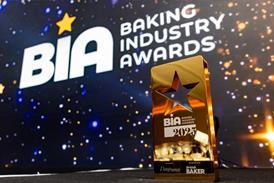
    By offering coeliacs something they'd struggled to buy before fresh gluten-free bread it's not hard to see why Genius triumphed in The Innovation Award category, sponsored by Asda, at the Baking Industry Awards last year. The addition of this loaf to the supermarket shelves meant those requiring gluten-free bread, could actually purchase a loaf, and eat it as it came fresh.

  • Chocks away

    Top BB75 retailer Greggs has plenty of ambition left for the UK market, but is already considering moves overseas. Anne Bruce reports
     - Published:  12 February, 2010

    Greggs has started gathering intelligence on overseas markets as it prepares for international expansion. The company is already Great Britain's biggest bakery takeaway operator, with 1,419 shops. But Greggs has plans to launch in other parts of the world in the longer term, says chief executive Ken McMeikan. Speaking to British Baker after Greggs topped the new BB75 league table of bakery retailers, McMeikan says Greggs' expansion ambitions are far from satisfied.

  • Rising to the challenge

    BB columnist Tom Herbert checked into the recent Rise of Real Bread conference and found delegates hungry for positive action to promote the health benefits and flavour of 'real' bread
     - Published:  12 February, 2010

    St Anne's College was the venue for The Rise of Real Bread Conference a place where the Gandalfs and Aslans of all baking things, philosophic and prophetic, gathered.

  • EAT secures new chilled distribution

     - Published:  29 January, 2010

    Sandwich retailer, EAT, which BB last August revealed had plans to double the number of outlets from 100 to 200 within three to five years, has revamped its chilled distributions to cope with worries over sudden failures in distribution of products to its stores.

  • The personal touch

     - Published:  29 January, 2010

    While most people will be aware of the major bakery wholesalers such as Bako and BFP lesser known are the smaller regional suppliers that are making inroads into craft bakery. Walker Humphrey, which supplies esteemed retailers like Bettys of Harrogate and Cooplands of Doncaster, is a case in point.

  • Delivering the goods

     - Published:  29 January, 2010

    The logistics of integrating two large firms, operating from different sites, can be a real nightmare.

  • Smoothing the sheets

     - Published:  29 January, 2010

    What's the latest?

  • Oil fired up

     - Published:  29 January, 2010

    Simply put, Daub makes ovens. The company pioneered thermal oil ovens which, according to research, save 30% on energy costs while producing quality end-products. At its Hamburg headquarters, which employs 85 people, the ovens are built before being exported to Britain and all over the world.

  • Family fortunes

     - Published:  29 January, 2010

    McDonalds Bakers of Glasgow took a tentative step in a new direction during the 1990s and has never looked back. A traditional family baking business, with 10 conventional retail outlets, the company had made an abortive and almost business-ending attempt to diversify into wholesale during the previous decade. And since it was "getting harder and harder for traditional bakers' shops", according to its MD, the decision was taken to develop a coffee shop and takeaway offering.

  • On course to succeed

     - Published:  29 January, 2010

    A world of change and only 650 words to sum it up (that's 12 wasted already). You could write a book on the new qualifications framework, its implications and benefits for employers, and how bakery fits in. Instead, here is the slimmed-down, abridged, Dr Atkins version just the protein, no carbs.

  • Macphie cupcakes

     - Published:  15 January, 2010

    These premium Easter-themed cakes use Macphie's Genoese Mix and 5th Avenue icing and offer a high profit margin.

  • CSM cupcakes

     - Published:  15 January, 2010

    This recipe combines CSM's Craigmillar-branded Extra Moist Cake and Crembel Lemon Fudge Icing.

  • Bakels hot cross buns

     - Published:  15 January, 2010

    This uses Baktem Blue (used at 20% on flour weight) for fermented buns, a ready-to-use crossing mix and a ready-to-use bun glaze. Baktem Spiced Bun Concentrate, a ready-spiced mix (25% on flour weight), is also available.
    Ingredients kg
    Flour4.000
    Baktem Blue 20%0.800
    Yeast0.200
    Water2.240
    Currants1.000
    Sultanas1.000
    Peel (if required)0.038
    Bun spice flavour0.035
    Total9.313

  • An eye towards Easter

     - Published:  15 January, 2010

    You don't have to wait until September's National Cupcake Week to capitalise on the cupcake craze, which shows no signs of slowing. In fact, cupcakes saw sales volume growth of 13.7% and average prices per pack increasing by 7.2% (TNS Superpanel, 52 w/e 4 October 2009). "There is still potential in the market for those looking for great trading profits," says Lisa Boswell, marketing manager at CSM. So why not try some decorated cupcakes this Easter?
    Ingredient suppliers are coming up with a number of ways to cut costs and simplify the process this season. Karen Scott, communi-cations manager at Macphie, says: "We recommend that bakers look more closely at the 'cost in use', because it is not just about the cost of the bag mix, it is about how far the mix goes and what additional ingredients may be needed."
    Meanwhile, British Bakels is offering a package that means bakers can achieve an 80% margin on hot cross bun sales. If they use Baktem Blue, along with Bakels' ready-to-use Crossing Mix, they will receive the ready-to-use Bun Glaze free of charge. This bundle deal is the equivalent to a 30% discount across the board.
    "Our package gives bakers the opportunity to produce great-tasting hot cross buns and increase their profit margins, thanks to the free bun glaze," says Pauline Ferrol, national sales controller at Bakels.

  • What we need for 2010

     - Published:  15 January, 2010

    Jonathan Warburton, chairman, Warburtons
    "I believe the category still has lots of opportunity to encourage consumers to expand their repertoire, particularly at the moment when staying in and eating at home is becoming increasingly common. If we work closely in partnership with our customers, we can achieve this. Innovation is key within any category to ensure that the product offering remains relevant to consumers and bakery is no exception. As a business, we are more determined than ever to help drive growth in the category and succeed in these difficult times."
    Mike Benton, marketing controller,McVitie's Cake Company
    "As the recession continues into 2010, promotions will continue to play an important part in the market for branded cakes.
    "Consumers will be looking for brands they trust and value products that provide more for their money and, as consumer confidence in the category slowly returns, there will be a bigger appetite for innovation. This will add excitement to the category, reflecting consumers' willingness to experiment with new products and flavours.
    "Health and nutritional improvements and reformulations will play a key part, as comfort eating declines and people look for healthier alternatives. In keeping with this trend, out-of-home consumption is likely to continue to decline, as fewer people choose to have lunchboxes and vending machines are removed from schools in a bid to tackle the growing problem of obesity.
    "It is also expected that there will be a massive growth in the importance of new consumer communication channels, as people become more interested in alternative forms of consumer engagement, such as digital media campaigns and advertising.
    "The government health agenda will put added pressure on the market, with companies under continuous pressure to produce healthier products that will aid in combating obesity in the UK. Retailers will also be faced with the challenge of maximising profitability from shop space, as consumers continue to demand value from products.
    "It would bring a great big smile to my face if we could see the cake market return to volume growth in 2010. Nothing would make me sigh; I'm an eternal optimist."
    Ken McMeikan, chief executive officer, Greggs
    "The biggest hope I have is that there aren't going to be significant job losses. One thing I've noticed in 2009, which impacts on confidence more than anything, is when people are uncertain about their own future and their incomes. People are still very uncertain about that, particularly when they know that whoever is in government will have to face the UK's debt challenge and make some tough decisions that could involve job losses. If people have money and there's still confidence to spend or to start spending, then we all have a chance of having a reasonably good year.
    "As for the baking industry, I would hope that we continue to work well with the Food Standards Agency (FSA) on issues such as salt and fat reduction. These are important targets we face as an industry and we are making good progress and doing a lot of work towards them. But we have to have a very healthy and constructive partnership with the FSA, because we don't want to have customers impacted adversely by the consequences of what we're doing, due to changes in the taste and quality of the products we're delivering.
    "We make great-tasting products that our customers love and we are working towards FSA guidelines and targets. But I think we need a commonsense approach. Our hope is to have a constructive working relationship with the FSA, so that we continue the dialogue and they work closely with us to understand the efforts we're making to reduce salt, as well as the consequences of what we're doing.
    "I also hope that we don't lose any more small independent bakeries. That's not good for the baking industry and, over the past three to four months, we've started to see some of the smaller chains of bakeries and independent bakers going into administration. The one that surprised me was Ainsleys, given its size.
    "We tend to see more reports of retail sales through the supermarkets, so you don't get the full picture of the high street and the effect the recession is having. It's good to have competition and the baking industry needs independent bakers; they create a lot of innovative and specialist products, challenging all of us to match or do better than them. And the human side of smaller chains or independent bakers going into administration is that people have lost their jobs.
    "For Greggs, my hope is that it remains a strong and growing business, because that allows us to continue to create jobs. We employ over 19,000 people, so securing their employment is important and good for the economy as a whole."
    Simon Cannell, head of La Boulangerie, Brakes
    "With regards to salt, my concern boils down to the fact that, as a nation, we've been consistently eating less bread over the years and what is this being replaced with? Everyone recognises that bread and other starchy foods should represent a significant portion of a healthy diet. If we turn customers off bread, will this be replaced by less healthy alternatives. Bread has always played a vital role in diets across the globe, but more and more people I speak to in the UK say that they don't eat bread any more due to diets etc.
    "For 2010, I'd like to see a healthier view towards bread in the UK. Sometimes, all of the good work that is done in salt reduction can lead to the only thing consumers hearing is that bread is full of salt and bad for you. We need a balanced view and we need to promote the benefits of bread in a healthy diet much more effectively."
    Nicky Cracknell, national account controller, Bakehouse
    "2009 has been a tough year for the economy and the foodservice industry has felt the impact. In 2010, consumers are looking for a good deal, but not at the expense of quality. With this in mind, there is a lot of NPD activity around products that offer the best combination of innovation and value. We believe that any issue of cost will come full circle, as people want to indulge in little daily luxuries, such as a fresh morning pastry on the way into work. We are seeing a real rise in interest in new savoury options within the bakery sector. There is a demand for innovation at the savoury end of the scale. Consumers want something different to eat on-the-go or as an alternative lunchtime option or accompaniment.
    "For coffee shops, price is a real driver at present, with an increased focus on savoury items and this is also true for quick-service shops and service stations, which are looking to extend their savoury offer and provide a choice of comfort foods. Operators will be looking at getting their core ranges correct, before considering extensions to the offering. It is a careful balancing act between not offering too much choice, so as not to confuse customers, but having enough to inspire them and secure repeat purchases. The important thing is to demonstrate that you are trying new things."
    Jefta Kon Lakovic, chief executive, Arnaouti Pitta Bakery, Hoddesdon, Herts
    "In 2010 I believe we are going to see the growth of more flour-based baked snacks, such as crisps, hoops and other extruded goods, because they will be perceived as healthier. Obesity is becoming a major problem, so lower fat levels will be good and cost content will be lower.
    "A new niche drinks market will emerge, with more drinks from the Orient using natural juices and spring water. They will be all-natural with little or no added sugars.
    "This Easter, I think the economy will give a false sign of uplift, around election time, but then it will dip again. Hopefully we will see a resurgence beginning in the autumn, motoring on through Christmas and gaining momentum in 2011. The British export market in food will contribute to this and the whole economy will start to resume growth of between 2-6%. This may happen earlier (as in France, Germany and others), but the UK. economy is no longer manufacturing-dominant. In my view, this is a serious disadvantage."
    Paul Ettinger, a founder of Caffè Nero
    "Predicting the big food trends is not easy, but I see artisan bakeries growing, and smaller food portions arriving. Challenges will include a flat economy, volatile ingredient prices, currency issues, inflation and more competition."
    Duncan Macfarlane, sales director, Scobie & McIntosh bakery equipment
    "Alistair Darling needs to move on or get the sack! The pound needs to recover more. The banks need a push to start filtering more money through to businesses and there needs to be more grants available. They should treat the whole of the UK as equal not just take specific areas where some can get grants of 47% towards new equipment and others, such as Aberdeen, getting virtually nothing. Where is the fairness in that?"
    John Smith, MD of craft baker New Pitsligo, nr Aberdeen
    "We have two shops and a wholesale business, comprising around 60% to local shops and convenience stores. I want to see cheaper distribution costs and diesel come down.
    "[Scotland's First Minister] Alex Salmond promised to reduce business rates and he's done that. We now pay virtually none, saving us around £450 a month. It's good to see a politician supporting small businesses and keeping his promises! It has made craft bakeries compete much better throughout Scotland."
    Keith Stalker, MD, EPP machinery
    "Not being able to get funds from banks is holding good businesses back. We see customers who want to expand SMEs and, while the very big ones are OK, as are the major retailers, the SMEs are not getting access to the money they need.
    "So the banks need to lend more and the pound needs to get stronger. We need to see the UK start to climb out of the recession and hear people talking more positively about things and for that to happen, more lending needs to take place."
    Neville Moon, head of food and beverage, Caffè Nero
    "I would say 'excess' will be a watchpoint as we exit the recession. For example, large portion sizes, or products laden with fat or sugar, will make people feel they are not being good to themselves. 'Healthy' will take on a greater role, particularly in snacking, as well as healthier alternatives to pastry and muffins. I also predict a greater interest in artisan products particularly for better bread."
    Kirk Hunter, CEO, Scottish Association of Master Bakers
    "I'd like to see us move strongly out of recession. To do that, we need to restore consumer confidence, so government must come clean on the right strategy. We need to get through the election because, at the moment, we are in a phoney war situation, which is not good for business.
    "We can anticipate public expenditure cutbacks, which are bound to have an effect on bakers, but overall I'm optimistic that 2010 will see the beginning of a recovery and a return to prosperity."
    "I hope this is a year we see the economy start to recover and customers being more confident."
    Scott Clarke, bakery category director, Tesco
    Simon Solway, MD, Unifine Food & Drink Ingredients
    "Last year was about looking at the bottom line and reducing costs; 2010 will be about building on that platform. Once the country thaws which is the big issue of the moment we're really seeing more positivity in the market.
    "Consequently, we're looking forward to the Baking Industry Exhibition [at the NEC from 21 to 24 March] this year, where there will be a lot of new launches; this gives us confidence. If we look at our customers, we're recording more launches compared to this time last year. If we looked at 2009, the first six months were very tough and things got a lot better in the last six months, and that has carried on already into January.
    "In November, British Baker wrote that Danish pastry sales were up 10% year-on-year second behind muffins. This is fantastic news yes, people are being careful about what they buy, but they want something that tastes good and satisfies all their senses. We would encourage customers to look to the Continent, where there are some great new products being launched. We would also like to see the UK export more cake there's still so much imported cake into the UK. The exchange rate is something producers can really benefit from."
    Andy Pollard, sales and marketing director, Cereform
    "I want to see the Euro exchange rate improve and raw material prices become more consistent, so we are able to give longer-term commitment on cost to manufacturers and they, in turn, can do the same for their customers.
    "I'd also like to see a continuing resurgence of brands, which puts value back into the baked goods sector. Also, I'd like consumers to understand and appreciate the baking industry as a provider of healthy staple products, as well as indulgent ones.
    "I have no agenda regarding the GM issue. However if, in the future, consumers and the retailers want the food industry to continue to provide products at ever-reducing prices while maintaining quality, it must be a consideration."

  • Never too late to automate

     - Published:  18 December, 2009

    The baking industry has traditionally prided itself on its artisan production methods, usually portrayed by television commercials showing the baker's lad on his bicycle, delivering fresh bread or a loaf gently rising in the oven. However, the multi-billion pound bread and morning goods market now delivers an estimated 12 million loaves and packs every day in the UK, and producing that quantity requires a far more state-of-the-art approach.
    Many smaller British bakers have yet to come up to speed with modern production solutions. The apparent reluctance to adopt new technologies in some quarters mirrors many sectors of the UK food industry as a whole. Even major bakery manufacturers, who already employ higher levels of automation, can benefit still further from the innovative methods now available for boosting productivity.
    It was to overcome this scepticism about the capabilities and benefits of flexible automated processes and solutions in the UK food industry that CenFRA, the Centre for Food Robotics and Automation, was founded. In contrast to the UK, the food manufacturing industry in Europe embraces automation and robotics at all levels. Even the craft bakers who dominate the Continental market rely on automated processes, so CenFRA's primary aim was to close that technological gap.
    Many bakers are aware of basic automation, such as mixers, depositing systems and conveyors, but some find it difficult to think 'outside the box'. Issues such as factory space, concerns that automation is not cost-effective for small runs or fears that switching to robotics could compromise the quality that hand-crafted products provide are all cited as reasons not to engage. Yet CenFRA says these fears are unfounded and, to encourage and enable greater take up of automation, has developed discrete event simulation systems to demonstrate the advantages without the need for physical mock-ups, which can incur significant costs. CenFRA's engineers can draw up a "virtual" map of the baker's set-up, using highly advanced software and can then highlight prospective areas for improvement, while identifying any potential or unforeseen obstacles and influences created elsewhere in the client's manufacturing process as a result of these changes.
    Traditionally, bakeries have been labour-intensive, fed by the many workers choosing to come to the UK to seek work, particularly from within the eastern region of the European Union. But there is an increasing trend for foreign workers to return to their homelands, and despite a backdrop of rising unemployment in the UK, many of these places remain difficult to fill.

  • A taste for pizza

     - Published:  18 December, 2009

    Think of pizza and you'll automatically think of Italy which is why the Kaak Group says it has turned to the land of pizza, pasta and Chianti as inspiration for its pizza lines.
    The only difference between Kaak and the traditional Italian pizzeria is that the company's pizza expert Italian company MCS based in the north of the country has designed plants that can produce up to 15,000 pizzas an hour.
    MCS is considered to be one of the world's leading specialist companies for pizza lines. The reasons for success are its expertise, built over a number of years, and the fact that each line is designed and developed on a bespoke basis.
    Says Maurizo Tabarelli, head of MCS: "The type of plant we commission depends on the end-product and the intended sales and distribution channels fresh or frozen pizza, sheeted, cross-sheeted dough, pizza crusts in trays or directly pressed on the belt and sometimes even a combination of methods. No matter what the customer's needs are, we supply the equipment and the tech-nical know-how."
    Core parts of the product range are pizza plants, a wide range of automatic provers with swing trays, as well as the cyclotherm ovens from the Bakemaster series. The ovens, which heat the baked products with radiated, as well as convection, heat, are modular in design, allowing easy selection of the baking area, number of burners and burner performance.
    Any type of wire mesh belts, hinge plate belts and, in particular, natural stone plates, are available. The stone plate supports are moved with heavy-duty chains located laterally on high temperature-proof ball bearings.
    This oven is suitable for baking almost any kind of baked goods, from traditional bread (hearth-baked) to all types of panned bread, hearth rolls, small bakery items on trays, all kinds of fine bakery wares and even most pizza types, as the oven can reach a baking temperature of up to 300°C. Pizzas can be baked in one to two minutes.
    The company also cuts down on dough handling and mess by pressing pizza crusts directly on to the oven belt before baking. This avoids the need to sprinkle flour on the dough during make-up. A light film is applied to the belt, the pizza crusts are pressed at a temperature of almost 100°C and they do not stick.

  • D-day for Lallemand

     - Published:  18 December, 2009

    If you've read the papers recently you'll have seen lots of stories stating that many of us do not have enough Vitamin D. Prior to the 1800s, people spent their lives largely in agricultural communities, working or playing outdoors, with the main source of Vitamin D being the sun. The ultra violet rays in sunlight naturally convert cholesterol in the skin to Vitamin D. This is the most important source of Vitamin D for people.
    The only significant dietary sources of Vitamin D are oily fish and fortified products such as margarine and breakfast cereals. For people living in countries far north of the equator, such as Iceland, who get less sun, dietary sources of Vitamin D such as oily fish are important for health and wellbeing.
    But times have changed. Now we are often in bakeries, offices or cars. Many of our foods are fortified, because processing takes out natural goodness. Breakfast cereals are commonly fortified with iron, niacin and Vitamin D, among others. And here's the rub: flour is fortified, too, but bakers never shout about it on the pack. It was a point made forcibly by Scott Clarke, bakery director of Tesco, at this year's Federation of Bakers conference. Breakfast cereals compete with bread, he said, but Kellogg's and others make their cereals sound healthier. Bakers, he pointed out, are missing a vital sales trick.
    But with Vitamin D now in the spotlight, Lallemand, which owns Britain's biggest yeast-making plant based at Felixstowe, formerly GB Ingredients, has pioneered a way to give yeast itself natural Vitamin D by treating it with ultra-violet light. The yeast will be available in normal block, cream and instant dried formats.
    But why is Vitamin D so vital? It's because deficiencies are said to contribute to osteoporosis, some cancers, especially breast, colon and prostate and a weaker immune system. The amount inherent in all Lallemand's yeast is at least 30 IU (international units) per 100g serving of bread, which is enough to ensure a necessary level but nowhere near enough to exceed the safe upper limit of 2,000 IU recommended by the EU scientific experts even if you do spend a lot of time outdoors, eat oily fish or take a multivitamin supplement.
    So who is Lallemand and why have they pioneered the new yeast? Lallemand UK MD Dr Mike Chell explains that the company is a major worldwide yeast supplier, which invests many millions in plants and research. "After the EU Commission took a keen interest in all yeast acquisitions across Europe, Lesaffre GB Ingredients' then owner agreed to sell the company.
    "Lallemand was waiting in the wings to buy GB," he adds. "Our Felixstowe plant is one of only two yeast plants in the UK and is the biggest. We supply both the UK and Ireland. The company is set to benefit enormously from all Lallemand's international R&D and expertise."

  • Muffin tops

     - Published:  18 December, 2009

    Breathe a sigh of relief with that headline, we're not building up to a discussion on what might poke out above Kerry Katona's trousers, but rather the more palatable proposition of cake muffins being one of the top performers in the cake market over the past year.
    Given that it's a pretty mature category, valued at £64m, why has it seen a 20%-plus spurt over the last year? It's largely down to the huge increase in opportunities to purchase, says Mike Benton, marketing controller at McVitie's Cake Company. McVitie's has developed the branded muffin market to the point where it has the top four muffin SKUs in what he calls the "eat now" market Galaxy, Mars, Jaffa Cakes and Choc Chip Muffins in that order and has a 51% share of the total branded muffin market. One way it has differentiated in an increasingly commoditised category is by injecting a filling and topping with chocolate.
    "The growth and expansion of the multiple grocers, local, express and travel outlets plus the growth of café culture within the UK and all outlets offering muffins as a staple item, has led to the growth of the muffin market," he says. What's more, the number of varieties on offer continues to expand, often with seasonal variations, "all leading to increased awareness of muffins within the UK market", he adds.
    Strong growth has also come from the coffee shop sector, says Simon Cannell, head of bakery at foodservice wholesaler Brakes, which led with a range of five tulip muffins when launching its La Boulangerie bakery division earlier this year. "We've seen phenomenal growth on those and they've been our most successful range since launch," he says. Many of those muffins have gone into high street department store coffee shops and contract catering. "We know that the coffee shop market is outperforming the rest of the industry anyway, but a lot of the reason why ours have done so well is because they are flow-wrapped, so they've got a four-day shelf-life from thaw. They've also got good visual characteristics."
    So is this boom something that is being reflected in craft retail? "It is, yes they're certainly going in the direction of becoming one of our top sellers," says Neil Wood, head of retail sales for 16-shop and bakery wholesaler Wright's, based in Crewe. "We're very proactive in introducing new products and people's eating habits are changing from some of the traditional lines to something that's a bit new. Muffins have been so well advertised by the likes of McDonald's, that it's a product that fits into the marketplace nicely."

  • End of a decade

     - Published:  18 December, 2009

    That was the year that was. The deepest recession in history, unprecedented industry interference from the food regulator, a series of big name chains toppling like dominoes not to mention a glut of biscuit-related scandals (more of that later), and well, looking back, it could have been a lot worse. In fact, over the course of the year, the number of good news stories among bakery retailers and manufacturers far outweighed the bad, which goes to show it wasn't all doom and gloom.

  • The proof is in the pastry

     - Published:  18 December, 2009

    When it comes to pastry, Pidy may not be the most recognised name in the UK, but this looks set to change as the Belgium-based firm embarks on expansion this side of the channel. Based in the once war-torn town of Ypres, the company already produces pastry products in as many sizes and shapes as you could imagine, so you might think NPD could pose a problem but you'd be wrong.
    Pidy, an acronym for Patisserie Industrielle Dehaeck Ypres, is an independent family business, set up in 1967 by the late pastry baker Andre Dehaeck , the father of current chairman Thierry. While working at the family bakery and patisserie, he secured his first business customer when approached by a lady from Gant, who had a wine and cheese shop and was interested in selling his pastry products to complement her offering. He also discovered a market for gift-packs of unfilled pastry, which were purchased by tourists visiting the battlefields surrounding Ypres. Enquiries from wholesalers then started rolling in, and the business grew and grew, with the company's first production unit created in a bakery of only 520sq m.
    A series of acquisitions and a number of years later, Pidy now produces over 300 million pieces per year, from its three production sites in Ypres, Halluin in France and Inwood, USA.
    Foodservice has been its core business since it began in the 1960s, but Pidy also manufactures ready-to-fill pastry products for sectors including manufacturing and industrial; contract and event catering; cash-and-carry; and retail. It produces six different types of dough: puff pastry, shortcrust dough, choux buns, sponge dough, pâte à foncer (the French version of a basic pie dough, but with an extra-fine texture) and croustade.
    For the production of its puff pastry Pidy uses both the French and Dutch method of production. With the French method, the fat is placed between the layers of dough, whereas with the Dutch method the fat is mixed with the dough and then layered. As an example of output, the Ypres factory produces approximately 29,500 pieces of its 4.5cm sized bouchées similar to a vol-au-vent an hour.
    Pidy already has a presence in the UK, with ambient products in Brakes, its biggest foodservice customer. It also supplies Tesco, Marks & Spencer, Harrods, Waitrose, Délifrance and Spar. But the firm isn't as well represented on the high street and has put the wheels in motion to change this.
    Recently appointed UK general manager Robert Whittle says the firm sees an opportunity to increase its presence in high street bakeries, patisseries and cafés. "We're also looking to talk to the likes of Pret A Manger and Starbucks in the UK and Europe," he adds. Whittle's aim is to double the firm's overall growth in the UK over a period of two years, which will involve expansion in the majority of the markets in which it operates, not just bakery retail.
    The majority of the sales thrust in the UK bakery and café sector will be through targeted product launches. These have been designed to address problems such as lack of time, space and skilled staff, as well as the view that sales are often made based on the visual appeal of products. Pidy has already launched easy-to-use kits, such as Tarto Presto. This contains pastry tartelettes and crème patissière, which can be combined with fruits or chocolate, for example, to create eye-catching "window candy", says Whittle.
    Pidy is hoping to introduce other kits as well and Whittle says plans are already afoot, although "still under wraps", to join forces with partners in the industry. "We see an opportunity to increase our presence in independent bakeries by working with partner companies, such as Unifine, to get our products to that market," he explains.
    Chairman Thierry Dehaeck says that "finding skilled staff is getting to be a nightmare" and that products such as Pidy's pastry cases can be promoted as "a perfect substitute for a handmade product", leaving the baker time to concentrate on the filling and presentation.
    "We can also offer frozen dough to the UK bakery sector, as we now have adequate storage facilities we haven't had the capability to do this before," says Whittle, adding that the firm is currently in talks with Brakes about distributing its frozen range.
    Dehaeck says that although the company has competitors, when comparing individual types of pastry, there are no other companies that have the 'all-under-one-roof' claim. "Pidy is at an advantage as it manufactures such a variety of products," he adds.
    Moreover, the company certainly hasn't been resting on its laurels when it comes to innovation. With around 30 new product launches in the last year, and plenty more to come, how does it come up with new ideas? "Question everything this is the most important thing," answers Dehaeck. To rethink and optimise the original idea, to reshape any shape and to apply trends proactively, are key parts of Pidy's new product development. But it's not enough just to sell the products, you need to sell the ideas to go with it, adds Dehaeck.
    Pidy likes to be ahead of the game. "We are focused on quality and customer-driven thinking. We always try to be proactive," explains corporate sales director Robin Van Oudenhove. For example, the firm introduced products containing non-hydrogenated fat around two years ago, despite that fact it isn't a necessary requirement in Belgium, he explains. Areas the company is now looking at include low-fat and gluten-free options. "If we can have a production facility ahead of a competitor in terms of trends, then we're at an advantage," explains Dehaeck.
    Recent innovation includes the creation of a vol-au-vent that keeps its crispiness without needing to be reheated; a tart with a vegetable coating that stops it going soggy and allows users to prepare finished products in advance; and canapé products such as mini-cones and 'spoonettes' an area Dehaeck says is seeing real growth in the UK. However, in one case, its recently launched edible coffee cups needed to come with a warning. Oudenhove explains that at a trade show in Dubai, a gentlemen decked out entirely in white took a bite out of the pastry cup before he had finished drinking the coffee and ended up wearing it instead.
    The family aspect of the business is very important to Dehaeck, who says the secret to keeping your staff happy and retaining them is by listening to what they have to say. And as some of his employees have worked at the company for over 25 years, that philosophy appears to be working.

  • Tunnel vision

     - Published:  04 December, 2009

    What can the optimum travelling oven achieve? Fast efficient baking well, that should be a given. But nowadays, every semi and industrial user is looking for more.
    At the Iba exhibition in Germany, Gouet, a part of Mecatherm, launched its new Double Action oven. Gouet chairman Olivier Sergent took British Baker through its workings: "The Double Action oven combines two of the most sought-after baking systems: cyclotherm and impingement, also known as radiation baking and forced convection baking." Radiation baking means there is no air movement, so the products bake gently and evenly. "In convection baking, when the core temperature is correct, the top opens and hot air flow gives fast surface baking for exactly the right amount of colour."
    Its dual action makes the oven ideal for tin breads, he says, ensuring they have no burnt tops, but is also suitable for flat breads, rolls and topped lines, such as pizzas. Sergent adds: "There is fantastic flexibility, but also consistency. And what makes it unique is that you can bake such a range of goods on an industrial scale in one oven. Baking time is reduced, saving energy, while the quality of the product, including tin bread, is excellent."
    The first oven has already been sold to the Village Bakery (Coedpoeth) for its gluten-free production site at Wrexham.
    Italian manufacturer Polin's tunnel ovens are designed for larger-scale bread, pastry and biscuit production. Polin manufactured its first oven some 80 years ago in Verona, Italy. The company now makes ovens capable of multiple applications. From cyclothermic heated systems to convection and electric, the made-to-order range can be adapted to suit a particular product and the production levels required.
    With the benefits of combining multihead depositors and sheeters to the line, as well as a choice of conveyor, from wire mesh, metal or stone-based, production can become more streamlined and versatile.

  • The future for free-from

     - Published:  04 December, 2009

    The free-from bakery sector has undergone a massive transition in recent years, from producing only long-life breads which have to be refreshed, to the launch of the first fresh gluten-free bread on the market this year. Recent data from TNS Worldpanel into free-from bread, ambient cakes and pastries and morning goods (for the 52 w/e 4 October 2009), reveals that the volume and value of bread sales have shot up by nearly 50% (see free-from bakery market tables). Ambient cakes and pastries have seen a steady growth in value, but a slight decline in volume, while morning goods have seen a small decline in both volume and value.
    Paddy Cronin, sales and marketing director for Finsbury Foods' free-from division, says the firm has seen significant volume growth for bread. Finsbury's free-from division is split between two businesses United Central Bakeries (UCB) and Livwell. UCB, based in Edinburgh, produces a range of flatbreads, morning goods, cake products and the Genius loaf, which won this year's Asda-sponsored Innovation Award at the Baking Industry Awards. Livwell, based in Hull, produces mainly bread and rolls, but also speciality products, such as ciabatta rolls, focaccias, croissants and pains au chocolat.

  • Time-saving devices

     - Published:  04 December, 2009

    König
    Brand new at the Iba show in Düsseldorf was a working prototype of the new industrial König automatic divider-rounder.
    Developed from the Industrie Rex III, the new model known as the Industrie Rex Hyper, came about after extensive customer surveys throughout Europe. Stewart Morris, director of UK supplier EPP told British Baker: "We studied all the ideas from the surveys and came up with key improvements. Customers wanted more and more time-saving, increased productivity and they wanted machines that were easy to clean to the very highest hygiene levels.
    "As a result the new divider-rounder can be dis-assembled (it's normally fixed) for full cleaning in 15 minutes. It can then be jet-washed. This makes it a revolutionary step forward in roll plant design."
    Central components of the machine have been combined to produce changeable sub-systems, which can be easily cleaned and serviced at the end of a shift, saving downtime. On the dough side, pressure is simple to adjust for different products and can be recalled via the linkage programme.
    König also unveiled an all-purpose final prover. Based on a proven racking and storing system, it allows the individual proving plates to be stored for a specified time, giving maximum flexibility with different products. The system meets the latest hygiene requirements and offers a large proving area but only takes up a small amount of space.

  • Hovis, health and hitting the headlines

     - Published:  04 December, 2009

    Jon Goldstone, you terrible tease! A long, involved chat with the brand boss, sat in Hovis HQ in Windsor arranged to find out the secrets behind the bread's recent runaway success gave no hint of the epoch-shifting announcement he would make a week later (a day after BB went to press): from January 2010, Hovis would be using 100% British wheat across its entire range.
    We caught up with Goldstone on his hands-free kit. "You kept that one quiet!" we exclaimed. "We were going to launch it in December, but we thought now would be a good time" he explains, hinting at an intriguing PR cat-and-mouse game, played out behind the scenes. Hovis was gearing up to announce the news next month, but caught wind that rival Warburtons was about to launch two all-British loaves using UK wheat. The Bolton baker played its card and Hovis' PRs sprung into action to deftly grab the headlines by announcing its full-range UK wheat switch.
    "I'm glad it's hit the headlines, because it is a big commitment for us to make. Every single product that has the name Hovis on it will be using 100% British wheat," he says, when asked about stealing Warburtons' thunder. "I think it is one of the most exciting and powerful things that we could have done as a brand."
    Undoubtedly. Plant bakers have always blended lower-protein UK wheat with Canadian wheat wheat that could not previously be grown in our dismal climate. But, for five years, Hovis has been trialling a red wheat to match Canadian wheat quality in the UK. This equates to £18m of wheat that will now be bought from the 600 farmers already signed up. What's more, there will be no change to the price of Hovis, despite the higher costs involved. How is that possible?
    "There is an on-cost," admits Goldstone. "We've made a commitment not to increase our retail prices next year."
    The move marks the culmination of a great year and a return to form for a brand that was in dire straits a year ago. From mid-2006 to October 2008, Hovis was in a worrying decline; Premier Foods was in the process of buying RHM, including Hovis a period during which brand investment slipped. Quality fell and marketing tailed off. At the same time, Warburtons' rise appeared unstoppable.
    Hovis was relaunched in September 2008 with new recipes and packaging, updating its pack styling with a nod to its heritage and an award-winning TV and cinema ad campaign. "All of that, together with significant improvements in our relations with the grocery trade, drove a real step-up in volume," says Goldstone. The company has now restored its market share to 2006 levels, around 28%, with a volume growth of 16.4% year on year in a market that declined 2% (October 4, IRI).

  • Bolt on business

     - Published:  04 December, 2009

    Laura Bolt is on something of a learning curve. Having previously worked as a business writer in Nottingham, before freelancing while living in Switzerland last year, she came to the realisation that her passions lay elsewhere. After much research, she enrolled on a three-month course at Ballymaloe Cookery School in Ireland, run by Darina Allan, whom Bolt describes as the Delia Smith of the Irish cookery world, and a 'real food' champion.
    "The course was fantastic as it gave me the chance to meet lots of artisan producers and get involved in events such as farmers' markets, which was really inspirational," she explains. "I then set myself a 12-month target to find out how I wanted to work with food. Making my own products and selling them on the market was one of the things on my hit list to try and that seems to be what has taken off."
    She set herself up as a caterer in July this year, producing a range of foods, and currently has a stall at the Local to Ludlow market every second Thursday of the month, where she sells solely baked goods, as a way of building her profile. She currently works from her home kitchen and has so far relied on roping in friends and family to help prepare and serve food at events she's catered for. "This is something that will obviously change when the business grows," she says. "It's my hope that event catering will eventually become the main income for the business."
    However, her initial aim was simply to create something that, hopefully, people would want to buy. "Although I've done far fewer catering events than farmers' markets, private catering looks to be where the turnover is going to come from in the future." Her next move will be to concentrate on additional promotion of her business, as well as looking at the feasibility and cost of a commercial premises. Bolt says it's early days to know what she'd do differently if setting up her business all over again, but she believes she should have had more confidence in herself and what she was capable of achieving.

  • High noon for the high street

     - Published:  04 December, 2009

    A stroll down the high street can be a gloomy experience at the moment, with shutters down and 'To Let' signs up. And the list of victims of the recession continues to grow. First Quench put 1,200 Threshers and Wine Rack outlets into administration in October. And baker Ainsleys of Leeds also called in the administrators, leaving further potential holes on the high street.
    But all is not what it seems. If you are a high street baker without too much debt, the 'To Let' sign may as well read 'Cut Price Sale'.
    A new report from research company Colliers CRE, Shop Vacancies: Filling the Void, gives an optimistic prognosis on the high street, suggesting that its long-term decline may be arrested. Firstly, with supply of units outstripping demand, companies with expansion on the agenda hold all the cards. Rents are down. Colliers has found that average prime rents in Britain fell from £130 per square foot in June 2008 to £115 per square foot in June 2009. That is the biggest decline in the 22 years in which it has been monitoring retail rents and the first fall in 15 years. All regions of Britain saw a decline in rent, it says, with the north east and Yorkshire and the Humber worst-affected.
    The report also says that rental values in Britain may not return to the highs of last year until 2015. The basis for that prognosis is that, after the last downturn in the early 1990s, it took seven years for rents to recover.
    "The challenging times have provided the opportunity for retailers with a strong customer base and successful business plan to capitalise on their competitors' downfall and expand their market share," said the report. "For acquisitive retailers, now is a good time to expand as the balance of power has shifted away from landlords when it comes to negotiations on leases and rents."
    Colliers' report points to a second factor that indicates now is the time to bag your bargain. As the economy went into recession, numerous shopping centre developments were shelved or delayed. Once the economy has recovered, there will be a shortage of new locations available.
    This may all be a shot in the arm for the high street, with competition for good-quality retail stock becoming more intense and void units being taken over. Small and badly configured units in tertiary locations are likely to remain difficult to let, however.
    The Greggs chain provides an example of how a well-funded business can cherry-pick the best sites with the economy in the doldrums. It is looking at buying 120 top First Quench shops and around 10 of Ainsleys' 32 shops from their respective administrators. "When companies go into administration, we are quick to make contact. We've looked at many companies and have put extra people into our property team to do this," Greggs' chief executive Ken McMeikan told British Baker.

  • Desserts display frozen assets

     - Published:  20 November, 2009

    Surely, 'always leave room for dessert' is one of life's truest lessons. It's certainly one that the pudding brands manufacturers will be hoping buyers keep front of mind as they sharpen their pencils, with an eye to revving up under-performing own-label puddings possibly at the expense of the brands.
    "Certain supermarkets have been taking stock of their own category and organising themselves to potentially streamline next year; 2010 will be a lot tougher for brands like ours," says Roberta Herd, assistant brand manager at Farmhouse Fare, which supplies both branded and own-label pudding pro-ducts. "We're looking to retain our position as a quality brand, and also to look again at foodservice options."
    The traditional pudding market in which it operates accounting for about a fifth of total chilled desserts sales has dipped in the last year, with promotions hitting value perception. "There has been a lot of work on deals, especially twin-packs, with a focus on promotion for the last year," she continues. "This is driving down price and expenditure. That's why traditional puddings are tracking slightly behind in value on last year. But Farmhouse Fare has seen really good growth about 56% in the last quarter (Nielsen, week ending 3 October 2009)." This is on the back of a new 10-strong range going into 52 more upmarket Tesco stores, as well as healthy promotional activity.
    News of the renewed focus on own-label comes with the latest figures from TNS, showing retailer own-labels faring worse than the brands (see overleaf). But the biggest winner after a year in recession has been the frozen desserts category. Manufacturers supplying foodservice also report gains for frozen products, though this is offset by the struggling hotel and restaurant sector, with the latter seeing a 25% rise in insolvencies in the last nine months compared to last year (PriceWaterhouseCoopers).
    "There is definitely a trend back to frozen due to reduced wastage," says Angus Allan, MD of Indulgence Patisserie, which supplies a number of chilled and frozen private-label products. "But if there is such a trend in foodservice (towards supplying frozen products), they are overwhelmed by the reduced number of people eating out. My gut feeling is this will last until after the election. Retail is very buoyant, foodservice is flat, but the coffee shop sector is doing fine."
    Clean-label declaration continues to be a priority, which has benefited the frozen sector. "The retailers always go after the chilled, but immediately you have a life and a wastage problem," says Doug Chapman, MD of frozen supplier Speciality Desserts, which focuses on developing bespoke desserts to fit a brand concept in the hotel, pub and restaurant markets. "With frozen, you've got more flexibility. Certainly in our marketplace it's about zero wastage."

  • A colourful existence

     - Published:  20 November, 2009

    As phoenix from the flames stories go, a cupcake cases supplier being plucked out of administration and landing plonk in the middle of a boom in muffins and cupcakes is one of the more positive stories to come out of the recession-hit bakery sector.
    A well-known name and a cupcake case supplier to craft bakers, coffee shops and supermarkets, Chevler Packaging filed for administration earlier this year, largely caused by an expensive final salary pension scheme that the business couldn't afford and a pressured market in carton packaging. With the recession in full flow, the bank got twitchy and pulled the plug on its investment, meaning uncertain times for the Hengoed-based business, which traded for two weeks in administration. Luckily, the management stepped up and bought out the profitable cupcake casing business from the family owners and left the plastics and carton side.
    Following loan capital assistance from Finance Wales, an organisation set up by the Welsh Assembly Government to help businesses struggling to find credit, along with investment from the new owners, Chevler is back on an even keel. In fact, the outlook is so positive they've managed to create 12 new jobs without losing any.
    Pretty good news, then, for nearly half the bakers in the UK that use Chevler cases, especially as it has only one rival supplier in the UK and another in Italy. "It wasn't in any way, shape or form a pre-pack buy-out. We were the first ones that [administrators] Deloitte made redundant," recalls MD Stuart Whelan. "There were competing bids. We put everything into our bid, we put our own money in and we got it. We were delighted. We knew we were getting a strong business that did not need any major surgery and customers saw very little disruption."
    Sponsors of the inaugural National Cupcake Week in September this year, alongside ingredients supplier Puratos, Chevler has been busy fuelling the cupcake craze ever since. It has launched a range of coloured cases, available in small pack sizes for craft bakers; previously these were the reserve of the big guys, who bought up to 100,000 cases at a time. There are eight separate colours in the range of 51mm x 81mm cases, which are offered in cartons of just 360. The new colours join the Chevler range, which already includes gold and silver foil cases, known for their icing holding properties.
    It's a simple idea, but one that can improve a coloured cupcake range display at a stroke. "Smaller bakers might only use 1,000 a year. So we listened to our customers, packaged them in small quantities and sell them through wholesalers," says Whelan. The last major breakthrough for Chevler was the tulip case, first developed for Costa Coffee, before it caught on throughout the industry.
    It has also developed cases for all the main special occasions on the calendar, from Christmas to Easter, Valentine's Day, Mother's Day, Halloween and birthdays. A forthcoming launch will be unbleached, grease-proof products, with a more rustic look, targeted at the artisan side of the industry.
    "If anything, we've had too many good ideas and have had to hold ourselves back to get the business right," says Whelan. "We turn around a phenomenal amount of samples at great expense; we have all the equipment here on-site, which means we can set up print runs. That gives us flexibility and quick reaction times, and we don't have the burden of outside printing costs."
    Now the business is in solid growth, Chevler can focus on innovative case ideas, says Whelan. "The business is in good shape," he says. "We have four owner managers, which is a good blend of experience. We'll be focusing on the business and customers will see more from us going forward."

  • Eco centric

     - Published:  20 November, 2009

    Economic hardship is failing to quell packaging and labelling innovation, as bakeries, cafés and food-to-go retailers increa-singly seek differentiation in the great high street bun fight.
    While times are tough across the retail sector, the recession has both boosted and hindered independent operators, with many consumers trading down from restaurants, but others swapping take-out breakfasts and lunches for home-prepared food.
    For those enjoying a lift in trade from the restaurant exodus, branding has become all-important to compete in a saturated sector ranging from small over-the-counter bakeries to chains such as Starbucks.
    Manufacturers of packaging and labelling solutions have responded with new ranges of bags, bowls, cups and containers in materials offering greater scope for on-pack marketing, and responding to increasing demand for an upmarket and environmentally aware image.
    Opinion is mixed as to the impact of the economic downturn on customers' willingness to pay out the premium applying to 'eco' packaging, with one trade source claiming the environmentally friendly option can triple costs. However, according to Planglow, trade in environmentally friendly lines is booming. "Packaging sales have soared over the last year or so," says Planglow marketing manager Rachael Sawtell. "Most of our products are environmentally friendly and we do tend to have a lot of bakers as clients."
    Greatest sales growth has come from sandwich and baguette packs, says Sawtell, which are cardboard-based with windows manufactured from plant-based materials such as corn. Most of Planglow's packaging, which also extends to wraps, salads and beverages, is from renewable resources and is 100% biodegradable or compostable.

  • Back to the future

     - Published:  20 November, 2009

    Last week Starbucks unveiled its new-look store on Conduit Street in London. Well, a look that's not supposed to be a look. A look that reflects its newfound back-to-roots indie outlook. So how does it, erm, look?
    In two words, 'sustainable' and 'local'. A facelift was long overdue. A recent review of coffee shops, published by The Local Data Company, said Starbucks was "entering a period of introspection" as it took stock of its strategy. "The uniform ambience doesn't seem so appealing these days and, now the bubble has been pricked, real questions are being asked about all premium coffee shops," it stated.
    The chain has haemorrhaged stores, while rival Costa has continued its rapid growth. Now, Starbucks plans to open a number of stores next year, but the focus will be on refitting 100 outlets in 2010 at a cost of £25m, matching the 100 it refitted last year.
    The aim is to reconnect the store to its heritage, with locally focused fittings and a less uniform approach. Tim Pfeiffer, senior vice-president, global design, flew into the UK last week to launch the plan, saying there are "several levels of environmental initiatives that we have pretty much embedded in the design going forwards".
    "We wanted to embed the character of the neighourhood in this and really elevate the offering to the customer, with the overall vibe of the store, creating an environment that really is very much more bespoke and one-off. We wanted to elevate the overall value of what Starbucks represents," says Pfeiffer.

  • Wild White winner

     - Published:  20 November, 2009

    It may be the current tagline for a certain brand of crisps, but the words 'simple is better' could just as aptly be applied to Hobbs House Bakery's prize winning loaf at the Baking Industry Awards 2009. Established in 1920, family firm Hobbs House has long been in the business of making bread. And despite many of its current recipes having been in existence for 20 years or more, the bakery, based in Chipping Sodbury, Gloucestershire, has not been standing still when it comes to innovation.
    Its Organic Wild White sourdough loaf shone through as winner of the Morrisons-sponsored Artisanal Bread Product of the Year a new category at the Awards this year. The loaf contains only organic flour from Shipton Mill in nearby Tetbury sea salt, water and a 45-year-old levain starter of rye flour and water. Sounds simple, but its production takes around three days, with the starter stored for two-and-a-half days before being added to make up the dough.
    Hobbs House production director Sam Wells obtained the starter 15 years ago from a German baker, who had had it for around 30 years. "People think it's amazing that something's still going after all that time," says Wells.
    The award category required entrants to submit three different products for initial judging. Alongside its Organic Wild White loaf, Hobbs House entered its Baguette Paysan and Organic Soda Seeds loaf, but the Wild White staked its place as the strongest contender, making it onto the shortlist. "It's the tasting that's the key," explains Wells, who recommended the judges warmed the bread before tasting for maximum effect. "Although it's an industry award, we obviously shout about it a lot to our customers," he explains. "We've made it our business to make sure we've had lots of press coverage, as well as marketing material in our shops, which we also sent to our wholesale customers. People like to be associated with winners."
    Wells says he was prompted to enter, in part, due to the fact it was a category specific to artisan production. "It's a word we've been using quite a lot recently regarding our business. Artisanal products are exactly what we're about, so I thought, 'Maybe this us for us'."
    When it was announced the firm had won, Wells says he was "absolutely speechless". "It was fantastic, a really good evening and Morrisons looked after us very well," he continues. "It was nice afterwards to be able to probe them (Morrisons' judges) on why they chose our loaf. They told us that all the judges had their own favourite second loaf, but, without fail, they had all picked the Wild White as their favourite, which was charming to hear and really encouraging. It's great to be able to bring that back to the bakers here, who make the loaf day-in, day-out, and to be able to give them that kind of feedback."
    Wells sent a text announcing the win to his fellow directors and, when he got back to the bakery, he says: "People were really buzzing about it." One of the great things about this type of category, he explains, is that the award is attached to a product rather than a person, so it's one the whole business can share, as they've had a direct involvement with it. "To be attached to the whole thing has been very beneficial internally and externally. And since winning, we've sold a lot more of the loaves," says Wells. "Bryan Burger, head of bakery at Morrisons, said we should expect to see around an extra 10% return out of winning, which has been about right."

  • The cost of change

     - Published:  20 November, 2009
  • Danish take the crown

     - Published:  06 November, 2009

    The in-store bakeries (ISB) seem to have Viennoiserie and Danish wrapped up this year.
    The Danish pastry category is worth £45m and is growing by 10.4% (IRI 52 w/e 5 September 2009), year-on-year, making it the second fastest-growing sweet bakery sector in ISB behind a resurgent muffins category, and outstripping croissant sales. In contrast, Warburtons' recent Bakery Review pointed to a 20% drop in wrapped Danish pastries value.
    Andy Clegg, head of bakery at Morrisons, says there has been no great push on promotions, but sales are soaring nonetheless. "We're seeing a small growth in packaged croissants," he says. "But ISB Viennoiserie has seen a market growth of 6% and we've got a growth of 38.9% (Nielsen, 12 weeks to 10 October), mainly driven by ISB croissants. Both the Bakery and Cake shop at Morrisons are performing beyond expectations this year."
    So why is Danish, in particular, performing so well? "There is more promotional activity in Danish than croissants, but it also comes back to affordable treats, which people want at the moment and which is really helping ISB in general," says supplier Bakehouse's brand manager Claire Warren. "NPD has been a little more cautious, but people still want to see new things out there and it's really important to deliver that to help grow the category.
    "We're seeing more NPD being generated than in other categories, such as Danish crowns with seasonal flavoured fillings, which helps maintain interest in the category. Traditionally, Danish pastries are popular with men and older consumers but lighter flavoured variants, such as lemon Danish, which is new to the category, are being aimed at younger consumers."

  • Night riders

     - Published:  06 November, 2009

    Anyone who uses the roads during normal daylight hours knows only too well the delays and frustrations caused by the overload of traffic in many areas. While a missed appointment can be re-scheduled, a missed delivery costs serious money for all involved with that particular load retailer, supplier and logistics firm alike.
    In 2005, The Freight Transport Association and the Rail Freight Consortium raised with government the problems associated with the general ban on deliveries taking place between 11pm and 7am. This long-standing local authority guideline was designed to reduce noise levels for nearby residents. However, the movement of some retailing to out-of-town shopping centres and the growing road congestion during the day have led people to question this.
    Recent evidence has emerged to show that blanket curfews are increasingly inappropriate. A survey of members of the British Retail Consortium, who run more than 7,000 outlets, identified for the first time the true cost of delivery restrictions. About 60% of the outlets are subject to a ban on delivering at specific times, with high street stores relying on kerbside deliveries the hardest-hit. A simple relaxation of one to two hours would save them some £30m a year.

  • Turning a corner

     - Published:  06 November, 2009

    Imagine the scene: a model with mid-length hair appears on TV before Christmas. With a swish of her hair, she announces that she has discovered the latest appliance that will "Curl & More".
    The catch is: it's not available at Boots or any other leading high street chemist for that matter because Curl & More is aimed at bakers, specifically those who want to curl pastries and bread doughs. And our fantasy model might like to know that all those not-so-filled croissants she had for breakfast can now contain more jam or cheese than ever before, as the new Curl & More allows a ratio of filling right up to 1:1.
    Manufacturer Rondo's general manager Richard Tearle is delighted at its success: "We sold a machine on the stand on the first day," he tells British Baker at Iba. "We also won two new equipment innovation awards at the show." (See British Baker, October 23.) And we have patented the design, which actually allows more filling than dough if required.
    He explains that Curl & More closes the gap between the familiar artisanal Croissomats and the powerful Tornado and Spira industrial croissant machines. It means Rondo now meets requirements for operations of all sizes, from very small through to industrial firms.
    The machine is flexible and can be used for automatic production of curled pastries, ranging from croissants to pretzels. And, depending on the pastry size, it produces filled or unfilled curled pastries in two to six rows, achieving a capacity of 4,000 to 12,000 units per hour.
    Centrepiece of the innovation is the curling process, which involves low curling speed and clearly separated process steps. These, says Tearle, "result in a consistently high-quality production process". He adds: "The design enables the application of large filling quantities. Until now, the industry believed a ratio of dough to filling of this magnitude could not be achieved, but Rondo has achieved it."
    The company also unveiled a new industrial pastry line in washed-down design. 'Wash-down' is a method of cleaning and disinfecting lines that is increasingly becoming a requirement. On the wash-down design, the line is hosed down with a hot jet of water and then disinfected with cleaning foam. It is particularly important for products filled with meat or similar and is increasingly used for sweet pastry.
    Rondo's wash-down line is made of stainless steel and features solutions designed to simplify the cleaning process, according to Tearle. For example, the line has smooth and slanted surfaces that enable water to run off easily. They also prevent water or particles from collecting in corners and tight sections. The belts have sealed edges and can be released quickly and easily to allow access for cleaning the underside and the table-top.
    New accessories from the firm, also on display, included a fat pump and updated automation and enhancement of its various bread and pastry dough processing lines.
    Rondo recently rebranded its image, merging the names Rondo and Doge, so what has the effect been? Tearle says: "The new branding has brought the whole company together with a focused approach." Not so far from Rondo's European headquarters lies Venice, which also relinquished its Doge, but held on to its famous designs and traditions while modernising its trade, transport, and machinery. There's a parallel in there somewhere.

  • A Swede in Scotland

     - Published:  06 November, 2009

    When running a mountain lodge in his native Sweden around a decade ago, Peter Ljungquist came to the conclusion that he would like to make the best jam, chocolate and ice cream in the whole country. And since he had "always been passionate about bread" too, a bespoke brick oven was installed in the traditional farmhouse in southern Sweden, which became his production hub.
    When visiting Edinburgh several years later, he immediately liked the place and decided to see whether the concept, tested on a largely rural customer base in Sweden, would translate to an urban environment in a different country. The central Quartermile district was chosen, because Ljungquist regarded the mix of heritage and striking new business and residential structures as "an interesting idea".
    Launched in 2007, the Peter's Yard coffee shop and bakery has become renowned for its high-quality, handmade artisan crispbreads made to an authentic Swedish recipe, using all-natural ingredients, including sourdough, fresh milk, rye flour, whole wheat flour and honey. Its product range also extends to traditional Swedish cakes/pastries and cardamom buns, which Ljungquist describes as "probably the most common bun in Sweden and now our most popular line". This Christmas, Ljungquist intends producing two Swedish festive favourites namely saffron bread and pepparkakor (a ginger biscuit).
    In terms of quality, there is far more to Peter's Yard than the products it sells. The 10 members of staff have received training from one of Sweden's premier chefs, while the high-spec décor has been chosen to create a welcoming atmosphere "where people want to relax and meet friends" over a bite to eat and a cup of coffee a concept known in Sweden as fika. Pointing to the light, airy design and to the lack of a partition between the 600sq ft bakery area and the 50-cover, 1,200sq ft customer area, Ljungquist elaborates: "We didn't want to hide anything. We wanted people to see what we were baking and to see us making the sandwiches."
    The outlet in Edinburgh, which also sells assortment packs of company products, is on course to beat its budget by 30% this year and record a turnover of £700,000. And although launched only this summer, Ljungquist is confident that the wholesale arm, run by Wendy Wilson Bett and Ian Tencor, will add significantly to this success by supplying crispbreads to high-quality food halls, delis and farm shops, as well as into the foodservice sector. He notes: "Our customers already include food halls at Fortnum & Mason, Harrods and Fenwicks; cheese shops like La Fromagerie; farm shops such as Secretts and Cheshire Smokehouse; and major retail outlets, such as Lewis and Coopers. We also supply Martin Wishart's Michelin-starred restaurants in Scotland."
    The wholesale arm's best-seller is the 200g crispbread pack, which retails for £3.50. At the coffee shop, meanwhile, hot drinks, cakes, sandwiches and soup are good earners but not the selection of breads. Ljungquist observes: "We make 100 loaves of bread by hand each day, on which we make no profit, because price expectations in the UK are still so low even when it's 'real' bread. But we believe a bakery has to have bread for sale, so we continue to make it to help build our positioning and reputation."
    Although a man of seemingly the calmest of personas, he admits to one slight irritation: being described in magazine and newspaper articles as "a Swedish businessman". He explains: "I am Swedish, that's true. But you couldn't find anyone further from being a businessman."
    Clearly, success for Ljungquist is derived from feeding his own soul, as well as the Edinburgh public. Despite offers to extend the Peter's Yard concept to other cities in the UK, he is not leaping at the opportunity. He says: "I ask myself 'How will it benefit my life?' I'm perfectly alright where I am."

  • It's a family affair

     - Published:  06 November, 2009

    Some of the best-known bakery businesses in the UK have started, and continued, as a family business. Bakery retailer Greggs began life as a family venture, and Warburtons is still one. So what makes family-owned firms so special?
    A new study into the UK business sector, carried out by Warwick Business School, reveals that small family-owned firms are regarded as more employee-friendly, motivational, passionate and creative than non-family private enterprises. Commissioned by insurer More th>n Business, it also reveals that family firms are perceived as offering better welfare conditions and more flexible hours, unity, purpose, trust, and less stress. Head of More th>n Business Mike Bowman says these perceptions could spur a surge in interest from job-seekers, who have suffered at the hands of the recession. With unemployment levels at their highest, rising to 7.9% in September that's 2.47 million people out of work and with the 16-24-year-old age category hit the hardest, could this be an opportunity for bakers looking to recruit?

  • Sats off the fence

     - Published:  06 November, 2009

    Paul Wilkinson: Are we able to meet the target of the 10% saturates reduction in cakes, biscuits and pastries without significantly compromising on the taste of the product? What do you not the businesses you work for think? Show of hands, how many people think this will be a very difficult thing to do by 2012? [Nine show hands]. How many think it's a pretty normal challenge at the end of the day? [Five show hands]. I just wanted to get some sort of idea. So is the industry geared up to do this?
    Matt Verney: I think it will be difficult to reduce it without affecting product quality, because we do a range of buttered croissants, Danish pastries and Viennoiserie. A lot of research has been put in place beforehand to find the right level [of fat], and if we are going to have to reduce it by 10%, this is going to affect quality, taste, flavour and texture. So we have huge concerns about reducing the fat content.
    Ivor McKane: I see saturated fats and calories as being two separate topics and I think there is a danger if we fail to separate saturates and calorie reductions as being two different streams.
    Peter Quinn: It's difficult and it's going to be product-specific. There will be products that are easier and products that will be extremely difficult to do.
    Having already been through a fat reduction exercise with the Melton Mowbray Pork Pies Protected Geographical Indication (PGI) status, we've learned a lot and also understand the consumers' prospective. They are very sensitive to that, so this process could have a negative effect on the bottom line. Technically, yes it's possible, but if the consumer doesn't like it, it's wrong.
    Stan Cauvain: I don't think we should underestimate the scale of the technical challenges, especially when delivering what are accepted sensory characteristics. Consumers have a perception of how things should taste. While, technically, we may reduce levels of saturated fats, if that doesn't deliver those accepted characteristics, consumers will walk away.
    Biscuit products will probably give you the most immediate opportunities for fat reduction where the functionality of fat, in terms of developing the structure, is less than it is in, say, a laminated product. [It will be easier] in those products where structural functionality does not come primarily from fats.
    Steve Knapton: Compared to some competitors, businesses that have already lowered fats can be a victim of their own success, because they've already achieved that.
    Chris Beresford: My biggest worry is that once it is reduced, the FSA may come back and ask for another 10%.

  • Nature over science

     - Published:  23 October, 2009

    Britain's billboard owners must love the Food Standards Agency. The wallpaper paste had barely dried on posters urging the public to watch their saturated fat intake by cutting back on biscuits, cakes and pastries when the government agency rolled out a new advertising blitz this month encouraging shoppers to check the labels of bread, pizza and sandwiches for salt content.

  • Concept success

     - Published:  23 October, 2009

    For long-established bakery chains, the idea of trying something new may seem like risky business, as existing customers will be used to particular products and price points. However, a number of bakery businesses, interested in introducing different and perhaps more premium lines, have come up with new shops to fit their ideas. We look at how two businesses have achieved 'concept outlet' success.

  • Take time for tea

     - Published:  23 October, 2009

    Ask most customers if they want a hot drink to go with their cake or sandwich and they might be tempted by a cappuccino. A humble tea bag just doesn't have the same allure as coffee, particularly if customers want to treat themselves. And let's face it, there's more theatre around an espresso machine, when you can make a bog-standard cup of tea at home.

  • Homing in on the harvest

     - Published:  23 October, 2009

    It is the time of year when new wheat crop opportunities present themselves and bakers can benefit from the adroit use of knowledge of the new harvest to achieve effective cost savings on flour and other cereal prices.

  • Biggin' up the baker

     - Published:  23 October, 2009

    I get by with a little help from my friends" is a familiar phrase. "I get by with a little help from my local regeneration agency" is, perhaps, less catchy. But that's exactly how one start-up bakery has managed to survive the daunting prospect of setting up in one of England's most deprived districts.

  • Put to the test

     - Published:  23 October, 2009

    When Conservative leader David Cameron visited Cotswold miller FWP Matthews to see the company's new facilities and learn about a partnership with French miller Moul-bie, he was a little surprised to be asked questions by British Baker (see panel opposite page). Yet in a short, but wide-ranging conversation, he answered willingly.

  • Naturally Nero

     - Published:  23 October, 2009

    The recession has killed off many things banks, bakeries and, erm, very nearly Iceland but try as it might, it has failed to knock the coffee shops off their perch. While Starbucks cut stores and Coffee Republic filed for administration, to hopefully emerge leaner and stronger, Caffè Nero and Costa have sat and watched sales sheets ticking over rather nicely, thank you.

  • Iba extends large welcome

     - Published:  23 October, 2009

    It was back in the 1960s when Roger Daltrey of The Who first belted out the classic "I can see for miles". It's the sort of song that pops into your head walking round Iba, the world's biggest bakery show.

  • Fairtrade sets sights on bakery

     - Published:  09 October, 2009

    Watershed moment alert: chocolate giant Cadbury is stepping up its activities in bakery. While you may have spotted the marketing splash about its switch to Fairtrade for consumer chocolate, you may not yet be aware that it is also ramping up the hitherto less-developed part of its business bakery cocoa supply. Such is the potential for Fairtrade growth in bakery, the chocolate giant is targeting craft bakers and bakery manufacturers by launching Fairtrade cocoa into the market.

  • Par-baked poser

     - Published:  09 October, 2009

    So (drumroll please)... what's the verdict? "We can say that part baked technology is a good technology," says professor Alain Le Bail, co-ordinator of an EU-funded project that has been pondering the matter. Or at least it could be. It found that par-baked bread demands around twice the energy of conventional breadmaking if the partial baking and the final bake are done in a baking oven. Another problem lies with the freezing of par-baked bread, which demands a lot of energy, especially if it is likely to be stored frozen for longer than a month.

  • At the Double

     - Published:  09 October, 2009

    You could say that a baker's job is never done until they have produced a great product, delivered it in pristine condition and made it so enjoyable that shoppers come back for more. Reputation is all to the smallest craft baker or the biggest bakery food manufacturer. But it is only as good as your last delivery.

  • Home is where the start is

     - Published:  09 October, 2009

    If interest in the recent National Cupcake Week showed us anything, it's that a huge cottage industry has sprung up in recent years made up of professional bakers working from home. It's not just cupcakes either. A wide variety of baked goods are being produced professionally in domestic kitchens.

  • Make more of malt

     - Published:  25 September, 2009

    The UK baking industry faces mounting pressure to reduce costs. Pressure is coming from the consumer and the retailer, but equally importantly, pressure is coming from within its own organisation to ensure survival in these difficult times. Finding ways to reduce costs and make more profit are key drivers.

  • The end of a sticky situation?

     - Published:  25 September, 2009

    As more bakeware hits the market offering claims of coatings that make greasing of tins wholly or partially redundant, is non-stick bakeware making release agents defunct for bakers? And if so, are there potential cost savings for bakers investing in non-stick bakeware compared to using release agents?
    Non-stick coatings range from clear silicon glaze to Teflon. However, Teflon is best used on automated plants or at bakeries where bakeware is handled with care. Careless stacking of tins and straps will reduce the life of Teflon coating, reaching a point where the coating can break down.
    Gary Atkinson, technical director, of AAK Bakery Services, which supplies release agents that are designed to enable baked products to be removed without damage from pans, sheets or oven bands, says that although hard-glazed bread pans work well, they require high levels of maintenance and regular re-glazing to maintain the effectiveness. This can be very costly for the bakery, especially if they are mis-handled during loading and unloading onto the lines.
    "By moving to a slightly softer tin coating in conjunction with a small, carefully applied coating of a release agent, the interval between the re-coating of the tins can be significantly extended and the bakery can make significant cost savings than through using a 'greaseless' system alone," claims Atkinson. "Working in conjunction with our technical services and engineering teams we can supply the right release agent along with bespoke application systems to ensure that the release agent is used efficiently and hygienically to give trouble-free, cost-effective release."
    Material type, thickness and tin construction - welded seams or deep drawing - need to suit the methods of handling and the number of releases required between refurbishment. Cost is therefore reflected in this process of design. Kaak Bakeware offers a range of coatings to suit breads and confectionery; tin and strap design will be largely defined by the production style, batch sizes, quantities per batch and baking profiles.
    Kaak Bakeware offers 'in-house' supply of bakeware from concept to final product using 3D computer design and robotic fabrication to the exacting tolerances which are necessary for automated bakeries. This process also allows small batches of tins to be supplied to craft bakers.
    So what are the potential cost savings in non-stick bakeware? "Non-stick coatings, silicon or Teflon, can show profitable returns on investment but only when the coating is not subject to mechanical damage and refurbishment occurs after a pre-described number of releases - variably between 2,000 and 4,000," says John Singleton, sales manager at UK Kaak supplier Benier. "The use of a coating may allow less release agent to be applied, which assists in increasing the number of releases obtained."
    There are other benefits to using release agents, says Richard Field, customer communications advisor at ingredient manufacturer Zeelandia. One is the cost saving during the baking process itself.
    "When baking tin bread, a release agent is paramount for the longevity of the bread tin as well as the perfect release of the baked loaf," he says. "During the process release agents are exposed to oxygen and very high oven temperatures - up to 250C - that ordinary oils and fats cannot withstand. Due to the contact with oxygen, a process is set in motion that begins with oxidation and leads to carbonisation. Once a layer of carbon has been built up, the transfer of heat deteriorates and the release and baking process becomes increasingly uneconomical."
    Release agents, such as Zeelandia's Carlo, help release steam during the baking process, which aids crust formation and helps crust colour development, claims Field. Zeelandia's release agents, which are resistant to oxidation, also cling to the side of the tin, ensuring even release.
    So the best savings come from striking the right balance between the needs of your process and the benefits of non-stick bakeware and release agents - ask your supplier for advice.

  • The spell of spelt

     - Published:  25 September, 2009

    Spelt bread, with its slightly nutty flavour, is rapidly winning consumer approval because of its perceived health properties.
    Spelt is a very old kind of flour, first produced around 5,000 BC. It survived into medieval times and much of its heritage was protected by millers and bakers in Eastern Germany and elsewhere in Central Europe. Head of The National Bakery School in Dublin Derek O'Brien, who has been doing a lot of development work with spelt, says that products made from the flour have grown much in popularity since spelt flour was reintroduced in this part of the world in 1987.
    "You can use either a one-hour or an overnight system, but the dough needs to be soft. It's a special flour and needs to be treated accordingly," says O'Brien. He adds that apart from the fermentation system, no other special baking methods or production techniques have to be used. It's a little more difficult to handle, but nothing too arduous.
    He goes on to say that if the flour is used properly in the making of spelt bread, it is cost-effective. But he warns: "There's no point in making spelt bread and selling it for the same price as wholemeal," given the price premium the bread can command.
    Sourcing spelt flour isn't a problem for the School; supplies are readily available from Irish Bakery Suppliers in Cork, which supplies Ballybrado, the only spelt flour produced in Ireland, or from Shipton Mill in Gloucestershire.
    So far, artisan bakers in Ireland have taken up the spelt bread theme with some considerable success, such as Denise O'Callaghan's Delicious Bakery in Cork and Alan and Zoe Tennyson's Artisan Breads in Bandon, Co Cork.
    One Irish bakery that makes no bones about spelling out the health benefits of spelt bread is O'Sullivan's, in Killorglin, Co Kerry. It says that spelt flour offers 50% [more?] amino acid than wheat, more Vitamin B, higher levels of fibre, more protein and special carbo-hydrates that help reduce blood clotting and make the body more resistant to infection. It's low in gluten, easily digested and, in general, is better tolerated by the body than any other grains.
    O'Sullivan's has been using spelt flour since 2005 to make three varieties of bread: white sliced, brown sliced and honey seeded. At present, the bakery is making 3,000 units a month, baking these products twice a week on Tuesdays and Thursdays.
    Helen O' Sullivan, daughter of Gearoid O' Sullivan, the managing director, says: "There's interest in spelt bread throughout the country and we find demand increasing all the time."
    While many artisan bakeries around Ireland have taken up the spelt bread cause, the plant bakeries haven't, as they prefer flour that's easier to handle. But Derek O'Brien sees no reason why spelt flour cannot be used in larger-scale production. It can also be used in certain types of confectionery, although that hasn't happened in Ireland, where spelt flour is confined to bread.
    A close working relationship with the leading German master bakers' school, at Weinheim, near Heidelberg, has been developed at the National Bakery School; Germany has stronger historical links with the use of spelt in baking. O'Brien says that many consumers are now aware of the reputed health benefits of bread made from spelt flour, which he says should only be used in a natural fermen-tation system.
    The School part of the Dublin Institute of Technology does a BSc course in baking and pastry arts management and also runs a professional baking programme; spelt bread now features strongly. The school uses many old spelt recipes that it has tweaked for modern production. This new academic year, 92 full-time students will enrol, meaning a record number will be learning about the commercial potential of spelt and, who knows, might eventually introduce spelt into Ireland's plant bakeries.

  • Hey, good looking

     - Published:  11 September, 2009

    Now that the main wedding cake season has come to an end, it's a great time to think of new ways to boost sales before the festive period gets into full swing. Appealing to your customers' indulgent side is key to boosting sales of baked goods in a recession.

  • Open to the public

     - Published:  11 September, 2009

    Evolution is forever calling on the past to look at ways to improve for the future, but in some areas of bakery and café retail design, what the more distant past offered is seemingly now a good enough solution.

  • Working wheat

     - Published:  11 September, 2009

    On a sunny day in the first week in August, British Baker went to visit a farm in West Sussex, one of the many to supply Warburtons with wheat, to find out more about the seed-to-crumb process.

  • Belgique displays chic tweak

     - Published:  11 September, 2009

    Belgique is a new bakery-café concept with deep breath a bakery, coffee shop, freshly made sandwiches, patisserie, chocolaterie, celebration cakes and a deli. With eight shops, 500 retail lines, 250 birthday cakes a month and thousands of boxes of chocolates, it's no wonder Igor Bekaert says he has taken only one day off in 60.

  • The right perspective

     - Published:  11 September, 2009

    On 28 July 2009, the Food Standards Agency (FSA) launched a consultation on its draft recommendations on saturated fat and added sugar reductions, and on portion size availability for biscuits, cakes, pastries and chocolate confectionery. The consultation addresses three different elements of the Saturated Fat and Energy Intake Programme: encouraging increased accessibility to smaller food portion sizes; encouraging more promotion and increased uptake of healthier options; and encouraging voluntary reformulation of mainstream products to reduce saturated fat and energy.

  • in-store bakery of the year

     - Published:  11 September, 2009

    Winner: Morrisons

  • trainee baker of the year

     - Published:  11 September, 2009

    Winner: John Ruddock

  • the innovation award

     - Published:  11 September, 2009

    Winner: Genius Gluten Free Loaf, United Central Bakeries, Bathgate, Edinburgh

  • Bakery supplier of the year

     - Published:  11 September, 2009

    Winner: Rich Products

  • Bakery food manufacturer of the year

     - Published:  11 September, 2009

    Winner: Kensey Foods

  • the achievement in bakery training award

     - Published:  11 September, 2009

    Winner: Robert Pashley

  • Celebration cake maker of the year

     - Published:  11 September, 2009

    Winner: David McClymont

  • the craft business award

     - Published:  11 September, 2009

    Winner: The Bread Factory

  • THe customer focus award

     - Published:  11 September, 2009

    Winner: Burns the Bread

  • artisanal bread product of the year

     - Published:  11 September, 2009

    Winner: Organic Wild White

  • baker of the year

     - Published:  11 September, 2009

    Winner: Alan Pearce

  • british baker special award for services to the industry

     - Published:  11 September, 2009

    Winner: Colin Lomax

  • contents

     - Published:  11 September, 2009

    16 British Baker Award for Special Achievement

  • Welcome to the baking industry awards 2009

     - Published:  11 September, 2009

    Many congratulations to all the winners and finalists in this year's Baking Industry Awards!

  • Bakery at large

    Sylvia Macdonald previews iba 2009 and a number of new launches
     - Published:  28 August, 2009

    Put on your comfy shoes, practise your German for "a large beer please" and get set for iba. The renowned German bakery exhibition takes place on October 3-9 in Düsseldorf.

  • Festive flavours

    With the festive season almost knocking on the door of summer, Georgi Gyton takes a look at what the industry is planning, from supermarket ISBs to the craft baker and everyone in between
     - Published:  28 August, 2009

    Tis the season to be jolly, especially for bakers as consumers line their cupboards, and stomachs, with mince pies, stollen, Christmas cake and brandy-soaked puddings. But will the recession signify a change in the traditional indulgence of the festive season? And will consumers follow the current trend of choosing traditional products they know and love?

  • Hitting the decks

    Deck ovens, able to bake various products at the same time, are becoming increasingly sophisticated. Helen Gregory checks out some recent options
     - Published:  28 August, 2009

    Name: Sveba Dahlen Classic Deck Oven

  • Donuts that do

    Eurobuns' win proved that doughnut innovation is far from over. Georgi Gyton finds out more about the winning product
     - Published:  28 August, 2009

    You may think there's no such thing as a healthy doughnut, but last year's Plant Product of the Year winner at the Baking Industry Awards, may well be as close as it's possible to get.

  • Lovely Laveli

    In a down-at-heel high street in West London sits a gem of a bakery. Anne Bruce pays a visit to Laveli
     - Published:  28 August, 2009

    Laveli Bakery in West London has only been open nine months, but it's already making a name for itself on the gourmet food blogs. "Have you tried the Laveli Bakery? It's fantastic! It has been a bakery for years and seems to have new owners now - gorgeous bread (the grainy one is the best) and amazing patisserie..." says an entry on Tamarind and Thyme.

  • Bitter struggle for sweeteners

    With the Food Standards Agency targeting a 5-10% calorie reduction as part of its consultation on sat fats in baked goods, Paul Gander finds that there are few alternatives to 'natural' sweeteners
     - Published:  28 August, 2009

    Definitions of the term 'artificial' are almost as hotly contested as its flip side, 'natural'. But when it comes to sweeteners, at least, there is a fairly clear distinction to be made between what is 'artificial' and what is not (see panel). What is more controversial, especially in the context of baked goods, is where these different types of sweetener can, and should, be used.

  • Slice of the action

    The world's love of pizza has been apparent for a long time, so it is a product high-street bakers really should be offering their customers. But what are the current trends when it comes to toppings, asks Georgi Gyton
     - Published:  14 August, 2009

    Pizza is one of life's comfort foods. It can be easily served in slices for the take-away market and is always a hit with the public. You only have to look at Domino's latest sales figures to see that pizza is also proving a definite hit in the recession, with its sales up 15.4% for the 26 weeks ended 28 June 2009.

  • Slice of the action

    The world's love of pizza has been apparent for a long time, so it is a product high-street bakers really should be offering their customers. But what are the current trends when it comes to toppings, asks Georgi Gyton
     - Published:  14 August, 2009

    Pizza is one of life's comfort foods. It can be easily served in slices for the take-away market and is always a hit with the public. You only have to look at Domino's latest sales figures to see that pizza is also proving a definite hit in the recession, with its sales up 15.4% for the 26 weeks ended 28 June 2009.

  • From parliament to parlour

    In the continuing war on obesity, the FSA is turning its spotlight on saturated fats, with obvious implications for baked goods. But ADM Trading (UK) research and development manager Jo Bruce says the technology to reduce sat fats is already there
     - Published:  14 August, 2009

    Healthy eating has become a priority for both consumers and governments. Initiatives such as the Change4Life programme and the Food Standards Agency's (FSA) plan to reduce saturated fat intake are current examples of the shift towards better-for-you consumption. In reducing saturated fat intake by around 20%, the FSA hopes to reduce deaths related to cardiovascular disease by 3,500 a year. On average, 6% of saturated fat in the UK diet comes from biscuits, buns, cakes, pastries and fruit pies (see table). So reformulation of bakery products presents manufacturers with an opportunity to contribute towards the reduction targets.

  • From parliament to parlour

    In the continuing war on obesity, the FSA is turning its spotlight on saturated fats, with obvious implications for baked goods. But ADM Trading (UK) research and development manager Jo Bruce says the technology to reduce sat fats is already there
     - Published:  14 August, 2009

    Healthy eating has become a priority for both consumers and governments. Initiatives such as the Change4Life programme and the Food Standards Agency's (FSA) plan to reduce saturated fat intake are current examples of the shift towards better-for-you consumption. In reducing saturated fat intake by around 20%, the FSA hopes to reduce deaths related to cardiovascular disease by 3,500 a year. On average, 6% of saturated fat in the UK diet comes from biscuits, buns, cakes, pastries and fruit pies (see table). So reformulation of bakery products presents manufacturers with an opportunity to contribute towards the reduction targets.

  • Mama's proves it knows best

    In a tense contest, 12 cupcakes battled it out for the accolade of Cupcake Champion and a winning slot on one of BB's Cupcake Week days. Andrew Williams reports
     - Published:  14 August, 2009

    It was a gruelling day of judging, resulting in a near-heart-stopping overdose of buttercream for our panel of experts. But the votes have been cast and we are delighted to announce Herts-based Mama's Cupcakes the supreme champion of National Cupcake Week's first ever Cupcake-off.

  • Mama's proves it knows best

    In a tense contest, 12 cupcakes battled it out for the accolade of Cupcake Champion and a winning slot on one of BB's Cupcake Week days. Andrew Williams reports
     - Published:  14 August, 2009

    It was a gruelling day of judging, resulting in a near-heart-stopping overdose of buttercream for our panel of experts. But the votes have been cast and we are delighted to announce Herts-based Mama's Cupcakes the supreme champion of National Cupcake Week's first ever Cupcake-off.

  • Moving with the times

    Andrew Williams reports on how the Cavan Bakery has taken advantage of The Carbon Trust's loans to move its equipment into the 21st century - and make considerable energy savings to boot
     - Published:  14 August, 2009

    Given the continually yelp-inducing world we wake up to each morning of apocalyptic economic forecasts, swingeing job cuts and institutional greed, it comes as little surprise that many of us are greeting the environmental call to arms with mutters of 'sod the environment'. An Allegra Strategies survey earlier this year suggested that business directors in the food industry were doing just that, jettisoning their glossy corporate social responsibility (CSR) brochures to keep their ships afloat; CSR dropped from third to 13th in their list of business priorities.

  • Moving with the times

    Andrew Williams reports on how the Cavan Bakery has taken advantage of The Carbon Trust's loans to move its equipment into the 21st century - and make considerable energy savings to boot
     - Published:  14 August, 2009

    Given the continually yelp-inducing world we wake up to each morning of apocalyptic economic forecasts, swingeing job cuts and institutional greed, it comes as little surprise that many of us are greeting the environmental call to arms with mutters of 'sod the environment'. An Allegra Strategies survey earlier this year suggested that business directors in the food industry were doing just that, jettisoning their glossy corporate social responsibility (CSR) brochures to keep their ships afloat; CSR dropped from third to 13th in their list of business priorities.

  • Future prognosis

    Following Coffee Republic's and O'Briens' administrations, what does this mean for the sector? Key Note retail analyst Dominic Fenn, editor of the Coffee & Sandwich Shops Report (July 2009), gives his view
     - Published:  14 August, 2009

    The major chains of Costa, Starbucks and Caffè Nero have been careful to choose sites at locations with high footfall or general tourist attractions, and have benefited from this. Older, established coffee and sandwich shops may not now be best located in comparison. Within a range of different types of locations, outlets of national branded chains have opened at new sites, such as regional or local out-of-town shopping centres, and traditional high street shopping areas. In the latter, outlets have replaced closed-down shop units - sometimes less successful independent coffee or sandwich shops.

  • A question of format

    With Coffee Republic a recent casualty in the competition for the high street, other retailers are venturing into new arenas to swell their numbers. Andrew Williams reports
     - Published:  14 August, 2009

    The history of establishing new republics is littered with grief, surrendered casualties, blood-letting and fraught backward steps. Just ask the French. Or, closer to home, Coffee Republic.

  • Future prognosis

    Following Coffee Republic's and O'Briens' administrations, what does this mean for the sector? Key Note retail analyst Dominic Fenn, editor of the Coffee & Sandwich Shops Report (July 2009), gives his view
     - Published:  14 August, 2009

    The major chains of Costa, Starbucks and Caffè Nero have been careful to choose sites at locations with high footfall or general tourist attractions, and have benefited from this. Older, established coffee and sandwich shops may not now be best located in comparison. Within a range of different types of locations, outlets of national branded chains have opened at new sites, such as regional or local out-of-town shopping centres, and traditional high street shopping areas. In the latter, outlets have replaced closed-down shop units - sometimes less successful independent coffee or sandwich shops.

  • A question of format

    With Coffee Republic a recent casualty in the competition for the high street, other retailers are venturing into new arenas to swell their numbers. Andrew Williams reports
     - Published:  14 August, 2009

    The history of establishing new republics is littered with grief, surrendered casualties, blood-letting and fraught backward steps. Just ask the French. Or, closer to home, Coffee Republic.

  • Crunch time

    Crisps and snacks are key to driving profit during the lunchtime trade and, with grazing popular at any time of the day, Georgi Gyton finds out why they are less impulse and more automatic consumer purchases
     - Published:  01 August, 2009

    When consumers buy lunch from a high-street bakery or sandwich shop, how many of them buy a drink and a snack to go alongside a pasty or roll? OK, an exact figure isn't available, but it's a lot. Looking to other retailers that have considerable success with the lunchtime trade, bakers might think about taking a leaf out of their book. Boots, for example, is known for its meal deals, offering a sandwich/salad with a drink and snack - such as crisps, bags of nuts or dried fruit, cereal bars or chocolate - for £2.99; and Boots is a chemist!

  • Mixed abilities

    Mixers are a critical piece of kit for bakers and the latest models offer clever tools to handle dough or batters gently and easily
     - Published:  31 July, 2009

    == WENDEL ==

  • Trick or bakery treat

    With Halloween just a few months away, Georgi Gyton looks at its growing popularity and why it is such an important date in the bakery calendar
     - Published:  31 July, 2009

    Halloween is a key time for bakers to capitalise on an increasingly popular calendar date, by producing a range of spooktacular products for both young and old.

  • DrieM machine

    Sylvia Macdonald gains an exclusive on a new dough-sheeting line due to be unveiled at IBA in the autumn
     - Published:  31 July, 2009

    If you remember the amazing voice of the late, great Roy Orbison, singing "dream, dream, dream" in his famous song aptly entitled 'Dreams', you'll know how to pronounce the name of new company DrieM.

  • Homage to Castleford

    Sylvia Macdonald attends the launch of ADM Milling's new flour brand - with centuries of history behind it
     - Published:  31 July, 2009

    Back in 1122, many Englanders rushed off to the crusades to recapture the Holy Land. It was also a time of turbulence in Europe and, on home soil, 'bandits' roamed, often stealing from the rich and poor alike. But one haven of tranquillity, Castleford Mill, West Yorkshire, simply went about its daily work, milling products to support the local community. It was safe from marauding hands because it had a job to do.

  • The science of salt

    With the Food Standards Agency's targets on salt reduction now clear, Baketran consultancy director Stan Cauvain explains the importance of salt to bread and why reducing it is likely to cause bakers more than a few headaches
     - Published:  31 July, 2009

    With the recent publication of new targets for sodium reduction in processed foods, salt (sodium chloride) remains at the top of the bakers' list of product quality concerns.

  • Untangling fibre

    The fibre-content market is beset by apparent contradictions when it comes to benefits and consumer communication. Paul Gander unravels some of them, and asks whether there are process and recipe issues here, too
     - Published:  17 July, 2009

    In these increasingly health-conscious times, we might expect fibre-containing bakery products to do especially well. But sales data tells a rather different story.

  • Piero's passion

    Not one to step into the spotlight without being pushed, Piero Scacco finally bowed to pressure and threw his name into the hat for the Baking Industry Awards. Georgi Gyton meets 'the Italian man who can'
     - Published:  17 July, 2009

    Mention an industrial estate in Slough and it may well bring to mind an image of David Brent, the uncomfortably weird boss of a paper merchant, played by Ricky Gervais in BBC comedy The Office. However, the particular industrial estate on this occasion is home to speciality bread-maker Montana Bakery and, thankfully, has not a single Brent-like character in sight.

  • Raising the game

    With its new state-of-the-art bakery in Bristol, Warburtons plans to paint Britain a deeper shade of red - Warburtons red that is. Sylvia Macdonald attended the opening
     - Published:  17 July, 2009

    King Canute is best known for turning back the waves. Warburtons, by contrast, just had to raise the ground. And it had the benefit of modern technology.

  • Chocolate dreams

    John Slattery, owner of the renowned Slattery Patissier and Chocolatier in Manchester, is planning to build on his already thriving empire. But he recently gave a glimpse of how creative flair, based on a humble rice crispie, can help turn a lucrative profit. Sylvia Macdonald reports
     - Published:  17 July, 2009

    John Slattery, master patissier and chocolatier, and current winner of the Baking Industry Award for Special Achievement, has no intention of resting on his laurels.

  • Hot topics

    From health to wealth to technical issues, the BSB conference offered topics to interest most bakers, including the odd rice crispie, Sylvia Macdonald reports
     - Published:  17 July, 2009

    A link between the Bank of England lending rate and chocolate rice crispies must seem fairly tenuous. But at the British Society of Baking's June conference, which took place at its new venue, Ardencote Manor in Warwickshire, all became clear.

  • Professional pilot

    There has been a lot of talk about different courses and qualifications in food of late. Andrew Williams explains how the Professional Bakery course stacks up, as employers prepare to test the pilot
     - Published:  17 July, 2009

    Ayear is a long time in the world of education quangos. The government overhauled the entire qualifications framework, launching a new Qualifications and Credit Framework (or QCF as it will no doubt become known - education bigwigs love an acronym). Meanwhile, the National Skills Academy (NSA) and bakery employers have been developing a brand new bakery course. While those of you in the industry may be scratching your head and using another acronym (WTF?), don't worry, all will become clear...in time. Trust us.

  • Ship-shape systems

    With dividers and moulders available in various shapes and sizes there are machines suitable for everyone, from plant to craft bakers. Georgi Gyton checks out what's currently on the market
     - Published:  03 July, 2009

    == Name: Accurist2 divider and Multitex4 moulder ==

  • The personal touch

    While supermarkets may have muscled their way successfully into the celebration cake arena, craft bakers feel that their own quality and taste standards will always deliver a superior offer to the demanding customer. Anne Bruce reports
     - Published:  03 July, 2009

    An angry celebration cake-maker sounds like a contradiction in terms, but that was before the likes of Marks & Spencer and Waitrose muscled into the gentle world of cake decoration.

  • A bridge too far

    Pie and mash retailer Square Pie is now firmly back on track, following a hard lesson in overstretching, as Andrew Williams reports
     - Published:  03 July, 2009

    Trying to fit a square pie into a round hole is all well and good if your intended aperture is a mouth, and not an ill- fitting retail concept. Square Pie's star was rising throughout the past decade, nimbly transferring its pie and mash food-to-go brand into shopping centres, markets, department stores and travel. Feeling they could do no wrong, they did just that, and stretched the brand too far by launching a sit-in restaurant three years ago.

  • Food for thought at Costa

    After coffee, food, including baked goods, is very much a driver at Costa, which looks for longer-term supplier relationships, finds Andy Williams
     - Published:  03 July, 2009

    Coffee is an addiction. As with many addictive substances, dabblers get the munchies. Not even a blood-letting recession has weaned hard-pressed cocoa-heads off their Jobseekers Allowance-busting £2.35 macchiato hit, and as such, coffee chains continue to be the dominant peddler of baked goods for caffeine junkies on the high street.

  • A flair for festivals

    A growing number of bakery businesses are discovering the fringe benefits of attending music festivals, with a largely young captive audience hungry for the baked goods they offer. But what are the pros and cons? Patrick McGuigan investigates
     - Published:  03 July, 2009

    Honeybuns' cafe at Glastonbury has always been a good spot to shelter from the howling wind and rain, and dry out your boots before trench foot sets in, so bad has the weather been at Britain's largest music festival for the past few years. This year, however, the Dorset-based cake company provided sanctuary for festival-goers in search of some shade from the glorious sunshine that bathed the campsite over the weekend, not to mention a civilised cup of tea and cake.

  • Continuous process

    Bakers have traditionally been reluctant to automate dough mixing, but there are signs that this stance is beginning to soften
     - Published:  19 June, 2009

    A visit to an industrial bakery in Britain will usually reveal that its processing lines are continuous, from the make-up plant through to packaging. However, it is not often that you encounter a continuous or fully automated batch mixing system, although there are rare exceptions.

  • Bits and pieces

    With costs up and consumers looking for products that deliver on more than just price, fruits, nuts and seeds can offer both innovation and health selling points. Georgi Gyton finds out how
     - Published:  19 June, 2009

    The use of fruits, nuts and seeds in bakery continues to be an ever-popular trend and, despite the increase in the price of ingredients, one that looks set to continue. Fruits such as sultanas, currants and raisins have remained mainstays in bakery over the years and have been joined by alternatives, such as cranberries. So why should bakers use these ingredients in their products?

  • Plant flies in for Birds

    When Patrick Bird, chairman of Birds at Derby, placed an order for a complete new bread line at BB's Baking Industry Exhibition last year, he had one key demand - he didn't want to miss a single day's production. Sylvia Macdonald finds out what happened next
     - Published:  19 June, 2009

    Birds supplies its 53 shops with more than 15 varieties of bread from its Ascot Drive bakery. Production stops at 3am on Saturday mornings and starts up again at 6pm on Sunday evenings, so installing new equipment is a challenge in time management.

  • Rent review

    Although landlords are generally reluctant to reduce rents, even with the recession biting, there are still opportunities for small businesses to negotiate better deals, as Andrew Williams reports
     - Published:  19 June, 2009

    Landlords are a much-maligned breed, exemplified by Alexei Sayle's Harry the Bastard in The Young Ones, who would regularly pop up to put his jackboot through his tenants' TV, proclaiming, "That's £700 you owe me!" But the tables are being turned on the Harrys of commercial property, who have grown accustomed to dictating terms and demanding rent increases.

  • Seal of approval

    Speed and waste reduction are two main influences on modern sealing technology. Patrick McGuigan looks at some recent equipment introductions
     - Published:  05 June, 2009

    It's a sign of our environmentally conscious times that reducing food waste was one of the driving factors behind Honeytop Speciality Foods' decision to invest in technology for applying resealable closures to a line of own-label tortilla wraps.

  • Pie high

    As the recession bites, pies and pasties are holding their own as consumers seek out comfort foods and meal replacements and suppliers produce healthier options. Andrew Williams reports
     - Published:  05 June, 2009

    For every yin, there is always a yang. While some firms suffer in the face of recession, pie producers can take heart that comfort foods are on the up, with Mintel even revising its market growth figures upwards.

  • Audience participation

    Listening to customers and reacting to their needs at a local level is the key to BB's approach to its market. And it was just that ethic that bagged it The Customer Focus Award at last year's BIA. Georgi Gyton reports
     - Published:  05 June, 2009

    Despite stemming from an Australian concept, BB's Coffee & Muffins appears British in every sense, and certainly caters for our love of tea and cake. But that's not all it offers. Producing freshly baked goods on a daily basis and the ability to understand its customers' needs are just some of the reasons it won The Customer Focus Award, sponsored by BakeMark UK, at last year's Baking Industry Awards.

  • Concentrate on the positives

    Scott Clarke, Tesco's recently appointed category director for bakery, argues that food pricing is now the number one priority for consumers and that the industry must combat media scare stories by getting off the back foot to positively promote bread
     - Published:  05 June, 2009

    Bakery is an industry full of challenges, but also of immense importance to customers, and everyone has an opinion and an emotional response to the category. I'm a customer, former manufacturer - I worked from 2004-2007 for RHM - and current retailer, a blend that I hope allows me a different perspective and a valuable opinion. I will let you judge that.

  • Burning a hole in your pocket?

    How do you design your bakery premises to maximise fire safety? Paul Gander asks what impact, if any, such precautions can have on insurance payments
     - Published:  05 June, 2009

    Consultants with specialist knowledge of the sector say that bakery businesses should no longer expect to see year-on-year reductions in insurance premiums, even where they take steps to reduce risks.

  • Food for thought

    The lines between coffee and sandwich shops, bakers and patisseries are set to get increasingly blurred. Andrew Williams reports from the Allegra Summit
     - Published:  05 June, 2009

    Judging by the number of bakery suppliers working the room at the UK Coffee Leader Summit 2009 two weeks ago, you could easily imagine 2010's event being rebranded the UK Coffee & Bakery Bandwagon Jumpers' Summit. And why not? With the branded coffee sector set to grow by at least another 1,000 outlets before it gets anywhere near saturation, who can blame them?

  • Mhor's code

    Artisan bakery concept Mhor Bread had delegates at the SAMB technical sessions wowed - and a little breathless. Andrew Williams reports
     - Published:  05 June, 2009

    I couldn't decide whether it's genius or a disaster..." was one onlooker's response after being introduced to the twin-cyclone effect of the Lewis brothers and their artisan bakery concept.

  • No happy medium

    With the plant baking industry and lobby group CASH taking up increasingly entrenched positions on the FSA's demanding 2012 salt targets, craft bakers are quietly confident they can make the grade. Patrick McGuigan reports
     - Published:  05 June, 2009

    Rather than finding a happy half-way house between the demands of health campaigners and the needs of plant bakers, the Food Standards Agency's (FSA's) 2012 salt reduction targets were greeted with criticism from both sides when they were published last month.

  • Selling the eco ethos

    When looking for environmentally sustainable packaging, is it best to turn to an eco specialist supplier for help? That depends on what exactly you need, finds Georgi Gyton
     - Published:  22 May, 2009

    Environmentally friendly packaging is not only a good way for your business to 'do its bit', but can also act as a selling point for goods, as consumers become increasingly aware of their benefits. But are eco-only packaging companies better than generic companies that offer sustainable options as part of their range?

  • Comfort in mind

    Recession, it seems, is having some benefit for bakers and retailers, with a trend towards comfort and treat foods noticed, as well as a demand for quality. Anne Bruce reports
     - Published:  22 May, 2009

    The market for small treats has benefited as recession-hit consumers seek comfort in cakes. "Consumers still appear to have a taste for small cake products," says Michael Evans, communications manager for cakes giant Greencore. "Tubs of mini cake rolls, bars, flapjack bites and the like are still fairly prominent in retailers' fixtures, with almost 90% of households buying small cakes, partaking on average 15 times a year," he says. Indeed small cakes make up the largest sector of the £1.3 bn ambient cake market, standing at £464m and growing at 6.6% per year. "Promotional activity has inevitably helped generate some of this growth," he explains.

  • Eye to the future

    Sylvia Macdonald travelled to Holland to visit the headquarters of Benier, a worldwide supplier of automated dough make-up machinery for large plant and mid-sized bakers
     - Published:  22 May, 2009

    Benier - how do you pronounce it? Well, it's not 'benny-er', though many of us may have thought so. It's more like 'ben ear' and MD David Marsh has a useful way of helping customers and hapless journalists remember. He says we should just think of the phrase 'bin 'ere, done that!' and it works! Just try it.

  • A way with words

    With National Craft Bakers' Week fast approaching, David Grieve tells you how to communicate your involvement and gain maximum impact through effective copywriting
     - Published:  22 May, 2009

    As craft bakers, along with other independent retailers, you may be feeling the pinch. Cost-cutting is important and, at times like these, it seems an easy option to stop spending time or money on marketing and publicity. But this would be a mistake. Your customers, the consumers, are also feeling vulnerable and uncertain of what lies ahead, so now is the time to communicate with them through all means available. You must reassure them that they still get the best value for money and quality from their local craft baker.

  • Students' success

    The annual ABST conference may well be the venue for healthy competition between students, but it is also an occasion to bring them together for a celebration of their industry, discovers Georgi Gyton
     - Published:  22 May, 2009

    Competitions, karaoke and camaraderie were just a few of the ingredients that went into an eventful May Bank Holiday weekend at the Alliance of Bakery Students and Trainees' (ABST) conference in Torquay.

  • Discount Ireland

    The bread industry in the Republic of Ireland is struggling as heavy discounting by major multiples is turning bread into a loss leader. Hugh Oram reports
     - Published:  22 May, 2009

    Close to 2,000 jobs could be at risk in the Irish Republic baking industry as supermarkets sell bread at big discounts. Jobs under threat are in production, distribution, van sales and among shop staff. And at least one major plant bakery is at risk of closure.

  • To your credit

    With the current economic climate weighing heavily on corporate finances, Mark Hughes explores a few of the harsh facts surrounding insolvency and administration
     - Published:  22 May, 2009

    As we now all know, the credit crunch has developed over recent months from a phenomenon mainly affecting the banking and capital markets, to a full recession, impacting on every aspect of the economy. As a lawyer specialising in food transactions, it is clear that 2009 will be a very difficult year for mainstream corporate finance activity.

  • What's new?

     - Published:  08 May, 2009

    The 2009 version of this small automatic dough dividing and rounding machine is on the market. The König Mini Rex is now available to through European Process Plant featuring enhancements to the design of the dividing and rounding system, which mean the weight range has been extended to 13g-140g.

  • What's new?

     - Published:  08 May, 2009

    Flexibility seems to be the order of the day. The new Vemag dough divider line by Reiser claims to offer greater weight accuracy, versatility and adaptability to handle a range of breads, rolls, buns and English muffins.

  • What's new?

     - Published:  08 May, 2009

    Well, newish - it was first shown last year at Europain in Paris and at Interpack in Düsseldorf. This industrial bread line from Rondo is designed to meet the trend for making bread from a dough band. Dividers have dominated for many years, but some industrial bakers have been turning towards production from a continuous dough band.

  • Back to scratch?

    Is reverting to scratch baking rather than using premixes one answer to greater cost control? One baker believes so, but premix suppliers argue otherwise. Anne Bruce reports
     - Published:  08 May, 2009

    Turning your hand to a bit of DIY is the obvious riposte to the credit crunch. From bringing your own sandwiches to work to washing the car yourself, there are savings to be made if you are prepared to suffer a little inconvenience.

  • The sandwich bites back

    The recession has affected the sandwich market and ramped up price wars, but is the solution to up-grade, rather than cut back? Andrew Williams reports
     - Published:  08 May, 2009

    Readers, please picture the following scene - with the caveat that it's not for the faint-hearted, and British Baker cannot be held responsible for any tears which might be shed: "We found an outstanding sandwich shop in the centre of Leeds. The woman was actually cutting the chicken off the bone. It was hot and she was putting it into the sandwich. She was cutting the avocado fresh. It was emotional."

  • Face the Fats

    With pressure growing on bakers to reduce sat fats, Stephen Bickmore of fats supplier Vandemoortele says manufacturers of food-to-go products can make a difference by changing the way they use fats
     - Published:  08 May, 2009

    It is an unfortunate fact that bakers are being driven to manufacture products with less choice of margarines and fats and are being called upon, more than ever, to use their innovative and creative skills to turn bland ingredients into tasty, attractive bakery products. Saturated fats are the latest target of the Food Standards Agency, following the demonising of trans-fats of recent years, which have since been eradicated from most products.

  • Natural talent

    With its organic and free-from ranges in the major multiples and a focus on sustainability and healthy living, Georgi Gyton finds out about a village bakery with more than just a local reach
     - Published:  08 May, 2009

    The Village Bakery in Melmerby is an organic operation in every sense of the word. Producing a wide range of bakery products, including wheat, gluten and dairy-free organic ranges, its commitment to standards and innovative branding won over the judges at last year's Baking Industry Awards, which saw it take home The Organic Award, sponsored by Asda.

  • Counting calories

    Displaying calories on menus is the latest scheme being piloted by the FSA, and with a number of sandwich bars signed up already, Georgi Gyton looks at the impact it might have
     - Published:  08 May, 2009

    Earlier this month it was announced that 18 catering companies and restaurants, including the likes of Pret A Manger and Subway, are to display the calorie content of their products in-store. This move is the first of its kind and has been brought about through the joint efforts of the Foods Standards Agency (FSA) and the Department of Health. The aim is to help consumers make more informed choices about the food they buy, but will it affect consumers' purchasing decisions? And will other bakery retailers be getting involved?

  • What's new?

     - Published:  24 April, 2009

    Ilapak's latest packaging machines offer several energy-saving features, including greater thermal efficiency of sealing jaws and rollers and the use of energy recuperation systems in the motor drives.

  • What's new?

     - Published:  24 April, 2009

    An easy way of packaging shortbread fingers - one of the trickier bakery and confectionery products to wrap because they are brittle and tend to crumble during the packaging process. The system is based around the Redpack P325 flow-wrapper, which is found in many bakery and confectionery production units.

  • What's new?

     - Published:  24 April, 2009

    Whatever you want, if tailor-made horizontal flow-wrapping machines and automatic feeding systems are your thing.

  • What's new?

     - Published:  24 April, 2009

    Three Fuji Alpha 6

  • Colour concern

    An impending voluntary ban on the use of artificial food colours, fuelled by concerns over hyperactivity in children, is hitting the cake decorations sector. Anne Bruce reports
     - Published:  24 April, 2009

    James Gibson of cake decorations company Sweet Sensations knows he is swimming against the tide as he speaks up in defence of synthetic food colours in icing sugar and marzipan.

  • Smooth Sale-ing

    Although drinks tend not to be the focus of most bakery retailers, they are still a key method of increasing customer spend. Georgi Gyton finds out why
     - Published:  24 April, 2009

    Despite the fact the recession is impacting the sales of juices and smoothies, bakers can still market these products to their advantage by focusing on trends that remain strong, such as health. The Americans seem to be ahead of the UK on this one, with many bakery and juice bars dotted across the nation, balancing the treat of a sweet pastry with a nutritious juice.

  • Organic growth

    Miller FWP Matthews has just invested £1.2m in its business, which focuses on organic and premium flours. Joint MD Paul Matthews tells Georgi Gyton why extra space and a new test bakery will fuel future growth
     - Published:  24 April, 2009

    Located in the heart of the Cotswold hills in the picturesque village of Shipton-under-Wychwood, specialist independent flour miller FWP Matthews has been putting its money where its mouth is.

  • Goliath vs Goliath

    With foodservice giant Brakes beginning to punch its weight in the bakery sector, will it prove a worthy contender to 3663? Andrew Williams finds out
     - Published:  24 April, 2009

    There's nothing quite like a good, juicy dust-up between industry giants to shake things up, is there? Especially when it's between two heavyweights who are about to knock ten shades of - shall we say chocolate brownies - out of each other.

  • Machines to go

    While coffee equipment could be
     - Published:  10 April, 2009

    A cheaper 2-group traditional espresso machine and grinder will cost you about £2,500-£3,500, with more premium models going up to about £6,000. This is quite an investment for a bakery wanting to add coffee to its offer, but it would allow you to sell the most popular drinks, such as cappuccino and latte. However, there are cheaper ways into the coffee market and filter machines start from as low as £190.

  • Crunch or grind?

    Even in a recession, there's money to be made in coffee and a lot of support to get started, finds Andrew Williams
     - Published:  10 April, 2009

    With a glut of food-to-go and sandwich outlets offering special coffee deals, such as recessionary £1 coffees linked to meal deal promotions, as seen in the likes of Pret, Upper Crust and Coffee Republic, focus is shifting from pushing premium coffees to just making sure consumers stay hooked on their daily coffee fix. This poses the question: if you are about to buy coffee equipment, should you go for cheaper filter or instant options or stay true to the premium ground espresso machines?

  • Short and sweet

    Brands, standard products and shorter runs of items are typical trends in the current cookie market. Patrick McGuigan takes a look at what's proving popular
     - Published:  10 April, 2009

    The economic winds of change seem to be blowing people's cookie-buying habits within in-store bakery (ISB) in strangely different directions at the moment. Buffeted by the storms of recession, shoppers have latched on to trusted brands, buying more licensed cookies, while at the same time jumping ship from 'premium' products to better-value 'standard' ranges.

  • Testing times

    Novel tests on wheat, flour, and dough proving and baking are helping identify optimum end-use for flours in Ireland. Ann Marie Foley reports
     - Published:  10 April, 2009

    Athree-year research project, subjecting wheat to a battery of routine and newly devised tests, has identified accurate and rapid methods for bakers and millers to quantify flour's quality and usability.

  • The In-Store Bakery Award

     - Published:  10 April, 2009

    In-store bakeries (ISBs) are perfectly placed to meet today's consumer demands for freshly made food and retail theatre. This is why the In-store Bakery Award is such an important category at this year's Baking Industry Awards.

  • Show off your skills

    The 2009 Baking Industry Awards cover a wide range of categories, giving you an unrivalled opportunity to demonstrate your business skills in different fields. Check out the categories below and apply for an entry form today
     - Published:  10 April, 2009

    == baker of the year Sponsored by Vandemoortele ==

  • Top marks

    Passion and an understanding of the industry are just two of the attributes that make Jane Hatton a successful and award-winning lecturer. Georgi Gyton pays a visit to Brooklands College to watch her in action
     - Published:  10 April, 2009

    When observing Jane Hatton in teacher mode with her 'team' of students at Brooklands College, it's not hard to see why she's suited to the job. Despite having a somewhat winding career path herself, the lecturer now steers students at the college in Weybridge, Surrey, towards their future, and her successful results are just part of what won her The Achievement in Bakery Training Award at the Baking Industry Awards last year.

  • A question of tastes

    TasteTech makes encapsulated ingredients and flavourings that survive processing. Sylvia Macdonald meets MD Janis Sinton and tours the labs and factory
     - Published:  10 April, 2009

    TasteTech: you could assume the name stands for taste technology and you'd be spot on. But aren't tastes, or 'flavourings' as they are called, those artificial things that we really don't need?

  • Ale and hearty

    Craft baker Ian Thomson has been appointed to the leading role in driving the UK's skills agenda forward, as chair of the National Skills Academy for Bakery steering group. Andrew Williams heads to Newcastle to find out what makes his business tick
     - Published:  10 April, 2009

    There are few people in the industry more passionate about training than self-styled Geordie Baker Ian Thomson. You'd also be hard pressed to find a baker more single-minded about getting booze into bread, but more of that later.

  • Stars in their eyes

    The FSA's Scores on the Doors scheme is designed to rate food premises on the basis of hygiene, but it's already causing controversy, as Patrick McGuigan reports
     - Published:  10 April, 2009

    Cleaning schedules and food safety management systems are hardly the most exciting of subjects. But thanks to the controversial Scores on the Doors scheme, a lot of people have become surprisingly hot under the collar about hygiene standards - and bakers, supermarkets and cafés are no exception.

  • Combi options

    For bakery retailers and coffee shops looking for a one-size-fits-all kind of machine, combi ovens could well be the answer. Georgi Gyton looks at what's on offer
     - Published:  27 March, 2009

    A combi-oven can hardly be accused of being a one-trick pony, unless said pony is capable of carrying out an array of different cooking tasks. For bakery retailers wanting to offer a range of different products, from bake-off pasties to pizzas and quiches, a combi oven is certainly capable of doing the job.

  • The soft touch

    For many bakery outlets, soft drinks sales are an afterthought. But Catherine Quinn discovers how well-chosen products can drive sales and complement your USP
     - Published:  27 March, 2009

    Walk into your average bakery outlet and, nine times out of 10, you're confronted with a fridge full of familiar soft drinks courtesy of a well-known-manufacturer. And while these established products are often viewed as the prudent choice, it might be time to reassess your range. Not only can your drink extras create extra sales, they can also help enhance your brand identity and assure customers of your discernment.

  • Winning ways

    The 2009 Baking Industry Awards are now launched, but how can you be sure that your entry will get noticed, let alone win through to the finals? Here are some practical tips on making your business stand out to the judges
     - Published:  27 March, 2009

    The clock is ticking on the 2009 Baking Industry Awards and the search is on again to find the baking industry's high fliers and success stories. The awards, now in their 22nd year, recognise the hard work and passion of the people and companies that make the British baking industry one of the most exciting and innovative in the world.

  • Showgirl glitz

    Working at the family business in Wavertree, Leanne Tang looks to be following in the footsteps of her father in more ways than one. Georgi Gyton visits the up-and-coming cake decorator to find out more
     - Published:  27 March, 2009

    Designing somebody's birthday cake and creating sugarpaste figures to go on it is all in a day's work for cake decorator Leanne Tang, but this doesn't mean it all comes easily. The winner of Renshaw-sponsored Celebration Cake Maker of the Year at the Baking Industry Awards 2008, says one of the most challenging parts of the competition was trying to keep her showgirls' heads on with spaghetti.

  • Supported by...

     - Published:  27 March, 2009

    ?

  • Join the drive for craft bakers

    The first-ever National Craft Bakers' Week is being staged in June this year and British Baker, along with a raft of other sponsors, urges you to get involved. To find out more, read on...
     - Published:  27 March, 2009

    In recent years, the independent craft bakery sector has sometimes struggled to promote itself to customers and potential employees. Now, the time has come to banish the 'humble baker' persona and start shouting about yourselves!

  • Strength in numbers

    Craft bakers have much to learn from each other about boosting business during these tough times, as Sylvia Macdonald found at the recent meeting of the British Confectioners' Association
     - Published:  27 March, 2009

    How do you grow in a recession? That was one of the interesting topics discussed at the recent British Confectioners' Association meeting in Gloucester.

  • On the ball

    Ball doughnuts have seen a return to popularity, as the economy takes its toll, and there is plenty of innovation taking place, finds Patrick McGuigan
     - Published:  13 March, 2009

    There's no better symbol of how the world has been turned on its head than the jammy doughnut. At the beginning of last year the poor old ball doughnut was in a sorry state. Sales had been declining for several years, with sexy young newcomers such as iced ring doughnuts, making all the running. It looked like the jam doughnut's best days were behind it.

  • The wholegrain truth

    Andrew Williams asks whether a lack of scientific consensus on the health benefits of wholegrain and all the mixed marketing messages in advertising and on packs are holding back the growing wholegrain bakery category
     - Published:  13 March, 2009

    The breakfast cereals industry was quick to fully capitalise on the potential for marketing the health benefits of wholegrain. In contrast, bakery is only now truly catching up, with a glut of wholegrain wrapped bread launches in recent months.

  • Welsh wizards

    Producing oggies big enough to sink a ship and Polish bread for local residents, Georgi Gyton visits the Welsh bakery on a five-year winning streak
     - Published:  13 March, 2009

    Despite the fact that the founders of The Village Bakery in Coedpoeth, North Wales, came from a plant background, the business was founded on craft ideals and principles. These have always been important to the company and no doubt played their part in the company scooping the Rank Hovis-sponsored Craft Business Award at last years' Baking Industry Awards.

  • Trainee Baker of the Year

     - Published:  13 March, 2009

    Are you a baker training at college or with a company? Are you a keen apprentice? Are you a company with good trainees who deserve recognition? Or perhaps you are a bakery trainer with some outstanding students, whom you feel should be noticed.

  • The Customer Focus Award

     - Published:  13 March, 2009

    In today's challenging trading environment, simply meeting customers' expectations is not enough - we need to surpass them," says John Lindsay, who is country manager and business unit director at BakeMark UK.

  • The Craft Business Award

     - Published:  13 March, 2009

    The focus of this award is not about size of operation or number of shops, but about product excellence, enterprise and ideas, says UK miller Rank Hovis, which is proud to once again sponsor The Craft Business Award in 2009.

  • The Innovation Award

     - Published:  13 March, 2009

    Innovation is the lifeblood of any industry - and the baking industry is no exception. This is why Asda is pleased to support the newly launched Innovation Award, which recognises the companies that are driving the sector forward.

  • celebration cake maker of the year

     - Published:  13 March, 2009

    Renshawnapier is proud to continue its support of the industry by sponsoring Celebration Cake Maker of the Year once again.

  • bakery supplier of the year

     - Published:  13 March, 2009

    Successful partnerships between suppliers and customers are vital in driving the baking industry forward. To help encourage and recognise the strong relationships that have been built in the sector, Sainsbury's is delighted to once again sponsor Bakery Supplier of the Year.

  • bakery food manufacturer of the year

     - Published:  13 March, 2009

    ADM Milling is delighted to sponsor Bakery Food Manufacturer of the Year for the seventh time. This year, we are looking for businesses that represent all corners of the food baking industry. Whether they are businesses that have grown from traditional craft bakery roots to become excellent specialist bakeries or large bakery manufacturers with a strong market presence - all are encouraged to enter.

  • the achievement in bakery training award

     - Published:  13 March, 2009

    The Achievement in Bakery Training Award is open to individuals and companies that have either initiated or been involved in successful training programmes. The award is once again sponsored by Rich Products, a leading provider of premium, indulgent frozen and ambient bakery products. Entrants do not have to be a customer of Rich's to apply.

  • baker of the year

     - Published:  13 March, 2009

    Matching the high standards set by least year's entrants to the Baker of the Year category will be tough, but sponsor Vandemoortele is sure that the industry's top bakers will rise to the challenge.

  • a celebration of talent

     - Published:  13 March, 2009

    In these challenging times, it is more important than ever to recognise the passion and hard work of Britain's best bakers and bakery companies. Times may be tough for some, but we must not forget that there are still a huge number of highly successful people and businesses in the baking industry, producing top-quality products at affordable prices.

  • Perfecting the pasty

    Cornwall's Crantock Bakery took the Bakery Food Manufacturer of the Year title, sponsored by ADM Milling, at last year's BIA. So what made the firm stand out from the tough competition? Sylvia Macdonald investigates
     - Published:  27 February, 2009

  • Time saver

    Retarder provers pretty much do what they say on the tin, but what makes them such an important part of bakery production? Georgi Gyton finds out
     - Published:  27 February, 2009

  • Crazy for cupcakes

    Cupcake sales have rocketed in the UK over the past two years and show no sign of a slowdown
     - Published:  27 February, 2009

  • Going Dutch

    What recession? Andrew Williams visits The Dutch Bakery, a one-shop-plus-wholesale family business in Sefton, and finds, from owner Derek Klarsson, that things are looking rosy
     - Published:  27 February, 2009

  • Landlord selling up?

    You have heard a rumour that your landlord is about to sell up. Naturally you are concerned, and, if the rumour is correct, what are your rights in such a situation?
     - Published:  27 February, 2009

  • Bad news for employers

    A new ECJ 'Working Time Directive' rules on holiday during long-term sick leave
     - Published:  27 February, 2009

  • Subway steps up

    It is recognised as one of the most successful franchises in the UK, but does Subway have what it takes not only to weather the downturn but grow through it? Paul Gander looks at the strategy behind its ambitious expansion
     - Published:  27 February, 2009

  • A very English affair

    Andrew Williams meets Jonathan Millar, sweet grocery buyer for upmarket store Fortnum & Mason
     - Published:  27 February, 2009

  • Our deli bread

    Delicatessen often comes high on the list of 'possibles' when a bakery is looking to diversify. Paul Gander sets out to uncover the promises and pitfalls
     - Published:  27 February, 2009

  • Café connection

    Greggs and Subway are just two of the participants ready to give advice at the Café+Live section of the Convenience Retailing Show. Helen Gregory reports
     - Published:  27 February, 2009

  • Get saucy

    Sauces and dressings have long been used in sandwiches and wraps, but what can retailers do to boost a stale menu without forking out for a huge range of new products? Georgi Gyton goes in search of ideas
     - Published:  13 February, 2009

    Sauces and dressings are not something that come instantly to mind when thinking about bakery, but they are an integral part of adding flavour - not to mention a point of difference - to a sandwich, wrap or a panini.

  • Sweet news for sweets?

    Make sure you know your Danish from your Viennoiserie, says Andrew Williams, as it does make a difference when it comes to sales performance
     - Published:  13 February, 2009

    Patisserie, Danish, Viennoiserie... they're all interchangeable titles for the same thing, aren't they? Well, sometimes, but you'd be best advised not to mix them up if you're doing a category analysis. According to one market analyst's definition, sales of one of those categories soared nearly 17% last year, while another dropped nearly a third and the remaining one fared pretty solidly.

  • Franchise success

    The fastest growing bakery retailer in the British Baker Top 50 league table puts its growth spurt down to opening franchise concessions and baking-off in-store. Georgi Gyton finds out how they went about it
     - Published:  13 February, 2009

    Jumping up six places in British Baker's Top 50 bakery retailers table this January, was UK coffee chain Coffee Republic. Currently at ninth place, up from 15 last year, the firm has seen massive expansion in the last year and shows no signs of slowing down.

  • The theory of pie

    "Thrilled to bits" with its Quality Product Award, sponsored by Tesco, at last year's BIA, Jackon's MD Trevor Jackson explains why his winning pie was a product of that age-old ethos 'less is more', reports Andrew Williams
     - Published:  13 February, 2009

    Forget yer bells and whistles. When it came to winning the Tesco-sponsored Quality Product Award at the Baking Industry Awards 2008, Jackson's Bakery opted not to throw the kitchen sink into its hand-raised Traditional Steak Pie - thankfully for the dental health of the residents of Chesterfield. For Jackson's, less was clearly more - apart, that is, from the meat content, where more is clearly more, with 30% meat, all sourced from a good local butcher.

  • Continental shift

    Expanding your retail business with eat-in, particularly all-day dining, can open up new business vistas - but how can you distinguish the hot options from the cold cuts? Paul Gander looks at some working examples
     - Published:  13 February, 2009

    A high-street shop with a retail front-end and any of a variety of eat-in options could be dismissed as 'neither fish nor fowl'. It can also prove to be something of a phoenix for a business that is marking time.

  • Seasonal seller

     - Published:  13 February, 2009

    Bananas are available all year round, but in the months when there is less fresh seasonal fruit around, bananas are good stand-bys. They are grown in India, China, Africa, South and Central America, Australia and the Caribbean. The Windward Islands, in particular, produce a high-quality crop.

  • In my world - the deli bakery

     - Published:  13 February, 2009

    Jo Fairley is co-owner of Judges organic bakery and grocery in Hastings and co-founded Green & Black's chocolate firm with hubby Craig Sams

  • Springing into Easter

    Why is Easter falling behind Christmas when it comes to creating new and innovative products, asks top food consultant Nellie Nichols
     - Published:  30 January, 2009

    In the blink of an eye Christmas is gone, it's the New Year and the time of resolutions - eat less, drink less, and yes, now spend less. At some point between Christmas and the New Year the left-over mince pies do their disappearing acts to make way for the definitive mountains of hot cross buns. In Britain we're a bit thin on the ground as far as the choice of Easter baked goods are concerned, which surely must be a little commercially short-sighted. Why is there less innovation in breads and cakes at Easter than at Christmas?

  • Ovens at a glance

     - Published:  30 January, 2009

    Sveba-Dahlen ovens and provers

  • Fact file

     - Published:  30 January, 2009

    l Sveba-Dahlen makes rack ovens, deck ovens, pizza ovens, tunnel ovens and provers of all sizes

  • Swede success

    Sweden's love of bread has helped oven company Sveba-Dahlen develop into a well-known international supplier, reports Sylvia Macdonald
     - Published:  30 January, 2009

    Think of Swedish food and pickled herring and meatballs are bound to come to mind. The good news for Swedish bakers is that both these national delicacies are usually served with bread. Visit a Swedish restaurant and the table will likely feature a basket of various types of bread - from traditional rye to Continental specialities such as French sticks and Italian ciabattas.

  • At a glance

     - Published:  30 January, 2009

    History: First opened in 1936 by Chris' father, before Chris joined in 1968. Chris' son Douglas is also a baker, working at The Cavan Bakery in Hampton, Middlesex

  • Beaney's top tips

     - Published:  30 January, 2009

    l It pays to have several suppliers, so you can negotiate better deals. We buy our flour from ADM, Heygates and Marriages - it keeps them on their toes

  • Beaney's holds its nerve

    Is expansion during a recession a foolhardy move? Not always, says NAMB's Chris Beaney, who feels bakers need to hold their nerve. Patrick McGuigan reports
     - Published:  30 January, 2009

    Chris Beaney must be one of the few people left in the country with a good word to say about the banks. The owner of Beaney's Bakery in Strood, Kent, who is also currently President of the National Association of Master Bakers (NAMB), recently secured generous financial backing from his local Barclays to take over a shop and bakery in the nearby town of Snodland in West Malling. "My bank manager has been really supportive. I was surprised how keen he was to help out when I went to see him about buying the bakery," says Beaney.

  • What winning meant to us

     - Published:  30 January, 2009

    "When you win something, my first feeling is for the staff, as it's fantastic for them, but my second is for the two companies that didn't win. Everyone did a fantastic job and we were very proud to be nominated, and to be recognised for doing a good job. However, it's all very well saying that we're the best, but now we've got to carry on being the best - I use it as a bit of a motivating tool."

  • View from the awards night

     - Published:  30 January, 2009

    "It was the first time I had been to an awards night, but I felt very much at ease all evening, and I really did enjoy it. It was nice to meet people, because the baking industry is an incredible trade - you can still go to bed at night excited about what you're going to do the next day. One thought I had at the awards, when I looked around the room at everyone there, was: 'Blimey, I hope I can be as good as all of them'."

  • Cornish champion

    WC Rowe entered Bakery Supplier of the Year, sponsored by Sainsbury's in the 2008 Baking Industry Awards - and won. Now it has a standard to maintain, finds Georgi Gyton
     - Published:  30 January, 2009

    Cornish baker WC Rowe had never competed for a Baking Industry Award before, but a mixture of curiosity, pride and belief spurred them on and 2008 saw the company triumph in the Bakery Supplier of the Year category. Distributing branded and own-brand to all the major multiples - Asda, Tesco, Morrisons, Somerfield, as well as Supplier of the Year award sponsor Sainsbury's - the firm has a story to tell and one it wants people to hear.

  • Need to network

    With social networking websites, including Facebook and Bebo, now so influential that confectionery giants like Cadbury can be swayed into reviving bygone products such as Wispa, Hugh Oram asks if bakers, large and small, could harness social networking as a cheap marketing tool
     - Published:  30 January, 2009

    Forget websites and email, the latest online marketing tool is social networking, through sites such as Bebo and Facebook. Essentially online communities, where people communicate through their own personal web pages, social networks offer huge potential for companies keen to raise awareness of their brands.

  • Greggs powerhouse

    Can the man at the helm of Britain's leading bakery retailer give it the 'Tesco effect', with consumer-focused policy and ambitious expansion plans? Anne Bruce finds out more
     - Published:  30 January, 2009

    Tesco opened its first Tesco Express outlet in October 2002 and now has 880. Not bad for six years' work.

  • Super soups

    When it comes to adding extras to your menu, hot fresh soup is the choice of a number of bakeries and cafés. So, asks Catherine Quinn, can it work for you?
     - Published:  16 January, 2009

    On a cold winter's day there are few things more comforting than a hearty bowl of soup. And for a light summer lunch, a flavourful consommé or a healthy bisque can be the ideal alternative to a plain sandwich or meagre salad - not to mention as a snack at any time of the day, or to pad out smaller lunch bites with a heartier option.

  • Perfect your paninis

    If over-cooked bread and slow transaction are what you associate with paninis, look again. There are ways to make them work for you, says Andrew Williams
     - Published:  16 January, 2009

    What can you do that's new with a panini? Good question. Speed up the delivery, perhaps? Experiment with flavours? Or how about selling one that doesn't dislodge your fillings?

  • A quest to invest

    BakeMark UK's Wirral site is home to one of four new European Innovation Centres for parent firm CSM. Georgi Gyton took a look around
     - Published:  16 January, 2009

    CSM's new Innovation Centre (IC) is all about... well, innovation. But what issues will the bakery supplier be looking at when it comes to long-standing products, such as cookies, brownies and doughnuts and how they can be developed? "Everybody knows there are doughnut rings and ball doughnuts, and everybody knows they can be iced, and decorated and so on, but what else can you do? What else is possible? For example, what about different shapes or different sizes?" These are the sorts of issues CSM will be looking at, explains IC and development director Kerstin Schmidt.

  • Get redundancy right

    With recession almost certainly upon us, redundancy is on the increase. But, says Ray Silverstein, you must follow current law to the T if you want to avoid unfair dismissal claims
     - Published:  16 January, 2009

    According to a recent survey conducted by the Chartered Institute of Personnel Development and KPMG, employers who were holding off making redundancies have reconsidered their position as a result of deteriorating economic conditions.

  • Challenge of the fittest in tough times

    With fears emerging that more non-food high street operators will disappear in 2009, will the glut of available retail units present an opportunity for bakery retailers? The 2009 Top 50 league table paints a picture of an industry hopeful in the face of the unknown. Anne Bruce reports
     - Published:  16 January, 2009

    Last year was a tough year for high street retailers, with the shock demise of iconic high street brand Woolworths perhaps best capturing the turmoil facing traders. Bakery retailers were just recovering from runaway commodity, ingredients and utilities prices at the start of the year, when the economy went berserk as the newly-coined "credit crunch" started to play out in the UK. Property prices plunged, consumer spending predictions were thrown into the unknown and availability of institutional funding dried up.

  • Season retains sparkle

    Despite some Christmas highs and lows, bakers were generally bullish about seasonal sales, finds British Baker
     - Published:  16 January, 2009

    Astraw poll of bakeries up and down the country has revealed that the meltdown on the high street witnessed by non-food retailers has not yet infected bakery retailers. While many felt twitchy throughout December, the last few days before Christmas came good, with sales often matching - or even exceeding - those of 2007.

  • Rough times for smoothies

    The fad for smoothies appears to be abating, as the recession takes its toll, but juices continue to thrive. And there are plenty of ways to kickstart the sales momentum. David Burrows finds out the facts
     - Published:  12 December, 2008

    Stocking smoothies has been a no-brainer for the past few years. Led by the phenomenon that is Innocent, sales of the drinks grew 424% in value between 2003 and 2007, and 552% in volume, according to research firm Mintel.

  • Mad about Muffins

    Sweet muffins have become a regular staple in the bakery retail and café scene. But can savoury versions work as well, asks Fiona Griffiths
     - Published:  12 December, 2008

    Cheese and onion - it's one of those classic flavour combinations that never goes out of fashion. Whether in bread, as a flavouring for crisps, a sandwich or a pasty filling, putting cheese and onion together just works.

  • Made in Manhattan

    New York consumers are clearly in love with the humble loaf in all its forms, as Patrick McGuigan discovers on a visit to the Big Apple
     - Published:  12 December, 2008

    Wandering the mean streets of New York, it's clear that the low-carb diet craze of a few years ago has long since been forgotten. Despite rumours of a resurgence, it seems like almost everyone rushing around Manhattan is either munching on a bagel or clutching an artisan loaf.

  • Turkish delights

    Exotic snacks and Turkish flatbreads are just two items in an eclectic range at the London-based Yasar Halim patisserie. Rebecca Evans went along to find out more
     - Published:  12 December, 2008

    With Turkish, Greek and Kurdish communities on its doorstep and a bevy of Polish, Russian and Ukranian neighbours, it's fair to say that Yasar Halim's patisserie, in Haringey, North London, has a tough job to keep all of its customers happy.

  • Contractual dilemma

    In the current economic climate, keeping a contract with a retailer may depend on some tough commercial decisions. So how do you stand legally? Nichola Evans reports
     - Published:  12 December, 2008

    With the current economic problems, companies are reviewing their arrangements with suppliers and seeing where savings can be made. One element of this is that firms are increasingly looking at pricing structures in place and reviewing their position with regards to providers.

  • The future for labels

    Campden BRI's law expert Dr David Leeks gives us the lowdown on a draft Regulation, set to have a big impact on food labelling
     - Published:  28 November, 2008

    The EC Commission has published a proposal to update and simplify the complex and long-standing rules that control food labelling. As a Regulation, the final text adopted will apply directly in Member States, without national redrafting or the scope for gold-plating. This would prevent, more reliably than previously, the emergence of bar-riers to trade between Member States on the basis of food labelling inconsistencies. Negotiations are ongoing and the final text may be significantly different from that currently proposed, but bakery manufacturers and retailers need to be aware of what's on the table.

  • Detox deals

    Looking ahead to the start of the New Year, David Burrows explores the world of 'healthy' sandwiches to provide the ideal post-Christmas detox
     - Published:  14 November, 2008

    It took several hundred loaves of bread, a tonne of ostrich meat and 1,500 chefs to prepare. But Iran's attempt to make the world's largest ostrich sandwich wasn't just to notch up an entry in the Guinness Book of Records. The monster snack was also created to raise the profile of healthy eating - given ostrich meat's reputation as a low-fat, low-cholesterol alternative to chicken.

  • Design and function: the balancing act

    Andrew Williams asked three leading shopfitters - are the UK's bakeries and cafés up to scratch?
     - Published:  14 November, 2008

    Oliver Blank is from Aichinger, a German shopfitting firm handling the McCafé roll-out over there, as well as Birds of Derby and Waterfields over here. Richard Hamilton of Agile Space's clients have included Pret A Manger, Lovejuice, Itsu, FooGo and independent coffee and bakery retailers. Franco Costa heads up Costagroup - a cutting-edge Italian shopfitter that has fitted everywhere from McDonald's in Italy to Paul in France.

  • The Princi principle

    Restaurateur Alan Yau - of Wagamama, Yauatcha and Hakkasan fame - is bringing his unique vision to bakery retailing, in association with Italian artisan bakery Rocco Princi. Andrew Williams went to Soho to check out his style
     - Published:  14 November, 2008

    A long-time destination for anything from gay bondage wear to, well, gay bondage, pockmarked with seedy snaking stairways and haunted by trench-coated gents shuffling into ribbon-stripped doorways, Soho is the scene of many a piquant fancy. Not least of these is Alan Yau's altogether more salubrious fetish: opening eating holes.

  • Fresh from the farm

    The growth in organic farming has also meant a rise in on-site farm bakeries. Catherine Quinn discovers a cottage industry on the rise
     - Published:  14 November, 2008

    We bake our cakes with eggs fresh from the farm, which gives them a really good colour," says Liz Hedges of Bryngwenyn Farm, who hand-collects eggs from her brood of hens daily. "We believe in proper free-range chickens, which can make it a bit harder to locate the eggs!" she adds. But despite the extra trouble tracking down the odd maverick chicken nest, the resulting cakes have proved a popular seller in her on-site shop. "I always baked cakes and, when we opened the shop, it seemed natural that there would be a cakes offering," says Hedges.

  • Fresh grounds for growth

     - Published:  14 November, 2008

    At the European Coffee Symposium held in London recently, Paul Ettinger, head of international food and beverages at Caffè Nero, said Britain's coffee shop sector needs to look at new ways of minimising the impact of the recession, including attracting more evening trade, selling more iced drinks and, possibly, selling alcohol.

  • Sign of the times

    Nutritional labelling has hit the headlines recently. But are bakeries, retailers and producers doing enough to ensure their customers know what they are eating? Catherine Quinn finds out
     - Published:  31 October, 2008

    Front-of-pack nutritional labelling is one of the few catering legislations that bakery retailers usually don't have to worry about. And with food hygiene, staffing, taxes and other legal paperwork to deal with, it's an issue few would voluntarily add to their tasks.

  • Going with the flow

    What should you be looking for in an ideal flow-wrapper? Simon Vevers asks a number of manufacturers what benefits their equipment bring to bakers
     - Published:  31 October, 2008

    Advances in flow-wrap technology are set to benefit bakery businesses, providing greater flexibility and ensuring high-quality display packs.

  • Fat under fire

    Fat reduction in bakery foods is in demand, but maintaining high quality and performance is always a challenge and can come at a cost, finds Georgi Gyton
     - Published:  31 October, 2008

    Health may appear to be the driving force in bakery lately, but the main thing bakers are after when it comes to fats and oils is performance. After all, there is little point in producing pastry with an incredibly low fat content if it's going to taste like cardboard.

  • Pick up a panini

    The panini has been the bedrock of the café sector for the last 10 years, but with reports of people making more sandwiches at home, will panini sales suffer? Not if you adapt your range, says BB's sandwich guru Adam Gilbert
     - Published:  31 October, 2008

    With the much talked-about credit crunch and economic downturn now setting in and the dreaded 'R' word about to reach our shores, consumers are having to be so much more careful about how they spend their hard-earned cash at lunchtimes, while still demanding to be well-fed and, most importantly, enjoying the same quality of food they did before hard times began to set in.

  • Cashing in on the campus

    Higher education establishments are keen to bring branded café concepts to campus, but, as Paul Gander discovers, there are limitations to catering to the student market
     - Published:  31 October, 2008

    Student life is all about long sessions in cafés and bars, a frantic social life and minimal studying, right? A captive audience, and a gift to caterers and food-on-the-go brands.

  • Richemont razzamatazz

    The British Richemont Club played host to international Richemont members, who came to sample some of the best of British, writes Sylvia Macdonald
     - Published:  31 October, 2008

    As the yellow Chinese dragon reared its head and the drumming of the band became more frenzied, passers-by stopped to stare at the spectacle threading its way through Manchester's busy streets. Behind the dragon was a formation of British and overseas members of the International Richemont Club, on their way to a special Chinese banquet to kick off a three-day gala, hosted by the British members.

  • A question of taste

    Can chocolate be healthy for you as well as delicious? Georgi Gyton finds the answer as she indulges in a selection of new products on the market
     - Published:  03 October, 2008

    Chocolate has traditionally been seen as being something of an indulgence, but consumer demand for healthy alternatives has even stretched as far as this cocoa delight. As well as health, premium products are on the up, as is origin chocolate. So what new products are manufacturers and suppliers offering?

  • Wake up to the morning trade

    With more than half the population eating breakfast before they leave the house, Catherine Quinn discovers the businesses turning creative to woo the rise-and-shine market
     - Published:  03 October, 2008

    It started with a few well-known chains offering breakfast muffins and pastries. But getting creative with breakfast can be a way to keep your cash tills ringing all day long. So whether it's savoury muffins made with cheese and courgettes, or a stock of homemade jam to accompany your fresh buttered toast, the breakfast trade can be a great way to keep your customers coming back for more.

  • Cost-conscious additions

    The soaring popularity of fruits, nuts and seeds in bakery goods has pushed up ingredients prices. We take a brief look at new product developments and applications to cut the costs
     - Published:  19 September, 2008

    Adding nuts to products can be an expensive business. So while prices escalate, a cheaper option than some of the exotic tree nuts could be using peanuts. Even cheaper than whole nuts, peanut flour was recently launched into the UK with a variety of US-style applications touted. It can be used as a healthy, protein-rich ingredient in a range of goods, including cereal bars, cakes, biscuits and confectionery, diet and nutritional bars. It can also control the fat migration of the high fat centres, as well as enhance flavour and texture. Extracted from the oil of roasted peanut seed, peanut flour normally contains around 50% protein.

  • Secure supply

    Global demand for raw ingredients is higher than ever, and prices have increased in line with demand. Mark Setterfield, managing director of ingredients supplier RM Curtis, tells Rebecca Evans how it sources reliable supplies for its customers
     - Published:  19 September, 2008

    Soaring ingredients prices have been one of the talking points of the baking industry this year. With global demand increasing and speculation pushing prices higher, securing a reliable supply route is more challenging than ever for bakers.

  • Health agenda

    Recent research clearly indicates that health is one of the main factors driving sales in bakery. Georgi Gyton takes a closer look at product development and finds 'extra fibre' could be the next big growth area
     - Published:  19 September, 2008

    The baking industry has always had a large element of indulgence about it - from cream cakes to doughnuts - but consumers are looking for healthier options when it comes to their daily bread. The focus used to be on what can be taken out of bakery products to make them more healthy - lower fat and salt content for example. But now it has shifted to what additional ingredients can go in.

  • Numbers game

    3663 is the number two foodservice supplier in the UK, but bakery buyer Richard Woolley tells Andrew Williams that being big does not mean ignoring the little guys. In fact, smaller suppliers provide that vital point of difference
     - Published:  19 September, 2008

    3663 - named because it spells 'food' on a phone (unless you're using a Blackberry, in which case it spells 'rffr') - has fast become one of the UK's foodservice giants since its rebirth out of the ailing Booker in 1999.

  • Going public

    The public sector, from schools to the health service, offers huge opportunities to independent bakers. There are challenges, of course, but are they more imagined than real? Paul Gander investigates
     - Published:  19 September, 2008

    Even a tiny slice of the government's estimated £2bn spend on food and catering in the public sector provides a mouth- watering prospect for bakery and ingredients suppliers.

  • The Customer Focus Award

     - Published:  19 September, 2008

    Winner BB's Coffee & Muffins

  • The In-Store Bakery Award

     - Published:  19 September, 2008

    Winner Tesco, Meltham Lane,

  • Celebration Cake Maker of the Year

     - Published:  19 September, 2008

    Winner Leanne Tang

  • Bakery Food Manufacturer of the Year

     - Published:  19 September, 2008

    Winner Crantock Bakery

  • The Quality Product Award

     - Published:  19 September, 2008

    Winner Jacksons the Bakers -

  • Plant Product of the Year

     - Published:  19 September, 2008

    Winner Eurobuns - Skinny

  • The Achievement in Bakery Training Award

     - Published:  19 September, 2008

    Winner Jane Hatton

  • Bakery Supplier of the Year

     - Published:  19 September, 2008

    Winner WC Rowe

  • The Craft Business Award

     - Published:  19 September, 2008

    Winner The Village Bakery

  • Baker of the Year

     - Published:  19 September, 2008

    Winner Piero Scacco

  • Contents

     - Published:  19 September, 2008

    The British Baker Award for Special Achievement

  • British Baker Award for Special Achievement

     - Published:  19 September, 2008

    This year's winner of the British Baker Award for Special Achievement, John Slattery, is in good company, with names such as baker Charles Geary, cereals scientist Stan Cauvain and bakery tutor Jean Grieves.

  • Welcome to the Baking Industry Awards 2008

     - Published:  19 September, 2008

    A very big

  • Think inside the box

    With sandwiches a staple of children's lunchboxes, the back-to-school season provides bakers with a great opportunity to boost sales. Georgi Gyton reports
     - Published:  05 September, 2008

    Despite an almost non-existent summer, it's nearly back to school time. Among other things, this is a time when mums and dads will be forced to face the issue of what they can put in their children's lunchboxes.

  • Clearing the FOG

    Fats, oils and grease (FOG) are day-to-day necessities for the baking industry, but can often be the root of problems that can impact on business operations and profitability. Envirowise's Clare Campbell clears up some of the murky questions surrounding FOG
     - Published:  05 September, 2008

    Up to 150,000 sewer blockages each year are caused by fats, oils and grease (FOG) being thrown down sinks and drains. The time and expense involved in unblocking drains and subsequent clean-up operations can have an immediate impact on the bottom line.

  • Make sure the ice is right

    Achieving the right colour and consistency when it comes to icing is no easy matter, especially with demand for natural ingredients, says Georgi Gyton
     - Published:  05 September, 2008

    The icing on a cake can fulfil a number of requirements. It can be used to make a cake more aesthetically pleasing and can pull together the theme of an occasion. It can be used to keep a cake fresh and help products stand out from their competitors. But icing a cake is not always a sweet success.

  • The customer is king

    Sharon Carney and David Girdler of Cuisine de France explain why building customer relationships was key to winning last year's Customer Focus Award
     - Published:  05 September, 2008

    Cuisine de France's national account manager, Sharon Carney, says that winning the Customer Focus Award, sponsored by BakeMark, at last year's Baking Industry Awards was a triumph for the business - not to mention a great opportunity to meet Joanna Lumley!

  • Greggs' chief aims for unified approach

    Greggs' new chief executive Ken McMeikan plans to shift the company's regional structure to a more centralised system. He talks to Rebecca Evans about strategy, stores and sausage rolls
     - Published:  05 September, 2008

    In early June, shortly after becoming chief executive of Greggs, Ken McMeikan went to work at one of the bakery retailers' Leeds shops. Rather than reading reports from the comfort of his new office in Newcastle, McMeikan spent his first week pitching in with shop staff, making sandwiches, baking off savouries and working the till.

  • Become a barista

    Good coffee-making is a craft and training goes hand-in-hand with getting the job done properly, but proprietors often assume it will take months and cost a packet to train a barista. Not so, says Paul Meikle-Janney
     - Published:  05 September, 2008

    You may ask yourselves, "Why should I move to quality coffee?" Compare the coffee industry to the wine industry and think back to when the UK drank very little wine - when our knowledge did not extend past drinking Blue Nun. Now, a lot of UK consumers have a basic understanding of different grape varieties and different wine-producing countries. Coffee has the same complexities and the consumer is becoming increasingly aware of the subtle differences.

  • Asda's bright sparks

    Tuesday evening saw Asda present its own Bakery Awards. Sylvia Macdonald was on hand to catch all the action of the night
     - Published:  05 September, 2008

    They laughed, they clapped and they cheered as retailer Asda's commercial bakery director, Huw Edwards, took to the stage at Birmingham's famous Belfry to host Asda's own internal Bakery of the Year awards.

  • Movers and shakers

    Subway is closing in on Greggs at the head of our Top 10 league table of bakery retailers, which updates our Top 50 list, published in January. Anne Bruce casts her eye over the 10 biggest players in the UK
     - Published:  05 September, 2008

    Subway is set to become the UK's biggest bakery retailer in the New Year if it continues its current rate of growth, pushing Greggs from premier position.

  • Divide and rule

    Developments in divider moulder technology have inched forwards, but the tweaks have made day-to-day life easier for operators. Andrew Williams reports
     - Published:  08 August, 2008

    It's a fairly tricky ask, reinventing the wheel - possibly as challenging as reinventing that bakery stalwart, the divider moulder. "There's a lot of old equipment out there that's just brought back with a facelift," is the assessment from Interbake's David Dunne, which would be a somewhat downbeat way to open an article on innovations in this area of the machinery market. Thankfully, he adds that the bits that have been developed in recent times are simple tweaks to make day-to-day operations easier. That can mean anything from safeguarding against manky dough festering around your kit to cutting out the need for multiple machines for different-sized dough pieces.

  • Pizza ovens suitable for Neapolitan-style pizzas

     - Published:  08 August, 2008

    [http://www.benier.co.uk] (Milton Keynes, Bucks) | [http://www.cater-bake.co.uk] (Knowsley, Merseyside) | [http://www.equipline.co.uk] (Uxbridge, Middlesex) | [http://www.jestic.co.uk] (Tunbridge Wells, Kent) | Pizza Plus Foodservice chris@pizzaplus.fsnet.co.uk (Preston) | [http://www.servequip.co.uk] (Croydon, Surrey)

  • Made to measure

    From super-hot ovens to compact counter-tops, you can easily find the right pizza equipment to suit your needs
     - Published:  08 August, 2008

    Originally, pizza dough was cooked outdoors on hot flat stones. Not entirely practical or indeed desirable in this HACCP age we live in, but you don't have to brave the British weather to produce excellent pizzas. There are options to suit you, from counter-top to conveyor models. Here are just a small selection:

  • No sloppy Giuseppe

    How do you square the need to sell authentic pizza quickly and without charging the earth? Cafés could learn a lesson from one Neapolitan in London, who is on a mission to bring proper pizza to the UK, says Anita Pati
     - Published:  08 August, 2008

    You don't want to mess with Giuseppe Mascoli's oven. The Neapolitan pizza owner prides himself on his E9,000 (£7,085), handcrafted specimen. "I had it made by an artisan in Naples," he says. "Then put on an industrial trolley and shipped over on a container. It's a very particular oven."

  • Passion play

    Considerable investment in the baking industry has made Maple Leaf a name to contend with. Georgi Gyton finds out why it stands out from the crowd
     - Published:  08 August, 2008

    Passionate People, Passionate About Food' is Rotherham-based Maple Leaf Bakery's slogan. This passion, along with a huge pride about what it does and what it has achieved, were the main instigators behind the company's decision to enter last year's Baking Industry Awards and the reasons behind its Bakery Manufacturer Of The Year accolade. Sitting in marketing and innovation director Guy Hall's office, drinking tea out of an 'I love New York bagels' mug, the passion is certainly evident.

  • Flour power

    A Norfolk miller has become something of a local hero, since winning a UKTV award. Mike Thurlow explains his unusual route into milling and his subsequent success with spelt to John Worrall
     - Published:  08 August, 2008

    In December 2006, Mike Thurlow, miller and tenant of Letheringsett Watermill in north Norfolk, won the UKTV Local Food Hero Award. One of the judges, celebrity chef Gary Rhodes, described him as "the nation's favourite" and thousands of internet voters clearly agreed.

  • Fairtrade's fair game

    In the third of a four-part series on ethical business, Rebecca Evans finds consumers crying out for Fairtrade products in cafés and on the high street
     - Published:  08 August, 2008

    So you've undertaken a green audit, embarked on an energy efficiency plan and explored eco-friendly packaging. How else can you make your business more ethical? Consider looking more closely at the core of your business - at the products you sell.

  • The quest to invest

    As the credit crunch begins to bite, Paul Gander examines how small and medium-sized café and bakery businesses are financing their debt and the possible solutions open to them
     - Published:  08 August, 2008

    A combination of the credit crunch, high raw materials price inflation and low business and consumer confidence makes this a testing time for owners looking to finance an early or mature phase of expansion in the food sector.

  • Give the facts, not the fat

    Following the brouhaha of Channel 4's Dispatches programme, which accused sandwich makers and retailers of misleading consumers on nutrition content, the National Consumer Council's policy expert Jeff Allder urges a more upfront and honest approach to labelling and cutting down on salt and saturated fat
     - Published:  08 August, 2008

    Bread has been with us since ancient times, but never before has the whole industry been under such scrutiny from consumers concerned with their weight and health. Ancient Britons would probably have given Sid the Slug short shrift, but nowadays, the baking industry cannot afford to turn its back on calls to lower levels of salt and saturated fat and to help people make healthier choices.

  • Seasoned debate

    Although consumer salt intake has fallen, the baking industry clearly feels that the FSA's future targets are not allowing customers time to adjust. Rebecca Evans reports
     - Published:  08 August, 2008

    Brits are eating less salt. Average daily consumption has fallen by 0.9g to 8.6g since 2000, reports the Food Standards Agency (FSA).

  • Paper chase

    IT should make your job easier to do, say bakers who have moved from a paper-based system to a newly updated bespoke bakery package
     - Published:  25 July, 2008

    You don't have to be a big-scale operation to take advantage of IT, and a number of smaller bakeries have benefited from a long-established package, tailored to craft businesses, which has recently been upgraded.

  • IT's all in the margin

    With the growing challenge of rising oil prices, computer systems expert Kerry Glynn suggests bakers can use some simple data analysis to achieve smarter working and protect their margins
     - Published:  25 July, 2008

    People driving SUVs are not the only ones worried about rising oil prices. Its impact is being felt throughout industry, and baking is no different. Add in spiralling costs for wheat and other raw materials, and protecting margins in our business is getting harder and harder.

  • Tricks for treats

    With its strong visual identity, Halloween is the ideal opportunity for bakers to brighten up their windows and inspire children with their ghoulish designs. Georgi Gyton reports
     - Published:  25 July, 2008

    H alloween is traditionally about dressing up in ridiculously unscary costumes, the implied necessity for everyone - well every child - to be out roaming the streets at night, trick or treating and getting someone else in the family to buy and carve a pumpkin. However it is also emerging as an increasingly profitable event for the bakery sector.

  • Waste savings

    Conducting a 'green audit' of your business isn't just about the planet - it could also boost your bottom line, says Matthew Rowland-Jones, of sustainable business consultant Envirowise
     - Published:  25 July, 2008

    Like many businesses, those in the baking trade often feel that they have little spare time on their hands to dedicate to environmental issues. However, this is an area where a little investment can pay dividends in terms of improved resource efficiency and cost savings.

  • French accent

    Andrew Williams travelled to France and Sylvia Macdonald to Leicester to learn about the provenance of Délifrance products and celebrate a new factory opening
     - Published:  25 July, 2008

    We have a three-year plan to double the size of our business," says an excited Délifrance MD Ian Dobbie, having just cut the ribbon on a spanking new bake-off plant in Wigston, near Leicester. Having topped the £40m turnover mark at the end of last year, this represents a major kick-on for the business, which has seen around 15-20% year-on-year growth for the past decade. Until now, the firm has been largely perceived as a frozen par-bake specialist, but this is set to change, with a renewed assault on the packaged morning goods category, armed with a new ability to fully bake-off its own products.

  • Dublin up

    Well-respected Dublin bistro Roly's has joined the growing number of restaurants doubling as bakeries to capitalise on their expertise in bread and confectionery, finds Hugh Oram
     - Published:  25 July, 2008

    Roly's Bistro is a modern rarity: a restaurant that bakes its own bread and confectionery, rather than relying on mixes or pre-baked products. Now it has done something even more rare: it has set up a bakery shop and café to sell the products that were previously the reserve of the restaurant. It is even thinking of franchising the concept - or at least extending it to other outlets.

  • The Waitrose way

    Suppliers wanting to approach Waitrose with product ideas need to come up with a very individual offer, as Andrew Williams discovers, when he talks to Waitrose cake buyer Sam Witherington
     - Published:  25 July, 2008

    Such is the pace of change in the spy vs spy world of supermarket buying, that the greatest delight in developing new products comes in creeping up and mugging a competitor with a category first.

  • The great training debate

    Keeping things simple and capturing the imagination of existing young bakery workers is the first phase in a national, affordable training programme, argues Dave Brooks
     - Published:  25 July, 2008

    OK, so let me confess straight up - I am an accountant and the amount I truly know about baking can be written on a grain of baking powder. The only time I have ever baked was on a 72-foot, 50-tonne yacht in the mid-Atlantic, which was racing for Boston on a 40-degree tilt... and I can assure you that is not good for making bread evenly sliceable!

  • Clean sweep

    Via Operation Ajax, the Gangmasters Licensing Authority is cracking down on the exploitation of foreign workers. And employers should be on their guard, advises Owen Warnock, partner at international law firm Eversheds
     - Published:  25 July, 2008

    A recent announcement by the Gangmasters Licensing Authority (GLA) suggests that the number of foreign workers being exploited is higher than previously thought, particularly in the food processing industry. To tackle the problem of rogue employers, the GLA launched Operation Ajax, an initiative that will see the authority carry out up to 30 raids during the next 18 months.

  • Staying power

    With gloomy economic forecasts in the media, bakers might be tempted to batten down the hatches in preparation. But people are always going to buy bread, argues Georgi Gyton, and staying relevant to the consumer is the key
     - Published:  25 July, 2008

    With many messages on the subject of our economy travelling like wildfire around the baking industry, you won't be blamed for supposing we're about to suffer the first recession this century.

  • 150 years young

    John Worrall reports on how the baking industry's main charity marked its centenary and a half
     - Published:  11 July, 2008

    The Bakers' Benevolent Society (BBS) celebrated its 150th anniversary with a family open day on Sunday 15 June at Bakers Villas in Epping.

  • Milking your offer

    Milk is the biggest daily cost of any café, but is expense the biggest issue when it comes to buying dairy? Georgi Gyton asks some bakery retailers
     - Published:  11 July, 2008

    The dairy sector has seen prices of raw ingredients rocket alongside all the other commodities, and the café and bakery retailing sector is no stranger to this. But aside from cost, what issues do bakery retailers and cafés face when it comes to the dairy products they use? Is it important to them to use locally sourced and/or organic products, and do customers care?

  • Up the function

    Striking the balance between consumers' desire for 'healthy' but tasty bread and retailers' need for longer shelf-life is the holy grail of product developers. Are heat-treated flours and functional mixes the way forward?
     - Published:  11 July, 2008

    Over the last year, healthy breads such as whole grain have experienced the fastest growth within the bread sector. The same period has also been marked by the widespread cleaning up of ingredients labels. This all amounts to great news for the shelf-life of the people eating the breads, but not so great for the bread itself.

  • Coffee, the Italian way

    If you're bringing the real flavour of Italian coffee to the UK, where better to start than Harrods? Andrew Williams reports on the Ca'puccino experience
     - Published:  11 July, 2008

    Last month saw the London opening of an Italian coffee chain that harbours ambitions to reassert Italy's easily overlooked status as the godfather of espresso - since its position was usurped around the globe by Starbucks and its bastard (in the nicest possible way) offspring. I know what you're thinking: "Great, that's just what the UK needs, another branded coffee chain."

  • Mill with a message

    As the owner of Bacheldre Watermill, a small Welsh mill, producing top-quality flour, Matt Scott has had his work cut out to get his business known. But he has a few good marketing tricks up his sleeve, as Steve Hemsley finds out
     - Published:  11 July, 2008

    Matt Scott knew he faced a battle to make flour sexy when he bought Bacheldre Watermill seven years ago. After all, producing organic and traditional flours from a 16th century Welsh water-powered mill in Powys was, literally, miles away from his former life as a postman in Gosport.

  • Principled packaging

    Focusing on one of the most visible aspects of your business - packaging - is a good way to start going green. Rebecca Evans navigates through the minefield of eco-friendly options
     - Published:  11 July, 2008

    Greener packaging - it's straightforward, right? Plastics are "bad", while paper and cardboard are "good". Well actually, it's not quite that simple, and even the experts don't agree. Landfill, where most of the UK's waste ends up, is under huge pressure. Space is due to run out within the next five to 10 years, according to Defra. And with conventional plastics taking between 200 and 500 years to break down in landfill, it's obvious that we cannot keep burying it underground, then burying our heads in the sand about the environmental impact.

  • Sweating the system

    Feeling squeezed between rising costs and tight margins? Maybe it's time to give the system a squeeze back. Paul Gander finds out what grants and other support are available
     - Published:  11 July, 2008

    For some, looking for government support - whether in grants, tax incentives or simply advice and training opportunities - has something of a stigma about it. That is, until they see who else is already benefiting from this type of support.

  • Your say: letter

     - Published:  11 July, 2008

    I must respond to your News Insight item 'Crunch time for training' (27 June), to address what seems to be a lack of understanding regarding the important and entirely positive developments currently underway in bakery training in the UK.

  • Seasonal seller

     - Published:  11 July, 2008

    Courgettes, also known as zucchini, are a very versatile vegetable with a delicate flavour. Courgettes were not widely eaten in Europe before the 20th century, but have been cultivated in Central America for 5,000 years and are related to watermelons, gherkins and cucumbers. They are plentiful in the summer months and anyone who has ever grown courgettes will know that they seem to turn into marrows before your eyes and are best when picked young, as they have more flavour and less water.

  • In my world: the craft baker

     - Published:  11 July, 2008

    Tom Herbert a fifth-generation baker and director of Hobbs House Bakery, a multi award-winning craft bakery based in south Gloucestershire

  • Wholly confusing

    Just as the Whole Grains Stamp - an initiative to promote consumption of whole grain - arrives from the US, the Advertising Standards Authority fudges what can and cannot be marketed. Bad timing or what? Andrew Williams reports
     - Published:  11 July, 2008

    The Whole Grain Stamp - a nifty little black and yellow food packaging label that has done wonders for the bowels of our American cousins - was launched recently into the UK, in a move that would have our back-page dietician Dr Allinson rolling around joyfully in his grave.

  • Ring my bell

    The award for best in-store bakery at the 2007 Baking Industry Awards topped off an excellent year for Asda's Boldon Colliery outlet. Andrew Williams talks to former manager Chris Spoors and current manager Ed Turnbull about how it felt to be in winning form
     - Published:  11 July, 2008

    It seems fitting that Asda's Boldon Colliery got the gong for best in-store bakery at BIA07 - gongs being something of a recurring theme at Asda's in-stores. Remember the advertising campaign earlier this year, featuring Victoria Wood ringing a bell to tell customers that freshly baked bread was on-shelf - part of Asda's novel approach to promoting its scratch baking? Well that was filmed in Boldon, Asda's flagship bakery, and deemed the best in-store in the UK by the BIA judges.

  • To top it all

    Local sourcing is increasingly important to the fruit toppings market, but seasonality dictates whether that fruit is really local or not, finds Georgi Gyton
     - Published:  13 June, 2008

    W ith increasing consumer awareness about what they are eating, the current trend is the use of natural fresh ingredients. It's easier for small craft bakers who sell locally to use more fresh fruit pieces in their toppings, as many have a relatively short shelf-life and are made for immediate consumption. "The biggest trend, though, is that people want premium products and they are actually willing to pay for them," says Stuart Allan, operations and development director of Indulgence Patisserie.

  • Want some advice? Talk to CenFRA

     - Published:  13 June, 2008

    Manufacturers and bakers will be able to get free advice on automating their plants from CenFRA, a newly-formed body whose vision is to to provide independent, affordable automation solutions.

  • Kit to fit

    German show Interpack unveiled a wealth of new automation and packaging solutions for the bakery and snacks sector. Rebecca Evans visited Düsseldorf to discover what's new
     - Published:  13 June, 2008

    Düsseldorf's giant exhibition halls swallowed up more than 179,000 visitors over the seven days of Interpack, a monster, triennial processes and packaging bash. More than 2,700 exhibitors, including packaging and processing equipment manufacturers, used the event to launch their very latest models, boasting improved efficiency and sophisticated technology. Both traditional and "eco-friendly" packaging manufacturers also used Interpack as a springboard for their launches.

  • Seriously wasted

    Dealing with waste is an issue bakers increasingly have to address as legislation and costs take their toll. In the first part of a two-part feature, Anne Bruce looks at the implications of waste disposal
     - Published:  13 June, 2008

    With landfill tax now costing £32 a tonne and set to rise by £8/tonne every year until 2012, business is facing an inflation-busting bill for its waste.

  • Sandwich guru: Adam Gilbert

     - Published:  13 June, 2008

    A lot of time is spent here at the SoHo Sandwich Co working with both our chefs and numerous bread suppliers to create interesting combinations of fillings with the right bread to bring out the flavour. We need to use a perfectly balanced selection of flavours and textures to make the customers keep coming back.

  • Redundancy duty

    Where 20 or more employees are to be made redundant over a specific period of time, employers have a duty to consult, warns Ray Silverstein
     - Published:  13 June, 2008

    Employers are obliged to provide information to, and consult with, trade union or other appropriate representatives where they propose to make 20 or more employees redundant at one establishment within 90 days or less.

  • Let's get technical

    The SAMB's Technical Sessions at this year's conference highlighted the importance of future investment in the industry, tackled the technology of flour and took an unapologetic trip into nostalgia, as Ian Martin reports
     - Published:  13 June, 2008

    The importance of investing in the future of the industry emerged as a key theme at this year's SAMB (Scottish Association of Master Bakers) Technical Sessions, which were held at the Peebles Hydro Hotel. Guest speaker Pat Smyth, who is president of the Irish Association of Master Bakers and managing director of AB Mauri company Yeast Products, stressed the need to address the industry's "low skills base", adding that "educational support is becoming an issue". He also identified a problem with retaining people in the industry.

  • Sunset for organics?

    With the rise of Fairtrade and local sourcing, supply chain shortcomings in the UK, and predictions of economic gloom hitting the organic pound, Andrew Williams finds that organic bakers needs to sing - loudly - from a different hymn sheet
     - Published:  13 June, 2008

    How do we solve a problem like organics? Once the hills were alive with the sound of ringing cash tills, as the organic market continued its decade-long steady growth. But the organic idyll was recently upset by an ominous rumbling in the form of new data, which showed that the organics market suffered the first year-on-year downturn in sales this year in April (source TNS Global).

  • The way the fortune cookie crumbles

    Have you often wondered how much we achieve is due to luck and how much we can actually take credit for? Tony Phillips reveals how it works
     - Published:  13 June, 2008

    There have been, I admit, quite a few occasions when I've made a decision that didn't really work out as planned, such as the location for a shop. Then, through a stroke of good fortune, someone has come along and made me an offer for the site that gave me a good profit - and I always took the credit for being so far-sighted.

  • SAMB shake-up

    Making schools careers officers more aware of bakery and changes to the board were just two of the topics at the SAMB conference, reports Sylvia Macdonald
     - Published:  30 May, 2008

    The Scottish Association of Master Bakers (SAMB) conference, from 24-27 May, saw George Stevenson, MD of of Mathiesons of Falkirk, with 32 shops and mall cafés, and a growing wholesale business, take over as new president.

  • The right combination

    Combi ovens are versatile bits of kit for the bakery retailer. Rebecca Evans reviews some of the latest technology on offer in the market
     - Published:  30 May, 2008

    Combis, the multi-purpose workhorses of the oven world, can be used to roast, steam or bake food. When used in combination, the various heating methods within each oven speed up the cooking process, maximising efficiency and saving time.

  • Savoury favour

    Does summertime spell a slump in sales of hot savouries? Georgi Gyton takes a look at how bakers are diversifying their offer and finds them launching lighter fillings to match the season's trends
     - Published:  30 May, 2008

    As summer is almost upon us - or at least as much of a summer as Britain normally gets - most of us like to have a barbecue in the garden when the opportunity strikes, and salad is nowhere to be seen in shops by Sunday afternoon. But does this hot weather affect the sales of hot savoury food? Do consumers, who are out shopping in a busy high street on a hot summer's day, choose to grab a pasty-on-the-go, or a sandwich?

  • Upmarket in Upminster

    Take one French-style mixer, one big fat wood-burning oven and one prodigious Parisian, and you've got the makings of a bakery fit to grab London's top restaurant trade, finds Andrew Williams
     - Published:  30 May, 2008

    Where do you go for the taste of authentic Parisian artisanal bread? Middlesex would not be many people's number-two destination on this front. But in Upminster, you will find a self-proclaimed sourdough "mini revolution" under way. (Any sightings of Frenchmen roaming the countryside wielding their baguettes in an aggressive manner are purely coincidental.)

  • A world apart

    Mario Matassa explores the notion of EU protected status for breads in his home nation of Italy and asks why more British bakers have not pursued the protection route
     - Published:  30 May, 2008

    Italy is renowned worldwide for its gastronomy and that gastronomy is part of our history, culture and tradition," says Davide Nardini, vice-president of the Council for the Province of Ferrara. "Here in Italy, food is an expression of our cultural heritage," adds Carlo Alberto Roncarati, president of the Chamber of Commerce. "Each area has its own history and intrinsic character. You can see that even in our bread and, if you don't protect it, you lose your identity, you lose what sets you apart."

  • Hammer down

    Lots of bakery firms turn to auctions to pick up machinery bargains, but how many do the same for used commercial vehicles? Not many. But used vehicles can be a great way to build up a small business or start-up
     - Published:  30 May, 2008

    For bakery owners, buying a new vehicle to transport perishable goods can be an expensive business, particularly when looking for specialist vehicles such as refrigerated vans. Many fledgling firms opt for used vehicles when attempting to build up a small business or start-up on a tight budget. Most will be aware of the used commercial van dealerships. But there is an alternative option that offers a wide variety of vehicles and potential to unearth a bargain - the auction.

  • Linda Young,

    bakery consultant, Baketran
     - Published:  30 May, 2008

    Where the Telegraph article does fall down is in its failure to recognise that UK bakers have already mastered the art of making large-volumed, fine-structured and soft-eating wholemeal bread products; but then I doubt that there were any bakers in the audience for the talk to make this practical observation.

  • Dr Terry Sharp,

    head, baking and cereal processing, CCFRA
     - Published:  30 May, 2008

    When eating bread, most of us probably don't think about the empty space in it, but rather whether we like its texture and flavour. Yet both of these are driven by bubbles. This is because one of the key aims when mixing is to ensure that air is trapped in the dough and, for sandwich and toast bread, we want the air to be evenly dispersed.

  • Bursting bubbles

    Why won't kids eat brown bread? It's all down to the bubbles in bread, which give brown loaves a coarser, unappetising texture... or do they?
     - Published:  30 May, 2008

    Bubbles could be the answer to encouraging more children to eat sandwiches made out of healthier brown bread, proclaimed The Daily Telegraph in a recent article (tinyurl.com/5oxs96). In it, the article suggested that there is a basic problem encouraging people to eat more brown bread because of its inferior texture to white bread.

  • Dramatic tension

    The live theatre at this year's BIE saw four days of of exciting college competitions, supported by California Raisins. Sylvia Macdonald reports from the sidelines - before being roped in to take part
     - Published:  30 May, 2008

    Making plaques, rolls loaves, pastries and decorating cakes - all against the clock - is challenging enough in a real working environment.

  • Sharkey's tale

    Sylvia Macdonald speaks to Rank Hovis wheat procurement director Gary Sharkey about his career path and wheat supply challenges
     - Published:  30 May, 2008

    == What was your route into the milling industry? ==

  • Rises & Falls

     - Published:  29 May, 2008

    == Best of times ==

  • In my world: the plant baker

     - Published:  29 May, 2008

    == John Foster - Fosters Bakery Fosters Bakery, based in Barnsley, south Yorkshire, supplies fresh and frozen products to major retailers, airlines and caterers ==

  • Hit the deck

    But which one? Andrew Williams takes three scenarios and asks deck oven suppliers to advise on the best options for bakers
     - Published:  16 May, 2008

    == 1 I am a small independent sandwich shop operator with limited kitchen space. I buy in mostly bake-off products, so I require a deck oven that is well-suited to baking-off baguettes and making pizzas, but it has to be simple to use. ==

  • Small is beautiful

    Rebecca Evans asks suppliers and manufacturers how they are tweaking their cake ranges to reflect healthier eating and snacking 'on the go'
     - Published:  16 May, 2008

    The UK cakes market has enjoyed positive, though slowing, growth over the past five years, but the shape of the market is changing.

  • Supersize PV

    London's Patisserie Valerie was ticking along rather nicely as a quaintly retro café chain with a top-notch reputation for patisserie and cake-making. Now it's going large, with big money backing, as Andrew Williams finds out
     - Published:  16 May, 2008

    When new MD Paul May talks about an "aggressive" growth strategy for Patisserie Valerie (PV), the word jars somewhat with one's perceptions of the shops. Original owner Madame Valerie was quite happy with one store thank-you-very-much, and it took over 60 years before PV opened its second store. Since 1987, the business has been quietly nurtured by the Scalzo brothers, who took the original Old Compton St shop and added eight more over 20 years. While the one remaining Scalzo in the business, Victor, carries a frame you wouldn't mess with, this ain't the kind of aggressive retail expansion form that gets the big high street players running for mummy.

  • Filling the gap

    Finsbury Foods stole a march on the supermarket premium cake category over the last two years. But what happens when tightening purse strings turn consumers' tastes for the little luxuries sour? Andrew Williams finds the firm's top brass unfazed by the prospect of recession
     - Published:  16 May, 2008

    Premium cakes have enjoyed juicy growth over the last two years, but with food inflation, house price fears and financial instability, will the top-end market hit the skids? When it comes to tightening the belt, it helps if you don't eat luxurious cakes. But that's enough of the diet tips. How do you sell premium cakes when people have less money to spend?

  • The suppliers: what do I get?

     - Published:  16 May, 2008

    == Island Bakery Organics ==

  • Northern lights

    Tesco's latest 'Enjoy the Taste of Scotland' event attracted more than 100 of the retailer's Scotland-based food and drink suppliers, as well as a record 20,500 members of the public. Ian Martin asks what's in it for Tesco and the suppliers?
     - Published:  16 May, 2008

    Only in its third year, Tesco's latest 'Enjoy the Taste of Scotland' has already become the biggest Scotland-only food and drink show in the UK and probably the world, says its initiator and Tesco's senior buyer for Scotland, Sarah Mackie.

  • In my world: the craft baker

     - Published:  16 May, 2008

    == Tom Herbert - Hobbs House Bakery ==

  • Italian flair for Dublin

    Il Valentino's has captured Dublin consumers' appetite for artisan-style products, finds Hugh Oram
     - Published:  16 May, 2008

    A new Italian-style bakery, Il Valen-tino's, in Dublin, has been trading since early this year. Owner Owen Doorly spent 13 years in Italy, working mainly on coffee roasting, and returned home to start up this bakery.

  • Students at large

    Highlight of the ASBT conference in Blackpool were the competitions, reports Sylvia Macdonald, giving students the chance to test their mettle
     - Published:  16 May, 2008

    Walking into a room full of baked goods - rolls, Viennoiserie, Granary and Hovis loaves, exquisitely decorated cakes and yes, the occasional bread which looks a bit lopsided or lacks spring - is quite a moving a experience. Especially when everything has been created by keen and competitive students.

  • Steady as she goes

    There was some good news at this year's NA Conference and the association plans an amusing end to the year. Sylvia Macdonald reports
     - Published:  16 May, 2008

    At the annual National Association of Master Bakers conference in Blackpool members heard that the decline in membership that has taken place over recent years has been halted.

  • Survival strategies

    Rebecca Evans looks at how craft bakers are meeting the challenges posed by the soaring cost of ingredients - and finds some surprisingly resourceful work taking place
     - Published:  16 May, 2008

    The cost of basic ingredients used in bakery has risen extraordinarily over the past year.

  • So cool, it's hot

    Sylvia Macdonald reports on the newest Magnatech Magnacooler, showcased at BIE, and asks some Irish bakers what it delivers
     - Published:  02 May, 2008

    One exhibit stood head and shoulders above the others at BIE - literally.

  • Café connection

    It's full speed ahead to Caffè Culture. Simon Vevers previews some of the innovations on show at London's Olympia this year
     - Published:  02 May, 2008

    Caffè Culture 2008, with its wide range of exhibitors, food demonstrations and extensive programme of seminars, is less than three weeks away. The show, taking place at London's Olympia on 21 and 22 May, features the latest products and services from international and UK-based suppliers, from bakery and café design through to kitchen equipment and training.

  • Are you stressed out?

    Don't stress, says Andrew Williams, who provides a guide to some of the latest gentle-action bread equipment on the market
     - Published:  02 May, 2008

    Larger bakers - we're talking business size not belt girths here - have long recognised the benefits of automatic roll plant. But what about the smaller guys - again, not the vertically challenged - who are thinking of improving efficiencies by automating?

  • The whole story

    Healthy and wholegrain breads are quickly catching up with once-dominant white bread sales in the UK and initiatives to promote their benefits to health are gaining momentum with a new labelling scheme. Andrew Williams reports
     - Published:  02 May, 2008

    No doubt fuelled by the likes of poo-obsessed TV nutritionist Gillian McKeith, healthy breads and, specifically, whole grains, have seen a revival over the last five years, with the focus being on maintaining a healthy gut. Heart health, on the other hand, has fallen somewhat off the radar. As one industry insider stated, during the course of researching this feature, "The health claims are amazing, yet the Brits seem to concentrate on bowels!"

  • Culture corner: Couture Wedding Cakes

     - Published:  13 February, 2008

    By Mich Turner, photography by Richard Jung, 160 pages

Bakery Events: Awards, Conferences & Exhibitions
Find Suppliers, Manufacturers and Ingredients
The online bakery directory powered by:

© William Reed Business Media Ltd 2010. All rights reserved. Registered Office: Broadfield Park, Crawley, RH11 9RT.
Tel: +44 (0) 1293 613400 Registered in England No. 2883992 VAT No. 644 3073 52.

Privacy Policy | Terms & Conditions