












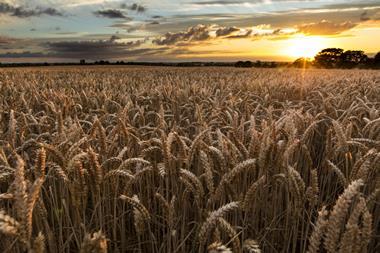
Frontier Agriculture is expanding investment in its sustainability programmes for wheat, grain and oilseed rape growers following a successful 2025 season.
More than £4m was delivered to over 800 farming businesses last year according to the first Harvest Impact Report published by the UK crop production and grain marketing firm, which is 50:50 owned by Associated British Foods and Cargill.
The report brings together the outcomes of its nine programmes aimed at supporting climate resilience and mitigation, improving input efficiency, and enhancing biodiversity. Programmes were delivered in partnership with bakery manufacturers such as Warburtons and Pladis, ingredients suppliers including Whitworths, Allied Mills, and Boortmalt, and other major food and drink companies like Cargill, PepsiCo, and Unilever – funding came via international sustainable agriculture investment fund, Livelihoods.
The Frontier report highlights how growers supplying wheat, malting barley and oilseed rape into supply chains were rewarded for delivering a range of sustainability actions. Collectively, the programmes spanned over 373,900 tonnes of footprinted grain across more than 57,000 hectares, equivalent to the land mass of the Isle of Man. More than one million tonnes of crops have been harvested through Frontier’s programmes since 2020.
As well as highlighting the financial value provided to participating farms, the report captures important progress across key areas including carbon emissions, regenerative agriculture adoption, nutrient management and biodiversity. Together, the findings demonstrate the value of collaboration between growers, supply chain partners and Frontier in building a more resilient and sustainable future for UK arable production, it said.
“As expectations of agriculture continue to evolve, it’s increasingly important that the value being created on farm is recognised and rewarded,” commented Frontier sustainability technical lead and report author, Rob Nightingale.
To ensure programme outcomes are measured consistently and transparently, Frontier works with specialist partners Yagro, Downforce and the Cool Farm Tool.
“One of the clearest insights from this year’s data is the significant role nitrogen fertiliser plays in the carbon footprint of wheat production,” noted Nightingale.
“While nitrogen remains essential for producing high-yielding crops that meet quality requirements, the report highlights the opportunities we have today – and those emerging in the future - to reduce emissions through improved nutrient efficiency and low-carbon fertiliser technologies. The challenge is finding ways to lower emissions without compromising productivity, and that’s where some of our programmes are increasingly focused,” he added
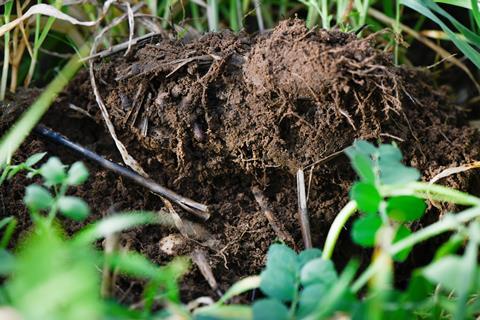
The report also explores the role of regenerative agriculture in helping to future-proof arable production. Recognising that different farms, soils and cropping systems require different approaches, Frontier’s programmes focus on practices aligned with four key principles: reducing soil disturbance, keeping soils covered, maintaining living roots and increasing the diversity of rotations within farming systems.
Off the back of its 2025 programmes, Frontier has expanded its harvest 2026 sustainability portfolio to support 850 growers across 64,000 hectares; covering approximately 425,000 tonnes of wheat, barley and oilseed rape. More than £4.5m has been made available to growers through participating supply chains.
“We’re also expanding our approach beyond individual crops and practices to look at the whole farm,” revealed Nightingale. “By working with our customers and partners to support change across multiple parts of the farming system at the same time, we believe there’s an opportunity to deliver even greater benefits for growers, supply chains and the environment.”
Read: From interest to action: can regenerative agriculture go mainstream in bakery?
Further help is at hand to help support arable farmers, including accelerating the uptake in regenerative practices, at time when extreme weather has resulted in three poor UK harvests in a row at an estimated cost of £5bn in lost revenue.
Earlier this year, Wildfarmed team up Lloyds Banking Group to create the Food & Nature Resilience Fund, while Lloyds and Nat West Bank both reinforced their support for arable farmers.
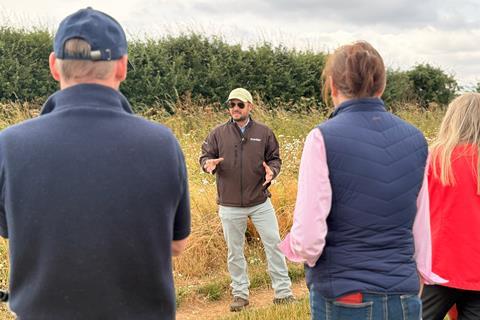
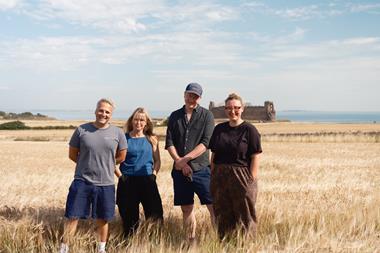
In addition, a new annual campaign called British Regenerative Farming Week was launched in September. As part of this, British Baker was invited to visit East Downs Farm in Chipping Norton, Oxfordshire, one of the members of The Green Farm Collective. Check out our video on LinkedIn featuring interviews with farm managers Michael Kavanagh and Tim Parton and Eurostar Commodities account manager Debbie Smythe.







No comments yet