


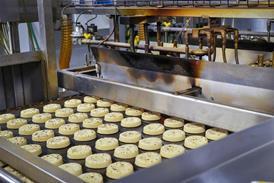






Britain’s bakers are facing a challenge that has little to do with recipes and everything to do with the weather.
The recent summer was the hottest on record in the UK, with the Met Office predicting even more extreme temperatures in 2027 due to the El Niño event developing over the Pacific Ocean.
In an exclusive Op-Ed for British Baker, bakery consultant Lucas Fussnegger explains how UK manufacturers should be wary of rising temperatures in their flour while suggesting solutions already in play elsewhere in Europe.

“As summers grow hotter and more unpredictable, the temperature at which flour is stored has quietly become one of the biggest variables affecting product consistency, and one of the most overlooked.
Flour is far from an inert ingredient. Its performance in the mixer is directly tied to its temperature. Warm flour behaves differently to cool flour: fermentation speeds up, gluten development shifts, and doughs that were perfectly calibrated in spring can behave unpredictably by the height of summer.
For bakeries running high volume, tightly timed production lines, even a few degrees of variation can mean the difference between a consistent bake and a costly batch of rejects.
“The weather shouldn’t be allowed to have the final say”
This isn’t a hypothetical problem. Demand for bakery products continues to climb, and with it the pressure on producers to deliver a uniform product twelve months a year, regardless of what’s happening outside.
At the same time, the climate is shifting: heatwaves that were once rare are becoming a regular feature of the summer calendar, and silo storage built decades ago was never designed with today’s temperatures in mind. We’re increasingly seeing this become a real issue for bakeries in England, much as it already has been for years further south.
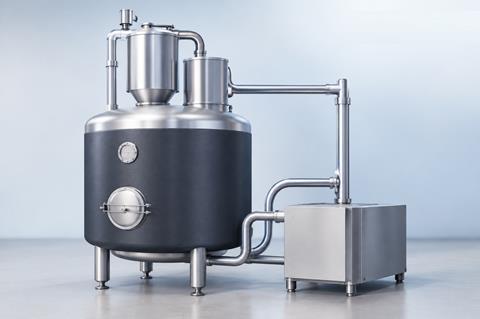
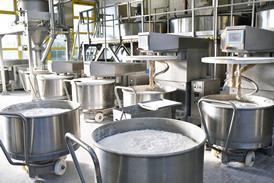
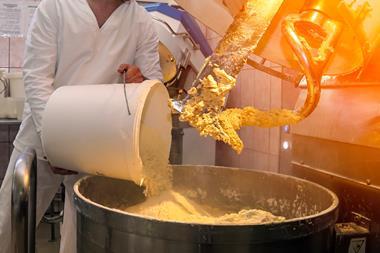
There are, however, ways to tackle the problem at its source such as the system developed by Dutch-based equipment supplier Technology Unlimited. It sees flour drawn directly out of the silo, passed through a cooling system and returned, bringing it back down to the temperature a bakery needs before it ever reaches the mixer. The system is built for serious throughput, capable of cooling up to 2,500kg of flour per hour, so it can keep pace with continuous production rather than slowing it down.
Large bakeries in Spain, where summer heat has long been a daily operational reality, are already running this system as standard. Their experience shows what’s possible: flour temperature taken out of the equation entirely, whatever the thermometer outside is doing.
The benefits go beyond avoiding a bad batch. Stable flour temperatures mean predictable fermentation times, easier planning across shifts, and no need to constantly recalibrate recipes around the season. For an industry built on consistency, that’s exactly the point: the weather shouldn’t be allowed to have the final say.”







No comments yet