










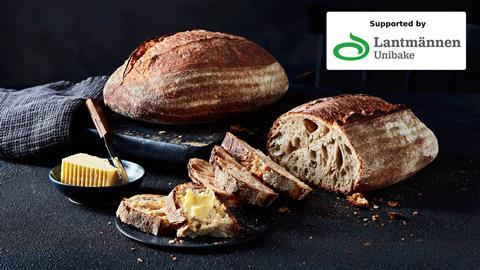
Sourdough’s rise from artisanal favourite to supermarket staple is complete.
But with sales soaring, ranges expanding, and operators working hard to prove their quality credentials, the nation’s retailers aren’t resting on their laurels. Indeed, it seems the battle is only just beginning.
Supermarket sourdough has entered “a new phase of maturity” according to Lindsey Hills, head of category & insight, Lantmännen Unibake UK. “What began as an artisan quality cue has evolved into a mainstream fixture across both in-store bakery and wrapped bread, and sourdough has become the benchmark against which consumers judge the quality of an entire bakery range,” she says.
Hills points to a 30.2% rise in the number of stores stocking sourdough as retailers dedicate more space to the products which generally carry a higher average price point than standard loaves.
“Retailers are no longer competing simply on stocking sourdough; they’re competing on the quality, authenticity and versatility of the sourdough products they offer,” she adds.
There’s certainly plenty of choice for consumers as exclusive analysis by British Baker has revealed a total of 299 listings for sourdough loaves, morning goods, and flatbreads across six supermarket websites – Asda, Morrisons, Ocado, Sainsbury’s, Tesco, and Waitrose. This represents 198 individual products in total (reflecting the presence of branded products on multiple websites). Perhaps unsurprisingly given its lack of brick-and-mortar sites, Ocado has the largest range with 84 products listed followed by Tesco with 54 and Sainsbury’s with 45 (see table below). This list also includes products made and labelled as ‘with sourdough’ in line with the Sourdough Code of Practice.
New products, refreshes, and higher sales of existing products have all contributed to a 56% volume growth in supermarket sourdough over the past year [NIQ 52 w/e 11 July 2026]. This, explains Kenny Martin, senior category manager at Finsbury Food Group, is “particularly significant because it reflects real consumer demand, not simply inflation-led value growth”.
What’s more, Martin adds, is it comes at a time when many other bakery categories are finding volume growth harder to achieve. The good news is there’s plenty of growth still to be had with around 25% of households buying sourdough or pre-packed artisan bread.
Brands vs own label
Both brands and own label are benefitting from this, although some believe brands have the upper hand (even if there were more own-label options in the market with 105 own-label sourdough products found on the retailers’ websites vs 93 branded ones).
“Brands are playing a particularly important role in driving category growth. They have helped bring visibility and momentum to sourdough, especially through standout formats and distinctive ranges,” explains Martin at Finsbury Food Group which produces sourdough and other bakery items for retail and foodservice markets at its Nicholas & Harris site in Salisbury.
He believes brands are doing “a good job of standing out” thanks to their use of bold colours and packaging. “In a busy bread aisle, that ability to disrupt and attract attention matters,” he adds.
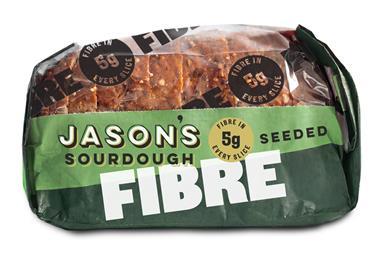
You can’t talk about bright colours and sourdough without mentioning Jason’s Sourdough.
The brand has seen sales skyrocket of late. In 2025 it became Britain’s third biggest bread brand, after more than doubling its sales to overtake Kingsmill (which suffered a 31.5% drop in value). Since then, with its newest factory in Glenfield, Leicestershire behind it, Jason’s sales have surged again with latest figures putting it at £165m [Nielsen w/e 8 August 2026].
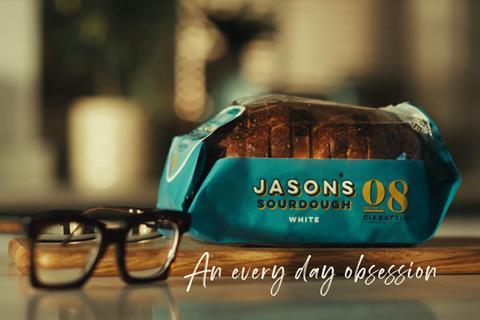
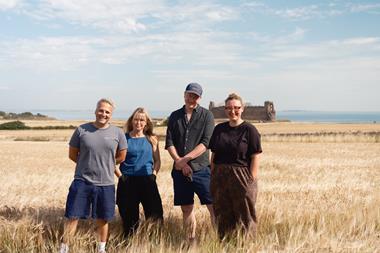
This gives it a “strong platform to continue expanding our range and reach”, says Jason Geary, master baker at Jason’s Sourdough. “We’re continuing to invest significantly in our sourdough production capacity to keep pace with growing consumer demand within this competitive market.”
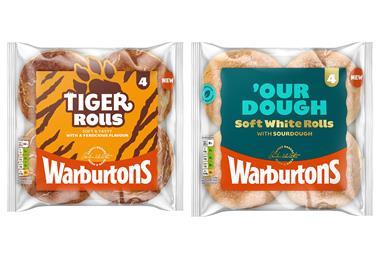
Notably, Jason’s Sourdough is the only brand with a presence across all six retailers analysed by British Baker – Warburtons narrowly missed out on this achievement as its ‘Our Dough range, made with sourdough, isn’t available on Waitrose’s website although its non-sourdough lines are listed.
Jason’s did have a head start though having hit the market in 2020 whereas Warburtons ‘Our Dough was launched last summer. The Warburtons line-up was expanded last month with Thin Bagels and Soft White Rolls, as well as a Tiger Bloomer with Sourdough which sits in its standard range.
Britain’s biggest bread brand isn’t the only one to capitalise on demand for sourdough over the past year. Hovis ventured into the market with a duo of sliced cobs in October, preceded by Brace’s in July which rolled out a four-strong range of sliced sourdough under brand Ernest 100%. The protein variant was dropped by Brace’s a few months later alongside a packaging update which saw it move from wrapped plastic to paper bags with plastic windows in the centre.
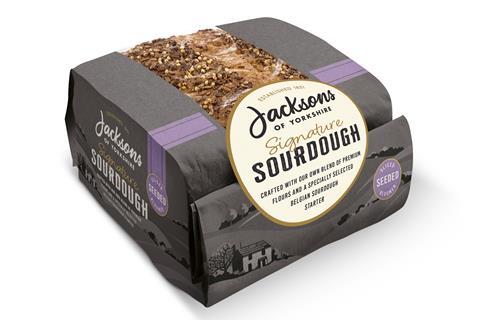
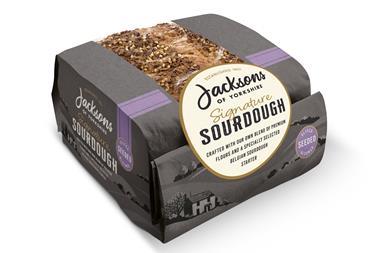
The sourdough surge has continued in 2026 with Jackson’s entering the market thanks to a multi-million-pound investment in its manufacturing capacity and capability. And, although not new to the sourdough arena, Wildfarmed extended its reach with a sliced Simply Sourdough loaf in June.
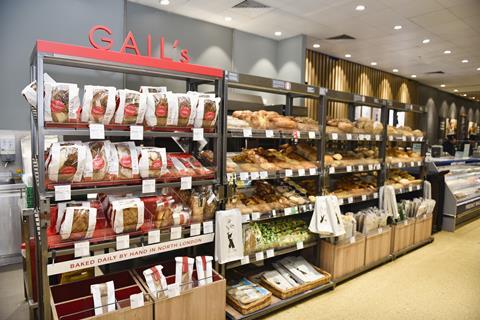
There is often a distinction between branded lines in pre-packed bread and in-store bakery (ISB) where own-label options take the lead. But not in Waitrose. In fact, the retailer has leaned into the power of brands to enhance its ISB offering with the likes of Gail’s and Wildfarmed having a presence there. One which is clearly marked through branded bays and packaging. Products available include Gail’s Potato & Rosemary Sourdough, Waste-Less Sourdough, and Bruern Farms Sourdough.
These products are also available on Ocado which serves up several branded products with limited availability on other retailers’ online offering. This includes Bertinet Bakery’s line-up featuring Malted Wheat Sourdough and Seven Seeds & Grains Sourdough, as well as products from Celtic Bakers, Ole & Steen, and Virtue.
Owning own-label
It’s a bit more difficult to track the movement in own-label sourdough product development, but one thing we do know is that quality has been on the agenda.
Hills at Lantmännen Unibake UK says retailers are “investing heavily in their sourdough ranges, refining recipes, innovating with inclusions and flavours, and broadening their format propositions”.
“Alongside launching new products, many have refreshed existing recipes, refined fermentation methods and expanded into seeded, wholegrain and rye variants, as well as convenient pre-packed sandwich loaves, rolls and food-to-go formats,” she adds. “The focus has shifted from simply increasing the number of sourdough products available to creating differentiated, premium propositions that appeal across multiple shopping missions and consumption occasions.”
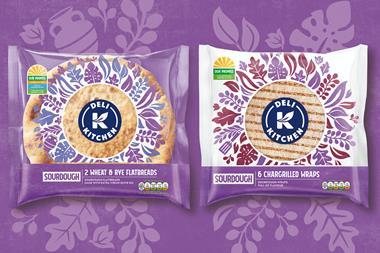
Tesco, for example, recently undertook a significant reset of its premium own-label bakery range with 22 new products rolled out and several recipes reformulated. Although not all lines were sourdough focussed, the latest additions to the Tesco Finest line-up included Fruited Sourdough, Real Sourdough Crumpets, Chocolate Sourdough Crumpets, and Sourdough Bagels.
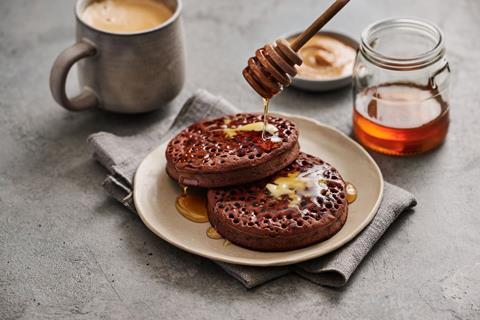
Fermenting formats
This represents another growing area of interest in the sourdough category, expansion beyond loaves. It’s not new, but it is certainly gaining pace both in and away from the bakery aisles.
“You can now get sourdough bread sauce, fish fingers and even chicken kievs that are sold as own-label top-tier products, helping to add value and make them a more ‘special’, premium option,” says Lydia Baines, marketing manager for bakery at Puratos UK.
“Baked goods that naturally lend themselves towards sourdough are loved by consumers – we have already seen pizza, crumpets and doughnuts fly off the shelves, and we expect to see a boom in sourdough pastries and items such as English muffins, flatbreads and soft rolls,” she adds.
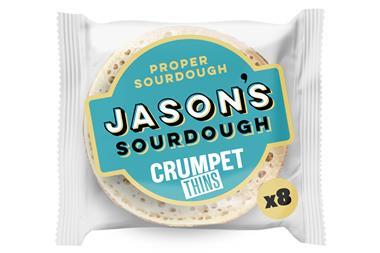
Looking at own label ranges, crumpets and bagels seem to be the products of choice for sourdough iterations with M&S, Waitrose, Sainsbury’s, and Tesco selling them. This theme continues in the branded arena with Warburtons and Jason’s offering up sourdough crumpets while Fitzgeralds, Good Grain Bakery, My Gluten Free Bakery, New York Bakery Co, and Warburtons do bagels.
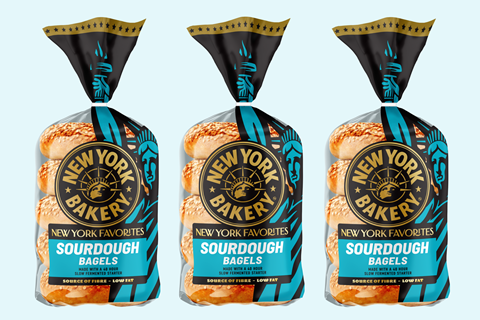
Loaves continue to make up the bulk of the category, but that doesn’t mean things are static.
Sales of tinned sourdough loaves have more than doubled over the past year [NIQ 52 w/e 11 July 2026] most likely as a result of their usability and familiarity to consumers. Pre-sliced variants fit into consumers lives, working for sandwiches or toast. What’s more, they fit into standard toasters without the need for flipping like their boule counterparts.
“Making sourdough easier to use and to toast will help bring in shoppers who may be interested in the category but have not yet fully converted,” adds Paul Bown, development process manager at Finsbury Food Group. Tinned loaves also work for consumers who “do not want a smaller half boule or who find traditional sourdough less convenient in terms of cutting the loaf and storing it”.
It also highlights a key shift in the way consumers are using sourdough. Once preserved for special occasions, weekend brunches, and meal accompaniments, many are using it as an everyday option.
Traditional boules, notes Lindsey Hills at Lantmännen Unibake UK, “remain an important quality cue” for the category but she says growth is increasingly coming from bloomers, sandwich loaves, baguettes, rolls and premium sandwich carriers that extend sourdough into breakfast, lunch, food-to-go and evening meal occasions.
Authenticity climbs the agenda
Consumers want versatility and exciting new sourdough options, but they also want authenticity, quality, and potential health benefits according to Roy Parton from the Association of Bakery Ingredients Manufacturers, which took the lead on the aforementioned Sourdough Code of Practice (CoP).
“The aim of the CoP is to give proper recognition for and preserve the integrity of the term ‘sourdough’ as a product descriptor, and to stop claims such as ‘naturally leavened’, for example, being used on products that do not meet the ‘live-sourdough-as-principal-leaver-bar’,” he explains.
Alongside naming conventions in line with the code depending on the product and its manufacturing process/ingredients, consumers are being given other information to add to quality perceptions.
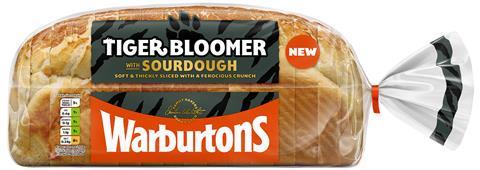
“Retailers are extending fermentation claims on pack, with phrases such as ‘16-hour ferment’ and ‘naturally leavened’,” notes Parton. Another part of the authenticity story is the age of the starter; an additional nugget of information being served up to shoppers.
That doesn’t mean ‘made with sourdough’ will be going anywhere. In fact, Lydia Baines at Puratos UK expects it to increase in popularity. “Within the next few years, we expect sourdough to become the baseline for breads, with most varieties having a ‘made with sourdough’ claim,” she says. “Retailers will likely be looking at how to navigate this change with their core portfolio, to see how they can premiumise everyday formats with inclusions, global inspiration and seasonal offerings.”
Spotlight on San Francisco sourdough
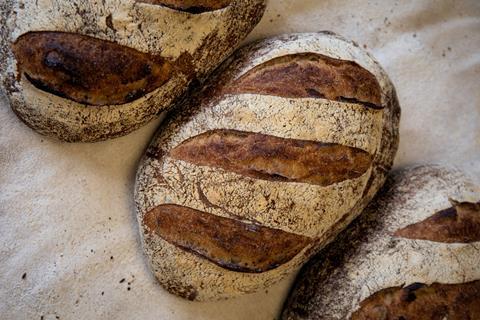
One such area serving up inspiration is San Francisco. The US city and county is synonymous with sourdough thanks to the likes of Tartine Bakery, although its roots go much further back to the Gold Rush era of the mid-1800s, when French bakers brought sourdough techniques to the region. The bread’s distinctive tangy taste comes from wild yeast and bacteria, particularly Lactobacillus sanfranciscensis, which thrive in the Bay Area’s climate.
There’s a growing presence of San Francisco-style sourdough in the UK, points out Hills at Lantmännen Unibake UK, who says it has become “an important premium cue within the category”.
Asda, M&S, Sainsbury’s, Tesco, and Waitrose are among the retailers to embrace this. Priced at £3.30 for a 600g loaf, Tesco’s San Francisco Style Sourdough Loaf is described as being made with a 30-year-old starter and ‘slowly fermented to create a deep, tangy flavour and crisp, golden crust’. Waitrose offers an own-label San Francisco-style sourdough boule and bloomer, as well as Gail’s San Francisco Sourdough which is described as the ‘quintessential white craft sourdough’.
Many of the tactics already in play will contribute to further growth for the supermarket sourdough category, both via in-store bakery and wrapped bread aisles.
“The biggest opportunities for growth in sourdough lie in continuing to broaden the category through innovation while educating consumers on what sets authentic sourdough apart,” says Jason Geary. He believes there is an opportunity for brands to better communicate the “craft, quality and fermentation processes behind authentic sourdough”.
“Combining innovation with greater awareness around ingredients and production methods will allow the category to continue attracting new shoppers while strengthening its position with existing sourdough consumers,” he adds.
ADVERTISEMENT: LANTMÄNNEN UNIBAKE UK

Lantmännen Unibake, your bakery partner of choice
With more than 140 years of baking heritage, Lantmännen Unibake UK is a specialist in frozen bakery manufacturing, supplying high-quality, inspired products to retail and foodservice operators across the UK by combining tradition with modern production techniques.
At Lantmännen Unibake UK, we incorporate market and consumer insight into the way we support our customers. Our ready‑to‑bake frozen pastries and speciality breads reduce labour and waste while delivering consistent freshness and quality. Our solutions help operators turn insight into commercial advantage.
Visit Lantmännen Unibake UKfor more information.






No comments yet