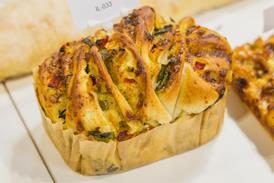
Traditionals with a twist Chelsea Buns
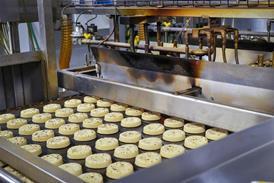
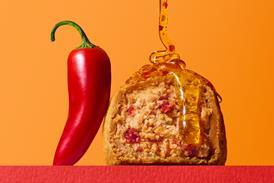
by Fiona Burrell- Published: 26 February, 2010Chelsea Buns were originally made in London in the early 1700s. They are a sticky, sweet treat and are either finished with glacé icing or sugar syrup. They usually contain dried vine fruits, mixed peel and mixed spice. The method for Chelsea buns can be used with all sorts of other fillings, both sweet and savoury. This recipe uses almonds and apricots, but you could use chocolate and dried cherries, pecan nuts and dried peach or cranberries and orange. Try making a savoury version using some Parmesan cheese, basil and roasted strips of pepper marinated in garlic flavoured olive oil. The buns can be baked side by side on a baking sheet, so that they have to be pulled apart or baked in a round cake tin. The apricot glaze gives a lovely shine and a sweet, but tangy, finish.
Letter
- Published: 26 February, 2010I enjoyed reading Tom Herbert's report from the Real Bread Conference, but I recently returned from a conference on Quality and Safety of Grain Crops and Foods, in South Africa. There, the availability of wholesome, reasonably-priced bread from plant bakeries using the Chorleywood Bread Process makes the difference between being able to put sufficient food on the table for your family or not.
Trade snapshot: a view from Sigep 2010
- Published: 26 February, 2010By David Mizon of Pin Point Training & Consultancy
Brand clinic: Good pack design
- Published: 26 February, 2010Don Williams, CEO of brand specialist Pi Global, says a real-world picture of your target audience is key to effective pack design
Letters: What is a 'craft baker'?
- Published: 12 February, 2010Let's define why we offer value
Nut store: Hazelnuts
- Published: 12 February, 2010Also known as cobnuts and filberts, hazelnuts are grown in Europe and America. Inside the shell, the nuts are encased in a dark brown, slightly bitter skin. This is usually removed before it is used in cooking. Put them on a baking sheet in a medium oven for about 10 minutes before rubbing in a clean teatowel to remove the skins. They are particularly good if they are roasted before use, but if they are to be used as ground hazelnuts, always allow them to cool down before grinding, as they can become rather oily, which will have an adverse effect on the cake, meringue or biscuit.
In my world
Stephen Hallam is MD of pork pie-maker Dickinson & Morris, and an advocate of artisan skills, regularly demonstrating the hand-raised pie tradition at Ye Olde Pork Pie Shoppe in Melton Mowbray- Published: 12 February, 2010I have long since lost count of how many articles I've read, or presentations attended, over the past 24 months concerning skills levels within the baking industry. The message has always been fairly clear and consistent: the number of people who have core and practical baking knowledge are becoming few and far between and, overall, there is a serious lack of the basic craft skills that underpin all bakery production. Until this is universally addressed, the industry will be heading for Armageddon.
Brand Clinic: Passion versus P&L
- Published: 29 January, 2010Brand owners spend their lives trying to increase the size and value of their brands. Of course they do, it's business and what matters most in business is profit and loss (P&L). What can happen, though, when the P&L becomes the primary focus of any company providing goods or services, is that quality of output is compromised. And when the passion is transferred from the brand to the balance sheet, the brand can suffer.
Nut store: Pecans
- Published: 29 January, 2010The pecan tree is indigenous to North America and the nut it produces has a smooth shell, but an appearance like a long walnut inside. Like the walnut, it is high in omega 6 fatty acids. Also called hickory nuts, pecans are best-known as the main ingredient in pecan pie, but can be used in many other baked goods. They go particularly well with chocolate and are a good addition to chocolate brownies, chocolate and pecan pie or chocolate and pecan cookies.
Your say: Letters
- Published: 29 January, 2010As much as I look forward to my delivery of British Baker and have welcomed its change to include much more content that is relevant to smaller, independent bakeries, there is still one matter which I do not understand: what is your definition of "craft baker"?
In my world
- Published: 29 January, 2010If even one, tiny, undeclared enzyme in your body is interested in the future of bread and baking, then your internal buzzer will be going off. This alarm trills louder and louder until answers are found. At the end of last year, I attended the first Rise of Real Bread Conference. A veritable fermenta levain of well-cultured interested parties assembled, a throng of approximately 150 souls, each having parted with £38 or at the very least a whole Saturday, to consider the future of bread.
In the market for... Long Fermented Sourdough
- Published: 15 January, 2010Sourdough is typical of artisanal baking: the art of encouraging wild yeast cultures to ferment just at the right time and for so long you could probably read War and Peace. I have worked with many bakers who are so proud to boast of starters that have been in the family business for generations.
The varieties of sourdoughs are unique, depending on the catalyst starter, type of flour used and also geographical location. All these factors will impact on flavour and texture. San Francisco Sourdough is a good example of this, as the wild yeast culture Lactobacillus sanfrancisco in that region gives a sharper, more acetic punch than a typical French levain.
The recipe below is made with an authentic wild yeast starter culture called crème de levain, a ready-made live starter culture ideal for artisanal loaves.Nut store: macadamias
- Published: 15 January, 2010Macadamia nuts are native to Australia but are also cultivated commercially in Hawaii. They are very difficult to crack out of their shells, but are well worth the effort. They have a creamy flavour and crunchy texture, which goes well with semi dried fruits such as cranberries, cherries and blueberries. Although low in carbohydrate, they are quite high in fat. They work well in biscuits such as White Chocolate and Macadamia Nut Cookies and can also be added to Brownies and Blondies instead of walnuts.
Fit for purpose: Style can't be everything
- Published: 15 January, 2010Richard Hamilton of HamiltonBIG, a creative retail and brand consultancy, reflects on style and substance in shop design
The look of the store obviously needs to reflect your own personal ambitions and being guided by a store designer is certainly of benefit. But of course I would say that.
To begin with, however, you must have your own idea of what style your operation can work within and how you want to be perceived. The role of a good designer is to translate your words into images and ideas, which can be developed into a 3D built store.
One point to constantly bear in mind when thinking about a look is to remember that, at all times, your eyes may well see differently to those of your customers, as design is inherently subjective. Some operators opt for a fashion-led design approach, which is exciting, fresh and fast-moving, but also expensive and short-lived. This requires you to be prepared for regular refreshes and the need to constantly stay in touch with what's new.
The healthy and hearty approach was in vogue a couple of years ago, with Daylesford leading the farm shop revolution. Urban minimal was pioneered by Pret A Manger in the 1980s and EAT softened this with a highly styled timber-and-white approach a decade or so later.
However, the classic approach can be of great success; take Caffè Nero, a classic Italian coffee house, which, in my view, easily outranks Starbucks' watered-down American approach. It's not just the pale blue contrasted with the rich mahogany-style timber, it's also what's behind that façade that adds to the feeling of quality: the coffee, the authenticity and, most importantly, feeling secure both in store and in brand.
The emotion of a store is the ultimate challenge and the look is part of determining this. Once you've encouraged customers through the door, fed them well, offered value for money and they've subliminally recognised the store is clean that's when the emotion needs to kick in.
The store needs to offer more than your competitors, it has to feel safe and conjure positive associations in the customer's mind. The look has to have broad appeal without being bland or niche. It's a fine line but, executed correctly, it is one of the ingredients of success.
richard@hamiltonbig.com
l Next month: how to allocate your budgetIn my world
- Published: 15 January, 2010Umer Ashraf is a young entrepreneur who owns the Glasgow-based iCafé chain of shops. He recently opened smoothie and juice bar Paradise Bay in Oban, on Scotland's west coast
Book Review: More Baking Problems Solved
- Published: 20 November, 2009Stanley Cauvain, Linda Young
Woodhead Publishing, £135Fit for purpose: Part 5 - store format
- Published: 20 November, 2009Richard Hamilton of Agile Space elaborates on his step-by-step guide to revamping your shops
Is there a perfect store format or is flexibility the key to success? The initial format of a store is usually determined at the start-up of any business and is dictated in part by premises, along with product offer. However, evolution can take your brand to new customers if it evolves with flexibility in mind.
Take Pret A Manger, for example. This started out in Victoria, London in the late 1980s as a deli-led sandwich shop, offering a similar concept to the current Philpotts offer. The initial store and operation was designed with large chiller displays packed full of fresh produce, enabling customers to select their own filling and witness their sandwich being made fresh.
As Pret developed from one store, the two founders, Julian and Sinclair, began to realise what was working and that they had to strike a balance between losing the freshly made appeal versus valuable store space initially used for queuing. The sandwich prep moved to a back-of-house kitchen and the product range, although less tailored to individual customers, was now a core range, pre-packaged in display cabinets enabling a rapid transaction and increased turnover.
Take-away sales replaced the deli and the natural evolution was to stick in some stools. Eat-in could be defined as being less luxurious than a café, but for many this begins, without thought, as a row of stools against an eating bench in a window. Like many retailers, the stools were a great success for Pret, as customers could sit and enjoy their sandwich while being a living window display. However, as new competitors hit the high street, Pret recognised the need for good coffee and the value it could add if executed properly.
Once coffee was fully introduced, the first café format was launched in Putney in the early 2000s and sat alongside a full range of stores from take-away to eat-in and, eventually, a freestanding kiosk. Each format worked, each format sold a core range of products, had a kitchen, sold good coffee and, critically, held true to the initial ingredients that made that first store a great success.
l Next month: what a store should look likeLetters
- Published: 20 November, 2009These are interesting times for those involved in the baking industry today. British Baker is reporting on some challenging issues and is clearly working for a response from officials, which industry can work with.
There are many products using high quantities of fat. People should be encouraged to moderate consumption. Reducing fat levels/quality of fat is a wholly inadequate solution. These products are supposed to be a "treat" not just "ordinary".
Regarding salt: it is difficult for bakers to come to agreement on this issue. Ian Barrett's letter (BB, 23 October) makes some interesting points. However, his argument is fundamentally flawed. We are talking about salt levels in the finished product. Using Baker's Percentages, many a recipe is formulated using salt at 2% on flour. Personally, I have been adding salt at 1.8% for over 10 years. I am sympathetic to trying to get this down to 1.5%, but I believe in long fermentation; I like the toughening effect of the sodium ions on the gluten in the dough; it helps to achieve full hydration; control of fermentation is implicit; and finally, yes, flavour is better. But most bread of today needs high salt to overcome lack of flavour. If you consult the work of Professor Raymond Calvel, it is obvious that salt levels in bread dough have increased significantly since the emergence of "no-time" dough.
Salt levels and 'bad' fat are part of a big picture; so too are all the hidden substances that never get as far as the label. My challenge to industry is: declare these! If the Food Standards Agency starts to get tough on this as well, today's bread industry will really have to change.
Andy Smith, bakery lecturer, Newcastle College and bakery consultantSpice rack: Aniseed
- Published: 20 November, 2009Aniseed grows in the Mediterranean in sheltered, sunny spots. The plant produces flowers similar to parsley. It bears a strong resemblance to dill, fennel, coriander, cumin and caraway, all of which have a slight liquorice flavour.
The seeds are oval, brown and ridged and are harvested from the plant in the autumn. They should not be confused with Chinese star anise which, although similar in taste and aroma, is not botanically related. Aniseed is available commercially, both as seeds, ground and also as oil. It is traditionally found in baked goods from around Europe.
At Christmas time in Germany, Springerle biscuits are made using flour, eggs, baking powder and icing sugar.
The ground aniseed is added either to the mixture or sprinkled on the baking tin. They have special rolling pins or moulds to press designs on the biscuits before they are baked. Aniseed can be added to breads, muffins, biscuits and tarts.In my world
- Published: 20 November, 2009Tom Herbert is a fifth-generation baker and director of Hobbs House Bakery, a multi-award-winning craft bakery, based in Gloucestershire
Brand clinic: Can government hurt brands?
- Published: 06 November, 2009Brands are sensitive, delicate things even the most robust ones. Treat them inappropriately and without the care they need, and they'll suffer. Remember Mr Kipling, when the packaging forgot about the brand? Remember Tropicana in the US recently, when a design disaster caused sales to plummet? Some memories might stretch back to when Babycham killed 'Bambi' and repackaged it in a trendy blue bottle. And who cannot remember the Coke Classic debacle or the awful squeezy Heinz Ketchup bottle, which collapses in use, leaving at least a quarter of the product inaccessible? How that got to market is a total mystery! I can just picture the meeting that sold that design to the client! It's easy to excite with 'innovation'.
There are countless examples of brands suffering at the hands of change, whetherit be design, advertising or product formulation. Some of these wounds are self-inflicted, but some can be the result of nanny government interference in product functionality. Part of a food brand's equity is its taste, smell and texture.
So when the government tells manufacturers to remove fat, remove sugar or, for example, the recent FSA demand to cut salt in bread give them half a chance and they'll remove everything but water, because, let's face it, everything is bad for us and will kill us in the end it inevitably has a knock-on effect on the consumer's experience of the brand. Brands with signature tastes rely on consistency of delivery.
What amazes me is this constant haranguing of the food market when there are products out there that everyone, especially government, knows are seriously and undeniably dangerous, wreck lives and actually kill thousands of people every year. We all know what they are! Don't get me wrong, I'm absolutely not calling for them to be banned because I firmly believe that people should be educated about potential risks though it's almost impossible to find anything that isn't a potential risk but be permitted to actually make their ownlife decisions.
Surely choice must be left to individuals not some bureaucratic, holier-than-thou quango, made up of people who seem to inhabit a different universe to mine. But instead of tackling the really serious problems presumably because of the revenue they generate they seem to tick their little boxes by finding easy targets because they are easy and, in that way, they can be seen to be doing something anything.
The thing that terrifies me is that we all just roll over every time we're instructed by our (in)glorious leaders. Isn't it time manufacturers took a real stand against bullying and strike a blow for freedom of choice and real-world common sense?Spice rack: Black pepper
- Published: 06 November, 2009Peppercorns are the fruit of a flowering vine grown in South India. The peppercorns are harvested and dried before use. Different varieties available are green peppercorns, which are the immature fruits, white peppercorns, which are the centre of the peppercorn with the black husk removed and black peppercorns, which are the whole dried fruit and, as such, the type with the most kick. Many savoury recipes the world over contain salt and pepper, but in some recipes it is pepper that has a starring role. You would expect to find pepper in savoury baked recipes, for example foccacia with cracked black pepper and rosemary, black pepper and cheese scones and black pepper and parmesan biscotti, but it can also be included in sweet baked recipes, particularly when combined with other spices. The Scottish Hogmanay favourite, Black Bun, is a pastry case packed with dried fruit and flavoured with spices, including a half teaspoon of black pepper. Black pepper also mixes well with cinnamon and cloves in Spice Cake.
Your say: letter
- Published: 06 November, 2009Reading all the latest articles about salt in bread was purely academic to me until two friends came to stay. They asked us not to put any salt in our cooking as they both had high blood pressure.
I thought that there were just three main reasons to use salt in bread: flavour, control of fermentation and getting the dough through the plant.
As regards flavour, the FSA's demand for a maximum amount of 1g per 100g of bread seems perfectly reasonable. If one thinks carefully about it, most bread is eaten in conjunction with a filling, so the predominant taste is that of the other food.
In any case, these excess amounts of salt did not start until the 1950s. A hundred years ago, the most common amount of salt used was 3.5lb to 3.75lb per sack of flour. This is at, or below, 1g per 100g of bread.
The point being missed is that some bread is so overdeveloped that some describe it as "cotton wool bread", while other bread breaks up nicely when it is consumed.
Turning to the other issues, control of fermentation was a factor in the days when we made doughs that lay in the trough from two to 10 hours, according to need. But with today's no-time processes, it is irrelevant.
Lastly, great play is being made of the difficulty of getting dough through the plant with salt at this level. This is absolute rubbish, as there is already plant bread with salt at this level on the supermarket shelves.
Ian Barrett
Berkhamsted, HertsIn my world
- Published: 06 November, 2009Fond as I am of jaunty ribbon, there's only one kind I want to see in my business the blue stuff, prettily embossed with our Judges Bakery logo, rather than the giant rolls of red tape, which everyone from the local council to Brussels via the Food Standards Agency (FSA) wants to macramé around us, making trading ever more challenging.
Because now, we're told, the 'food police' aka the FSA want to limit the amount of salt and saturated fat in foods (including bread): yet more ways to make it harder for us to do what we do, in an already challenging trading climate. I don't know if you've tried salt-free bread lately, but on the incredibly rare occasion our bakers have accidentally produced a batch without this vital ingredient, a) it doesn't rise properly and b) you wouldn't want to eat it anyway, because it's basically tasteless. In addition, except in the case of some people with high blood pressure, there's no evidence that salt is harmful; indeed, sodium allows the body to take in fresh fluids, eliminate fluid waste and stay in balance, maintaining blood pressure, avoiding dehydration and keeping the kidneys healthy.
When it comes to fat, I have more mixed feelings being against the use of hydrogenated fats (which contain trans-fats, with their negative implications for health) and worried about the environmental impact of trade in palm oil, which is the practical alternative ingredient. We get around this at Judges by using a small amount of organic palm fat, which must to comply with organic regulation come from sustainable plantations, rather than rainforest areas that have been destroyed in favour of a palm monoculture. But at the end of the day, I'm against a 'nanny state' that imposes yet more rules on the people. My own theory is that it's all a clever distraction from the disastrous way the government handles the big stuff such as the economy and wars, or the spread of MRSA in hospitals, which kills more people than a little extra salt or even hydrogenated fat ever will.
It's unlikely that the FSA guidelines will become mandatory. But if they do, we'll all have to reformulate our recipes, to comply with all of the extra man hours and expense that entails. Just as we're all forced to splash out on 'Spills' signs and don't-trip-over-the-step yellow-and-black tape and super-sensitive thermometers to take the temperature of our chiller cabinets in order to tick an EHO box three times a day. There surely cannot be an employer in the UK who hasn't sworn at the layer upon layer of red tape we already have to comply with, muttering under their breath while perusing a 600-page Seton Health & Safety catalogue of equipment full of ludicrously expensive 'Danger' placards, stickers, protective clothing and illuminated signs.
So, am I the only one who sees red about all the extra tape that we're faced with, when all we want to do is bake good bread just like bakers have been doing for millennia long before anyone had invented the word bureaucracy?Fit for purpose: Part 4 - for the love of location
- Published: 23 October, 2009If we were to believe the overused adage location, location, location, we often assume that this is critical to success, but how important is it? When the high street was the hub of every town, location was important and people would purchase their weekly provisions from local retailers because convenience was king, bread, bacon and broccoli all easy to find and simple to purchase.
Spice rack: Cumin
- Published: 23 October, 2009Cumin is a spice that is used in many countries around the world, but in particular in India, The Middle East, North Africa and Mexico. It is also added to some European cheeses.
In the market for... stone-baked campagne baguette
- Published: 09 October, 2009The ancient concept of leavened dough dates back at least to the Egyptians, writes consultant baker Wayne Caddy.
Spice rack: Mace
- Published: 09 October, 2009Mace is the lacy, bright scarlet outer covering of the nutmeg. Once it is peeled away and starts to dry, it turns golden yellow. As blade mace, it is added to sauces to infuse flavour before being removed. Its flavour is reminiscent of nutmeg, but more delicate.
Brand clinic: Visual brand ID - science, not art
- Published: 09 October, 2009Don Williams, CEO of brand specialist Pi Global, continues his series looking at the secrets of building a strong brand
No one in their right mind thinks that a trip to a busy supermarket is fun. The purchase decision point is where the brand identity and packaging of fast moving consumer goods (FMCGs) have to work harder than any other medium in the communication mix: right next to competition; 24/7; tiny little canvases in a sea of at least 50,000 'noisy' SKUs.
In my world
- Published: 09 October, 2009David Powell, Master of the Worshipful Company of Bakers
I am often told that in this industry 'the day you stop learning, is the day you go stale in heaven!' I have no desire to put this to the test, but so far I have found this to be correct. I've also found that the rate at which we learn, and the source of the information, changes over the years.
Recette Cake with Griottines
- Published: 25 September, 2009Out with the glacé cherries, in with the Griottines. BB spotted this new ingredient while out and about at the recent Speciality & Fine Food Fair in London.
Griottines are a type of high-quality Morello cherry, the Oblachinska, found only in the Balkans, that have been steeped in kirsch to give them a distinctive and unique flavour.
To conserve the flavour and physical characteristics of the fruit, the first maceration of the cherries in liqueur is said to take place within six hours of picking. The Morello cherries are then steeped in different liqueurs for successive macerations.
The last maceration provides the final touch of kirsch, which is the hallmark of Griottines. Keylink a supplier of ingredients, equipment and packaging in the UK is the distributor.
Try this recipe idea for a succulent, moist cake. Ensure the cake is displayed in slices to reveal the Griottines within and position it as a high quality French cake. You can also use the cherries for gateaux and desserts.
Ingredients
(makes enough for six x 1.5kg cakes)
Flour1.9kg
Icing sugar1.5kg
Softened butter1.7kg
Eggs36
Baking powder6 sachets
Griottines and 36cl Griottine juice
Method
1. Cream the ingredients together to obtain a smooth mixture.
2. Grease and flour six 1.5kg loaf tins. Dry the Griottines on kitchen paper, coat in flour and fold in.
3. Bake for 5 minutes at 240°C, then reduce to 180°C and bake for about 35 minutes. Check the cake is cooked by using a skewer, which should come out clean.
4. Cool, then remove from tin. Pour the Griottines juice over the cakes.Spice rack: Poppy Seeds
- Published: 25 September, 2009Poppy seeds are cultivated from Papaver Somniferum and are used to flavour breads, rolls, cakes and pastries in Mediterranean and Middle Eastern cookery. They have a nutty aroma and taste, particularly when roasted. Poppy seeds can be added to many recipes, either as an integral part of the recipe or as a garnish that adds colour and flavour, as, for example, in a poppy seed plait, which has the poppy seeds sprinkled on the bread after proving and glazing. Their flavour marries well with citrus, so try Lemon and Poppy Seed Muffins which are finished with a lemon syrup glaze when they are hot out of the oven or make an Orange and Poppy Seed Cake, adding poppy seeds and orange zest to a sponge mix, then soaking with an orange syrup once cooked.
Fit for purpose: Part 3 - the customer journey
- Published: 25 September, 2009There is a simple rule in retail design that, for many years, has been a bit of a design myth: it's the so-called Right Hand rule. Several food retailers have adopted this rule as the starting point of creating a successful customer journey and it is as simple as it sounds.
The Right Hand rule has developed from the observation of shoppers and their natural inclination to head to the right-hand side of the store on entry. This is understood to be a comfortable and natural direction for customers and determines the position of display chillers, fridges and any other point-of-sale en route to the tills. The optimal flow should be a simple square movement moving to the right, up to the till and servery counter, moving to the left and exiting down the left-hand side of the store.
Till and servery locations vary across all stores and are inevitably determined by property factors, such as power, water and drainage. But where possible, a counter directly opposite the entrance is the best location as favoured by many chains such as Pret A Manger. This enables staff to catch the attention of customers with direct eye contact on entry to the store and, by simply adding a raised platform behind the tills, staff can communicate with anyone at the back of the queue.
What ultimately makes good customer flow is simplicity, movement and a single route with the full product range on offer and no need for retracing steps or crossing queues. Laying out products in a logical fashion, both in terms of fridges and hot cabinets in the store and planograms for product display, aids the overall flow and, in turn, creates a key element of a memorable experience ease of use.
A memorable experience is also built on other elements, such as routine, brand awareness and expectation. Marketing your brand values is simple: while customers are queuing, they're captured and have time to look. It's also good to create a dedicated space in-store for promotions. It may just be a window, but it's a place that customers habitually refer to for the latest product or store news. Finally, as with everything in retail, managing customer expectation is vital to any success. Whatever your brand values may say about your product or store, they have to be exceeded for a customer to return and spread the word.
l Next month: are corner sites the best?In my world
- Published: 25 September, 2009S-l-o-w-l-y, there are changes afoot in the baking world. And when I say s-l-o-w, that's exactly what I mean. Ever since the Chorleywood process (or 'no time dough method') was developed in 1961, bread-baking has been revolutionised, dramatically speeding up a process which had existed for millennia. Suddenly, a raft of new ingredients began to be added to a product that used to be created almost alchemically, using simple flour, yeast, salt and water: ingredients such as E481 (sodium stearoyl-2-lactylate), E472e (mono- and diacetyl tartaric acid esters of mono- and diglycerides of fatty acids), E920 (l-cysteine), E282 (calcium propionate), E220 (potassium sorbate), E300 (ascorbic acid), E260 (acetic acid) soya flour, vegetable fat and dextrose, enzymes and I could go on. However, as bakers well know, many of those hidden processing ingredients do not have to be declared on the label.
But now, there's a move to slow it all down again and to return to transparency, as well as simplicity through a Real Bread Campaign, under the umbrella of the environmental group Sustain. (For a while, it looked like there were to be two similar campaigns running simultaneously, with the UK arm of Slow Food launching a crust-thrust of their own but the two have now joined forces, with Slow Food giving Real Bread its not inconsiderable support.) The campaign is now celebrating having secured funding from the Big Lottery Fund's Local Food Scheme.
As well as pointing bread-lovers in the direction of traditionally-created loaves, there's even 'direct action' suggested by the campaign: activists can download 'warning' stickers from the internet to peel off and apply to loaves in supermarkets/convenience stores, declaring: 'This 'bread' may be made using the following: L-cysteine, fungal amylase, hemicellulase, phos-pholipase, peptidase, xylanase, protease and a whole cocktail of other hidden enzymes', and inviting 'unsuspecting' bread-lovers to join up. It's impossible to know exactly how many stickers have been downloaded, but the simple truth is that the Real Bread campaign taps into a growing desire for food to be local (ideally, 'gold-standard' real bread will be made with 20% local flour) and without unnecessary additives.
At my own business, Judges Bakery (in Hastings), we use 'overnight' doughs anywhere from 18-24 hours, allowing loaves to rise almost at their leisure with flour, water, salt, and that's just about it. (And in the case of the sourdoughs, without any yeasts other than the natural variety picked up from the very air itself). Our bread attracts customers from far and wide which is a slight 'food miles' niggle for us, but we can just about live with it.
It's almost certainly completely impractical for the entire industry to return to pre-Chorleywood days. But many customers hanker after bread 'like it used to be' with the enhanced flavour, texture and keeping power that only time, rather than additives, can deliver. Judging from the Real Bread Campaign's success, a growing number of bread-heads are waking up to the differences between 'real' bread and the factory type. And, if you ask me, about time tooIn the market for... macadamias
- Published: 11 September, 2009Prices of Ludlow's Peter Cook delivers a delicious Rye-Wheat, Macadamia and Sultana Bread for the third and final part of our special macadamia bread recipes, devised by three UK artisan bakers in association with The South African Growers' Association (see British Baker, 14 August pg 19 and 28 August, pg 16).
Spice rack: Cloves
- Published: 11 September, 2009Cloves are the dried flower bud of a tree of the Myrtaceae family and are native to Indonesia, although they are grown in other parts of the world. They are used as a spice in many cuisines worldwide.
Brand clinic:
- Published: 11 September, 2009Don Williams, CEO of brand specialist pi global, gives us the second tranche in a regular series on how to avoid the pitfalls of brand-building
In my world - the craft baker
- Published: 11 September, 2009Tom Herbert is a fifth-generation baker and director of Hobbs House Bakery, a multi-award-winning craft bakery, based in Gloucestershire
Fit for purpose: Part 2 - the first steps
Richard Hamilton of Agile Space continues a step-by-step guide to revamping your shops- Published: 28 August, 2009Before you even begin taking the first steps towards designing and fitting your bakery shop or café, it's worth considering the sustainability of the materials to be used, as eco-policies and 'green' credentials are becoming an increasingly fundamental part of business basics. Store design has had to follow suit and, to many people's surprise, it isn't all hessian and yucca plants at an inflated price.
In my world
Umer Ashraf is a young entrepreneur who owns the Glasgow-based iCafé chain of shops. He recently opened smoothie and juice bar Paradise Bay in Oban, on Scotland's west coast- Published: 28 August, 2009As I sit here on the comfy sofa at iCafé on the Great Western Road, sipping a latte, I can't help noticing some wee things that could perhaps be a little better and, of course, things that we already do superbly, like this latte in front of me.
Brand clinic: Part 1 - history repeating itself
Don Williams, CEO of brand specialist Pi Global, kicks off a regular series in avoiding the pitfalls of brand-building- Published: 14 August, 2009We fragile humans all feel the need to be a part of something - a community, a club, a team, a clan - and the more exclusive or special that group is, the more special and safe we feel. It's why village-dwellers love to have a pewter tankard behind the bar of their local... it's Friends, it's Cheers, it's tribal.
In my world
David Powell, Master of the Worshipful Company of Bakers and global director innovation/bakery, Rich Products- Published: 14 August, 2009I often wonder about the differences between success and failure. We are all aware that businesses in every sector are struggling in the current economic climate; some get to the point where they cannot carry on and, sadly, are forced to go into administration.
Spice rack: Vanilla
- Published: 14 August, 2009Vanilla beans are long pods of a tropical orchid plant, which is native to Mexico but is also grown, among other places, in the Indian Ocean islands of Madagascar, Comoros and Réunion.
Brand clinic: Part 1 - history repeating itself
Don Williams, CEO of brand specialist Pi Global, kicks off a regular series in avoiding the pitfalls of brand-building- Published: 14 August, 2009We fragile humans all feel the need to be a part of something - a community, a club, a team, a clan - and the more exclusive or special that group is, the more special and safe we feel. It's why village-dwellers love to have a pewter tankard behind the bar of their local... it's Friends, it's Cheers, it's tribal.
In my world
David Powell, Master of the Worshipful Company of Bakers and global director innovation/bakery, Rich Products- Published: 14 August, 2009I often wonder about the differences between success and failure. We are all aware that businesses in every sector are struggling in the current economic climate; some get to the point where they cannot carry on and, sadly, are forced to go into administration.
Tributes to a streetwise gentleman
Several letters, received at British Baker's offices, pay tribute to Tony Phillips, a well-respected member of the baking industry and BB's long-serving columnist. Here is how they remember him:- Published: 30 January, 2009Tony died peacefully on Saturday 17 January 2009, following a short battle with a brain tumour, first diagnosed in August 2008.
Seasonal seller
- Published: 30 January, 2009Pineapples grow in Brazil, Paraguay, the Caribbean, Hawaii, Thailand, the Philippines and Africa. They are so-called because of their resemblance to pine cones.
In my world: the plant baker
- Published: 30 January, 2009John Foster is MD of Fosters Bakery in Barnsley, South Yorkshire, which supplies fresh and frozen products to major retailers, airlines and caterers
Seasonal seller
- Published: 16 January, 2009Oranges are at their best at this time of year and there are many varieties to choose from. For example, the bitter Seville or marmalade orange, the somewhat gruesomely named, but delicious blood orange or navel orange are just a few and they can all be used creatively in baking.
In my world: the craft baker
Tom Herbert is a fifth-generation baker and director of Hobbs House Bakery, a multi-award-winning craft bakery, based in Gloucestershire- Published: 16 January, 2009Well, what a year 2008 has been. Shops up and down the high street have been, and are being, shaken and shaken. If the high street were a tree, then you could say that the dead branches have broken off, the leaves have long blown away and as for the fruit and blossom... are we done pruning?
In the market for... savoury muffins
- Published: 12 December, 2008by bakery consultant Wayne Caddy
Seasonal seller
- Published: 12 December, 2008Passion Fruit or Passiflora edulis is native to South America but is commercially grown in South Africa, California, Florida and Kenya, among other places. The fruits are round to oval and dark purple or yellow when mature. The interior is filled with many seeds coated in an intensely scented juice.
In my world: the café owner
- Published: 12 December, 2008Umer Ashraf is owner of Glasgow-based iCafé. He has three shops and plans to expand
- 18 - 19 March, 2010
Food and Drink Federation’s Biscuit, Cake, Chocolate and Confectionery Sector Group annual conference - 21 - 24 March, 2010
Baking Industry Exhibiton (BIE) - 21 - 24 March, 2010
Food & Drink Logistics Show - 22 - 23 April, 2010
Managing Food Safety Incidents and Traceability in the Bakery Chain - 15 - 16 May, 2010
The Bath Coffee Festival 2010 - 22 - 26 May, 2010
SIAB Exhibition