









Passing ownership of a family bakery business down to the next generation is by no means a simple task.
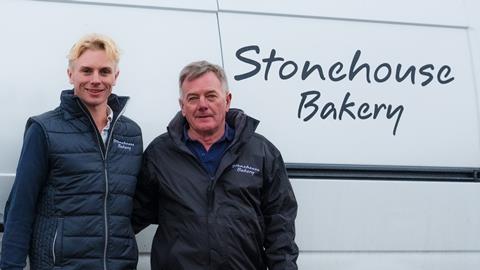
North Yorkshire-based Stonehouse Bakery recently completed a lengthy succession plan, with Harvey Clacherty taking over the reins from his father Ian.
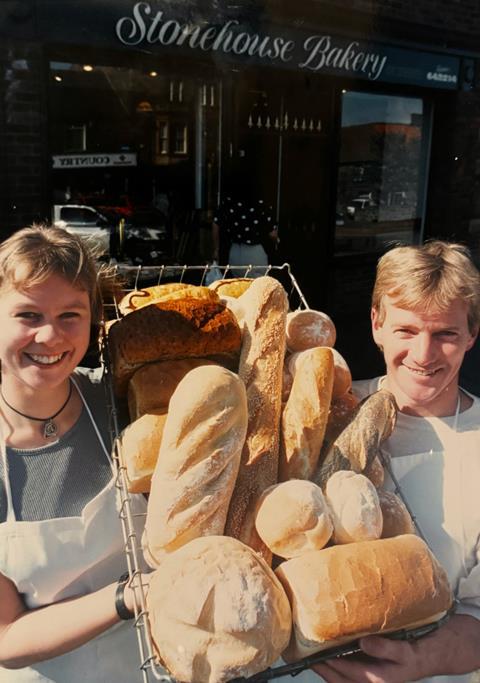
The company started out in 1993 as a small café in Danby, with all of its products baked in house. The range proved popular and Ian decided to expand with the purchase of a 3,025 sq ft production unit over in North Liverton Industrial Estate.
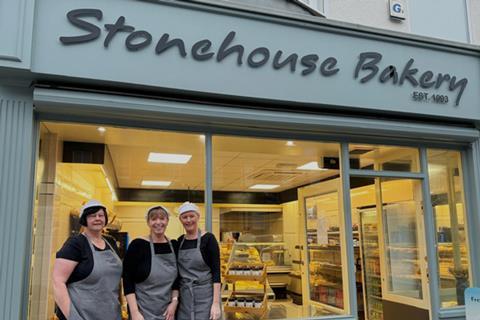
From there, Stonehouse Bakery grew into what it is today – three retail shops in Loftus, Saltburn-by-the-Sea, and Skelton with over 100 wholesale customers including restaurants, cafés, pubs, hotels, and independent retailers. It currently employs 11 production staff on day and night shifts as well as three van drivers, three office staff, and 21 workers across its stores.
Harvey first entered the business three years ago at the age of 22. He’d originally planned to study electrical engineering at university, but had enjoyed his year abroad working at a bakery in Bordeaux. With his father wanting to retire after three decades in baking, Harvey took the opportunity upon returning home to gain experience in all areas of the business as part of a succession plan.
He reveals some of the challenges of this process were agreeing on the right timing and period that the buyout would run over, the overall mechanism to make it work, and managing the shift in authority between himself and his father. They also had to agree on a price.
“Turning a family business into something that works legally on paper is far more complex than people expect,” Harvey tells British Baker. “There are a lot of nuanced decisions to make, particularly when trying to balance what is fair for the outgoing generation with ensuring the business remains financially stable and able to invest and operate properly going forward.
“A major consideration for us was structuring the deal in a way that didn’t put unnecessary strain on cashflow,” he adds.
There’s also risk on both sides, stresses Harvey. “From my perspective, I’m committing a significant amount personally to take the business on, while my father is placing a great deal of trust in me to run the business well enough to sustain the agreed structure. Inevitably, when both parties have to consider worst-case scenarios, those conversations can be uncomfortable at times,” he says.
A proper succession plan involves formalising things in the business that are often historically based on trust and informal understanding. “It’s easy to think that, because it’s a family business, corners can be cut – but in reality, that’s often what leads to disputes later on,” highlights Harvey, adding that “everything needed to be properly documented and professionally structured”.
The hardest part, he says, was balancing the legal, financial, and emotional aspects of the transition whilst keeping the business trading day-to-day and moving forward.
Harvey also made a mistake in trying to change too much too quickly, which he admits unsettled a lot of the staff at the time. “In hindsight I wish I had stayed quiet and spent more time understanding how our business runs and fully grasping everything. Then once I was in the position to make changes I could do it, and do it from a place of knowledge rather than being like a bull in a China shop,” he says.
He has now developed a new long-term strategy for Stonehouse Bakery, which sees it focus on retail rather than wholesale. Shop sales have been in steady and sustained growth – since 2021 the Loftus and Saltburn sites have seen takings increase by an average of around 14% and 12% year on year, respectively. The Skelton shop is said to be trading strongly in its first full year, which Harvey says reinforces confidence that the model can be replicated in new locations.
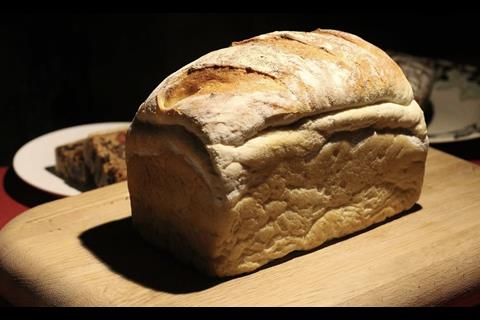
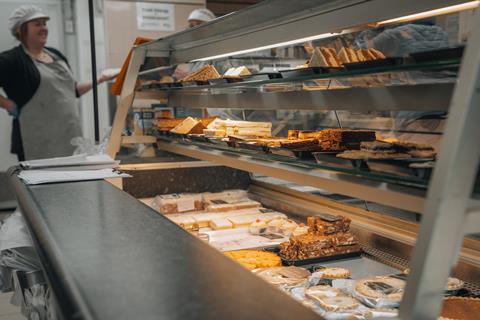
Their signature product is the traditional tin loaf, whilst bestsellers at shops include bacon or ham sandwiches – featuring locally sourced ingredients –Victoria jam & butter cream sponge cakes, Mars Crunch traybakes, and caramel shortbread.
However, they have streamlined their range by dropping a lot of their time-consuming speciality bread lines such as walnut bread, cottage loaf, and wholemeal rye which struggled to sell well. Instead, the bakery is enhancing its food-to-go offering to tap into the rising demand for convenience and quality.
Stonehouse Bakery has also been futureproofing through equipment investments such as a new Revent rack oven and a commercial bread slicer, improving capacity and efficiency. It has made better use of its Cybake InStore system too, which has allowed it to delegate replenishment decisions to shop managers.
Harvey says he’s received a lot of help and guidance from the baking community, including from John Foster of Fosters Bakery near Barnsley (the former Craft Bakery Association president) and Hobbs House Bakery over in Gloucestershire.
He also thinks AI is becoming a powerful tool for small firms like Stonehouse Bakery. “Used properly, it gives businesses like ours the ability to scale and adapt without having to rely solely on adding labour, which is becoming increasingly expensive,” he adds.
Do you make the best cakes or loaves?
Then enter Britain’s Best Cake 2026 or Britain’s Best Loaf 2026!
The cake competition – proudly sponsored by Dawn Foods, Kluman & Balter, Rainbow Dust, Shufflemix, and St. Ewe Free Range Eggs – aims to celebrate the sumptuous, sweet treats on offer in the UK. There are nine categories to choose from, offering up the opportunity for all types of cakes to triumph.
It takes place on Monday 13 April at NEC Birmingham. Entries cost £39+VAT.
Now back for its 13th edition, the loaf contest is proudly sponsored this year by ADM Milling, Fritsch, L&M Parnaby, Matthews Cotswold Flour, and Rademaker. It shines a spotlight on the fantastic bread available from the nation’s bakeries with eight categories to choose from, presenting a chance for loaves of all shapes and sizes to take home a trophy.
Live judging and awards ceremony take place on Tuesday 14 April at NEC Birmingham. Entries also cost £39+VAT.




No comments yet