














The UK Government recently published a long-awaited update to the Nutrient Profiling Model (NPM) used to determine which food and drink is ‘less healthy’.
Compared to the previous 2004/05 version, which has been used to underpin HFSS legislation, it has a lower threshold on free sugars and an increased focus on fibre.
Although it is not yet applied to policy, its publication garnered considerable backlash from the food & drink industry, including concerns that it could mean healthier options may no longer be promoted to consumers resulting in them being delisted, while others pointed out flaws claiming a one-size fits all system won’t deliver results when it comes to improving the health of the nation.
Here, Ken Potts, chief scientific officer at Modern Baker, explains why he believes an approach focused on avoidance rather than encouraging the addition of health-promoting ingredients risks falling behind science and creating a widening gap between regulation and real-world health.

“The government’s recent and not uncontroversial adoption of the 2018 Nutrient Profile Model (NPM) is being presented as a necessary step to improve the nation’s diet. But for the baking industry, it risks entrenching an approach that has already exceeded its limits.
At its heart, the NPM still works by penalising nutrients deemed to be ‘bad’ – fat, sugar and salt – rather than sufficiently rewarding nutrients that are demonstrably beneficial to health. The 2018 update introduced some welcome modifications but did little to challenge this underlying logic. The result is a framework focused on avoidance, rather than encouraging the addition of measurable health-promoting ingredients.
The weakness of this approach is conceptual and scientific. Nutrition science has moved on considerably since nutrient profiling models were first introduced. We now know that the health effects of a food are not determined only by its constituent ingredients, but by what happens in the body after consumption: how it is digested and metabolised, and how it interacts with the gut microbiome.
Yet the NPM continues to score foods largely on composition alone. This is particularly problematic for fibre. Soluble, fermentable fibres are among the most robustly evidenced dietary components for improving glycaemic control, supporting gut health and reducing cardiometabolic risk. However, under the current model, these fibres are weakly rewarded, while relatively small amounts of salt or sugar can disproportionately affect a product’s overall score and creates perverse incentives.
Consumers – ‘post traffic light shoppers’ – are already moving beyond this narrow focus in the supermarket aisles. The growing success of higher-fibre breads, fermented products and nutrient-dense foods suggests that rigid profiling scores are no longer the primary signal of health.
Retailers are responding in kind. Rather than relying solely on official health claims or nutrient profile cut-offs, many are looking to broader indicators of nutritional quality, scientific credibility and consumer trust.
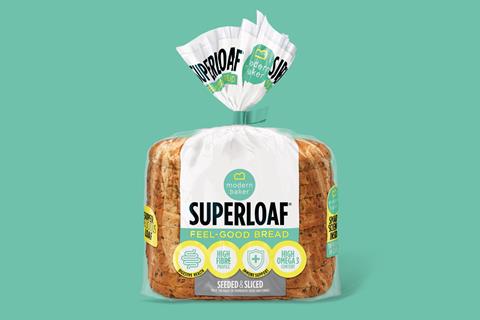
This shift creates a clear opportunity for challenger brands. At Modern Baker, we believe that meaningful health benefits must be earned through formulation, fermentation, and evidence, not label optimisation. Products such as Superloaf are designed to deliver measurable physiological benefits, even if they don’t fit neatly into legacy scoring systems.
If policy continues to double down on models that prioritise demonisation over nourishment, it risks falling behind both the science and the market and creating a widening gap between regulation and real-world health. Healthier baked goods will not come from scoring nutrients in isolation, but from rewarding foods that demonstrably work with the body.”













No comments yet