












Croissants, Danishes, and pain au chocolat are among the undisputable stalwarts of the pastry category, promising affordable, delicious, grab-and-go breakfasts at a moment’s notice.
They grace counters in coffee shops, craft bakeries, convenience stores, supermarkets, and more, further cementing their status as an affordable, but indulgent, treat. But times are changing.
“Once a simple morning indulgence, the pastry has evolved into one of the most exciting and fast-moving categories in modern bakery,” states Stéphanie Brillouet, marketing & innovation director at Délifrance. “No longer limited to the comforting familiarity of croissants and Danishes, today’s pastry offering is a showcase of creativity, personalisation, and cultural influence.”
This, she adds, is shaped by shifting consumer lifestyles and global tastes as pastry lovers seek a new experience from the category.
So, what does this showcase look like? And how does it differ from artisan bakeries to national chains, supermarket in-store bakeries (ISB) and beyond?
“Supermarket and artisan bakeries operate at different speeds in responding to the pastry trends of today,” explains Demi Omer, marketing executive at wholesaler BFP, noting that supermarkets need to prioritise “accessibility and consistency”, with complex supply chains to navigate.
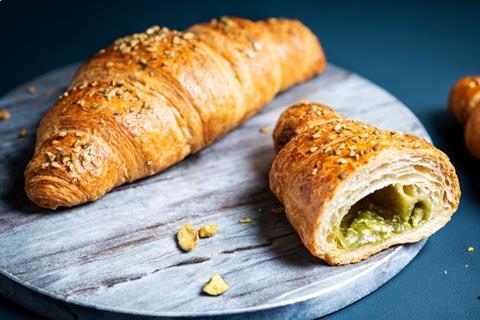
Here, classic croissants, as well as almond, and chocolate filled ones lead the way, although pistachio varieties have been popping up in ranges. Samantha Winsor, Lantmännen Unibake UK marketing manager, points out that premium offerings are “particularly resonating with shoppers” in this market as they offer “a moment of indulgence that feels both special and accessible”.
Asda, for example, has added a Gingerbread Latte Plait to its seasonal line-up while Waitrose has added a Black Forest Danish to its festive range.
Like most trends in the food & drink industry, many of these start with the artisans before making their way into the mainstream. However, as noted on a recent visit to several London artisan bakeries, British Baker found that classic pastries still sit alongside those shaking up the category.
“Artisanal bakeries are not holding back on experimenting with fillings, toppings and custards to really elevate their offerings too and often add an unexpected twist or flavour to the layering,” explains Jacqui Passmore, marketing lead West EU & AMEAP, Dawn Foods.
But they need to get the base right first, with many delving into traditional techniques to achieve this. “Without the red tape and production constraints of larger bakeries, smaller artisanal producers are driving this creativity and helping to elevate the quality and range of pastries now on offer,” Passmore adds. “These bakers are reviving many French, Swiss, Belgian, Italian pastry techniques as well as introducing new lamination methods too.”
Freedom in formats
Flavours and formats are naturally top of the list of things for bakers to experiment with.
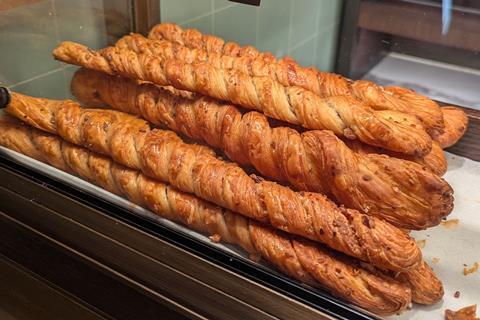
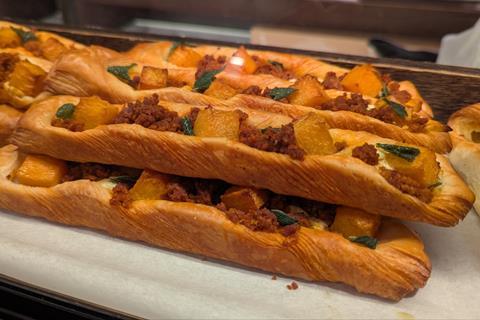
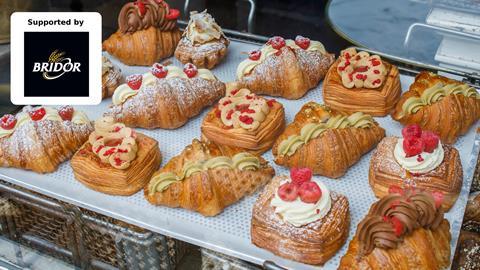
A peek at the freshly baked pastries available in the Harrods food hall serves up several examples of this. There’s the Pistachio & Raspberry Croissant which combines the on-trend nut with tart fruit but takes it one step further. The pastry is actually made up of five demi mini croissants baked with pistachio frangipane, raspberry jam, fresh raspberry, and nibbed pistachio. A Pistachio Pain Au Chocolat was also available, with dimensions more akin to an éclair than a typical pain au chocolat. Further innovation came in the form of the Pecan Croissant Twist – more of a spiral shape than the classic plait – and the Butternut & Chorizo Croissant, a long, thin pastry base with chunks of roasted butternut squash, chorizo crumb, and herby cream cheese nestled along its length.
Notably, rather than confusing consumers with odd names for the resultant shapes, the department store let the products do the talking. Equally, many of the flavours were familiar, embracing on trend and seasonal combinations but never stepping too far into the unusual.
“Consumers continue to gravitate towards classic sweet pastries and familiar flavours, but with a twist,” explains Samantha Winsor, Lantmännen Unibake UK marketing manager. “This desire for ‘safe innovation’ means they’re looking for the comfort of known formats, enhanced by new textures or flavour combinations.”
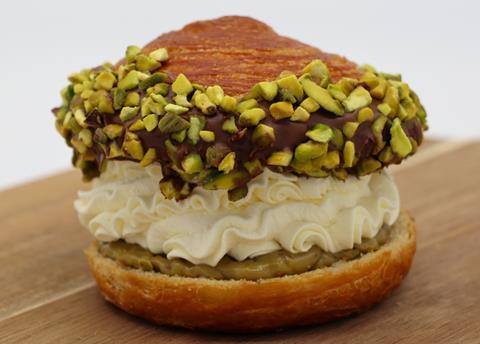
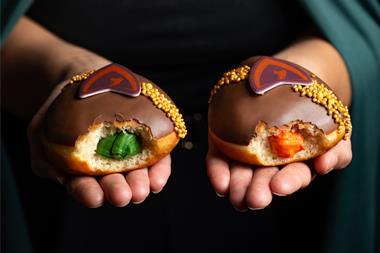
Further up the country in Bradford, Marshalls Bakehouse, owned by Holly Marshall, also looked to reinvent the classic croissant inspired by current pastry trends. Drawing from the viral Dubai Chocolate trend, the bakery experimented with both traditional and bun-shaped croissants. The bun-shaped one was filled with pistachio crunch and fresh vanilla cream, with a chocolate hazelnut topping finished with pistachio nibs. The traditional croissant, meanwhile, was sliced in half, filled with fresh cream, and finished with a drizzle of coffee cream on top to create pastries that “balanced the traditional craftsmanship with modern indulgence, appealing to tastebuds and the social feed”.
“Bakers are moving beyond the classic shapes and spiral, experimenting with formats that are both eye-catching and functional for on-the-go lifestyles,” adds Délifrance’s Brillouet. “Square croissants, mini filled pastries, and hybrid creations like the cruffin or croissant cube are redefining what a pastry looks and feels like. These new formats not only cater to aesthetic appeal, perfect for social media – but also support convenience, portion control, and premium pricing.”
Savour the flavour
Experimenting with savoury flavours is also opening doors for operators.
“Savoury pastries are also the second fastest-growing food-to-go types by volume sales behind salads, up 15.1% and this is an area of great potential for operators at lunchtime,” says Erwan Inizan, Northern Europe sales director at Bridor, which supplies frozen French bakery products.
“The croissant’s soft centre and flaky texture makes it a great sweet base for a savoury sandwich and is therefore a unique alternative to the traditional sandwich,” Inizan adds.
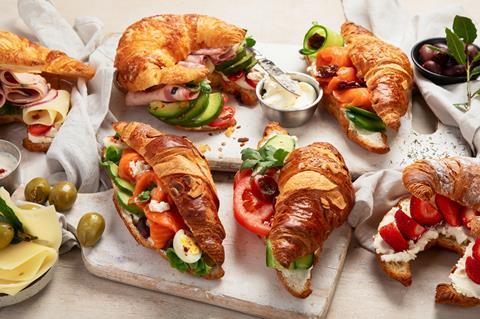
Bridor has nicknamed the use of a croissant as a sandwich carrier a ‘Crodwich’ and points to the unlimited potential for fillings, suggesting the likes of goat’s cheese & butternut squash, a take on tartiflette with potatoes, smoked lardons and cheese, or even a gourmet vegetarian option with pureed red lentils, pickled cauliflower, and thinly sliced vegetables.
Data from the firm’s recent consumer research found that 31% of consumers already eat croissants as part of a savoury meal and 41% would like to see more savoury croissants on menus.
Cheese & ham croissants feature regularly on menus, but some are taking the fillings a step further. Gail’s, for example, has rolled out a Ham, Cheese & Stuffing Croissant filled with chestnut & sage stuffing and béchamel as part of its Christmas menu.
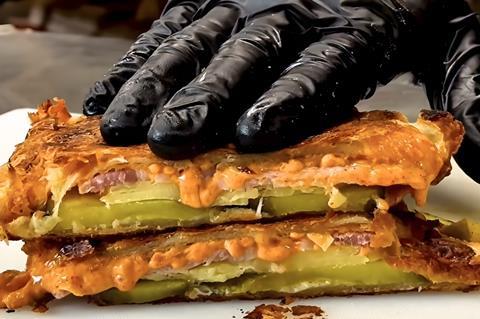
B. Bakery in London is another innovator in the savoury pastry space. The bakery is serving up ‘Crunchy & Juicy Croissant Toast’, filled savoury croissants toasted in a panini press for an indulgent, texture forward experience. Filling combinations include smoky bacon, mustard, smoked paprika & pickled gherkin, avocado & chicken, and pesto, Italian ham, & mozzarella.
“These visually appealing creations helped drive strong customer engagement and demand,” explains Omer from BFP, which supplies B. Bakery. “Their focus on experience and exclusivity, amplified by social media, gives smaller businesses an edge in creativity and responsiveness.”
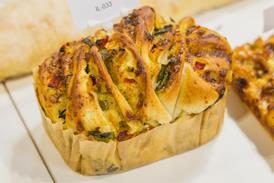
Sticking with the savoury theme, Pophams in London offers a Marmite, Schlossberger Cheese & Spring Onion pastry which has whole roasted spring onions inside its swirl. Imma the Bakery, headed up by reigning Baker of the Year Tona Erreguin, is another artisan bakery not afraid to experiment with savoury notes having recently served up Pizza Swirls slathered with cheese and pepperoni.
There is still opportunity aplenty on the sweet side of the spectrum. Pistachio remains a firm favourite, with Winsor from Lantmännen Unibake pointing to the continuing popularity of nostalgic British desserts as inspiration, particularly on the ISB scene. Think fruit pie and apple crumble.
“Among the most popular classic dessert-inspired flavours are seasonal fruits, such as apple and berry, tropical and citrus, or winter pudding stone fruit mixes,” she says, also noting the rise of “Scandi-inspired flavours” such as cinnamon, lingonberry and vanilla, as well as Mediterranean ones which can be seen through the likes of Sicilian lemon, Seville orange, and tiramisu flavours.
As such, Zoe Plant, NPD and innovation manager at innovation centre Food WorksSW, believes “global influence has shifted pastry from ‘French patisserie to ‘world patisserie’. “It’s about fusion and visual appeal – pastries that tell a story of place, craft and connection. That’s why we’re seeing yuzu, pandan, and miso next to chocolate and vanilla.”
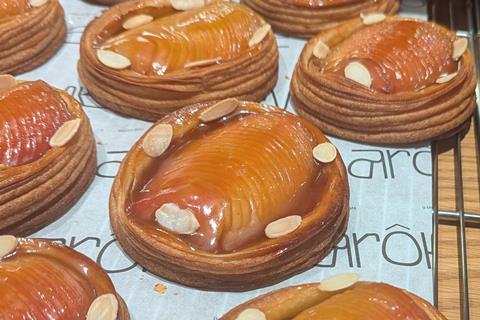
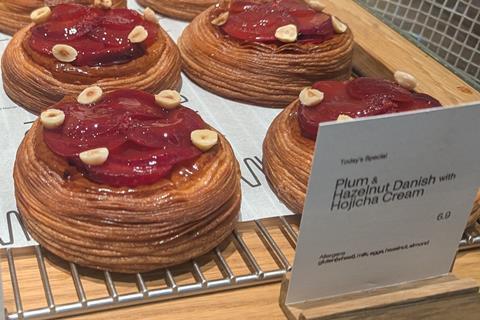
Plant points to Arôme in London as one bakery where this can be seen in action, with a Pistachio Chocolate Escargot next to a Plum & Hazelnut Danish with Hojicha Cream, and the Apple Danish with Miso Caramel Glaze. This flows through to its savoury range with a Nori & Tomato Pain Suisse.
There’s a world of inspiration to explore, but pastry maestros need to ensure their creations remain fit for consumers and not just social media.
“Ultimately, the biggest trends shaping pastries today are about evolution through innovation,” adds Brillouet. “Tradition remains the backbone of the category, but the future lies in dynamic formats, bold flavours, and the ability to connect emotionally with consumers through choice and creativity.”
ADVERTISEMENT: BRIDOR
The weeks leading up to Christmas are incredibly important to the restaurant and hospitality sector. Last year, Britain’s leading hospitality groups saw a year-on-year sales increase of 2.7% in the run up to the big day .
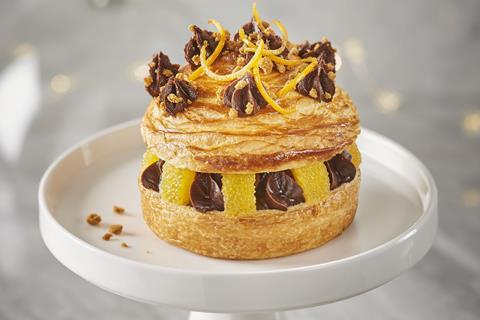
To help caterers and chefs maximise festive sales and tap into the potential of baked goods this season, leading French bakery manufacturer Bridor has published its first-ever festive recipe book.
Available to download for free via the Bridor website, the book includes a series of exclusive recipes incorporating Bridor’s products, including pastries such as the Bun ‘n’ Roll Coffee Cream , the Bun ‘n’ Roll Orange Supreme and Chocolate Ganache, and the Millefeuille Croissant.
The recipes cover various occasions, spanning appetisers, starters, festive main courses and desserts, to allow caterers to flex their offering to suit different needs throughout the day.
Download the festive recipe book here.



No comments yet