










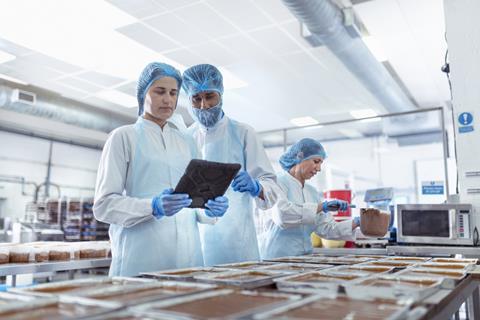
Discussions around AI-assisted fraud in the food industry have been initially focused on fast-casual dining and takeaways.
However, the operational landscape of modern bakery production makes it a highly vulnerable target.
In an exclusive piece for British Baker, Annabel Kyle, technical director at food safety consultancy firm Food Alert, highlights the areas where such fraud can occur and what companies can do to defend themselves:

“As bakeries expand into e-commerce, direct shipping, and third-party delivery platforms, a new breed of tech-savvy fraud is putting revenue, food hygiene ratings, and business reputations at risk.
Many craft bakery chains rely on third-party aggregators for delivery. To handle customer complaints at scale, these platforms frequently use automated, algorithmic dispute resolution systems.
When an automated system receives a customer complaint accompanied by an image, it is programmed to settle the dispute immediately. The platform issues compensation to the consumer and passes the financial penalty directly to the bakery. Manufacturers are left out of the loop, absorbing the cost of high-value items – like bespoke celebration cakes or luxury selection boxes – without the chance to inspect the product or verify the claim.
Industrial baking relies on strict Hazard Analysis Critical Control Point (HACCP) protocols, X-rays, and metal detectors. Yet, an AI-generated image can easily bypass these physical defences in the court of public opinion.
A convincing photograph showing glass embedded in a brioche bun or raw dough inside a batch of croissants is deeply damaging. Even if internal batch logs prove that oven temperatures and metal detectors operated perfectly, disproving a visually flawless digital fabrication is an uphill battle for any QA team.
Written intimidation
Fraudulent complaints used to be easy to spot: brief, emotional, and poorly written. Today, fraudsters use Large Language Models (LLMs) like ChatGPT to generate aggressive legal grievances instantly.
By prompting an AI to “write a severe legal complaint about a metal washer found in a bakery product”, claimants produce authoritative emails. These messages cite specific legislation, such as the Food Safety Act 1990, and threaten immediate escalation to Environmental Health Officers (EHOs), trade bodies, and the media.
A bigger trend we have seen at Food Alert is the use of AI to intimidate our food business clients in relation to food complaints. If a guest disagrees with an outcome, we often receive an email clearly written with AI, quoting legislation and stating they will report the matter to enforcement authorities.
This artificial urgency often pressures busy site managers into paying unverified claims just to avoid perceived legal action.

Hidden regulatory threat
The real risk extends beyond a refunded order. When a consumer escalates an AI-generated complaint to a local EHO, the authority is legally obligated to investigate and may conduct an unannounced inspection.
Even where the original complaint is fabricated, an inspection may uncover unrelated issues, creating real regulatory exposure. Repeated complaints can also, over time, affect a business’s food hygiene rating.
A drop in hygiene rating from a 5 to a 3 or 4 can be catastrophic. Many supermarket supply deals and corporate catering contracts require a flawless rating. Furthermore, 84% of local councils across England, Wales, and Northern Ireland now charge for a food hygiene re-rating, with an average cost of £219.95 per visit.
Identifying AI images is getting harder. While current digital anomalies (such as unnatural textures) exist, image generation is advancing rapidly.
Compounding the problem, UK legislation currently provides no statutory framework to penalise the creation of synthetic images for commercial refund fraud. Furthermore, research shows that only 38% of commercial AI image generators use digital watermarks, which can be easily stripped with basic screenshot tools or just cropped out.
Defensive manoeuvres
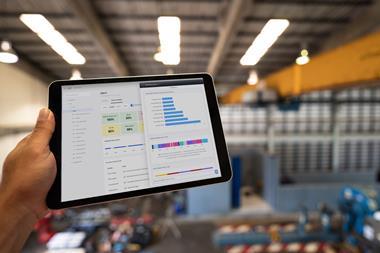
Bakeries can defend themselves against AI fraud by upgrading from paper records to cloud-based software. Real-time digital logs of oven temperatures, metal detector checks, and QA reports provide hard data to refute synthetic claims instantly.
You should never dismiss complaints outright, though, but escalate those with severe visual or legal language to technical managers. Check if the packaging details or crumb structure in the photo match the specific batch run.
Reviewing terms of service with aggregators is also wise, such as demanding formal mechanisms to dispute automated chargebacks using HACCP records.
At present, generic AI image generators usually fail to replicate specific visual branding details. Therefore, physical safeguards should be used, including the implementation of tamper-evident labels, batch stickers, or custom-branded greaseproof paper.”






No comments yet