










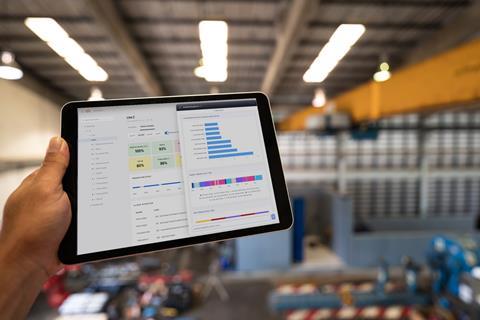
IntelliAM has rolled out an end-to-end Industrial Intelligence Platform designed to help food and drink manufacturers save costs across operations.
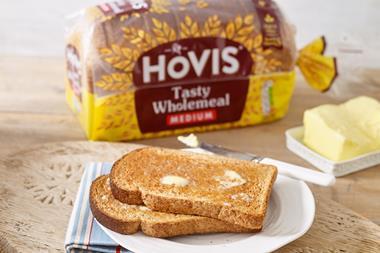
The UK-listed tech firm already works with major food and drink producers including Hovis, which deployed its AI-driven systems at seven of its production sites last year.
It said that while legacy manufacturing AI architectures have previously focused on descriptive dashboards or passive predictive maintenance alerts, its new triple-layered framework spans data ingestion, contextual analytics, and agentic AI to support closed-loop operational decision-making.
Unlike large language models trained on open-web text, IntelliAM’s ecosystem is said to be custom-built on specialised, real-world factory data, processing more than 16 billion industrial data points annually.
The platform integrates the following three distinct product layers:
- IntelliAM 53: ingests data and generates clean, deterministic machine and asset intelligence directly from physical hardware
- Decipher: analyses raw time-series data and transforms it into contextual operational understanding and deep performance insights
- Enigma: utilises advanced AI agents to provide intelligent decision support and initiate direct operational action.

IntelliAM CEO Tom Clayton noted that bakery production is a high-volume, tightly integrated process, so a single equipment failure can stop a line, disrupt distribution and put customer service at risk.
“IntelliAM gives engineering and operations teams a live, plant-wide view of asset condition by combining data from wireless sensors, existing control systems and maintenance records,” Clayton told British Baker. “Its machine-learning models learn the normal operating signature of each asset, identify subtle changes and give teams early warning of developing faults. For bakery manufacturers, that means fewer unplanned stoppages, less intrusive calendar-based maintenance, better use of engineers and spares, and more consistent production.”
According to the CEO, the clearest evidence of the value created by the platform is the Hovis deployment, which he says achieved full return on investment in under six months. This delivered between 80% and 90% reduction in invasive maintenance costs and 20% less spending on contracted engineering support.
One specific example given on how IntelliAM systems helped Hovis avoid production failure was for a 7SK moulder, which had an abnormal pattern detected by wireless condition-monitoring sensors. Engineers were then prompted to inspect the gearbox output and tension-roller assembly, with the team ultimately finding significant wear on an internal shaft where the bearings were mounted. Because of the component’s location, Hovis estimated that an undetected failure would have caused a major breakdown and at least four hours of repair time.
Clayton confirmed that investment required from a bakery business to purchase the IntelliAM AI platform depends on its number of sites and assets, the available data infrastructure, and whether it begins with a focused deployment or a wider enterprise rollout. “We normally start by identifying the production-critical assets and establishing the financial cost of downtime and current maintenance activity. That allows us to design a deployment with a clear business case and measurable success criteria,” commented the CEO.
He expressed how food manufacturers do not have a data problem; they have a decision problem. “Britain’s future productivity gains will come less from building new factories and more from improving the efficiency of the infrastructure we already have,” he added.





No comments yet