








East London-based Signorelli Bakery is looking to take its Italian café and deli concept to three new high-traffic sites by the end of the year.
The business, founded in 2015 by husband-and-wife team Alberto and Rebecca Rosmini, currently operates five cafés across the capital.
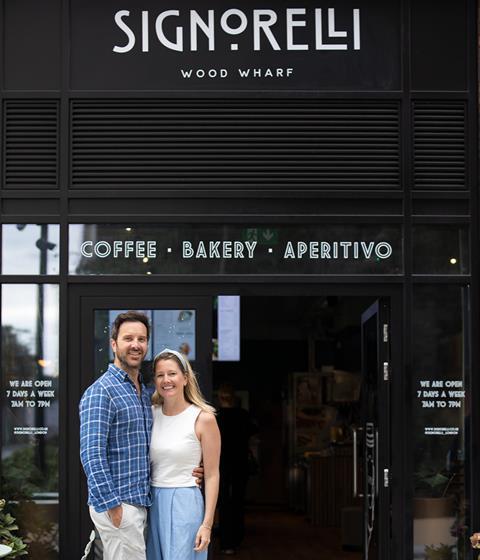
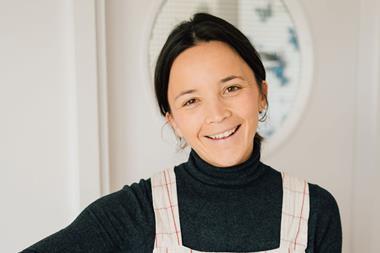
Rebecca hails from the northeast of England and head baker Alberto from the Liguria region of Italy. They bring principles of Italian cooking to their business, including the use of locally sourced ingredients and minimal food waste.
“If we’re spending so many hours making this stuff, and someone before us has grown the wheat and made the flour, and the butter and other ingredients, we can’t put anything in the bin,” Rebecca tells British Baker. “We’ve got to find a way of having products that have a second life.”
They turn yesterday’s croissants into puddings and surplus bread into croutons or breadcrumbs.
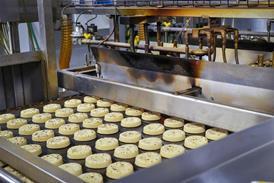
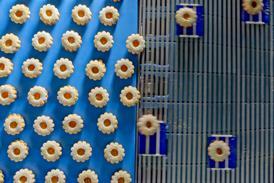
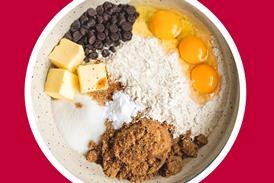
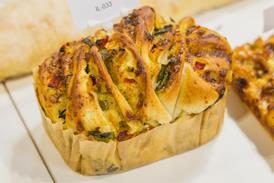
Signorelli also strived to build an artisanal menu that evokes freshness but provides good shelf life without containing additives. This led to the business creating its signature products – Italian-style shortcrust biscuits and cookies, and loaf cakes made with oil.
Most artisan bakeries are focussed on sourdough and pastries, with a lack of direct competition in its signature formats benefitting Signorelli. However, it also sells a lot of viennoiserie at its cafés along with celebration cake sales via its website, and has a catering arm that comprises 10% of its overall business.
“It’s a much nicer way to spread your business and spread your success”
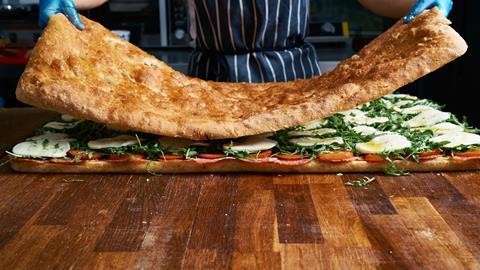
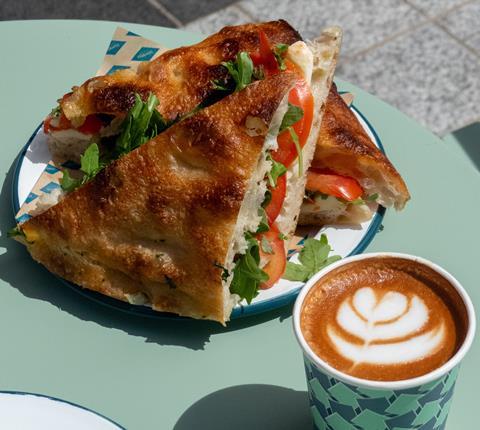
Signorelli has also produced focaccia sandwiches for over 10 years, putting it ahead of the curve in premium sandwiches, a market that has been flourishing recently. The bakery has found a middle ground in the focaccia carrier for its sandwiches lying somewhere between the authentic Ligurian style, which is relatively thin and thus problematic to cut, and the deep-pan version from Puglia, which is favoured in the UK.
In the 35-degree heat of the Mediterranean climate, Ligurian focaccia does not require a long-fermentation process and is just a straight dough produced over four hours whereas more northerly European countries make sourdough focaccia, noted Rosmini.
Focaccia sandwich fillings at Signorelli include its bestselling salami, mozzarella & rocket and its tomato, mozzarella & pesto, with weekend specials like the porchetta & stracciatella plus a regularly updated vegan option. Fresh mozzarella is supplied from Sole e Latte in Grays, Essex.
There are sourdough loaves being sold as well, although these are not made by Signorelli. “I really love the model of the Docks in the 1800s, where you put yourself in one place and you found lots of people around you that were really good at one specific thing,” says Rosmini. During lockdown, her company started swapping focaccia for sourdough with another local bakery and although the exchange deal has since stopped they continue to source loaves from them. “I think it’s a much nicer way to spread your business and spread your success,” she adds.
The Italian coffee offering is also hugely important for Signorelli, accounting for around 50% of sales. The business gets its coffee from The Roasting, a café and wholesale supplier based in Pimlico which they had worked with prior to open the bakery. Rosmini notes the coffee supplier is not the cheapest but provides great quality and is really reliable and supportive. She calls the owner Julio an “absolute obsessive individual when it comes to coffee” and says her artisan business “needs those kind of individuals”.
Starting the journey
The couple were encouraged by friends, who were fans of their dinner parties, to open a food business. They hit the ground running in Stratford’s East Village, just a few years after it had housed athletes for the 2012 London Olympics, with the area was like a ghost town but starting to populate through private rental schemes. Rosmini notes that residents would only come out into the streets if they were places to shop, with Signorelli Bakery becoming only the second retailer after Sainsbury’s to open there.
Their site was inundated with customers and they opened a second location in 2018 at Stratford Cross along the walk towards West Ham’s London Stadium. However, being the consummate hosts that they were, the Rosminis were too keen to please everyone and kept saying yes to every request to widen their offering.
“We stretched ourselves really thinly, and then Covid came along,” says Rebecca. “We got permission to stop, which is the hardest thing about running these kind of businesses with an obligation to open every single day. And when you don’t deliver exactly the same thing, people get annoyed with you.”
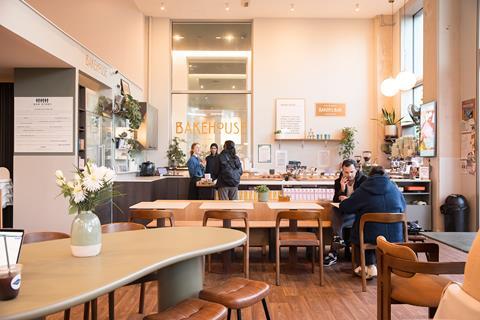
The bakery concept was an evolution of the restaurant, which has struggled to keep pace with “crazy brunch service”. The founders had also realised that when all costs were analysed, they’d make the same profit by just running a simple bakery and coffee shop concept.
This coincided with some “weird luck” in November 2019 when the landlord decided to change shop fronts. Rosmini asked for a window by the till, and the resultant update to the Signorelli counter basically saved the business over Covid as it could stay open despite no one being allowed inside.
“It was probably the most profitable we ever were, going from 30 staff down to five with everyone baking including myself and our baristas,” she says.
Coming out of lockdown, the couple faced production problems. Rebecca fell pregnant with their second child at a time when Alberto was forced to bake at nights due to the site being too busy during daytime operations – he often was producing up to 300kg of focaccia by himself. They badly needed a space for daytime production.
As luck would have it once more, their landlord offered them a new 3,000 sq ft kitchen just a few hundred metres from their original site. It was a bright, south-facing corner unit that had natural light from sunrise for Alberto and his bakery team to work their early morning shift.
Launched in 2022 and dubbed the Bakehouse, it also afforded space for a café which Rebecca didn’t think was necessary being so close to their other shop. But they turned out to have two completely different customer bases. “Most people don’t know they’re the same business which is really bizarre,” she notes.
Growing the brand
Signorelli expanded its footprint thrice more last year. The landlord for its Stratford Cross site was opening a new office nearby and wanted a high-quality coffee and bakery shop on the ground floor, so it took that space earlier in the year. Then in June, it opened a new site at Wood Wharf (near Canary Wharf), and in December it created a third café within the same block at Stratford Cross – this time inside the lobby of the Arden University’s Stratford campus.
“These opportunities kind of presented themselves rather than us actively going out and seeking them,” admits Rosmini, who ironically use to work as a commercial property surveyor. However, this also means she knows what she’s doing in terms of negotiating contracts and dealing with asset managers, leading to word-of-mouth recommendations and contacts from agents suggesting further expansion moves.
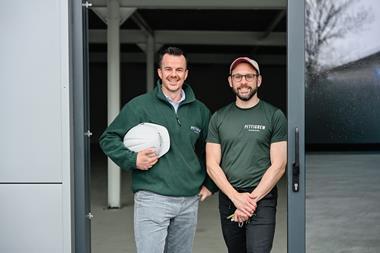
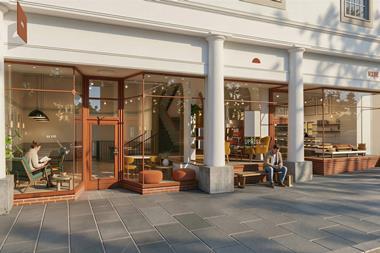
New sites in Liverpool Street and Kings Cross – areas which Rosmini says were always on the agenda being within a 10-minute train commute from Stratford – are currently with legals and expecting to open later this year. Another location at a London railway station is also in discussion, which they plan to act more like a deli with a selection of products from various artisan food producers across East London such as pasta, cheese, chocolate, kombucha, jam, honey, and dips.
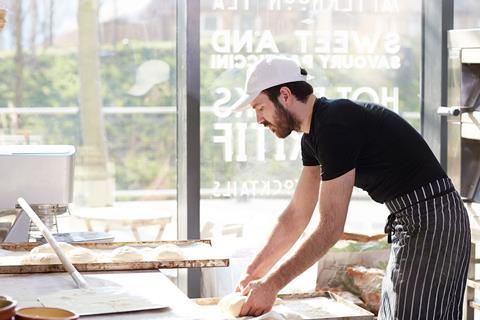
The Bakehouse has capacity to supply all these new sites as it currently only operates a 6am to 2pm production shift. Products are transported via cargo bikes, with frozen cookie pucks baked off in stores.
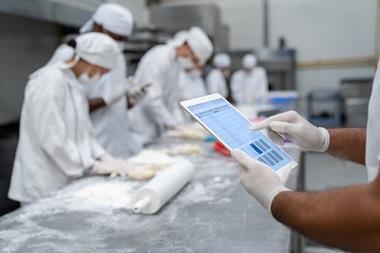
At the end of last year, the company received a £20k grant from Made Smarter, delivered by growth agency London & Partners. This help fund a technology adoption project to support growth including new cookie making equipment, AI-generated training videos, and a WhatsApp chatbot to answer staff queries in multiple languages (read more about this in our recent technology feature).
The company has previously self-funded its expansion but recently also secured a £250k loan from Barclays bank through its Growth Guarantee Scheme, the government-backed initiative that supports access to finance for smaller businesses in the UK.
Rosmini admits the prospect of moving from community-based locations to very high traffic environments is “quite scary”. She recognises that a big mission for the business will be how it communicates its values in such spaces, “so that people understand shopping with us is very different to shopping with a Joe & the Juice or a Starbucks or a Pret”.



No comments yet