













Work smarter not harder is an ethos which applies to many things, with bakery production among them.
Bakeries across the nation are increasingly looking to modernise and enhance their operations by investing in new equipment and systems as part of a smart manufacturing approach. This is essentially about connecting elements of technology across production sites that allow managers to make decisions based on data rather than guesswork.
“Historically, a lot of decisions in baking were based on experience – things like checking dough by eye or feel,” comments Stuart Craig, group IT director at Finsbury Food Group. “That expertise is still important, but now we can capture real-time data from across our operations with smarter mixers, ovens and packing lines and use that to guide decisions more consistently.”
“It’s not just about today’s gains, it’s about making sure the technology continues to add value well into the future”
Linking machines, systems, and people together enables full visibility of what’s happening. This could mean the use of sensors, cloud platforms, AI, and advanced analytics. “These technologies allow manufacturers to monitor performance in real time, identify inefficiencies earlier, and continuously optimise production,” says Ines Ashton, digital and AI strategy director at The Compleat Food Group.
Spotting patterns from the data can also help bakeries plan ahead and make better decisions about where to invest next.
“It’s not just about today’s gains, it’s about making sure the technology continues to add value well into the future,” notes Finsbury’s Craig.
So what advanced options are available to bakeries aiming to scale up and futureproof their business, and which companies are already taking advantage of them? And is there anything to be wary of before splashing the cash?
Working it out
Smart solutions can be applied across the entire baking process, from mixing and proving to baking, and packing. They support quality consistency, food safety, traceability, regulatory compliance, emissions reporting, and more.
Taking care of a lot of the admin work traditionally done by hand not only reduces the chance of manual errors but also frees up time for staff to focus on other high value areas, benefiting productivity, efficiency, and growth.
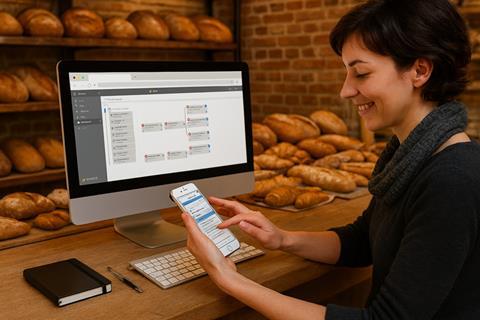
Technological solutions are inherently complicated things but are becoming increasingly simple to implement, even for people without IT backgrounds or formal training. For example, cloud-hosted Software as a Service (SaaS) platform Softools enables manufacturers to quickly and easily digitise and automate processes currently managed on paper, Excel, Word, or email, all of which can be a barrier to scaling.
The tech firm has its headquarters in Henley-on-Thames and works with all sizes of manufacturers worldwide, from single-site artisan producers up to global enterprises. The world’s biggest bakery supplier, Grupo Bimbo – based in Mexico and owner of UK brands New York Bakery Co, St Pierre, Baker Street, and Sanissimo – has been a customer of Softools for the past five years. It currently uses the platform to track performance KPIs and manage Capex approvals, with continued support for improvement initiatives globally. Over 2,000 users at Grupo Bimbo are engaging in these processes each month, including across UK operations.
Digitisation journey
Bakery SMEs can also get help with their digitisation journey from Made Smarter Adoption, the government-funded programme now operating across nine different regions spanning the length and breadth of England.
It has just completed its first year supporting businesses in the Southeast, delivering 137 diagnostic workshops and creating 93 digital roadmaps, with many firms going on to develop new skills and invest in technology projects which are match-funded by Made Smarter.
“At the heart of our approach is making digital transformation achievable, identifying early opportunities to demonstrate value, build confidence, and ensure every investment is aligned to clear goals,” comments Jez Heys, technology adoption specialist at Made Smarter South East.
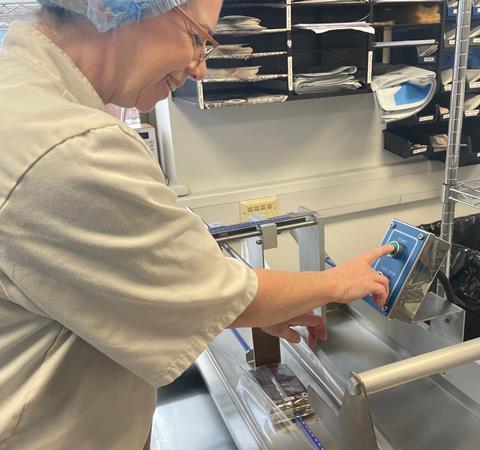
One of the bakeries to receive support was The Homemade Brownie Company in Basingstoke. Through a Digital Transformation Workshop, the supplier gained the structure needed to tackle improvements in managing stock, fulfilling orders, and connecting systems as part of scaling operations. “We’re now exploring replacing our ERP system, automating packing label generation, and integrating our online channels,” reveals owner Adam Bland.
Another beneficiary of a Made Smarter workshop was Newhaven-based bakery Manoosh, which specialises in Israeli-style pitta bread and supplies wholesale to independent retailers, eateries and distributors. It also had a workshop to help identify areas where technology could support growth, such as stock control software and new packaging machinery. It is currently exploring Leadership and Digital Champion training to build capability of key team members.
There’s more of this to come as Made Smarter South East has recently secured additional funding of £3.1m to continue delivery of support and match-funding grants (up to £20k for each business) until 31 March 2027.
Machine mind power
As you might expect, AI is getting applied to more and more things in bakery manufacturing.
It’s increasingly being used to enhance quality management through computer vision, whose eyes never grow weary and thus offer far more consistent monitoring.
“AI models can analyse product characteristics such as pastry colour, shape, and surface texture in real time, allowing manufacturers to detect quality deviations earlier in the process,” highlights Ashton at Compleat.
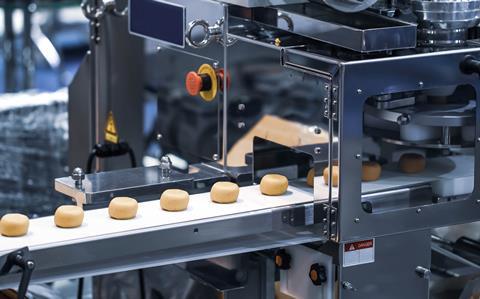
One such example of this in action is at bakery supplier Aryzta, which implemented an AI-powered system to analyse production at its Dandenong facility in Melbourne, Australia. By combining software platforms from OFS-Flow and Mavyn AI to collect, standardise and evaluate data from the factory floor, it was able to identify a consistent pattern of over-scaling during production previously not visible through existing reporting.
Adjustments were made to the scaling process, reducing product weights by 3.1% to fall in line with specifications whilst maintaining quality. This change delivered a measurable decrease in ingredient waste and a significant decrease in overall production costs. The approach was subsequently rolled out at Aryzta’s bakery site in Dunstable, Bedfordshire.
AI can also be combined with systems such as predictive maintenance, automated scheduling, and integrated Enterprise Resource Planning (ERP) to result in a wide range of operational improvements.
Compleat, meanwhile, has used it to transform safety culture from reactive to pre-emptive and preventative. The company turned its existing CCTV system across its UK sites into an AI-powered safety network that delivers real-time insights and data-led root cause analysis. This is estimated to have achieved up to 60% reduction in reported incidents, in turn cutting down claims, insurance costs, and loss of production for a saving of as much as £1.9m over five years.
Case study: Signorelli Bakery

Family-run Italian/English bakery brand Signorelli operates a bakehouse near Queen Elizabeth Olympic Park in East London, from which it supplies three café sites in the area plus another in Canary Wharf.
It secured a £20k grant from Made Smarter’s London division to match-fund a technology adoption project that included new cookie making equipment. This benefited its employees with nonverbal autism who work in production – they could nail consistency but needed help with productivity so that they could find time to make other items like loaf cakes.
Signorelli also used London-based AI experts GenAI to produce a collection of videos that help train staff on standard operating procedures. By filming a short clip of one of their managers and feeding this and some written scripts into a series of AI systems overlaid on each other, they were able to generate a whole host of bespoke training videos.
Rebecca Rosmini, who co-founded the business with her baker husband Alberto, notes that this new AI-generated approach was relatively quick and affordable compared to a standard video production project. “It would’ve taken years and cost huge amount of time and energy, by which point our processes would have changed,” she adds.
While Signorelli was looking to scale, they were also weary of losing all the knowledge about bakery production and operations they’d accrued over the years. So, they looked to digitise it all in a similar way to what Gail’s Bakery did with its BreadGPT staff resource tool.
Signorelli management spent around six months writing things out on Google Sheets and Forms, and worked with a Bulgarian firm to create a WhatsApp chatbot so that employees could access information right from their own phones via specific questions. This could range from ‘What’s the key box code at Stratford Cross store?’ to ‘Who do I contact if the coffee machine isn’t working?’ or ‘What’s the company policy when I’m sick?’.
Better still, thanks to the developments in online translation tools (now a free add-on to any digital package), these questions could be asked and answered in any language the user prefers. Signorelli currently employs 52 staff, but has many nationalities among them, including Spanish, French, Italian, Romanian, Ukrainian, Venezuelans, Colombians, Argentinians, Iranian, and Chinese.
Rosmini highlights one particular employee, a Ukrainian lady in her mid-50s who had her life uprooted due to the war and was trying to rebuild it in a country whose language she couldn’t speak.
“Her sister came to help get her through the interview,” recalls the co-founder. “Fast forward 12 months, and there’s no communication issue in the team with her. She still doesn’t speak English, but she uses AI to translate her interactions”.
The employee is now one of the stars of the Signorelli team, notes Rosmini, who recognises her potential and plans to enrol her on some English courses with the local council so that she can get into management.
Changing tech tack
As the saying goes: ‘Change is inevitable. Growth is optional’. And managing changes effectively at a bakery manufacturer poses a significant hurdle to overcome along the journey towards growth.
Integrating smart technology with legacy equipment can be complicated, and staff need both time and support to become comfortable with new systems.
“For us, the approach is always structured around people, process and technology,” reveals Finsbury’s Craig. “We put our colleagues first, making sure they understand why changes are happening. Then we focus on refining processes and only after that do we introduce technology. This way, automation enhances what people are already doing well, rather than creating disruption.”
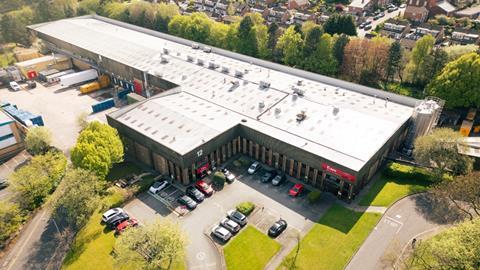
Sandwich maker Raynor Foods had an interesting way of getting staff engaged with new tech – it turned its entire factory into a real-time, interactive game.
At its site in Chelmsford last year, it rolled out the S3 Project (Smart People. Smart Process. Smart Factory), designed specifically for SMEs and provided by tech firm Alyn.
Not only does the new platform help optimise existing systems in the background through digitisation and monitoring, it also produces intuitive workflows to streamline operations and motivates employees by offering rewards for things such as punctuality (rather than punishments for being late).
However, it requires each worker to be equipped with a location device, which had some asking questions about being tracked ‘Big Brother style’. Raynor’s innovation project manager Thierry Batariere needed to ensure that they shared full transparency of purpose from the start.
“We didn’t call the tracking device a tag,” he reveals. “We called it ‘Gamelink’, because that’s exactly what it is: a way to connect to the ‘game’ and earn points by doing the right things at the right time.”
How best to invest
Compleat’s Ashton advises businesses to simply start with the specific problem they are trying to solve and, once that is clearly defined, the solution often becomes much clearer.
“Organisations should avoid chasing the latest tool or model simply because it is new,” she asserts. “Instead, the focus should be on identifying points of inefficiency within operations, whether that is downtime, quality variation, safety risks or manual processes, and addressing them systematically.”
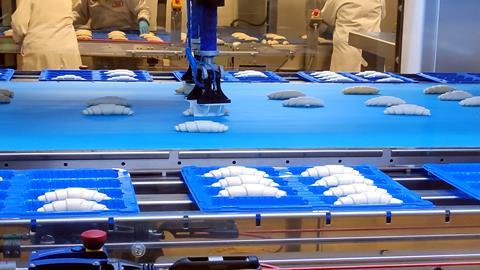
However, with a rapidly evolving technology landscape, especially in areas such as AI, there’s no such thing as a guarantee that every investment will remain futureproofed. But risk can be reduced by building a technology ecosystem around a small number of strategic platforms and partners, suggests Ashton. “This approach creates greater integration, stronger support models and a more scalable digital foundation,” she says.
Companies must also ensure that its processes and the data derived from them are properly standardised before introducing the likes of AI or automation. “Without strong foundations, digital tools cannot deliver their full value,” adds Ashton.
Considering the examples detailed above, it seems clear that when people and processes move in synch with technology at a bakery business, it can unlock improvements that go far beyond the production line.








2 Readers' comments