









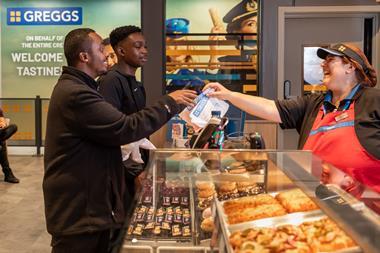
Greggs’ value proposition continued to resonate with customers as it again outperformed the wider out-of-home market in the first half of 2026.
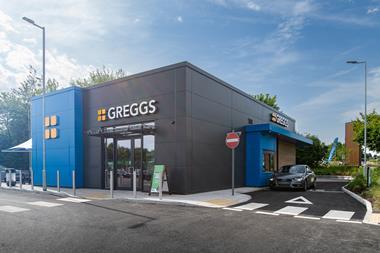
Interim results for the 26 weeks ended 27 June 2026 showed total sales at the bakery chain had risen by 7.2% to reach £1.1bn, whilst it added 34 net openings to put its estate up to 2,773 shops. Along with developing new channels such as grocery retail, the growth supported continued gains in market share and overall volumes.
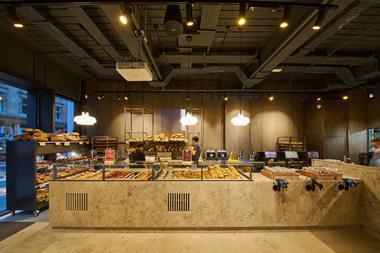
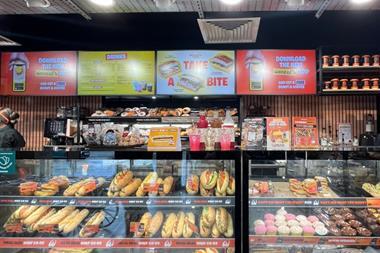
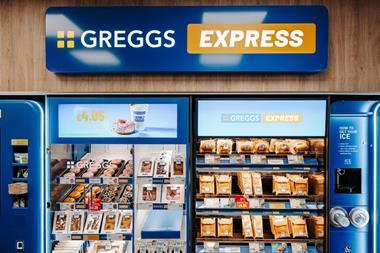
Like-for-like sales at company-managed shops were up by 2.1%, and those for franchised shops increased by 1.3%. It highlighted how its innovation in new retail formats – including the ‘bitesize’ Greggs, the currently trialling Greggs Express, and its first international travel hub shop in Tenerife South Airport – provided additional growth opportunities.
The company confirmed that it was expecting to increase its estate by between 100 and 110 shops this year, including 10 new Express trial sites. It predicts it will maintain an expansion rate of around 100 new locations per annum over the medium-term.
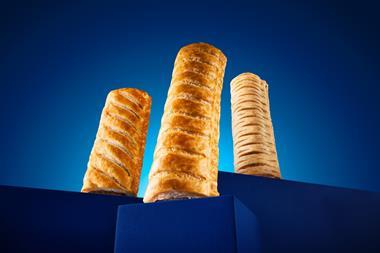
Greggs noted that its strength of brand and value leadership helped ensure it was a “go to” destination for food to go. Its ongoing menu innovation followed consumer food and drink trends, with new products launched during the year so far including Chicken Rolls and Iced Matcha Lattes.
It also said delivery sales were incremental to the business, with three-quarters of company-managed shops now accepting orders via Just Eat and Uber Eats. Usage of its Greggs App has improved since last year, with customers scanning for 31% of company-managed shop transactions (H1 2025: 25.7%). The ‘Bake-at-Home’ range launched at Tesco was said to have been successful and the range sold at Iceland has also been enhanced to support first-half growth.
Greggs is targeting £11m in structural cost savings for 2026 and has delivered £7m to date. New National Distribution Centres in Derby and Kettering are set to increase logistics capacity to 3,500 shops, while capital expenditure is expected to drop from £200m to £180m this year.
The company’s operating profit leapt 22% to £86.5m during H1 2026, while pre-tax profit grew 19.7% to hit £76m. Greggs said its profit growth reflected a soft comparator period together with growth in grocery business, strong cost control, and the phasing of cost inflation.
“We remain focused on opening shops in more catchments and introducing convenient ways for customers to pick up Greggs favourites, while broadening and innovating our menu in line with changing tastes and trends,” commented Greggs CEO Roisin Currie. “We are making great progress in building the supply chain infrastructure that will support the significant growth opportunities that lie ahead. The Board’s expectations for the full-year outcome are unchanged.”

Analysts react
Julie Palmer, managing partner at financial and real estate advisory group BTG, commented on how Greggs seemed to remain undeterred from the challenging landscape as it continues to invest in store expansion. “A recipe of weight loss drugs, low spending and confidence, and rising employment and business costs, worsened by ingredient inflation and rising energy costs from the outbreak of war, has not seen the value bakery chain crumble under the pressure as it focuses on keeping control of costs,” she said.
However, she warned that Greggs will have to continue “walking the tightrope” of pricing and controlling costs to retain and grow market share as the food to go provider of choice.
“After a summer of sport, beer gardens and heatwaves, Greggs will be banking on autumn and winter seeing demand for its hot pastries and convenient on the go products returning,” added Palmer. “Keeping prices low and continuing to expand product ranges to meet changing food trends will be key to luring people back into its vast number of stores to achieve this. If Greggs cannot deliver sales volume, however, could its substantial presence across towns and cities become an expensive Achilles heel as opposed to the gateway to capturing every corner of the market?”
Keishia Quijano, producer at retail and hospitality innovation consultancy Label Sessions, noted how Greggs is one of the few UK retailers putting AI somewhere boring – stock monitoring and order consolidation, for example – rather than into customer-facing theatre.
“On top of that, around one-quarter of transactions at Greggs run through the loyalty proposition or the app, meaning the business holds first-party data on everyday purchase behaviour at a scale most grocers would envy,” she said.
“Greggs has done the groundwork to outperform a struggling market and, if it can continue to innovate at pace, the baker should be well placed for what’s next.”



No comments yet