









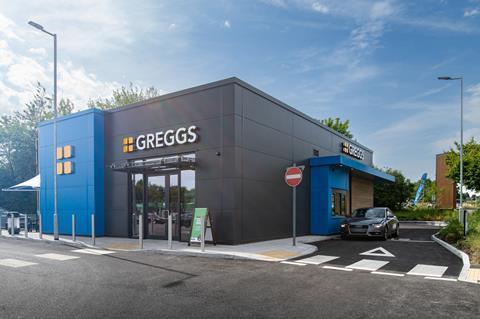
While Greggs continued to grow its estate and sales last year, the recent drop in profits highlights how tough trading has become in the UK’s food-to-go market.
Market analysts have been quick to react to this morning’s publication of the bakery chain’s preliminary results for 2025.
Julie Palmer, managing partner at financial advisory firm BTG, noted how the increasing popularity of weight loss drugs, lower spending and confidence from consumers, and rising business costs seem to have eaten into the bakery giant’s profits.
“Despite a year of opening branches and resilient sales in a flaky market, even Greggs has been unable to stay completely immune from the challenging outlook for food and drink retail,” she said.
However, the business has maintained a strong slice of the food-to-go market, and enjoys strong customer loyalty thanks to its ability to deliver low prices and desired quality. This means it will likely be feeling more comfortable than some of the competition entering 2026, Palmer added.
However, she believed the picture for the coming months doesn’t look to be improving, and the market is likely to remain very difficult for operators in addition to hospitality companies. “Continued inflation increasing the cost of ingredients, energy bills staying sky high and minimum wage hikes taking effect could see many players forced to push up prices, cut jobs and even close branches,” she said. “An already shrinking market may become even more challenging if consumers cannot afford to keep up with rising costs, and those businesses who cannot adapt to changing consumer behaviour will not be able to survive if sales drop.”
Palmer suggested that, to keep its strong slice of the market and continue a trajectory of sustainable growth, Greggs will be needing to “walk a tightrope of pricing and profitability”.
“Concentrating on fitting out new stores at the expense of overlooking current like-for-like sales is a potential problem”
Dan Lane, lead analyst at trading platform Robinhood UK, said the whole brand identity of Greggs centred around it being the face of the cheap and cheerful pastry pick-me. “If today’s margin compression leads to raised prices, it runs the risk of diluting the entire point of its offering. Consumers have baulked at price increases in the past for exactly this reason,” he added.
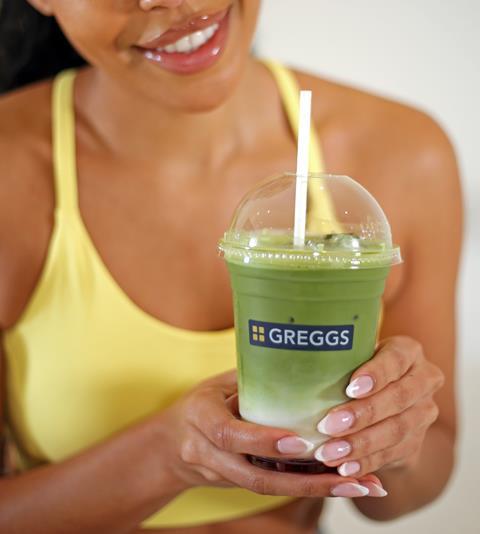
Lane also warned the bakery chain not to sacrifice its beloved, and reassuringly simple, brand by trying to be all things to all people and losing its purpose. “February’s launch of its iced matcha latte might ring alarm bells for the early-doors steak bake crew,” he said.
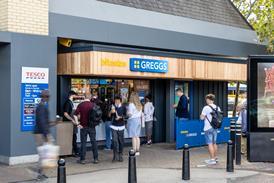
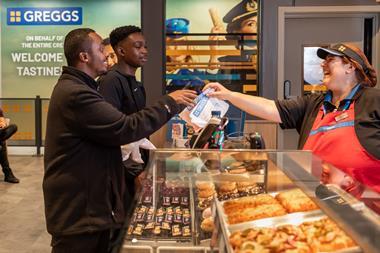
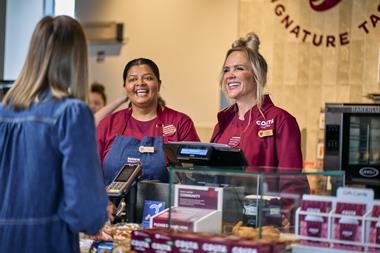
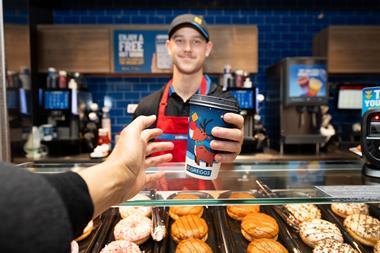
Earlier this year, Greggs overtook Costa to become the largest overall branded chain in the UK coffee shop market. As of 27 December 2025, its estate had reached 2,739 shops with new national distribution centres in Derby and Kettering to support further expansion of up to 3,500 sites.
On the question of whether expansion was still the way forward for Greggs, Lane thought upping the store count might seem impressive but it could turn out to be a superficial measure of success, especially if new sites cannibalise existing stores. “Concentrating on fitting out new stores at the expense of overlooking current like-for-like sales is a potential problem – the company needs to reassure its customers and shareholders that this isn’t the case,” he commented.
“The fact that the money Greggs is putting back into its business is earning a lower return than last year (ROCE 16% vs 20.3% in 2024) is a sign that it’s not as simple as opening new sites, launching menu items, creating loyalty formats and watching the cash pile itself up.”


No comments yet