








In this series, British Baker talks to people from across the baking industry to find out about their career path, what their job involves, and the latest trends that are shaping their work.
We’re looking to showcase a diverse range of talent and job types across the industry, so if you’d like to be involved, please email dan.riley@wrbm.com.
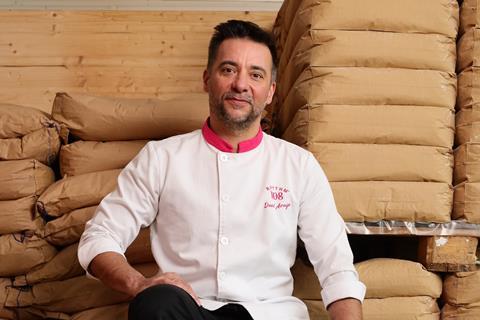
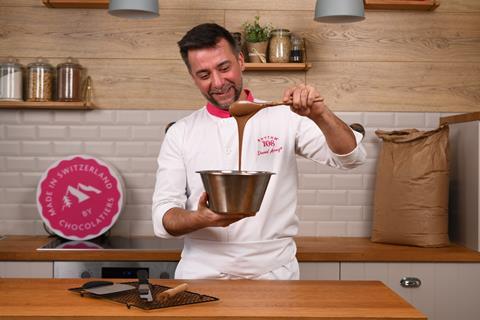
Name: Daniel Araujo
Age: 45
Job title: COO
Company and location: Rhythm 108, Geneva
Education: CAP (diploma) Pâtissier and Chocolatier; Brevet Technique des Métiers (trade certification) from École Nationale Supérieure de la Pâtisserie, Yssingeaux
Tell us about your career to date.
I started my career as an apprentice in a small artisan pâtisserie in Annecy-le-Vieux, where I’m from. It was a fantastic place to learn because every day was about mastering the fundamentals – precision, consistency and respect for traditional techniques.
After qualifying, I worked in several artisan and boutique pâtisseries and chocolateries around the Annecy region. My biggest step came when I became head pâtissier at Boulangerie Neveu, where I managed a team of 10 producing all of the pâtisserie and viennoiserie from scratch daily for four busy stores.
Following this, I worked for seven years at Pâtisserie Clairet in Geneva before joining Rhythm 108. I now lead a business that supplies customers across multiple international markets including the UK.
How would you describe your job, and what kind of tasks and responsibilities does it involve?
Although I’m the COO today, I still think like a pâtissier. Traditional pâtisserie teaches you that every ingredient, every gram and every process matters. Those principles don’t change whether you’re making one cake or producing thousands of packs every day.
My role is incredibly varied. I oversee production planning, procurement, ingredient sourcing, manufacturing, quality, continuous improvement, recruitment and operational strategy. My job is to make sure we produce exceptional products, at the optimum cost, while maintaining the highest quality standards and delivering to every customer on time.
I also lead much of our new product development – probably my favourite part of the role. Transforming a delicious recipe into a product that can be manufactured consistently at scale, without compromising on taste or texture, is where the real expertise lies.
Tell us about a challenge you have overcome recently.
At Rhythm 108, I quickly realised I had to rethink everything I’d learned as a traditional pâtissier. I’d spent my career working with butter, eggs, milk and wheat flour, and suddenly I had to create products without any of them – and make them gluten-free as well.
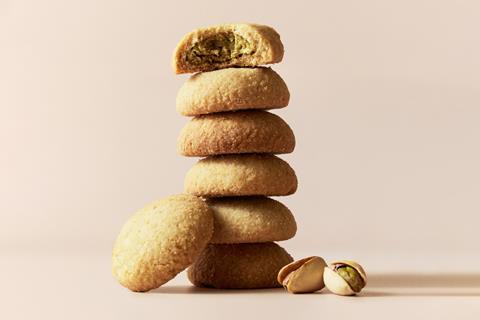
One of the first categories I wanted to reinvent was biscuits. I’d grown up eating traditional sablés, and I believed there was an opportunity to create something every bit as indulgent using completely different ingredients. Achieving that buttery crunch, rich texture and satisfying bite without relying on the traditional building blocks was one of the biggest technical challenges of my career. It took a huge amount of experimentation, but it’s something I’m incredibly proud of.
I’ve had to grow with the company too. We’ve evolved from a small artisan bakery into a semi-industrial manufacturer, and that requires a completely different skill set. I’ve learned to rely less on my own intuition and more on building systems, empowering people and creating processes that allow the whole team to succeed.
What have been some highlights of your career?
Launching our crunchy filled biscuit range is definitely one of the highlights, and it started almost by accident. I was working on improving another product and had some dough left over. Rather than throw it away, I started experimenting with different textures, fillings and flavour combinations – just seeing what was possible.
One combination immediately stood out. It had multiple textures, that buttery crunch with a viscous spread, roasted nut flavours, sweetness balanced with just the right amount of salt, and it delivered something completely different to what was already on the market.
From that first Friday afternoon experiment, we went from concept to supermarket shelves in just 12 weeks. Today, the range represents around 25% of our sales and is our fastest-growing product family. Around 18 months after launch, we started seeing major companies such as LU and Ferrero introducing products with similar concepts. As a product developer, there’s no bigger compliment than seeing the rest of the category follow your innovation.
What is a common misconception about your role?
People often think pastry and product are all creativity, flair, and inspiration. Of course, creativity is important but there’s an enormous amount of technical knowledge and analytical thinking behind every successful product such as ingredient functionality, manufacturing processes, scalability, food science, costs, and commercial viability. Every decision has consequences. If you change one ingredient, it can affect texture, processing, consistency, shelf life, and production efficiency.
The best product developers aren’t just creative, they’re problem solvers. They combine craftsmanship with science and commercial thinking, and that’s something I’ve learned more and more as my career has progressed.
What advice would you give to young people entering the food industry?
Stay curious and never stop learning. This industry changes incredibly quickly, and the best people are the ones who keep asking questions and keep improving their craft.
I’d also say be innovative, be resourceful and, above all, be consistent. There will always be setbacks. Products won’t always work, equipment breaks down, and projects don’t always go to plan. That’s part of the industry.
The important thing is to keep showing up, keep learning from every experience and keep pushing yourself to improve. Over time, that consistency creates opportunities.
Interested in a career in bakery? Check out Foodmanjobs for the latest vacancies



No comments yet