












In this series, British Baker talks to people from across the baking industry to find out about their career path, what their job involves, and the latest trends that are shaping their work.
We’re looking to showcase a diverse range of talent and job types across the industry, so if you’d like to be involved, please email dan.riley@wrbm.com.
Name: Ken Potts
Age: 55
Job Title: Chief science officer
Company and location: Modern Baker, Oxford
Education: BA Modern History, Oxford University; Higher Diploma in Artisan Baking, School of Artisan Food
Tell us about your career so far:
I originally worked in IT change management, then took a career break to look after young children. During that time, I started to bake bread as a hobby and enjoyed it so much that I decided to turn it into a second career. What fascinated me was the realisation that baking was a mixture of craft and science rolled into one.
That interest led me to the School of Artisan Food, where I completed the Higher Diploma in Artisan Baking, and then to working in several artisan bakeries specialising in sourdough bread.
At Modern Baker, I lead product science and new product development around Superblend, our fibre-polyphenol-rich ingredient platform – technically a ‘high-impact nutrition system’ designed around human biology.

How would you describe your job in a sentence or two:
My job is to turn nutrition science into practical food innovation that can work in real bakeries and factories. This means applying our Superblend ingredient into products that deliver better nutrition through everyday foods.
What does a typical day look like for you?
There is not really a typical day, which is one of the things I enjoy about the role. On any given day I might be reviewing formulation work, looking at test data, speaking with ingredient suppliers, working through manufacturing constraints, supporting new product development trials, or helping shape the evidence and messaging around what we do. And lots of product testing and tasting.
Tell us about a challenge you have overcome recently:
My key challenge has been working through the best way to deploy Superblend at scale. There were several possible manufacturing and deployment routes, and each had different trade-offs in nutrition, flavour, and cost. The trick is to avoid treating it as a purely technical question. A solution can be scientifically elegant but still fails if it does not work commercially or operationally.
What have been some highlights of your career?
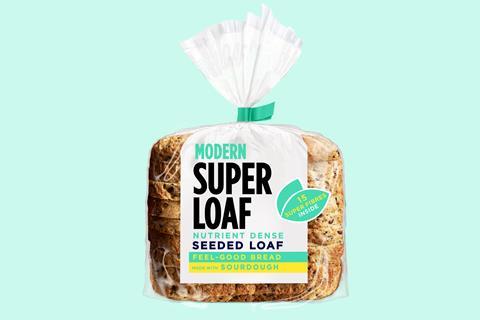
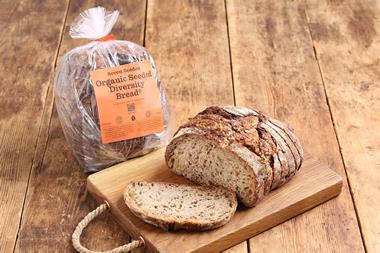
The major highlight has been seeing Superloaf – our proof-of-concept product containing Superblend made by one of the UK’s leading bread manufacturers, Hovis – reach supermarket shelves across all the major retailers, and score amazing consumer reviews.
Another highlight has been developing Superblend from a bakery-focused idea into a broader ingredient platform with potential across other everyday foods. I am also proud of the evidence base we are building around the technology. For me, the exciting part is not just making a product sound healthier, but showing that bakery can play a serious role in improving everyday nutrition.
What’s a common misconception about your role?
That it is purely a lab or technical role. The science matters enormously, but the job is really about practical application. Nutrition science only matters if it can be incorporated into products that taste good, work commercially, and make sense to the consumer. So I spend a lot of time moving between scientific detail and very practical food manufacturing questions.
What advice would you give young people entering into the baking industry?
Don’t think of baking as old-fashioned. It is craft, science, nutrition, engineering, logistics, and creativity all in one industry. Be curious about all these elements.
I would also say: learn from people on the bakery or factory floor as much as from books. The best ideas are the ones that work in the real world.



No comments yet