










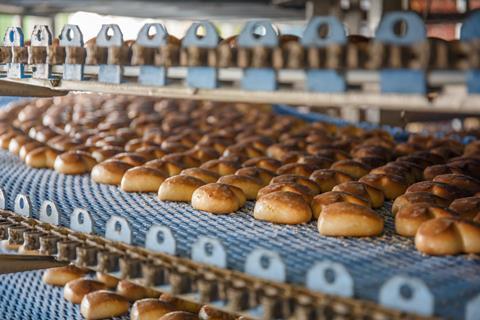
Confidence is in freefall among food and drink manufacturers facing soaring costs, particularly in energy, triggered by the war in Iran.
A State of Industry report for Q1 2026 from the Food and Drink Federation (FDF) revealed confidence levels across the industry has plummeted to -64%, the lowest level seen since the 2022 invasion of Ukraine (-70%). It is also on par with the low confidence recorded around the height of the Covid pandemic in mid-2020.
This is not a short-term impact, warned the FDF, with the outlook confidence score for the next quarter standing at -51% as most businesses anticipate conditions will continue to deteriorate.
According to the International Energy Agency, the Middle East conflict unleashed the worst energy crisis in history, worse than the previous crises of 1973, 1979 and 2022 combined. It’s also the fourth structural shock to hit the industry in less than a decade, following Brexit, the pandemic and the war in Ukraine.
“The scars of these previous shocks have not yet healed,” stated co-authors of the report, FDF chief economist Dr. Liliana Danila and senior economic analyst Uros Milosevic. “The number of businesses in the industry has been declining for the past two years, many food and drink manufacturers are yet to rebuild their margins, and household finances are strained, while the regulatory burden remains substantial, with more on its way. As a result, from a cost perspective, resilience is running thin.”
Gulf economies have come to play a key role in the global food system as they supply about 20% of the oil and natural gas. The FDF found that a fifth of food manufacturers – including bakeries – had energy bills amounting to more than 10% of total operating costs, while almost a tenth (8%) said it makes up over 20% of outgoings. Cost of plastic packaging has also soared by up to 15%, with some firms reporting increased transport costs of over 20%.
Further up the supply chain, the increased cost of fertiliser is a concern – the Gulf region is responsible for 30% of the world’s urea production. Coupled with higher transport and energy costs, this contributes to rising prices of ingredients. According to the UN FAO, global agricultural prices were 4.1% higher in April than in February this year.
As a result, 82% of food and drink manufacturers have said they will need to increase prices to mitigate against these increases. The FDF reported a third of businesses are planning to restructure or reduce their headcount (33%), or reduce marketing spend (33%). Over a quarter (26%) are planning to cancel or pause investment projects and a fifth (21%) will need to reduce staff training, hampering the long-term growth and resilience of the sector.
Among the businesses surveyed in the sector, it found that:
- 38% want the government to simplify packaging recycling reforms
- 33% are for a phased introduction of the Employment Right’s Act
- 28% are for a delay to changes to the proposals on Nutrient Profiling Model (NPM)
- 23% have said realistic transitional arrangements for the upcoming EU trade deal would help them with current pressure

FDF chief executive Karen Betts said it was unsurprising that confidence levels were low, following the series of shocks in recent years and the latest impact from the war in Iran.
“In the last inflation spike, companies made savings to absorb some of their rising costs, but now there’s little flexibility left to do this again,” she commented. “What’s more, government is proving inflexible in its own asks of the sector – they are reluctant to offer energy support to intensive users across food and drink production while they continue to layer on regulatory change.”
Betts noted how companies are having to change their operations to realign with EU law, cover recycling reforms costs, work out if they can continue to make food healthier to rapidly shifting government targets, and adapt to new employment law.
“Piling so many asks on industry at once comes at a cost,” she adds. “Government needs to work in much better partnership with the food industry to shore up our resilience while helping shoppers manage a maelstrom of rising costs.”
The FDF recently revised its 2026 food inflation forecast, putting it up to at least 9% by the end of the year. To minimise the impact on shoppers and help stabilise inflation, the trade body is now calling for rapid, targeted, and time restricted support for energy prices during this crisis, focusing on categories that use the biggest share of energy, such as bakeries. This could be modelled on the scheme which was introduced during the Russian invasion of Ukraine.
It also urged the government to minimise additional regulatory pressure and cut red tape by, for example, delaying the proposed changes to the NPM until a five-year review of HFSS advertising and promotions has taken place. The government should also ensure a realistic transition and sell-through period to allow businesses to adapt to the upcoming Sanitary and Phytosanitary (SPS) agreement with the EU.




No comments yet