












Pladis has pledged to double the volume of products it sells with lower levels of sugar, salt and saturated fat, and higher fibre and protein content, by 2030.
The snack manufacturing giant, which produces brands such as McVitie’s, Jacob’s and Carr’s, said it would achieve the target by improving existing recipes as well as launching new products and expand successful ranges into more markets.
In support of its new strategy, Pladis has developed a new global nutrition framework that will guide how products are developed, reformulated, and marketed across its portfolio. Built by the company’s scientists, the framework draws on internationally recognised nutrition systems, including France’s Nutri-Score, Australia’s Health Star Rating and the UK’s Nutrient Profile Model. The latter system defines what can be termed as high in fat, sugar or salt (HFSS) and thus subject to UK retail and marketing regulations.
The framework is applied across all Pladis products and takes a balanced view of nutrition. It assesses both nutrients consumers are encouraged to have more of, such as fibre and protein, and nutrients many are looking to reduce, including salt, sugar and saturated fat. Products identified by the framework as offering a better nutritional balance currently account for around 10% of Pladis’ sales volume, a figure the company has an ambition to double by 2030.
The move comes on the back of long-standing work by the manufacturer to evolve its portfolio. It highlighted how it has already removed 676 tonnes of sugar from recipes in the UK – the equivalent of around 169 million teaspoons. In the Netherlands, it has revamped its Sultana fruit biscuits by reducing sugar and salt and increasing fibre. Reformulation efforts over the past decade have also seen its snack brand Ülker remove 549 tonnes of fat from its products alongside reducing sugar and salt.
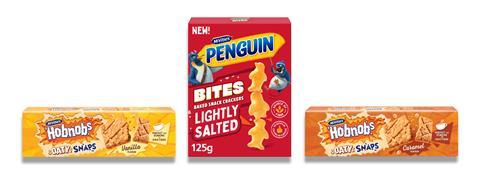
Products launched recently in the UK include two new flavour variants of high fibre Hobnobs Oaty Snaps and a Lightly Salted variety of new Penguin Bites.
Pladis noted that its reformulation and innovation initiatives come as consumers increasingly seek snacks that fit their lifestyle and wellbeing goals without sacrificing taste and enjoyment. The company believes the move will provide greater choice across its portfolio in response to those changing expectations.
“People don’t buy biscuits and chocolate because they’re looking for a lecture on nutrition – they buy them because they enjoy them. Great taste will always come first,” commented Dr Jennifer Moss, chief R&D officer at Pladis.
She said the company thinks the brands that succeed in the future will be the ones that can deliver on both taste and healthier claims. “That’s why we’re committed to giving consumers more options while continuing to provide the enjoyment that has always been at the heart of our brands,” Moss added.
The pledge forms part of Pladis’ newly launched global sustainability strategy: Happy People, Happy Planet. The manufacturer employs around 16,000 people and sells products in more than 110 countries. Its UK arm topped £1bn in sales during 2024, and a year ago unveiled a £68m investment across nationwide operations, with the bulk being spent at sites in Liverpool, Stockport, and Carlisle.









No comments yet