








A baseball cap that says ‘Nice Buns’, a sweatshirt with a croissant and ‘I don’t mind being called flaky’, and a tote bag depicting a pair of hands holding two buns with the words ‘Dem Buns Dough’ – just some of the bakery-related merch that has brought a smile to my face over the years.
The mildly suggestive tote bag, which came from Cadzow Bakehouse in Hamilton, has pride of place among my vast array of tote bags. This is high praise (as a millennial, totes are a staple accessory).
And, as silly as some these items are, they got me thinking – should every bakery do merch? What types of products will resonate with customers? Should they all have bun-based puns, for example?
There are several benefits to merch. It’s free advertising for starters.
“Every time a customer carries your tote bag or wears your apron, they are doing your marketing for you,” says Vhari Rusell, founder of The Food Marketing Experts.
“Merch also deepens loyalty in a way that a loyalty card scheme simply cannot. When someone owns something with your brand on it, they have made an emotional investment… That creates a sense of belonging, and belonging creates advocates who actively recommend you, defend you and come back to you again and again.”
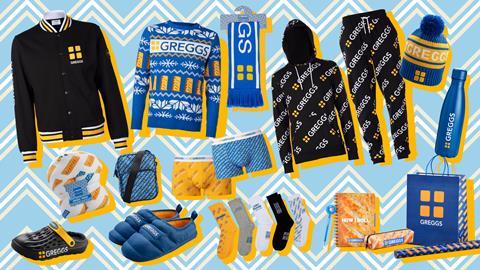
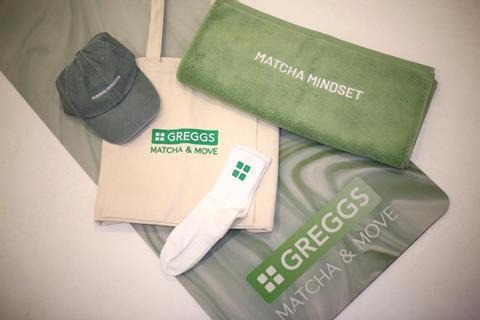
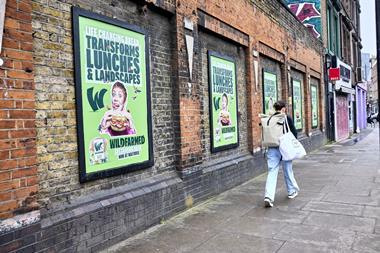
It would be remiss to talk about bakery merch without mentioning the behemoth that is Greggs. The food-to-go giant arguably set the precedent for attention grabbing merch a few years ago with underpants emblazoned with sausage rolls. There were also sliders with its logo, a festive range (pictured above), and more recently a giant steak bake bean bag. It even embraced limited-edition merch to celebrate its iced matcha launch earlier this year with a pilates mat, tote bag, swear towel, socks, and cap bundle given to those who visited the Greggs Matcha & Move studio.
“Greggs’ merch worked because it was completely self-aware, and that is a rare and wonderful thing in food marketing,” explains Vhari Rusell, founder of The Food Marketing Experts. She notes that the sausage roll is “genuinely iconic in this country”, highlighting how Greggs had the confidence to put it front and centre on candles, socks, pants, and more, showing that it was in on the joke.
“That self-deprecating humour is deeply, authentically British, and it created an emotional connection that went far beyond the product itself. People weren’t just buying a tote bag. They were buying into a shared cultural moment and saying something about who they are,” she adds.
Creating a community
It is this community spirit that smaller bakeries up and down the British aisles can grab on to.
“People have real, personal, emotional connections to their local bakery,” Russell says. “They have a favourite order, a favourite member of staff, a favourite Saturday morning ritual. That is extraordinarily powerful raw material for merchandise.”
This is exactly the experience at South Oxfordshire-based Imma the Bakery. Run by reigning Baker of the Year Tona Erreguin, it introduced merch a few years ago as part of a crowdfunding campaign.
“We wanted to offer tangible pledge rewards instead of just a bread subscription or future benefits,” Erreguin says. Customers kept seeking out the merch once the campaign had ended and, not wanting to deny them the possibility buy something, Imma made some lines permanent.
The current line-up includes tote bags, bread knives, hoodies, t-shirts, mugs, caps, and aprons. The tote bag, emblazoned with ‘I don’t mind being called flaky’ and an illustration of a croissant, is the bestseller with around one in every 20 customers picking one up.
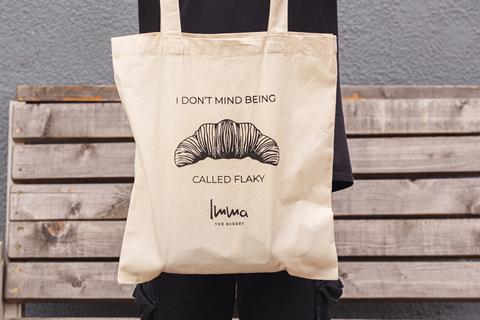
“Think about this as fulfilling a customer need,” Erreguin explains. “People get to know each other while queuing to get a couple of loaves. To an extent that creates a sense of identity, and people like to feel part of something. To us, merchandise must satisfy customers’ need for identity and become a useful part of their everyday lives not just aim for sales or advertising.”
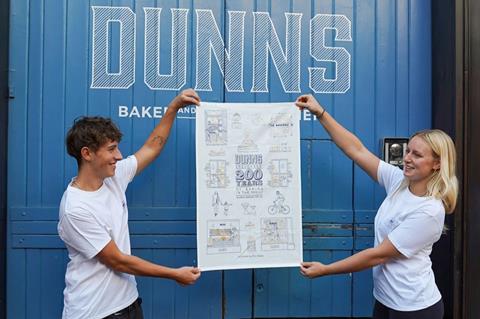
For Dunns in Crouch End, tea towels claim the bestseller spot. Priced at £8, they were introduced as part of the bakery’s 200th anniversary celebrations alongside aprons, t-shirts, and tote bags.
“All feature beautiful illustrations drawn by a local artist, Ellie Sampson,” notes Dunns sixth generation baker Lewis Freeman. “I wanted to ensure the artwork looked great in its own right and that they are items people would wish to wear and use on a daily basis,” he adds.
The two-tone illustrations showcase different parts of the bakery process – such as a baker lifting bags of flour or decorating products – as well as key moments in its history including the date 1850 when its Crouch End site was built and its address, The Broadway N.
Not another logo
Without an impressive milestone or fundraising campaign, bakery businesses should look to their brand, their products, and community for inspiration. Ask your regulars what they want and love, what your business is tagged in on social media, and what are the inside jokes, phrases or moments that already exists within your community and daily rituals. And, like Greggs, take a look at your product line-up for inspiration – the answer may be staring you in the face.
“Please, not just a logo on a tote bag,” begs Russell, describing this as a “missed opportunity”. “The merch that really works, the kind that gets shared, that gets worn, that becomes part of someone’s identity has personality. It makes you smile. It has a point of view.
“Puns and wordplay are your friends, and don’t let anyone tell you otherwise,” assures Russell. “That said, the design has to feel genuinely like you. That is the non-negotiable. If your bakery is elegant, refined and minimal, a loud pun might feel jarring. If you’re warm, playful and community-focused, then go for it. The best merch is an expression of your brand personality, not a departure from it.”
This is exactly what Edinburgh-based Babyfaced Baker has embraced with its merch range. Its line-up includes the aforementioned ‘Nice buns’ caps to tote bags with the words ‘Silly puns & cinnamon buns’ on them, as well as beanies with a simple whisk illustration, and sweatshirts with a giant croissant and the phrase ‘It’s okay to be a little flaky’ on the back. Leaning into the gifting market, the bakery also sells complementary items including cinnamon bun-scented candles and bake at home cookies.
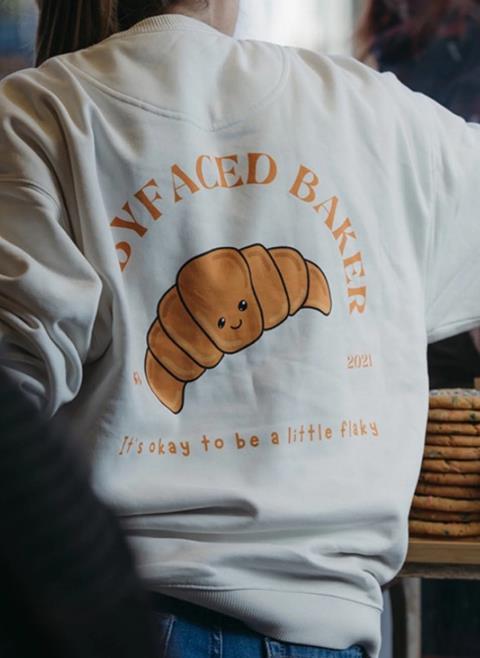
“We launched our first design on a T-shirt and a tote bag for our first Christmas back in 2021 and then slowly added more designs and items as the bakery (and our merch) grew in popularity,” says Babyfaced Baker founder Rhiain Gordon.
Tote bags and caps have always been and remain the bestsellers, according to Gordon who creates all of the merch designs. “I wanted to introduce merch to have an extra bit of fun on the shelves that matches our brand. We get a large number of tourists visiting each year so it’s nice to have something they can take home with them too.”
Although the bakery doesn’t sell “an overly large amount of merch”, it’s steady. Items can be bought in-store or online, and, to keep things streamlined, the bakery ships out all merch every Thursday which is when it ships out its baked goods.
Start small and test is the overwhelming advice from the experts, particularly as merch is a nice to have not an essential for running a bakery business. And while some multi-talented bakers have created products themselves, there are plenty of artists on hand to make the designs pop.
“You don’t need to commission a full merch range,” advises Russell. “A single well-designed product that really reflects who you are will always outperform a broad range of generic items. One brilliant thing beats 10 mediocre ones every time.”
Time to get those thinking caps on and the bun puns flowing.

No comments yet