













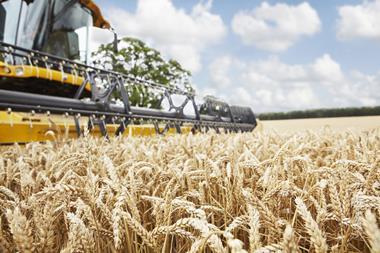
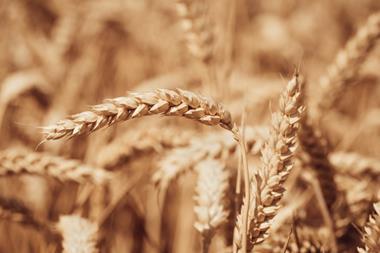
A lack of rainfall has taken its toll on UK wheat crops, with initial yields below the five-year average.
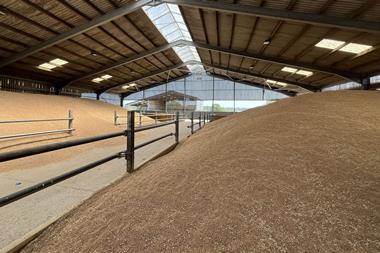
The exceptionally hot and dry weather has prompted farmers to harvest two to three weeks earlier than usual, making this the earliest harvest in more than 20 years according to AHDB. Many farmers have been working through the night to avoid the highest temperatures.
With just over half (54%) of the wheat crop harvested, AHDB reported that the average yield has been 6.8 tonnes a hectare, down 13% compared with the five-year average. It noted that the average is already relatively low because of weak harvests recorded in 2024 and 2025. The 2026 wheat yield is also outside the 10-year range of between seven and 8.9 tonnes.
While the yield recorded by individual farms has varied between 3.9t/ha and 11.5t/h, only 10% of farms surveyed reported yields above their five-year average, underlining the widespread impact of the dry conditions.
In more positive news for bakers, ADM UK Milling pointed out that early indications suggest higher protein levels in this year’s wheat. AHDB has reported an average of 13.5%, although this does vary.
“Harvest is still ongoing across much of the UK, so it is too early to draw firm conclusions about the overall impact of recent heatwaves on the wheat crop,” explained ADM technical director Simon Penson. “We continue to work closely with growers and our customers to monitor quality throughout harvest and help ensure the consistency and reliability they expect.”
This was a sentiment echoed by Mark Riley, head of milling & grain at Matthews Cotswold Flour who said the “initial results are showing good quality” with group 1 protein rates showing above 14% in the majority of samples and averaging around 13.5%.
“Recent heatwaves have, however, impacted moisture contents which are considerably low compared to previous years, ranging from 10.4% to 13.7% and averaging at 11.9% compared to the 14.3% we were seeing from the 2025 harvest,” Riley added.
Other crops
AHDB also reported on the harvest status of other cereal crops:
- Winter barley: Harvest is largely complete across the UK, with yields close to the five-year average
- Winter oilseed rape: Harvest is well advanced, particularly in southern England, and yields are above the five-year average
- Oats: Harvest is around one-third complete and yields are not yet clear
- Spring barley: Harvest is under way and initial yield reports are highly variable.
“While it’s encouraging to see oilseed rape yields improving on average, cereal yields have generally been below the 10-year average so far, with some farms experiencing significant reductions.,” said Anthony Hopkins, AHDB director of cereals and oilseeds.
“Following successive years of difficult weather and rising costs, the financial pressures are becoming increasingly acute for those businesses hardest hit.”
AHDB senior analyst Anthony Speight pointed out that differences in rainfall and soil moisture retention have had a major influence on crop performance. Crops on lighter soils have generally been more affected by prolonged dry conditions than those on heavier land.
“Although harvest has progressed rapidly across most regions, we’re seeing considerable variation in yields between farms, reflecting differences in rainfall, soil type and cropping decisions,” he explained.
“At this stage, the emerging picture points to disappointing cereal yields in many areas, but we’ll gain a clearer understanding as harvest continues.”









No comments yet