







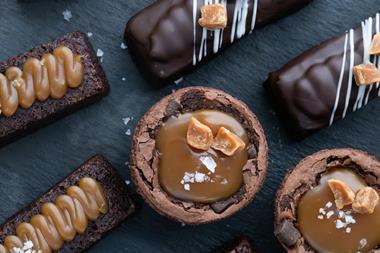
Kerr’s Bakery has used a new food surplus system to repurpose offcuts of its traybakes into an ingredient in chocolate snacks.
The ZRO system aims to help manufacturers, retailers and brands keep surplus food within the food market. The core concept behind ZRO is that if something was made to be food, its highest value is to stay food.
“For too long, surplus has been approached as something to manage once the original route to market disappears,” explained ZRO Group managing director Matthew Stephenson. “We see a much bigger opportunity: to retain as much of the value already created in that food as possible.”
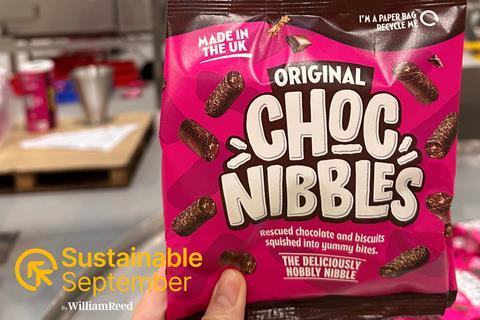
ZRO Group, which was previously called Sweetdreams, produces the Choc Nibbles confectionery brand that is made using surplus chocolate and biscuit pieces.
Stephenson added that every surplus stream is different, and that the right approach might be prevention, redistribution, reformulation, repurposing or recovery. ZRO has been developed to connect specialist businesses across the food industry, and identify the highest-value viable use for surplus food.
“It gives businesses a simpler way to explore better outcomes while keeping food as food wherever it is safe and viable to do so,” said Stephenson. “That is where we believe the next opportunity for the industry lies – not simply managing surplus more efficiently but rethinking what it can still become.”
ZRO said a recent pilot project with a leading UK biscuit manufacturer created more than £156,000 of additional value from 438 tonnes of surplus material.
Shortbread repurposed
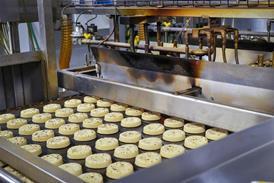
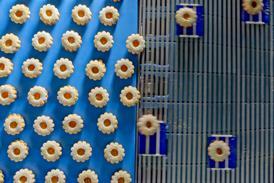
Another business to have employed the ZRO system is Kerrs Bakery, part of the McGhee’s Group, that produces traybakes including products such as Millionaire Shortbread. The bakery had found that as production volumes increased, offcuts, mis-shapes and damaged products were going into general waste streams despite remaining suitable for food reuse.
ZRO said its team worked closely with the Kerrs site to find a way to safely reuse the food. They identified that tray bake off-cuts could be repurposed as ingredients for ZRO Group’s Choc Nibbles, and a tailored process was developed to collect the offcuts onsite.
Kerrs operations manager Gary McGeough said this had given the bakery a reliable and cost-effective way to manage surplus more responsibly. He estimated that around 20 tonnes of surplus bakery product had stayed in the food chain during the first 12 months.
“The results so far have encouraged us to look more closely at how we manage surplus and explore further opportunities to create value from it,” McGeough said.
While Choc Nibbles are produced by ZRO Group, not all the surplus processed through the ZRO system is used by ZRO’s own business. The company explained that it assesses each surplus stream and identifies the highest-value viable outcome.
“Depending on the product, this may mean redistributing it for people, reformulating it through ZRO’s own food-to-food capability, or reprocessing it into a suitable ingredient that can be returned to the original manufacturer or supplied to another food manufacturing business,” said a spokesperson, adding that where a food use cannot be found, the material may be repurposed for animal nutrition.
This September, sustainability takes centre stage across William Reed.
As the food and drink industry navigates economic uncertainty, evolving consumer expectations, technological disruption and the transition to a low-carbon future, access to trusted intelligence, expert insight and meaningful connections has never been more important.
As a trusted voice in the food and drink sector, we have a responsibility, and an opportunity, to use our influence to accelerate progress on one of the most important challenges facing our industry. Sustainable September brings together our content, expertise and people to explore the industry’s biggest sustainability challenges and showcase the solutions making a difference.


No comments yet