













An innovative UK trial is underway to test whether growing a mixture of milling wheat varieties can deliver better crops.
The four-year project will combine UK trials with experience of farmers and millers to assess the potential of milling wheat variety blends to deliver on yield, meet milling specifications, and contribute to more sustainable production practices.
It is funded by the Agriculture and Horticulture Development Board (AHDB) at a cost of £260,205.
The need for robust information on blends – growing multiple varieties as a single crop – was identified in the most recent review of the AHDB Recommended Lists for cereals and oilseeds (RL).
In addition to potentially delivering stronger yield and quality (compared to single variety stands), cereal blends may produce other benefits such as better yield stability and reduced disease severity, the AHDB said. This which would help reduce fungicide spray intensity, contribute to the management of fungicide resistance risks, and prolong the durability of disease resistance genes.
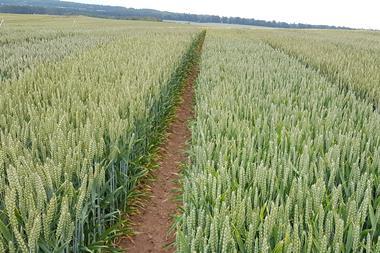
The AHDB variety blend tool for winter wheat and experience will be used to identify hard milling varieties (UKFM Groups 1 and 2) to include in the project’s dedicated variety blend trials, which will also feature the same varieties in single stands (for comparative purposes).
“Based on pedigree information and RL agronomic data, the AHDB variety blend tool for winter wheat can identify potential blends. However, as the tool data is based on varieties grown as straights, it does not account for complementarity of traits,” explained AHDB crop protection scientist, Georgia Hassell, who is leading the variety blends initiative.
“In other words, it does not indicate whether a mix will be greater or less than the sum of its parts. These trials will specifically assess how varieties complement each other in mixes, including how they exploit resources in a relatively wide range of timings and spaces.”
The trials will be drilled each autumn (2025, 2026 and 2027) at two experimental sites:
- Harper Adams University (Shropshire) – generally has a high septoria tritici pressure
- Agrii Throws Farm (Essex) – generally has a high yellow rust pressure.
The trials will include the following treatments:
- No or low-fungicide treatment to test disease resistance of blends compared to their component varieties
- A high fungicide intensity treatment (Recommended Lists standard fungicide programme) to suppress all diseases to test the additional benefits of blends.
Various measurements will be taken, including disease levels, canopy assessments, growth stages, height, and yield. The project will also assess grain quality data, via milling and baking tests, analyse mycotoxin concentrations and record the presence of ergot.
Led by experts at Harper Adams University and Cope Seeds (UK) Limited, the new work will deliver evidence on the performance of variety blends, prime conversations among farmers and millers, and ultimately underpin the adoption of blends in the UK.








No comments yet