


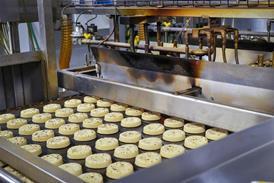


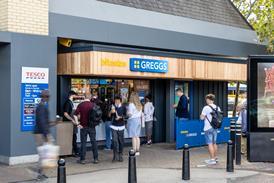
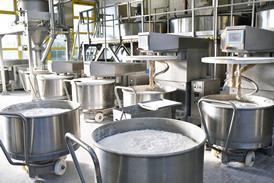






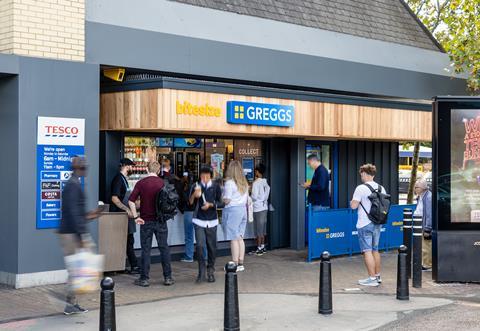
The baking industry has reacted to the seismic news of Greggs plans to close four manufacturing sites, placing around 740 jobs at risk.
Bakery consultant Lucas Fussnegger described it as a “very interesting development” that was mainly down to staff costs. “The last few years have been challenging for anyone with a lot of manual labour,” he said, blaming government changes such as hikes to minimum wage and National Insurance contributions.
Fussnegger highlighted how Greggs is a very dynamic business and one that can see the value in investing into more automation. “Over the past five years a lot has been invested into automation and there is more to come,” he added.
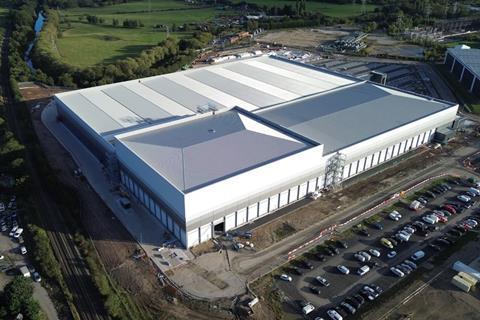
Julie Palmer, managing partner at financial and real estate advisory group BTG, pointed to the new national distribution centres in Derby and Kettering as the backbone of Greggs’ new manufacturing strategy. These sites have been designed to support its target of 3,500 shops (its current estate size is 2,796), with frozen storage and picking beginning in Derby in Q4 2026 along with the commissioning of a new sweet production line.
“Fewer, larger, better-equipped sites, served by centralised logistics, give Greggs both capacity and efficiency,” commented Palmer, who thinks the move actually strengthens the bakery chain’s vertically integrated model rather than stepping away from it. Higher volumes per site can afford improved ROI on new production lines, she notes, whilst making it easier to scale successful products across the estate.
The centralised distribution also gifts Greggs larger, more predictable ingredient and packaging volumes, which bolsters its procurement capabilities and supports longer-term supplier partnerships.
“In short, Greggs is doubling down on owning its supply chain, and that control is a key part of how it protects its value positioning,” added Palmer.
The bakery brand has also announced that it will source a small number of products from specialist suppliers. Fussnegger expressed how there will be some bakeries that will benefit from this with many being able to invest into their own sites. But he suggested an alternative reason for the changes.
“Greggs is now selling more coffee than anyone else and the effect of El Niño [more extreme weather] and GLP-1 [weight-loss medication] is clearly visible in their sales,” he said. “There is a drop in consumption in sausage rolls and other savoury pastries with the rise of more high-quality chains such as Pret and Gail’s taking the food part of the business.”
According to Palmer, the timing of proposal to reshape Greggs’ manufacturing footprint is “sensible” considering the continuation of inflationary pressures. “Greggs is guiding to around 2% cost inflation for 2026 but has flagged that pressure may be greater in 2027,” she said. “Structural savings secured now will help protect margins and preserve its value positioning as that pressure builds.”
Greggs’ Q3 trading update on 30 September showed continued strong performance including a 3.4% increase in like-for-like sales at company-managed stores. The same day, its shares surged to their highest price in over a year (2,058p) following an early morning update to investors that had it expecting a “modestly improved” profit for the year.
Since 2024, Greggs has invested more than £300m in its manufacturing and logistics network.
“This is a well-capitalised business investing ahead of demand: building the infrastructure for a 3,500-shop estate while reducing its unit costs,” said Palmer. “It also continues a proven playbook. The 2016–2020 supply chain programme built ‘Centres of Excellence’ that underpinned the last phase of Greggs’ expansion, and this is the next iteration of that approach.”
Workers union reacts
The Bakers Food and Allied Workers Union (BFAWU) has a dedicated page for Greggs workers on its website, proclaiming a long-standing recognition agreement with the company including regular regional and national meetings between union reps and management.
BFAWU general secretary Sarah Woolley expressed deep concerns about the proposed changes to Greggs manufacturing network. “Our immediate priority is our members, their jobs, their families and the communities that could be affected by these proposals,” she said. Woolley noted that the union’s members were understandably asking why their jobs and livelihoods were put at risk in the name of efficiency and future progression against a backdrop of the company’s strong performance.
During the newly launched consultation process – which will last a minimum 45 days – the BFAWU will be closely scrutinising the proposals, challenging them where necessary, and exploring every possible alternative to compulsory redundancy, asserted Woolley.
She also revealed the union had already started conversations with members working close by to the Greggs sites touted for closure, suggesting they freeze recruitment in the future to give those affected an opportunity to find new work quickly.
Greggs currently employs around 33,000 people in total, although these are mostly at its retail shops. While the number of new jobs being created at its new site in Kettering has yet to be announced, the company is expecting to hire around 600 staff in Derby.
Greggs CEO Roisin Currie revealed during a media call on 30 September that relocating workers was absolutely an option, although location-wise this doesn’t make sense to be from the proposed site closures to the new centres. “If we can’t find opportunities within the business, we then work with people on things like CV writing, preparing for jobs outside, and we will also link with employers in the local area to try and understand what other opportunities exist,” she said.








No comments yet