











Confidence remained downcast amongst food manufacturers over last year’s crucial Q4 trading period, according to the Food and Drink Federation (FDF).
The trade body’s latest State of Industry report had sector confidence at -31% for the 2025 festive season, a time when consumers usually boost sales by filling up baskets with additional treats.
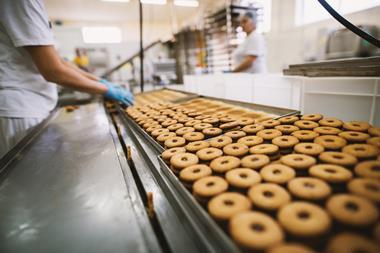
Lifting of uncertainty around the Chancellor’s Autumn Budget did provide some relief to businesses including bakeries, with confidence rising from a trough of -60% the previous quarter. It had been at -40% for Q2.
But the lack of concrete measures from the government to stimulate growth wasn’t enough to result in positive confidence across the industry. It was particularly bad amongst smaller businesses, with half (50%) of SME suppliers saying that conditions had actually gotten worse in Q4 compared to Q3. Similarly, 45% of mid-sized businesses agreed that conditions deteriorated in the golden quarter.
Firms reported that production costs – which include the cost of energy, ingredients and labour, and regulatory pressures like the new Extended Producer Responsibility (EPR) packaging tax – had risen by 4.4% in 2025. The average increase in costs was up to 5.3% for small businesses which restricted their ability to invest in productivity gains, noted the FDF.
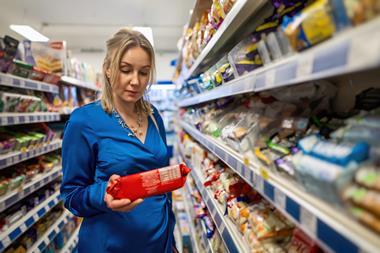
There was also little opportunity for suppliers to recover the impact of rising costs as consumer confidence was found to be matching that of the industry in Q4. ONS public opinion data for December 2025 reported 39% of people to be cutting back on essential spending due to higher food prices.
In spite of these challenges, the State of Industry report revealed that there’s still appetite for growth amongst small- and mid-sized food manufacturers. Two fifths (40%) of SMEs are said to be looking to grow sales in foreign markets and just over two fifths (41%) are planning to increase investment in machinery this year to help modernise and automate processes.
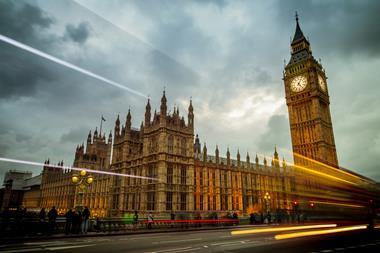
The FDF is urging the government to provide the right support to drive productivity and sustained growth including ensuring that, as the UK’s largest manufacturing sector, food and drink receives a fair share of R&D funding and is not overlooked for support for energy intensive industries.
In addition, SMEs interested in driving sales abroad should be given targeted support to help with exporting, said the FDF. It suggested replicating the Welsh and Scottish Government’s schemes of support for SME exporters by promoting their products at international trade shows, which it said would cost the UK government £2.6m.
“UK food and drink manufacturers are 97% small and medium sized businesses – ambitious, agile and innovative businesses,” commented FDF chief executive Karen Betts. “Government shouldn’t underestimate their potential to drive jobs and growth. We’ve set out a blueprint of practical measures to unlock £50bn worth of growth, but are yet to see any of these actioned by government.”
Betts noted that UK food and drink is popular globally, and known for its quality, creativity and innovation. “Setting the conditions for success here at home while growing those exports is a win-win for government, industry and communities up and down the country. The right government measures will pay dividends in business confidence, investment, productivity and growth,” she added.
The FDF said the government should also maintain its commitment to put any upcoming policy through an ‘Inflation Gateway’ to assess what their impact would be on driving up production costs for food businesses, and in turn, prices for shoppers. This includes its proposals to change the Nutrient Profile Model (NPM) – the model used to assess which foods will fall under restrictions against advertising less healthy foods – to determine the impact on businesses’ ability to invest in developing healthier products. Betts previously expressed “serious concerns that changing to the new model will mean many healthier options could no longer be promoted or advertised to consumers, which runs the risk of them being delisted by retailers”.







No comments yet