











The baking industry sits at a critical juncture in its decarbonisation journey.
It, like many other sectors, is facing mounting pressure from consumers and is locked in to government commitments as businesses are expected to operate with net-zero emissions by 2050.
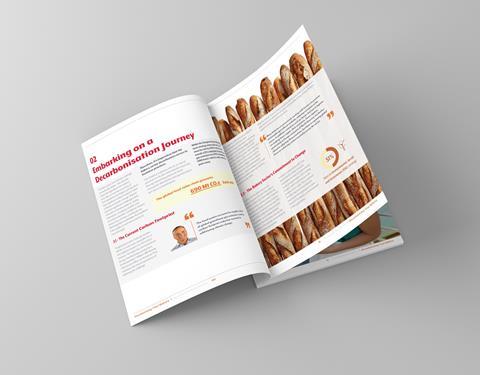
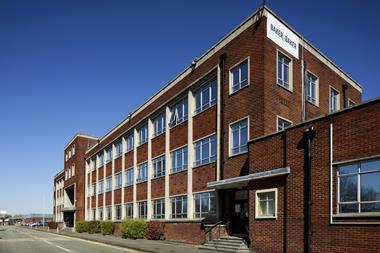
While this might seem like a long way away, firms need to get their journeys underway sooner rather than later which is why equipment supplier Spooner has released a new free-to-access report on how they can realistically transition toward lower-carbon production. Entitled Decarbonising Your Bakery: A Practical Guide, it features insights from industry experts including at Baker & Baker, Federation of Bakers, and American Pan.
Here is a summary of some of its key recommendations:
Turn off offsetting
Bakers should prioritise carbon reduction over offsetting.
As Professor Averil Macdonald explains: “A lot of the research conducted shows that the vast majority of offsetting projects do not achieve their intended outcomes. Businesses may feel they are absorbing everything they’re producing, but currently that is not a valid assumption.”
Unlike measuring carbon emission production and reduction, carbon offsetting is often difficult to measure and quantify effectively, making it an unreliable strategy for achieving meaningful climate goals, notes the report.
Measure the scopes
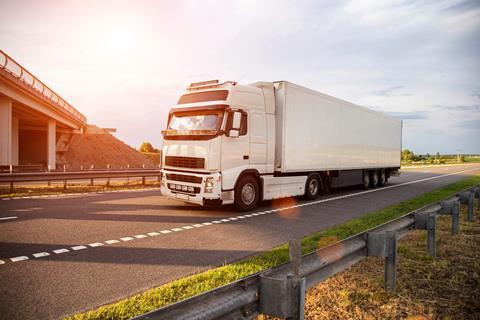
The UK industrial bakery sector consumes roughly 570,000 tonnes of CO2 per year [Carbon Trust’s Industrial Energy Efficiency Accelerator report], the vast majority of which comes from ovens, provers, coolers, and associated steam boiler plants. This indicates that there is vast potential for carbon reduction within the factory.
“I see transportation, ovens, and refrigeration as the top three areas where decarbonisation can drive significant carbon reductions,” says Jim Colston, director at Process Energy. With emissions from transportation primarily derived from road-based movements of raw materials – sitting within Scope 3 – this is harder to control than the other Scope 1 emissions.
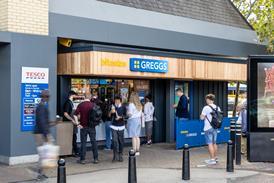
The composition of energy usage and carbon draw at bakeries depends on what products are being made. For example, bread requires greater energy draw from ovens whereas bagels need to heat water baths. Meanwhile, some bakeries such as retail chains like Greggs that employ in-store bake-off models see the greatest energy consumption from refrigeration.
Businesses can get better visibility on energy consumption across their operations by using modern measurement solution such as from Siemens, which helps uncover hidden inefficiencies through capturing of granular data. AI can then help adapt processes dynamically, reducing energy and waste.
Optimise oven efficiency
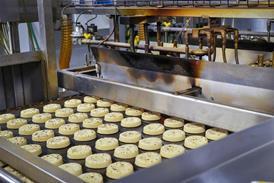
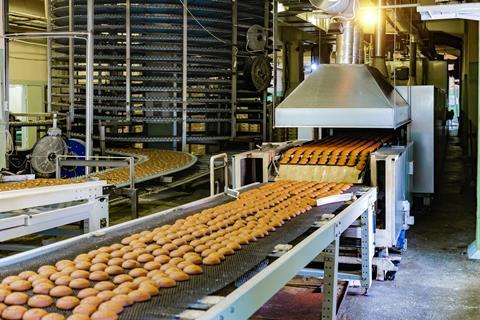
Ovens represent the heart of any bakery operation and a critical area where inefficiencies can accumulate.
Andrew Stead, general manager at SpoonerPlus, points to several factors that impact the level of carbon emissions stemming from ovens including cleanliness, dampers & airflow systems, gar burners, and forced extract systems.
“If you don’t maintain, optimise, and keep on top of your ovens, then a buildup of these factors can lead to an increase in carbon emissions being produced,” says Stead.
But testing how bakery processes could be improved through physical trials is quite wasteful. So businesses could explore the emerging technologies that offer digital simulations to help identify efficiency gains.
Switch to renewables
Removing natural gas will be a vital component in the transition to net zero for any bakery. However, there are unique challenges that arise in three key areas – oven supply, steam generation, and building heating – when replacing gas with green electricity.
Companies must also be wary of making the right choice of renewable energy source, including how green it is, if it will be consistent, what can be adopted within an existing factory infrastructure, and the government policies that determine its availability.
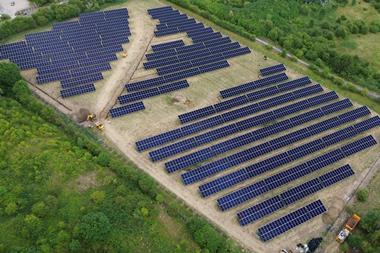
On-site generation is a way to secure renewable and reliable energy supply. The report lists three examples of bakeries that have done this: Premier Foods (installed a £2.1m, 2.2MW solar farm at its Mr Kipling factory in Barnsley in 2025), Premium Bakery (installed solar panels at its East Lothian bakery), and Jones Village Bakery (installed over 1,000 solar panels at its Wrexham site).
Alternatively, hydrogen can be blended into methane (aka natural gas) to lower carbon emissions whilst still burning in the same way bakeries recognise. And hydrogen can be created from renewable-powered electricity.
Transform equipment
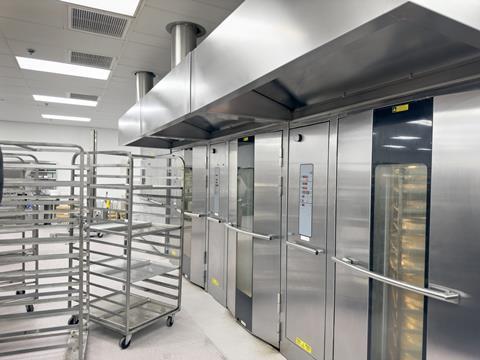
Hybrid ovens have been developed to help address real-world constraints for energy transitions, operating on gas and electricity synchronously. All of new gas ovens from Spooner, for example, come with a slot where a power module can be added at a later date, enabling them to be powered partially by electricity.
The report urges bakeries to seriously consider adopting hybrid or electric ovens when replacing aging equipment. Any purchase decisions made today will impact the next 30 years, it notes. Therefore, today’s purchase decisions are critically important for tomorrow’s compliance.
Carbon emissions can even be reduced with new baking pans such as from American Pan, which are made with high strength aluminised steel to improve thermal transfer and thus lower energy use.
Lastly, heat recovery represents one of the most immediately impactful applications of circular economy principles in bakery operations. Modern technologies can capture thermal energy usually lost to the atmosphere and redistribute it, such as for pre-heat combustion or heating the factory floor.
Read the full report here.





No comments yet