











The Scottish government is continuing to fund the development of new bakery ingredients and products that are both healthier and more sustainable.
One such example is Palm-Alt, an innovative plant-based alternative to palm fat, the imported ingredient which many UK bakers rely on but is linked to the destruction of tropical rainforest.
Created by food researchers at Queen Margaret University (QMU) in Edinburgh, the plant-based blend of rapeseed oil, fibres, and proteins is also healthier than palm shortening (commonly used in the likes of biscuits, cakes, and pastries) as it contains up to 25% less fat and 89% less saturated fat.
The new allergen-safe substitute can be produced in large quantities from ingredients available in the UK, meaning it helps reduce food miles and their related carbon emissions as well.
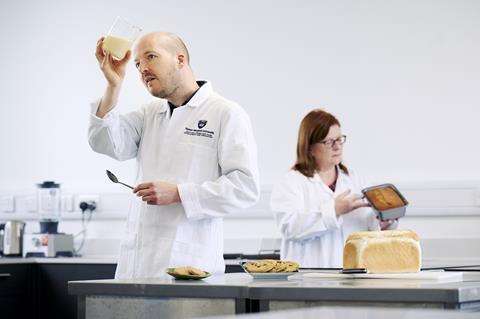
Initial trials at QMU in 2023 showed that cakes, biscuits and bread made using Palm-Alt maintain their regular texture, flavour, and colour. The research team including food scientist Dr Julien Lonchamp and Catriona Liddle, head of the Scottish Centre for Food Development and Innovation at the university, has since moved testing out of their labs and into industrial manufacturing settings at Opportunity North East SeedPod, Scotland’s dedicated food and drink innovation hub in Aberdeen.
With excellent results reported, several UK food manufacturers keen to enhance sustainability and nutrition claims in their products are reported to have entered licencing discussions with Edinburgh Innovations, the commercialisation service at QMU who are managing the patent of Palm-Alt.
More recently, the Scottish government provided £239k via its Proof of Concept Fund to support further development of Palm-Alt including extension of its range. The project will run until the end of March 2026.
“Today, the focus on nutrition and on identifying and developing more sustainable food and food sources has never been higher,” commented Dr Julian Lonchamp. “This Proof of Concept funding from the Scottish Government will allow us to continue our work in commercialising Palm-Alt, seeking out new applications and solutions for the food industry in, for example, the use of Palm-Alt in pastry and confectionery products.”
The Food and Drink Federation (FDF) Scotland has today (8 October) revealed the list of 14 manufacturers set to receive financial support from the fifth round of its Reformul8 Challenge Fund.
The fund is a key mechanism of the FDF Scotland’s wider Reformulation for Health programme – funded by the Scottish government – and sees each business provided up to £5,000 towards a project focussed on positive nutritional change in products.
There are five bakeries among the latest cohort, including former Reformul8 Challenge Fund recipients Bells Food Group and Saltire Patisserie along with Luscious Lovelies Cakes, the Premium Bakery, and Nairn’s Oatcakes.
“This fund has improved diets by removing hundreds of millions of calories from food and drink over recent years and I am encouraged by these latest innovative proposals,” said Scotland’s public health minister Jenni Minto. “Addressing the problem of obesity, helping people eat well and maintain a healthy weight is a public health priority.”
Other initiatives run by FDF Scotland include the Healthier Bakery Fund and the more recently launched Healthier Food Service Fund.
Edinburgh-based wholesale supplier Saltire Patisserie was previously highlighted by the trade body for its use of funds to create reduced-salt bagels and bread. These products saw the company triumph in the Diet & Health category at the recent FDF Awards 2025.
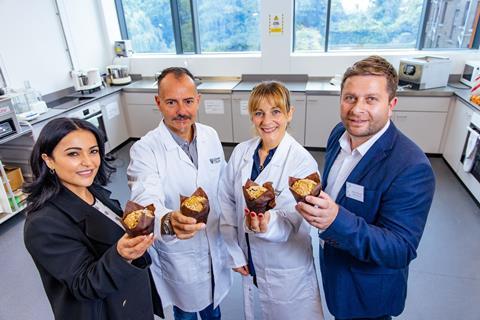
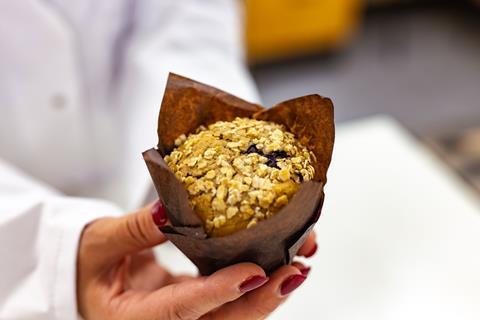
For the past two years, Saltire has also been collaborating with Abertay University in Dundee on a Circular Economy Project. This has led to the development of a new muffin made using brewer’s spent grain (BSG), a byproduct of the beer brewing process.
Naturally high in fibre and protein, BSG serves as a nutritious and environmentally friendly alternative to traditional baking ingredients. By adjusting the drying and milling techniques, the food scientists reduced the grain to a fine 0.25mm particle size – a step that improved texture, moisture retention, and shelf life.
Sensory testing was carried out at Abertay’s Consumer Experience Centre, a one-of-its-kind facility for food evaluation in Scotland.
“This partnership is a great example of how academic research can address real-world challenges,” commented Alberto Fiore, the university’s professor in food chemistry and technology. “By combining scientific insight with artisanal baking expertise, we’re creating healthier, more sustainable products that help tackle food loss.”








No comments yet