













The Health and Safety Executive (HSE) is carrying out a series of inspections at large bakeries across the UK.
Starting from this month, inspectors will check that bakery workers are properly protected from the dangers of airborne ingredients, including flour dust.
Exposure to certain dusty ingredients can lead to occupational asthma, a serious and potentially life-changing condition which has flour dust as one of its most common causes in Britain. Exposure to other dusty ingredients such as bread improver enzymes can also cause respiratory sensitisation, warned the workplace health and safety regulator.
Dust can cause the airways to become hypersensitive, meaning that even small amounts of dust can trigger asthma symptoms – in many cases the condition is irreversible.
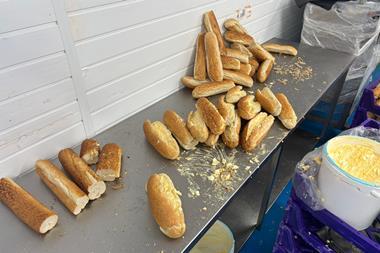
The danger for bakery workers is that dust generated from flour and other ingredients can linger in the atmosphere if not properly controlled. Many common tasks at bakeries are high-risk, including dusting flour during dough handling, tipping and dispensing dry ingredients, and cleaning up flour spills.
Flour spills should never be cleaned using dry sweeping or compressed air, noted the HSE, with an industrial vacuum cleaner (minimum M class) or wet cleaning methods used instead.
Employers must follow the hierarchy of controls under the Control of Substances Hazardous to Health regulations (COSHH). HSE inspectors will assess bakeries’ compliance with COSHH regulations, focusing on whether they have correctly considered their measures for managing risk in the following order of effectiveness:
- Eliminating dusty processes (such as using non-stick belts instead of flour as a lubricant, or using sensors to stop flour dusters when products are not present)
- Substituting dusty ingredients with alternatives (such as low-dust flour or liquid/gel-based ingredients)
- Engineering controls like local exhaust ventilation
- Respiratory protective equipment as a last resort.
In addition, inspectors will check that there is health surveillance in place for bakery workers exposed to dusty ingredients.
“Too many workers in bakeries are suffering from unnecessary exposure to dusty ingredients including flour,” commented Mike Calcutt, deputy director in HSE’s Engagement & Policy division. “When employers prevent exposure, the risk of asthma is removed. That’s the key principle we want bakeries to apply.
“It may be possible to reduce the risk with ventilation or protective equipment, but these controls should not be selected where elimination and substitution would be effective. I urge employers to carefully consider dusty processes, eliminating risk and substituting to prevent exposure by weighing the long-term benefits in sustaining prevention against the true cost of ill-health and using controls lower in the hierarchy,” Calcutt added.
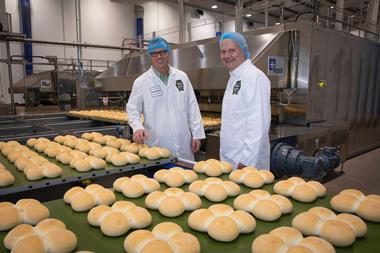
The HSE revealed it has seen the benefits of correct application of the hierarchy of controls in previous inspections, when a large bakery transformed its approach. The unnamed company assessed its use of flour nationally and trialled low-dust flours and dust suppressants, which dramatically reduced dust exposure, reducing the risk to workers.
By focusing on eliminating and substituting flour in the first instance, the company was able to implement fewer mechanical controls and reduce the time and cost needed to extract dust from the atmosphere, said the HSE.
Low-dust flour is now an established standard, and the Federation of Bakers’ Blue Book provides industry-specific guidance on dust control and health surveillance. Employers are encouraged to review these resources and ensure their control measures meet the required standards. Guidance on controlling flour dust in bakeries is also available at the HSE website.








No comments yet