











Cerealto is accelerating its UK ambitions by combining rapid product development, increasing scale and a co-manufacturing model designed to win retailer and brand partners alike.
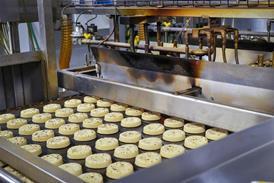
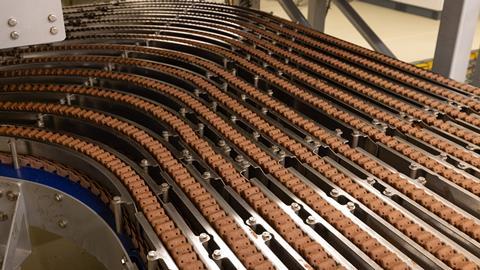
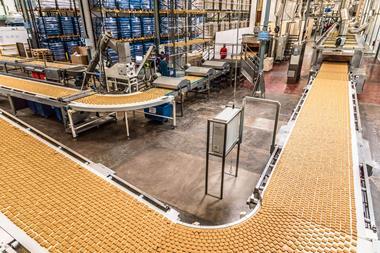
The company currently produces more than 36,000 tonnes of products per year – including biscuits, cereal bars, rice cakes, snacks, and gluten-free lines – at its two bakeries in Worksop and Manchester, either for retailer own label ranges or branded lines through co-manufacturing agreements.
These two sites employ around 600 staff in total, who are a part of a 3,900-strong workforce under Madrid-headquartered parent company Cerealto, which also operates six factories across Spain and Portugal, one in Mexico, and two in the US including the recently acquired Fresca Foods site in Colorado. It recorded 9.3% sales growth last year putting it on track to surpass the €600m turnover mark (£517m).
Cerealto opened its 330,000 sq ft, purpose-built facility on the outskirts of Worksop, Nottinghamshire a decade ago. The business then extended its UK manufacturing footprint in the summer of 2024 with the acquisition of Hill Biscuits, a historic biscuit maker founded in 1855 and based at Tudno Mill in Ashton-under-Lyne, Greater Manchester.
Over £11m has been invested to improve capacity and efficiency, with production optimised through synergies between the two locations roughly 50 miles apart. A central team has also been curated to manage all of Cerealto’s UK operations – profitability is said to have doubled since the Hill Biscuits acquisition.
“We tend to keep our factories efficient and up to speed to face market challenges,” Cerealto CEO Bosco Fonts tells British Baker.
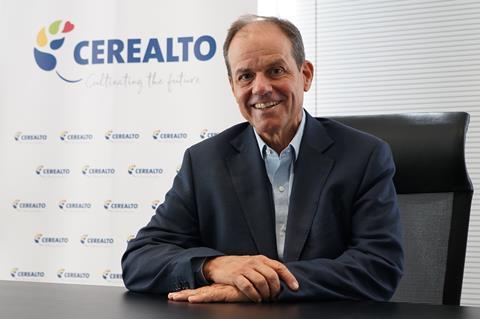
One of the biggest strengths of the company is its speed of product development, notes Spanish native Fonts, who assumed the leadership role in April 2023 having previously worked for PepsiCo, United Biscuits and LU Biscuits. “We brought into the UK this agility, as we like to call it,” he says, “and we just put this mentality of being a partner that’s the fastest in innovation.”
This helps the business stay ahead of the curve in an “extremely competitive” biscuit market in the UK. For own-label biscuit manufacturing, Cerealto is lined up against heavyweights like Fox’s Burton’s Companies, Elkes Biscuits (owned by Boparan Private Office – which recently acquired Brace’s Bakery and Roberts Bakery), Pladis (which also makes the McVitie’s brand range), and Biscuit International.
“We have to be ready for new formats and developments,” adds Fonts.
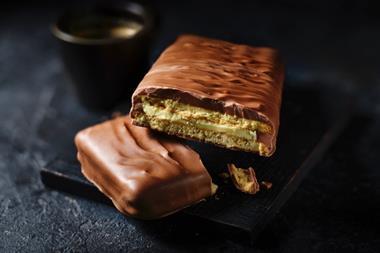
Such examples of Cerealto’s innovation strategy within its UK portfolio this year include adapting classic British desserts into traditional biscuit formats, such as for the sticky toffee and lemon meringue varieties of custard creams. It also created Chocolate Orange Bourbons.
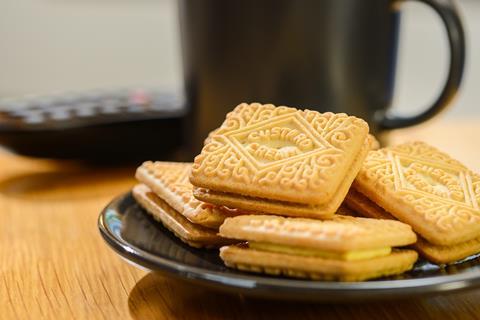
Despite Hill Biscuits being a brand in itself, the main focus of the company is on co-manufacturing for external brands or for retailers’ own label ranges, asserts Fonts, adding that the split between brands and own label is roughly 50% in the UK.
“Manufacturers are focusing now on marketing their brands,” he notes. “That’s why we are a unique pure-player contract manufacturer – we do not push our own brands like a traditional bakery would do. We want to reassure our customers that we don’t have a conflict of interest when allocating resources.”
The company also exports its UK-made products, accounting for around 10% of total sales, with customers in the likes of Norway, the Caribbean, and even Australia inherited from Hill Biscuits.
While flavour innovations in familiar biscuit types like custard creams and bourbons continues at Cerealto, the CEO also highlights the rise in more indulgent formats like chocolate enrobed or fibre and protein enriched biscuits. “We all thought the private labels would bring the prices down, but now we are seeing premiumisation in the market, and we’re providing for [this trend],” he asserts.
Another consumer trend Fonts thinks is here to stay is for nutrient dense foods – with less calories but more fibre and protein – as demanded by the increasing number of people on weight-loss medication (ie. GLP-1). Cerealto “saw that coming” more than two years ago, accepting that volumes would go down but seizing the opportunity to redeveloping its portfolio accordingly. One example Fonts gives is a reformulation of digestive biscuits with oats for added fibre and protein.
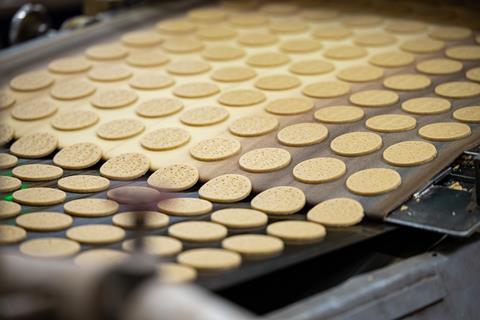
Cerealto UK is looking to expand more in the out-of-home sector with investments being made to roll out individually packed premium biscuits or packs of four or six standard biscuits. Hill Biscuits site has a “very big capacity” to produce these smaller formats, reveals Fonts, while noting how they are seeing increased adoption including for on-the-go occasions.
With the divestment of its pasta business in Spain, the parent company has now sharpened its focus on cereal products within the snacking and indulgence space. It has secured a €110m (£95m) financing facility to support further growth, €75m of which is to be spent this year including nearly €9m at UK sites.
Part of these funds have already gone on significantly expanding capacity for puffed rice cakes in Worksop. “We are now one of the largest producers in rice cakes in Europe,” the CEO confirms.
Without saying whether any further acquisitions are on the cards in the UK or elsewhere, Fonts expresses Cerealto’s desire to keep developing. “The company was born in Spain some 40 years ago, but we want to be the preferred contract manufacturer for both private labels and for co-manufactured brands,” he says. “We want to be the manufacturer’s manufacturer.”







No comments yet