









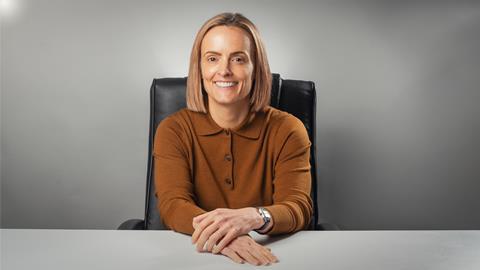
In her pole position of chief operating officer, Lucy Wills has been in the driving seat of an evolution at Finsbury Food Group.
Through initiatives she helped develop and implement, such as the Finsbury One Excellence Programme, the bakery manufacturer has become more integrated and focused on growth, automation, and talent development. British Baker caught up with the COO to find out more about how her work is steering the company and colleagues along a path of continuous improvement.
Wills began her career as a food scientist after graduating from the University of Glasgow, moving straight into operational roles rather than more typical routes such as food safety or NPD. She joined Finsbury 15 years ago to manage its continuous improvement strategy, which quickly morphed into leading capital investment.
She notes that this came at an interesting time for Finsbury, which was still operating more as a collection of businesses than a unified group following what she describes as a “high-energy acquisition trail”. This began in 2002 with the purchase of Cardiff cake manufacturer Memory Lane Cakes, adding artisan bread and morning goods supplier Nicholas & Harris in Salisbury the following year, and Bathgate-based free-from specialist United Central Bakeries in 2005 (later sold to Genius Foods). The Lightbody Group in Hamilton was acquired in 2007, and the next year Finsbury took over another free-from bakery specialist, A&P, along with Yorkshire Farm Bakery.
In 2015, Wills became site director in Hamilton then progressed to manufacturing director of its cake business in Glasgow. As the company sought to “bring the group together properly” following the pandemic, she was appointed group operations director in 2022 before stepping up to COO just over two years ago.
Wills describes herself as a generalist in terms of her leadership expertise, responsible for almost everything across the end-to-end value chain outside commercial finance and “a few other more unique parts”. She highlights four main initiatives she has helped implement across the group.
The biggest game changer, Wills says, has been the adoption of a best-in-class complementary systems platform featuring a suite of software for planning, product lifecycle management, and more. This has allowed Finsbury to leverage its scale and drive “foundational continuous improvement-type activity” up to completely revolutionising the way it reports management information, data from which can be used to derive insights and move the business forward.
The long race
Wills also helped launch the Finsbury One Excellence Programme, getting it off the starting grid and up to speed. “Finsbury One is about wanting to deliver world class performance,” says Wills, adding that it is “a marathon, not a sprint – it is something that we will be doing forever”.
She reveals her vision for the initiative was to address the “range of operational maturity” at its sites by building consistent repeatable performance that can be increased incrementally every year. Wills says her career taught her that “the best things happen when you bring the outside in”, in this case benchmarking itself against manufacturers outside of the bakery sector as well as within it, so that it is set up to achieve maximum results. “That way, we’re able to actually embed performance improvements sustainably across the business,” she adds.
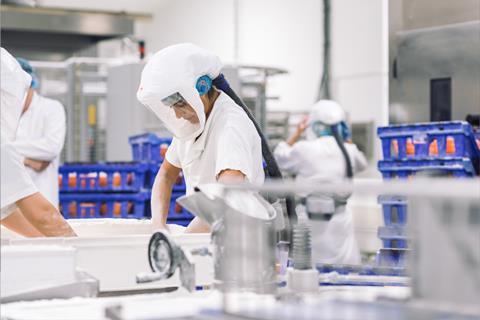
According to the COO, Finsbury One has delivered significant improvements across operations – everything from OTIF [On-Time, In-Full delivery orders] to efficiency. “It’s also more importantly built the capability of people within the business and that’s been really transformational for us. It’s meant that we’ve been able to evolve our organisational design in order to essentially grow what we need ahead of scaling our business further,” Will says.
One example she gives of the programme in action is from its ‘one line approach’, whereby key metrics from a single production line are analysed for opportunities to improve. Wills says a targeted rapid deployment exercise on a bread line has produced a 7% increase in efficiency over a 12-week period and taken it from 500k to 680k loaves per week.
Accelerating automation
Another part of Wills’ work has been on Finsbury’s capital investment programme, which has picked up pace over the past three years and is set to continue. With a current workforce of around 3,500 across its UK sites, the company is “constantly looking for ways to automate, but in a sustainable way that provides career opportunities for people within that”. Wills expressed how she is “pretty proud of our track record” in adopting proven technology to scale up quickly and realise the return on investment.
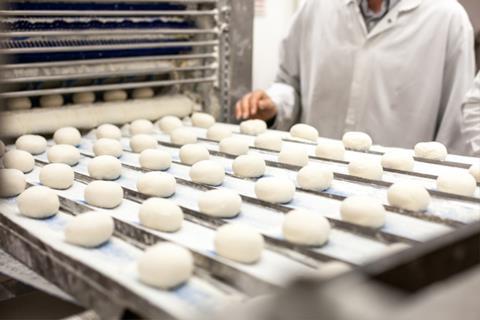
Last October, Finsbury unveiled a multi-million-pound investment plan at its dedicated foodservice site Kara in Manchester, including purchase of a new robotic water splitter and upgrades to proofing and packing areas as well as its pizza doughball production line. These form part of a first phase strategy on what Wills calls “direct automation” across its sites.
Meanwhile, phase two has it beginning to implement digital solutions such as a supply planning system enhanced by AI tools. “It does the heavy lifting and augments people’s capabilities, so they can spend more time on higher-value aspects,” she says. In addition, Finsbury has recently mapped all its business processes to identify opportunities for utilising AI, with an automated Overall Equipment Effectiveness (OEE) system being implemented over the next 12 months to help fast-track activity.
Future proofing
Wills has also helped develop Finsbury’s succession plan. She says that, with the labour challenges faced by food manufacturers and exacerbated by the likes of Brexit, Finsbury decided “really early on” about developing internal capabilities for growing its own talent.
This includes creating the Finsbury Academy – a virtual platform covering modern apprenticeship and graduate programmes that “stretch right into finance and commercial areas”, along with technical skills training. “If you don’t have the right capability and work culture, it’s very difficult to drive performance forward,” emphasises Wills, noting the firm talks a lot about a growth mindset with “everybody wanting to make tomorrow better than today”.
The COO asserts that Finsbury also enables people, be they existing staff or ones it wants to attract, to have a clear view of what a career path with the company will look like. “No matter what level you’re at, you can come to Finsbury and have a career and actually have something that you bring your discretionary effort to, as well as just turning up every day,” she says.
Finsbury has continued to expand its portfolio of manufacturers since Wills joined, acquiring Fletchers Group of Bakeries in 2014, Johnstone’s Just Desserts in 2015, free-from bakery business Ultrapharm in 2018, and Scottish sweet treats supplier Lees Foods in 2023. It grabbed a majority stake in London-based brand Lola’s Cupcakes last August, and bought Telford meringue and snacking bar specialist Flower & White in April this year.
Will says the two most recent acquisitions were interesting as they “have taken us into areas that we don’t currently operate so much within”. However, she notes they are aligned with Finsbury’s core purpose of being a manufacturer of specialty bakery. “We’re not going to move away from that,” she adds.


No comments yet