








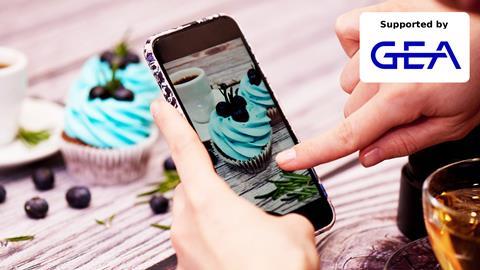
Older generations of bakers might moan that Gen Z never move from in front of their phones. But the truth is the right viral moment on socials can spark a surge in online orders or a pilgrimage with consumers forming queues out the bakery door.
According to research from American Express, four in five (80%) Gen Z consumers have visited an independent business after discovering it on social media – with the longest journeys averaging 95 minutes.
And over the last year this online buzz has inspired many offline bakery trends – from dot cakes, the Bruce chocolate cake, classic school bakes and more. Overall, it’s helped supercharge bakery by providing a global shop window to what’s possible.
But how do brands translate a social media phenom into real-world sales?
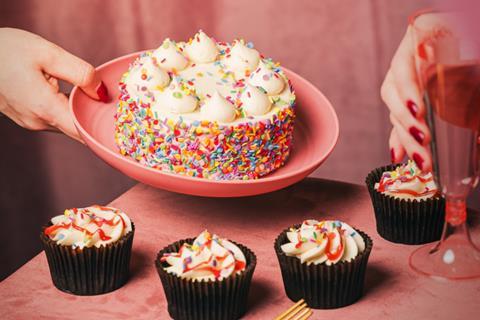
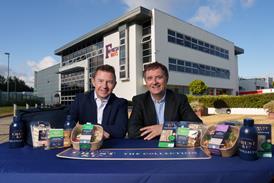
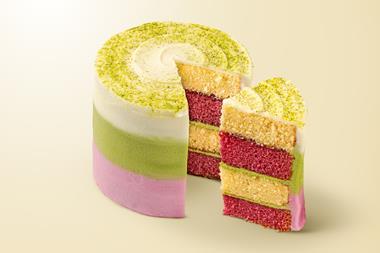
Finsbury Food Group scored a big hit with the Paint the Town Red Velvet bento cake box under its new Little Big Cake brand. This features a sponge cake and cupcakes topped with cream cheese frosting and plenty of sparkle.
“[It] was devised by looking at how we could take a highly visual, social-first trend and turn it into something that worked for mainstream retail,” says Ross Lowrey-Heywood, innovation manager at Finsbury Food Group.
“Bento cakes originated in South Korea and gained momentum through social media, particularly because they’re compact, playful, personal and shareable. We could see the format growing in independent bakeries, but no one had really brought that idea into the supermarket cake aisle at scale.”
“Social media can create awareness, but familiarity is what closes the sale.”
Lowrey-Heywood adds that the success wasn’t just about replicating a trend – but also understanding why the trend actually resonated with shoppers in the first place. He cites several shifts happening in cake which influenced the launch. These micro-trends include much smaller celebrations and more informal gifting, plus the rise of cakes which felt personal without necessarily being bespoke.
“The success comes from the balance it strikes. It sits between something extraordinary and different, but still recognisable and accessible. Social media can create awareness, but familiarity is what closes the sale. Little Big Cake gives shoppers something they want to show off before they eat it, while still delivering a flavour and format they immediately understand,” he says.
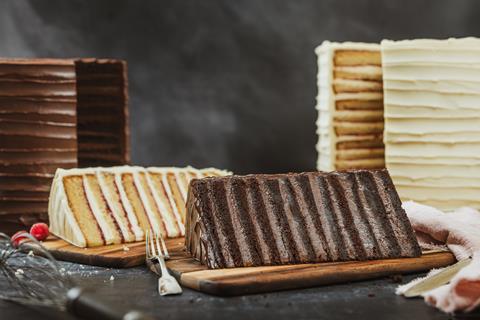
Nostalgia and popular culture also present a powerful draw for shoppers. Holly Wales, activation manager UK from CSM Ingredients, pinpoints the viral ‘Matilda cake’, inspired by Bruce Bogtrotter and the film’s famous chocolate cake scene, as exemplifying both.
“The trends that have delivered the strongest sales growth combine strong visual appeal with something consumers already recognise such as nostalgia, a familiar flavour or a connection to popular culture,” she says.
Of course, Lowrey-Heywood makes mainstream success sound (relatively) easy. Yet for bakers the big problem with trends is that customer buzz, along with sales, is guaranteed to eventually fade away. Plus, thanks to social media algorithms that increasingly prioritise newness and novelty at any cost, the hype cycle of boom to bust is constantly accelerating.
This means bakers hopping on an existing trend can experience diminishing returns. Annabel and Emily Lui, founders of Cutter & Squidge, remember launching both a Dubai-inspired layered cake and a Dubai Giant Biskie when the Dubai chocolate trend was at its height.
“We saw an initial flurry of orders, but these began to taper off as the trend started to die down and the market became increasingly saturated,” says Lui. “It showed us that while a viral trend can generate significant initial interest, that demand isn’t necessarily sustained over the longer term.”
Completely dotty?
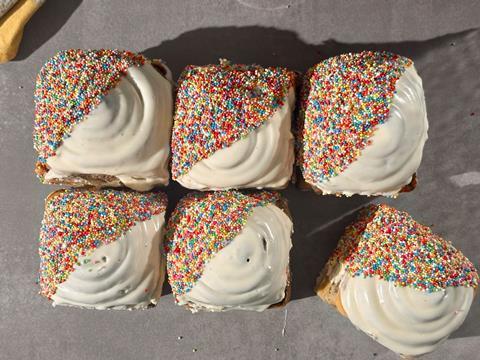
It’s certainly true that for every winning trend there’s plenty of pretenders that never properly catch on. Many commentators cite Dot Cakes – Instagram-friendly but basic cakes topped with icing and sprinkles – as one bake that didn’t quite live up to the hype.
“While [there was] a high number of views and engagement rates on social platforms, we have not seen many bakeries or retailers picking up and running with Dot Cakes as a product line,” says Jacqui Passmore, marketing lead west EU & AMEAP at Dawn Foods. “In fact, the craze has already dropped off on TikTok.”
Kyle Rodgers, commercial director at Rainbow Dust, thinks there was never anything special about them. “No one took it upon themselves to adapt and evolve them so they just lost momentum,” he adds.
Their relative flop reinforces an important truth about translating trends. As Dan Jones, marketing manager at British Bakels puts it: “staying power comes from being more than popular online: a trend has to translate into products that work commercially and that consumers want to buy.”
Putting a spin on an existing product is often the most effective approach.
“Some of the most successful innovation takes something very familiar and gives consumers permission to experiment with it,” says Adam Cohen, senior marketing manager at flavour house ITS.
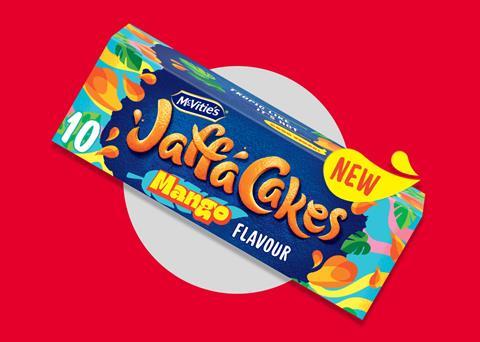
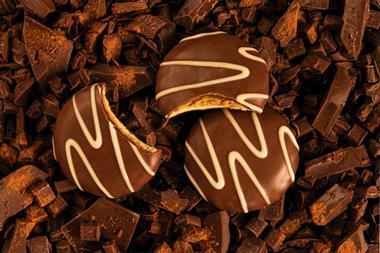
He gives Jaffa Cakes as a good example where the brand has increasingly experimented with new concepts like Cola Bottle, Hot Honey, and Mango to let shoppers dip their toes in something new while retaining a format they recognise.
“This idea is being pushed hard in cake private label,” notes Cohen. “Retailers have become considerably braver and faster with NPD, so major brands can no longer rely purely on heritage and familiarity. They must continually create reasons for consumers to notice them again and while tapping into the latest trend, make sure that it also has longevity.”
Longevity might be difficult to achieve with trending bakes – but it’s not impossible. For example, bakers have successfully used matcha (one of the decade’s most enduring flavours) to offer on-trend twists to everything from cupcakes to cookies, and the flavour is still going strong.
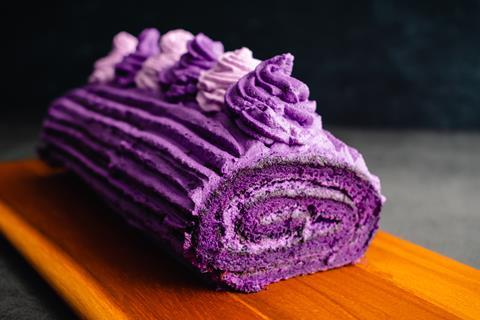
Its success might also have paved the way for ube to do the same. Another name for the purple yam, it has a sweet marshmallow taste to contrast with matcha’s more umami profile.
Already bakers like Kasa & Kin and Paison Bakery in London have successfully experimented with treats incorporating it.
Social media magic
Whatever the latest fad, one thing’s for sure: today social media feels like the number one driver for cake trends. So how exactly can bakers sprinkle a little bit of social media magic on their products?
Harnessing Autonomous Sensory Meridan Response (ASMR) is a great start. After all, there’s a reason influencers scrape their knives against pie crusts and tap manicured nails on packaging – it’s to dial-up the sensory experience for online viewers.
“As texture is such an important part of the customer experience at the moment, brands can bring this to life through content such as a fork cutting through a soft, spongey cake, ASMR-style footage capturing the crunch of a bite, or sprinkles being added to cupcakes,” explains Tyler Bennett, business development manager at Tiptree Patisserie.
“Video is a great way to showcase texture. Something as simple as snapping a biscuit in half to reveal its crunch can give customers a much stronger sense of what they can expect when they try it themselves. Ultimately, the more you can bring the eating experience to life, the more effectively you can sell an existing product on social media.”
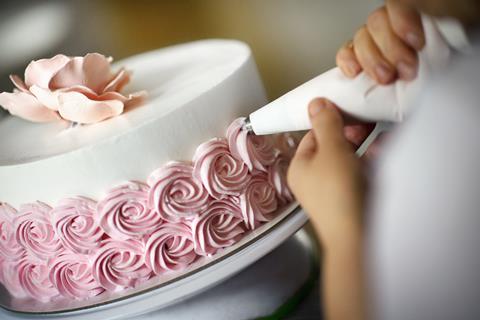
On one hand viewers are looking for a sensory experience from social media – content that provides a powerful sense of how a bake feels to buy and eat. Lingering on details like icing squirts and slathers of frosting can help accentuate the impact.
But one of a bakery’s biggest social media assets can be the people behind the business. Cutter & Squidge regularly showcase its staff in creative ways on social media – from videos in which they pretend to ‘bury’ disloyal customers, to behind-the-scenes interviews caught with mics on a cake knife.
“We use social media to build a connection with our customers beyond individual products,” says Lui.
“Creating that relationship gives customers another reason to stay engaged after the initial trend has passed. Our Naked Cake range has seen sales grow by 144% over the last year, supported by a strong focus on social content that showcases the product. Showing the cakes being made from initial baking through to final packaging allows customers to see the craftsmanship that goes into the finished product and feel part of that process, giving it fresh attention.”

Bringing real-life people to the fore can also be a positive approach to a macro-trend that promises to swallow social media whole: the rise of AI.
Generative AI means that For You pages can be overwhelmed with bakery creations that look incredible – but are ultimately too good (or complicated) to be real. And already, YouTube is awash with channels featuring bakers trying to turn them into real-life cakes.
Lui says that, ironically, the rise of AI-generated content “has made authenticity increasingly important”.
“Even with social media tagging content as AI-generated, consumers cannot always tell whether an image they see online represents a genuine product. Showing real-life footage of how a cake is made helps provide that reassurance and helps ensure the expectations created on social media match what ultimately arrives at their door.”
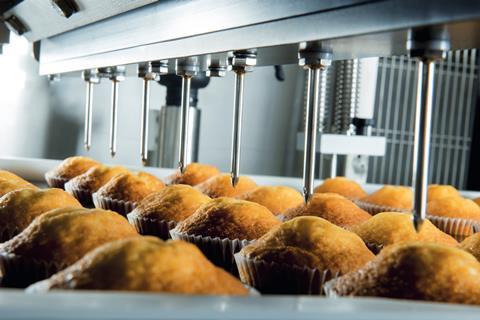
Unlock new possibilities in cake production with GEA Bakery
As consumer preferences evolve and demand for high-quality baked goods continues to grow, manufacturers need production solutions that combine consistent quality, flexibility and efficiency.
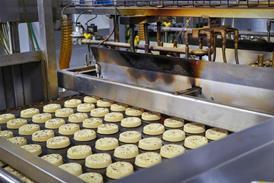
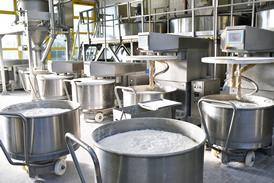
GEA Bakery supports cake producers with advanced technologies designed to optimize industrial production, from batter depositing and baking to cooling and handling. These solutions help manufacturers achieve reliable results, improve process efficiency and respond to changing market demands.
Innovation goes beyond equipment. At the GEA Bakery Experience Center, manufacturers can explore new possibilities, test recipes and product concepts, and work alongside GEA specialists to evaluate production processes and develop new ideas. This hands-on approach helps bridge the gap between product development and industrial-scale manufacturing.
Whether refining existing products or creating new cake varieties, GEA combines process expertise, technology and practical application to support bakery businesses at every stage of their innovation journey.
Discover how GEA Bakery can help you unlock new opportunities in cake production – click here.




No comments yet