












Thanks to our category sponsor
Sustainability remains as important as ever in the baking industry, with this category seeking companies that showcase the most impressive achievements over the past year, including changes in operations, staff buy-in and training, and how it was communicated to customers.
The winner came out on top of a strong field of finalists including another regenerative flour brand, a pair of plastic eliminating manufacturers, and a food waste reducing retail chain.

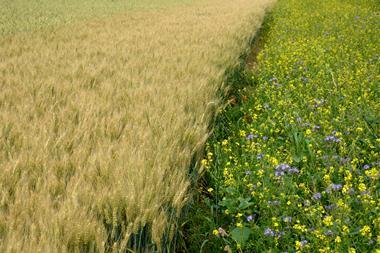
Winner: Regen flour brand and product launch, Wildfarmed
For the second time in three years, Wildfarmed has won the Sustainability Initiative of the Year category at the Baking Industry Awards.
“Sustainability is their raison d’etre,” commented a judge, adding “there is no one else that is doing as much to help spread awareness of regenerative agriculture, push its adoption, engage businesses of all sizes, educate all sectors of society, and even make it cool.”
A fellow judge believed Wildfarmed’s mission to convert all UK farms to regenerative agriculture (Regen Ag) practices is one of the most important in history.
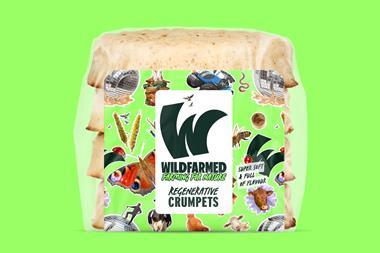
Clearly the brand hasn’t rested on its laurels since winning the category two years ago. In early 2024, it launched its first branded bread range at Waitrose supported by a national campaign that also helped raise awareness of regenerative agriculture. With its Seeded Sourdough becoming a £1m line, distribution of the range has been extended this year to Ocado and Tesco, where the brand has joined the latest Accelerator Programme. Plans are afoot to expand the product range and increase distribution.
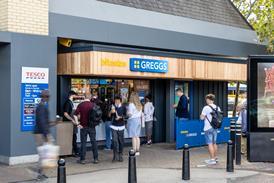
Wildfarmed reported that consumers are now increasingly seeking confidence in product origins and simple ways to contribute to climate action, along with healthy bread options. Its bread range built on its successful ingredients business, which incorporated over 150 wheat growers and more than 1,000 business partners like M&S, Greggs, Higgidy, Simply Lunch, Speciality Breads, Brakes, and Franco Manca.
This year, it has team up with academic and commercial organisations such as AgriSound, the University of Bristol, University of Edinburgh, Nature Metrics, and Chirrup.ai to measure the biodiversity, carbon, and water health of its fields. Results so far include a 3.7x increase in bee populations and 80% rise in plant diversity.
The judging panel thought it admirable that Wildfarmed had secured listings with three major retailers, were impressed by its new partnerships, and really enjoyed the statistics provided in the entry that highlighted the environmental benefits of its fields. “They are living it and breathing it,” said one judge, while another noted they’d “made progress in leaps and bounds” over the past 12 months.
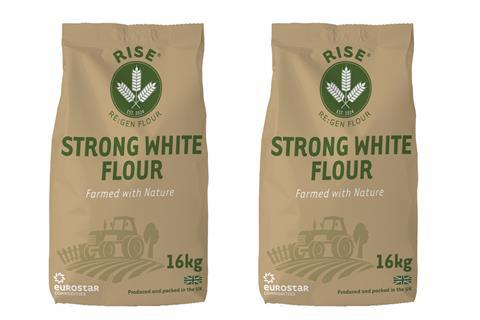
Finalist: Regenerative flour range, Eurostar Commodities
The Yorkshire-based ingredients supplier rolled out its new Rise Re:Gen line of 100% British regenerative flours in February, farmed in collaboration with The Green Farm Collective (GFC.
Eurostar claims to have been astounded by the response from bakery manufacturers since the range was launched, with interest and volume sales far exceeding expectations. It plans to extend beyond the initial two variants – Strong White Flour and All Purpose Flour – and work on new strategic partnerships as well as recruiting more farmers to the GFC.
Judges warmly welcomed the decision by Eurostar, an established business with over 30 years of trading ingredients, to enter the niche regen flour market. “They’re trying to utilise their experience and knowledge in the industry to grow this net of regenerative farmers,” noted one judge.
Finalist: Sharing surplus food, Gail’s
High street chain Gail’s wanted to ensure its leftover food was shared to people who need it most in the communities and neighbourhoods around its bakeries. So, it partnered with Neighbourly to collect and redistribute surplus products to a network of over 320 charitable organisations nationwide, helping save more than 1,000 tonnes of CO2 annually with over one million items donated – this figure is expected to reach 1.5m by next year.
In addition, between two and four bags of unsold food from each Gail’s shop are offered daily via the Too Good To Go app. Funds generated went towards a new charitable initiative helping fight food poverty among school children.
The notion of ‘sustainability being in the DNA of the brand’ was well received by judges, who were pleased by the considerable amount of food being saved from waste. “They’ve absolutely delivered what they set out to do, but they still don’t feel like its enough and have more work to be done,” a judge enthused.
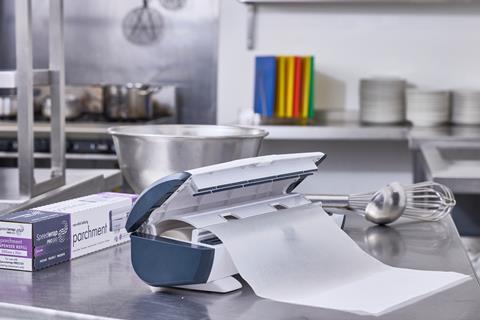
Finalist: Plastic waste reduction, Prowrap
Bristol-based food wrapping supplier Prowrap says it has taken a holistic approach on its Speedwrap Pro dispensers and refill rolls to ensure they have minimal environmental impact throughout its entire life cycle.
This includes removing plastic adapters, utilising 100% recycled aluminium foil, and having baking parchment rolls that are fully biodegradable and compostable. Moreover, the raw material for baking parchment is grown in controlled, sustainably-managed European forests.
Prowrap has also implemented its own national dispenser recycling scheme, with over 250 old dispensers already diverted from landfill, exceeding its goal of 200. Meanwhile, production has been moved from China to the UK to save at least 8.7 tonnes of CO2 annually.
Judges appreciated the company’s hiring of Ben Creeth as marketing and sustainability analyst. “They are certainly looking at the right things,” commented a judge.
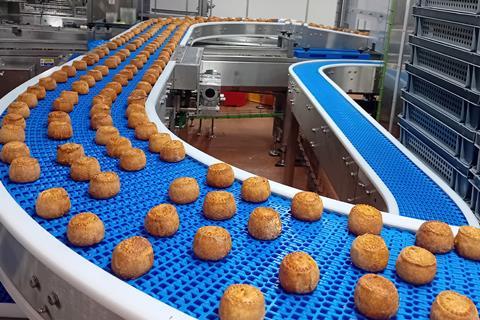
Finalist: Plastic trayless packaging, The Compleat Food Group
With approximately 200m pork pies produced annually across various brands, Compleat’s initiative to remove plastic trays from packaging eliminates as much as 110 tonnes of plastic over the course of a year as well as cutting CO2 emissions by 430 tonnes.
To bring about this move, the company invested in eight robotic arms at its Tottle bakery site in Nottingham, which helped maintain high production speeds without the stabilising support of trays. It has since rolled out trayless packaging for pastry slices made at its Poole site, removing a further 10 tonnes of plastic annually, with plans to replicate the process at its other UK factories.
Judges respected Compleat’s perseverance towards completing the project, which they noted had not sounded easy. They also liked how the firm had chosen to make the significant investment themselves rather than via demand from retailers and consumers. “That’s commendable,” expressed a judge.
Baking Industry Awards 2025 winners revealed
A female head baker from Oxfordshire, the manufacturer behind Jason’s Sourdough, and a regenerative agriculture specialist are among the winners
- 1
- 2
- 3
- 4
- 5
- 6
- 7
- 8
- 9
- 10
- 11
- 12
- 13
- 14
- 15
 Currently
reading
Currently
reading
Baking Industry Awards 2025: Wildfarmed wins Sustainability Initiative of the Year
- 17








No comments yet