








Domino’s UK & Ireland has had an advert banned through the new restrictions on less healthy food promotions.
The Advertising Standards Authority (ASA) ruled that the company’s ad for its Cheeky Little Pizza range was in breach of the regulations introduced on 5 January prohibiting the advertising of products high in fat, salt or sugar (HFSS) online and on TV before a 9pm watershed.
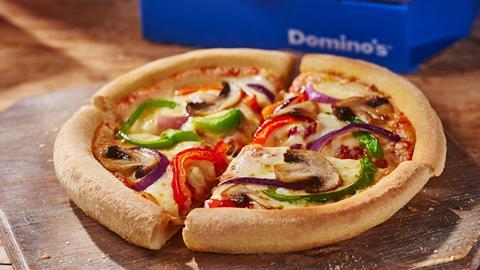
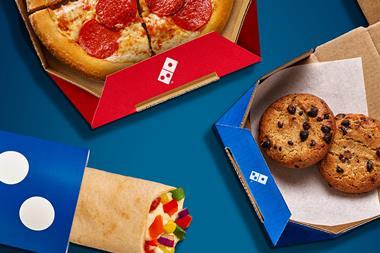
Several complaints relating to Domino’s ads that ran on TV, YouTube, and a video-on-demand service earlier this year were upheld by the ASA, as they showed a specific pizza that was less healthy.
Domino’s had previously contested that its Cheeky Little Pizza range, originally launched in 2024 as part of £4 lunch menu, was designed to provide a lower-calorie option made with reduced-fat cheese.
An unnamed third party had provided them with nutrient profiles for the 7” pizzas that are all under 600 calories each. This included a scoring of three – as set out in the Department of Health and Social Care’s Nutrient Profiling Technical Guidance – for the Sausage & Bacon variant shown in the ad, which meant it could be regarded as non-HFSS.
However, Domino’s admitted that since being contacted by the ASA, it had realised the figure for energy (total metabolisable calories per 100g) used in that calculation was incorrect and accepted the pizza was in fact an HFSS product. Upon being made aware of the breach in regulations, the company said it withdrew the advert immediately whilst at the same time strengthening its internal validation processes to help make sure it doesn’t happen again.
“At Domino’s, we take our responsibilities around advertising compliance seriously and work closely with external specialists to ensure campaigns comply with advertising regulations,” commented a company spokesperson.
As well as beginning enforcement of the new HFSS ad restrictions at the start of the year, the government published its long-awaited update to the Nutrient Profiling Model (NPM) used to determine which food and drink is ‘less healthy’. Known as NPM 2018, the proposed new model was warmly greeted by health campaigners but received harsh criticism from many in the food industry, who voiced “serious concerns” about its impact.
During a consultation period on the NPM 2019 in June, the Food and Drink Federation gave warning that it stood to jeopardise the positive progress made from healthier product development, especially as would now cover free sugars naturally present in syrups, honey, unsweetened fruit and vegetable juices, smoothies, purées, and pastes. Research from Oxford Economics later found the government had “significantly underestimated” the cost and impact of proposed model. A statutory implementation date has yet to be confirmed, although businesses are anticipating a 12-month transitional period.





No comments yet