










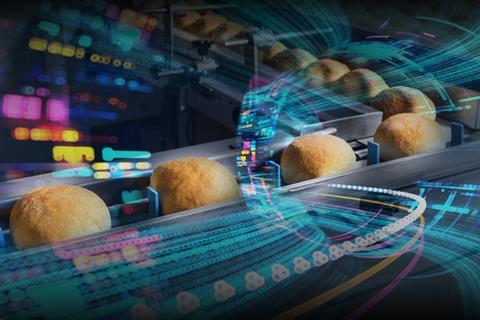
Artificial intelligence (AI) is a powerful tool for bakers, but it isn’t a silver bullet and it needs to be used carefully.
This was the message conveyed by one of the speakers at a recent British Baker webinar entitled ‘How AI and technology is changing the baking industry’, sponsored by Aiperia and TraceGains.
It featured presentations from a quartet of experts covering topics including the benefit of AI in large-scale bakery manufacturing, how smaller firms can get support in their digitalisation journey, what bakery chain Gail’s is doing with AI to assist shop staff, and how NPD teams can leverage its predictive power. A live Q&A session between the panel then followed, moderated by British Baker deputy editor Dan Riley.
Here are five key takeaways from the discussions:
Correlation does not mean causation
AI needs some numbers to work with, says Stanley Cauvain, director of international bakery consultancy BakeTran. Those numbers need to cover the full spectrum of information from raw materials to final break quality, he adds.
However, data analysis is likely to throw up all sorts of correlations. Just because a process parameter appears to be linked with product quality, statistically, it doesn’t mean we can use it to manipulate the final outcome or process efficiency.
To make AI really work for bakery manufacturing, businesses need to integrate heuristics – ie. rules of thumb – with the hard numbers. This can be done in bakery production by implementing something called Neuro-symbolic AI, which combines both imaging technology and data processing with skills knowledge from expert (human) bakers.
Identify quick wins
Every AI project must solve a real problem, says Kevin Smith, lead technology adoption specialist at Made Smarter – it is very much about ‘technology pull’, not ‘technology push’.
Bakeries (including SMEs) should first focus on analysing tasks and identifying quick wins from using AI that build confidence before scaling to more advanced cases. This could be on reducing batch weights, stock checks, demand forecasting, recipe scaling, or customers FAQs.
These are non-threatening first steps. AI isn’t replacing bakers, it’s removing the admin and guesswork so that people can focus on the craft and their customers, asserts Smith.
Shop assistance
The more accurate your sales forecast is, right down to the product level, the more comfort you’ll get around ordering, says Bread Holdings chief technology officer Darren Wilkinson.
The parent company behind retail chain Gail’s and wholesale supplier The Bread Factory built its own applied AI that sits in its existing system to help with order recommendations. This advanced way of organising and optimising production ensures that food is available when people want it and it’s as fresh as it can be.
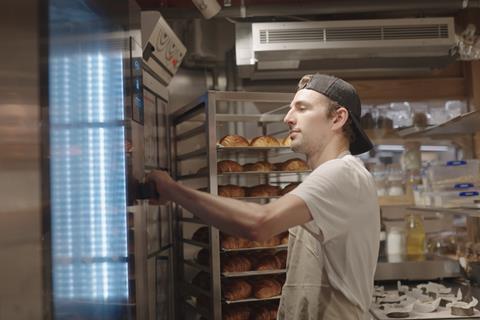
Gail’s also created Bread GPT, essentially a derivative of the large language models that is linked to its data and document repositories. This helps staff find out how do I do specific processes (e.g. how to bake a croissant in store) and find out what’s going on at shops including sales of a particular items on a given day.
It also provides employees with information about the wider organisation, such as who to contact for certain queries, what their pension benefits are an so on. Because it’s trained on internal resources, it’s a lot more intuitive, its fast, and it gives a nice conversation-type answer, adds Wilkinson.
Staying ahead of the trends curve
AI-powered data analysis of social media posts and websites can allow bakeries to spot trends early, says Mademoiselle Desserts product development controller Melissa Shaw.
The sweet bakery manufacturer has been using online insights platform TasteWise for the past four years to see what people are talking about on the likes of Instagram and TikTok. This would typically have taking weeks of analysing reports and compiling presentations but TasteWise systems achieves this within hours, splitting trending flavours or ingredients into early, emerging, trending, mature, and declining lists.
The early and emerging trends are of particular interest, notes Shaw, as producers want to predict the trend before it comes mainstream. She gave the example of pistachio, which was gaining traction a few years ago when the system highlighted it and allowed manufacturers to act early on it.

The future of AI adoption
Each speaker was also asked to recall the most impressive uses of AI and technology in baking that they’d seen or heard about.
Cauvain’s example is ‘Lights out’ flour mills, where nobody was there apart from an AI system which continuously monitored the milling process with appropriate sensors. The outputs would be predetermined and the adjustments for quality done automatically.
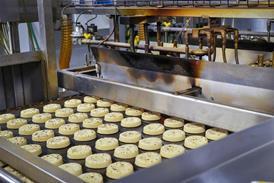
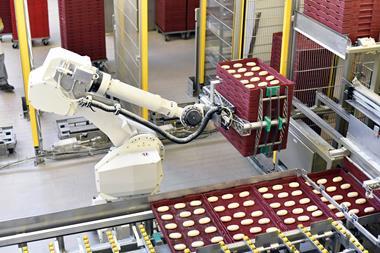
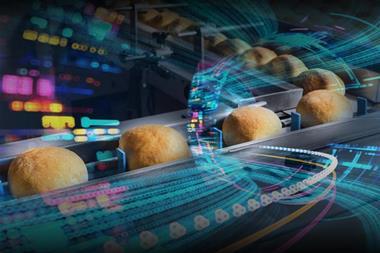
Whilst admitting it’s nothing new, Smith says smart vision technology always impresses him. These can scan loaves in real time, checking colour, size, and shape and ensuring that quality is met every time. He’s also seen smart ovens that adjust automatically to the dough to reduce energy consumption and produce consistent results.
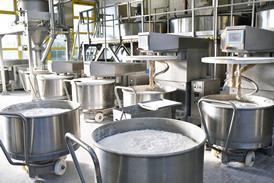
Shaw is also interested in the enhancements to production, heralding new viscosity sensors on mixers that can automatically adjust hydration and other levels to achieve the right dough consistency. Batch bakery can rely heavily on staff to make the correct adjustments to cope with changing weather conditions, she notes. So, an automated system would be fantastic in helping reduce waste in a bakery.
Meanwhile, Wilkinson appreciates the things that can simplify complex tasks and remove the tedium from repetitive admin. This could be a really well coordinated planning system across labour, ordering, production, and transport, with feedback loops. Its not as visually appealing, he accepts, but it delivers a lot of value by taking a lot of buffers out of a system and lets people focus on the baking rather than planning – something that is actually quite complex in the industry.
The webinar can still be viewed in its entirety, and is available on demand here until the end of the year.







No comments yet