









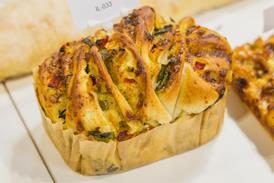
Pizza dough balls brand Great Balls of Flour is investing £100k in automation – part-funded by Made Smarter – to boost productivity and sales, which will in turn create new jobs.
The York-based business – which was founded in 2021 – uses a small batch, 48-hour fermentation process to produce high-quality, slow-proofed frozen pizza dough balls for retail, including Neapolitan, sourdough and gluten-free options. It also produces a range of pizza flour mixes and its own pizza ’dusts’ to help consumers make restaurant-quality pizza at home.
The business employs four full-time staff and generates an annual turnover of around £1m. Led by director James Talbot, Great Balls of Flour has a clear growth ambition to increase turnover to £2m within three years, including through wholesale and export growth.
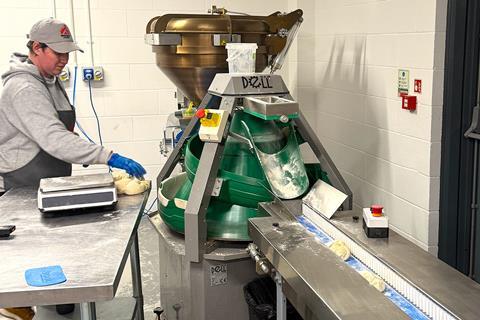
However, production of its flour mixes and dusts is constrained by a highly manual packaging process. Weighing, filling, capping and labelling is currently carried out by hand, creating a critical bottleneck and limiting output.
The manual process is slow, labour intensive, and prone to inconsistency, diverting skilled staff away from the company’s automated dough ball line. Inaccurate manual weighing also results in higher levels of product waste, impacting both margins and environmental performance.
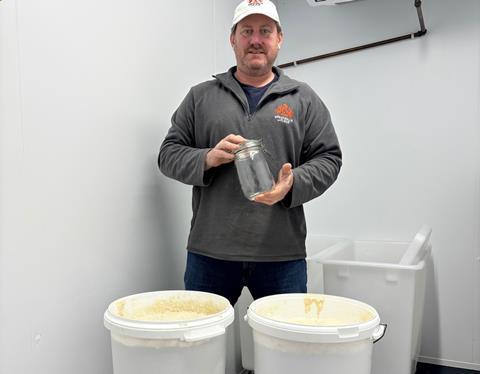
To address this bottleneck and achieve further scaling and growth, the firm engaged with the Yorkshire and Humber regional division of Made Smarter, the government-backed industry initiative helping UK SME manufacturers adopt digital technologies.
Great Balls of Flour went through Made Smarter’s digital transformation workshop process, which breaks down the digital journey into quick, iterative steps and creates a roadmap of how to get there. This identified the digital tools and technologies that can be implemented to maximise operational processes and enhance growth, as well as any skills development needed in the business.
As a result, Great Balls of Flour identified a project for a fully integrated, automated packaging line. The £100k investment, supported by a £20k grant from Made Smarter, includes purchases of automatic machines for vacuum filling, capping, and labelling – designed to create an end-to-end automated process.
The filler uses digital sensors and load cells to deliver precise, programmed weighing, while the capping and labelling equipment use integrated sensors to ensure placement accuracy and print real-time batch and use-by information, meeting retailer quality and traceability requirements.
The new line operates as a dedicated, independent process and integrates with the wider operation by freeing up skilled staff currently tied to manual packaging. Output data from the equipment will also integrate with existing production planning systems, which are currently manual and spreadsheet-based, enabling more accurate inventory and capacity planning.
“Automation can often trigger fears about redundancies, but for us it’s the exact opposite”
Once fully operational, the new packaging line is expected to deliver a substantial increase in output, up from one tube per minute to 20 tubes per minute. Combined with the existing automated dough ball production, this will enable flexible multi-shift operation, allowing production to expand from an eight-hour day to 16 or 24 hours as demand requires and maximising the use of existing assets.
Consolidating production into a single, efficient automated process is also expected to reduce energy consumption per unit.
In addition, Talbot has completed the Made Smarter Digital Leadership Programme, while Great Balls of Flour production manager Steph Mallinson has taken part in the Made Smarter Digital Champions programme, helping to embed digital skills and leadership capability across the business.
“The Digital Leadership Programme was incredibly insightful, particularly in how to manage resistance to change,” said Talbot. “Automation can often trigger fears about redundancies, but for us it’s the exact opposite. It’s about upskilling our workforce. This course gave me the tools to communicate that our goal is to move people away from repetitive manual tasks and into more rewarding, higher-value roles.”
Since launching in 2021, Made Smarter Yorkshire and Humber has engaged with almost 1,200 manufacturers, created nearly 700 digital roadmaps, and provided technical project support to more than 250 businesses – close to 150 companies have taken part in leadership and skills programmes. Made Smarter has now handed out £1.4m in CapEx grants in Yorkshire and Humber, unlocking a further £2.4m in private investment for a £3.8m tech boost across the region.



No comments yet