











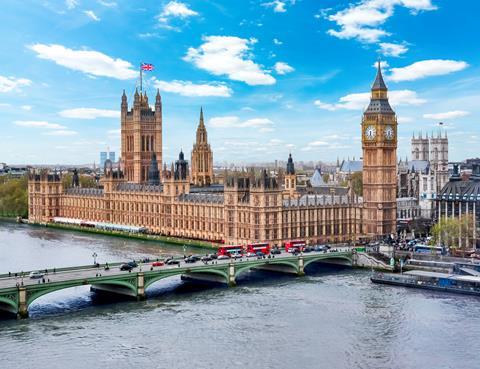
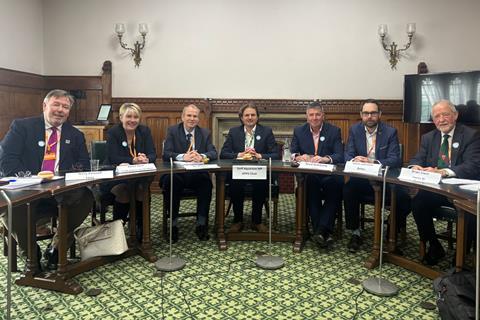
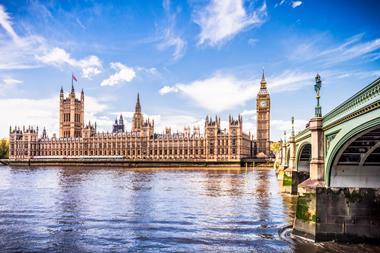
The baking industry should be recognised as a crucial part of UK society, with policies to protect it, according to bakery leaders attending a recent meeting with MPs at the Houses of Parliament in London.
Held on 19 May, it marked the first panel event of the All-Party Parliamentary Group (APPG) for the baking industry, which was formed last summer to help discuss particular areas of concern and examine relevant policies.
Chaired by Liberal Democrat MP for North Norfolk, Steff Aquarone, the panel comprised representatives from various key sectors who were each asked their perspective on the state of the baking industry, and the one change they would make to improve its future if they had a magic wand.
The Craft Bakers Association is acting as the official secretariat for the APPG, with its chief executive Karen Dear highlighting how craft bakeries – often the anchors of local communities – are under serious strain from the rising costs of employment, National Insurance, energy, and ingredients. With magic wand in hand, Dear’s “big ask” of the government would be to consult with businesses of all sizes, not just multinationals, on every major policy project.
Ian McGhee is a third-generation family member and production director at McGhee’s Bakery in Glasgow, as well as a past president of trade body Scottish Bakers. He brought up the new policy of a price cap on supermarket food proposed by the new SNP government in Scotland. “I can’t see how that would ever work,” he conceded. “It’s against internal markets of the UK.”
McGhee also raised a point on the hidden cost of compliance and the “burden it’s putting on mostly-family run ventures”. He said bakery manufacturers like McGhee’s needed to put extra resources on accounting and external consultancy to ensure data is collected and fed into various portals on the likes of Extended Producer Responsibility (EPR), carbon reporting, and high in fat, sugar and salt (HFSS).
He admitted he wanted to use his magic wand to create four more, with requested changes including:
- Targeted energy/business relief
- Reform of access to grants
- More flexibility around living wage implementation for small businesses
- Support for investment in automation, energy efficiency, and apprenticeships.
David Armstrong, group commercial director at bakery supplier Bako, revealed that while volumes were broadly OK across the sector, it had become increasingly challenging to turn these into profits. There are low levels of business confidence, he said, particularly on high streets causing store numbers to decline, plus a reluctance to make capital investment including on training.
Armstrong’s one wish would be for a stable macroeconomy and political environment. “It seems that we’ve been in a state of ‘wait and see’ for the past six years as a country and I think until we’ve got that kind of stability, businesses find it very hard to plan,” he expressed.
Terry Fennell, CEO of food & drink qualification awarding organisation FDQ, said the UK baking industry was “punching above its weight” in terms of number of apprentices, with not enough aspiring young bakers coming through from higher education.
He noted how there was £9k of funding available for entry-level bakery apprentices, but that this was actually lower than other sectors which do not require the same amount of consumables such as energy and raw ingredients. “A data technician can attract £18k worth of funding and [an apprenticeship] provider never has to visit them in the shop, it’s all online,” added Fennell. “That’s why there are a lot of providers offering data and AI courses, but very few offering bakery. It’s a real shame.”
Fennell pointed to the Apprenticeship Levy (a £15k annual tax break for employers to spend on skills training), which he said was a fantastic idea in principle but noted how there were less apprenticeships getting put through now than when the scheme was launched in 2017. “Something is not working for businesses and investment in training, and it’s not the standard of the students,” he commented.
Gavin Johnstone, head of bakery operations at Bettys, said the Harrogate-based craft business was struggling to attract skilled talent. “Typically, what we see coming out of bakery college is people wanting to go into a startup, with a strong pull towards social media,” he commented. “Bettys might not be what they want, but we have a need for real craft skills so we’re having huge challenges there.”
A magic wand for Johnstone would be used to ask the government and its policy makers to treat the craft bakery sector “more like a strategic asset, not kind of an afterthought”.
Brian Irwin, chairman of the Federation of Bakers and director of Portadown-based Irwin’s Bakery, echoed Johnstone’s point saying a key ask would be for the baking sector to be recognised as a critical manufacturing sector of the food industry.
“The cornerstone of the daily food requirement for the UK population is bread,” stressed Irwin, adding that it’s the main source of fibre for all age groups as well as providing essential protein, vitamins, and minerals. Large-scale bakery manufacturers supply 12.5m units of bread every day to supermarkets, even during the pandemic, and are incredible at reliability and delivering value, he noted.
Another request was to include the baking industry in its British Industrial Competitiveness Scheme, which aims to cut electricity bills for energy-intensive manufacturers by up to 25% (currently only covering growth sectors within the government’s Industrial Strategy).
Irwin also called for the government to think carefully about the introduction of new regulatory measures such as increases to National Insurance contributions, waste collection tax (EPR), and net zero targets. “Perhaps they can be toned down or pushed back,” he suggested.
APPG chair Aquarone concluded the meeting, saying “we’ve got a lot of thinking to do about what we can do and where we go next”, whilst noting the “very good turnout” including a few other MPs. “To get any MPs to come along to anything at the moment in the state of politics is a remarkable success,” he quipped.







No comments yet