






Traditionally, bakeries have often used L-cysteine as a reducing agent to relax dough and optimise speed and efficiency in commercial baking. However, a more natural process, using deactivated yeast, is gaining popularity for its processing and commercial prowess.
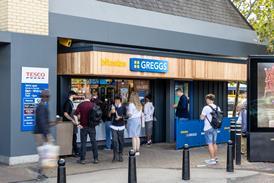
The UK’s baking industry continues to be under pressure like never before. Media headlines, such as the one earlier this year which pointed to the collapse of nine UK bakeries, tell the tale of a need for bakery businesses of all sizes to streamline production, control costs and find efficiencies wherever they can – and however small those might seem to be.
Yet, at the same time, there are reports of a boom in interest for artisan bread, neighbourhood bakeries, and high-quality baked goods. So, while some bakery chains may be struggling under the weight of high street pressures, the outlook for independent bakeries that cleverly serve their neighbourhoods well, is thriving. Plant bakeries are also seeking out methods of streamlining production, but in ways that enhance the end-consumer experience, as shoppers increasingly look for clean-label products and bakery that meets their needs for health and indulgence.
Whatever the picture, the pressure is still there to ensure optimisation of ingredients and production processes. One way in which bakeries can optimise production processes while still meeting those high shopper expectations is through the use of deactivated yeast.
Deactivated yeast contains high levels of glutathione, which (like cysteine) breaks the molecular links in the gluten network of the dough. However, deactivated yeast has a natural reducing power (NRP) much greater than the reducing power of standard yeast.
As Jonquil Dawson, head formulator for Lesaffre UK & Ireland, explains: “To produce deactivated yeast, we begin with a standard fermentation process, just like any other yeast production. The yeast cells are then deactivated by means of a heat treatment process, which kills the yeast cells so they have no gassing power. When the yeast dies, the glutathione which was inside the cells is liberated so it can act on the gluten network in the dough.”
From the consumer standpoint, glutathione can be listed simply on labels as ‘deactivated’ or ‘inactive’ yeast, which can be perceived as a more natural ingredient than the E-number cysteine, which can be regarded as an aggressive reducing power that can permanently degrade gluten structure, leading to weak, sticky dough, dense crumb and loss of loaf volume, according to Bakerpedia.

Production advantages
Some of the advantages of using deactivated yeast include:
– the dough becoming more extensible and easy to shape;
– a reduction in mixing time, which is particularly beneficial for bakers using strong flours, but can be observed with any kind of flour. This limits dough oxidation, preserving the natural aromatic potential of the bread. It also saves energy and capital investment, with fewer mixers required to achieve the same outcome;
– a reduction in dough temperature, which helps with frozen dough processes or when external heat is high (such as in the past British summer).
To explore in greater detail, Lesaffre’s Dawson gives the example of the productivity improvement resulting from a reduced mixing time. “A bread making line with a mixing of 4 minutes slow speed + 8 mins fast speed (4’+8’), can see the mixing time reduced by 20% when using deactivated yeast,” she says. “This means a reduction of one minute 30 seconds and a new mixing time of 4’+ 6’30’. In terms of overall time this translates into increasing the number of mixes per day from 120 to 139, meaning productivity can be improved by almost 16%.”
Meanwhile, the effect of using deactivated yeast on processes beyond mixing, including resting, scaling, relaxing, and shaping include:
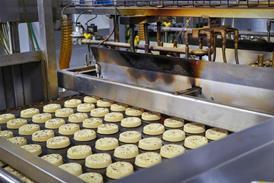
● limiting the strengthening of the dough, allowing easier passage through an automatic divider on an industrial line;
● limiting dough tearing during rounding;
● reducing overall relaxing time;
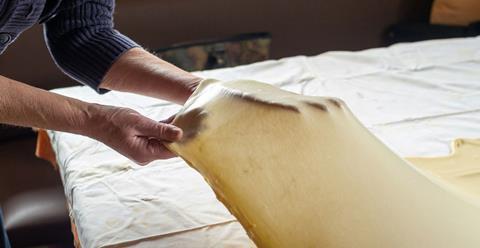
● reducing dough elasticity and increasing extensibility, resulting in reduced resistance to shaping whether automatically or manually, while the dough does not shrink back after shaping.
Finally, dough extensibility also reduces the resistance to gas pressure, allowing better development during the final proof, as the dough needs less pressure to increase its volume, and a greater final volume can be achieved.

Examples given by Lesaffre reveal the benefits for the bakery in baguettes, flour tortillas and pizza production, laminated dough and puff pastry production, as well as croissants, Danish pastries, hamburger buns, sandwich bread and breadsticks. Other uses of deactivated yeast, says Dawson, come in the formulation of mixes and bread improvers.
Why Lesaffre?
Lesaffre’s deactivated yeast comes in two varieties: Baker’s Bonus RS 190 and Baker’s Bonus RS 190 Star, which have different natural reducing power (NRP)* based on different average levels of use.
“In short,” says Dawson, “deactivated yeast is a great answer to many of the mega trends currently facing the UK bakery industry, including reduced mixing time resulting in less energy consumption, increased productivity, preserving the natural aromas of the flour, reducing dough oxidation and providing a clean label option with which modern consumers can identify.”