








With consumers changing their habits on traditional meal times, snacking has become the new brief for bakery retailers. So what can they do to meet shoppers’ evolving needs?
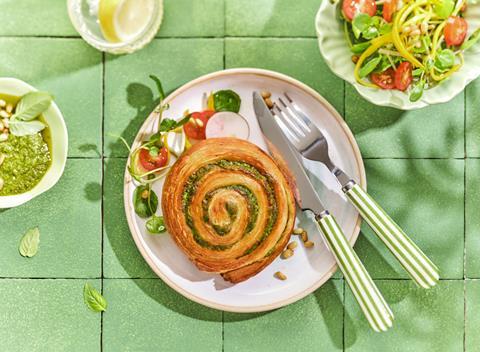
Traditional sit‑down meals are losing their grip on British life, with recent data suggesting that more than 80% of the UK population now snacks between meals [Mintel]. In fact, informal, on-the-go eating has become the norm, particularly among younger generations, with 77% of Gen Z and 72% of Millennials in Europe buying food-to-go every month [Accio/McKinsey].
This evolution reflects a broader shift toward spontaneous, portable indulgence, driven by faster, more urban lifestyles. The modern consumer now expects convenience and practicality without compromising on quality, creativity or enjoyment.
For foodservice operators in the UK and Ireland, this means ‘three meals a day’ is no longer a reliable blueprint for menu planning. “Instead, consumers are building their intake around flexible, informal occasions – whether that’s a filled pastry with a mid‑morning coffee, something savoury between meetings, or a picnic-style dinner shared at home,” says Erwan Inizan, sales director at Bridor. “As such, convenient and high‑quality savoury bakery is becoming a strategic category rather than a sideline.”
Premium snacking is reshaping the bakery brief
The growth of food to go has already been well documented, with the UK food-to-go market forecasted to be almost 40% larger in 2028 than it was in 2019 [IGD]. Within this, lunch remains the dominant occasion, but the boundaries between breakfast, lunch and dinner are blurring as consumers look for options they can eat throughout the day.
Savoury pastries are one of the clearest beneficiaries. They are now the second fastest‑growing food‑to‑go type by volume in Europe, behind salads, and are up 15.1% [Lumina] by volume. At the same time, classic breakfast items are extending into later dayparts. In Bridor’s European research, 71% [Bridor] of consumers said they would like to eat savoury sandwiches made with croissants, while 31% [Bridor] already eat croissants as part of a savoury meal.
Tapping into the snacking trend
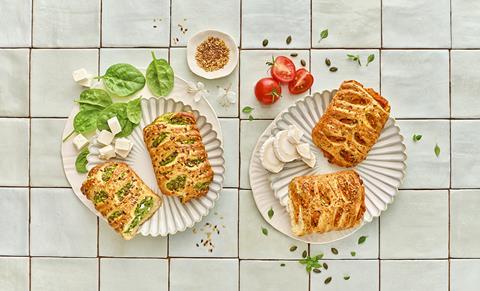
Bridor has launched a variety of products this year designed to help operators tap into the growing consumer demand for convenient on-the-go options:
Mediterranean Delices and Swirls for any time of day
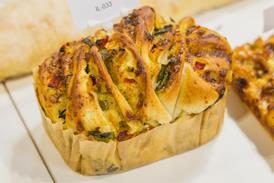
Bridor’s new Goat’s Cheese & Tomato Delice, Feta & Spinach Delice and Pesto Swirl (all 100 g) have been created to help cafés, coffee shops, contract caterers and hotels respond to demand for premium savoury snacks. All three products use leavened puff pastry for a crisp, golden crust and include a generous 28% filling with authentic, rich Mediterranean flavours.
The crodwich: turning a breakfast icon into a savoury profit centre
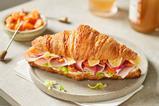
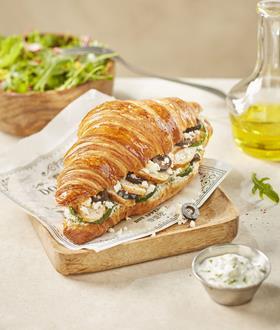
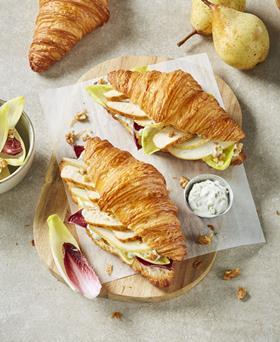
As consumers move away from fixed mealtimes, croissants are no longer confined to breakfast. Bridor’s ‘crodwich’ concept – a savoury sandwich built on a croissant base – taps into this shift. To support operators, Bridor launched the Maxi Croissant earlier this year, an ultra‑generous 120 g pure‑butter croissant designed as a hot or cold sandwich carrier. The format offers a soft, flaky texture and a substantial footprint for fillings. For operators, it creates a distinctive mid-ticket carrier for portable lunches and substantial snacks that can justify a premium versus standard bread.
Making the economics of snacking work
Snacking demand is volatile by nature. “Our Croissant Revolution research shows that more than half of grab‑and‑go purchases are unplanned and occur outside a normal routine [IGD],” comments Inizan. “This unpredictability can lead to either empty cabinets or high waste if production is not carefully managed.”
By using frozen bake‑off products, operators can:
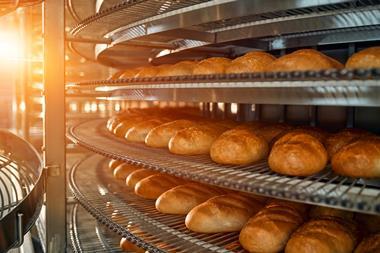
● Bake to demand. With a typical shelf life of 9 to 12 months at -18°C, savoury pastries can be baked in small batches throughout the day in line with actual footfall.
● Maintain consistent quality. Deep‑freezing technology crystallises water in the dough cells to protect lamination, lift and texture. This is especially important for multi‑site operators who need a uniform experience.
● Reduce labour pressure. Ready‑to‑bake formats minimise on‑site preparation and bypass bakery skill gaps, freeing teams to focus on service, upselling and final presentation.
In a market where value for money remains the primary driver of eating‑out decisions [Lumina], this combination of controlled waste, operational simplicity and premium perception is increasingly powerful.
Practical steps for operators
For operators looking to harness the savoury snacking surge, three actions stand out:
1. Rebalance your range around all‑day occasions. Move beyond a binary breakfast‑versus‑lunch mindset. Identify products that work at 10:30, 15:00 and early evening, and give them permanent space on the counter.
2, Build a clear savoury snacking ladder. Offer a tiered range, from lighter snacks to more indulgent crodwiches, so guests can choose according to appetite and budget while you protect margin.
3. Bake little and often. Use frozen bake‑off formats to underpin a “freshly baked, all day” positioning. Smaller, frequent bakes help to keep displays abundant at key snacking times and reduce the cost of unsold stock.
“As consumers increasingly embrace flexible, informal eating throughout the day, operators who align their menus with these spontaneous occasions will capture the biggest growth opportunities. High-quality savoury pastries and smart bake-off routines enable businesses to deliver on-the-go indulgence across multiple dayparts, helping to drive profit throughout the day,” concludes Inizan.
By combining consumer insight, continuous product innovation, and premium bake-off expertise, Bridor is helping operators turn evolving snacking habits into long-term business opportunities. For more information, visit: www.bridor.co.uk.