







As bakery manufacturers look to improve efficiency, consistency and production flexibility, technology is playing an increasingly important role. In this Showcase, we highlight four solutions helping bakeries scale output, optimise processes and prepare for future growth.
- Mastering high-hydration dough
- Optimising delicate dough processing at scale
- Supporting skilled bakery teams through innovation
- Future-proofing bakery operation
Mastering high-hydration dough
For bakery manufacturers, increasing production efficiency without compromising product quality remains one of the industry’s biggest challenges. Labour pressures, rising operating costs and growing expectations around consistency are forcing businesses to examine how their production processes can become more efficient while still delivering the characteristics consumers expect from premium bakery products.
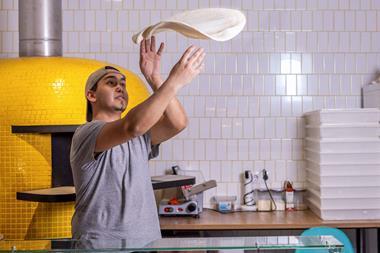
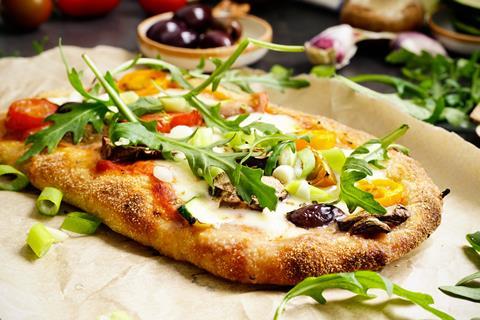
This challenge is particularly evident in pizza and pinsa production, where dough quality plays a critical role in the finished product. While traditional pizza remains a strong performer across both retail and foodservice channels, pinsa is emerging as a growing premium offering, valued for its light texture, open crumb structure and artisan appearance. However the dough typically contains significantly higher levels of water than with conventional pizza, making it more difficult to handle consistently in a production environment.
For manufacturers looking to scale production, high-hydration doughs can present a range of operational challenges. Dough may become sticky during processing, vary between batches or lose some of the characteristics developed during fermentation. The result can be inconsistencies in appearance, texture and product dimensions, alongside increased waste and greater reliance on manual intervention.
“Pinsa is creating new opportunities within the pizza market but its high-hydration dough can be more challenging to process consistently at scale,” says James Fitch, head of sales, bakery, Interfood Technology.
“Manufacturers need systems that can handle delicate doughs without compromising the texture, structure and visual appeal that define a premium product.”
As consumer demand for premium bakery products continues to evolve, manufacturers are also looking for greater flexibility from their production investments. While pinsa is attracting attention as a differentiated offering, many businesses require production capabilities that can support both pizza and pinsa manufacturing, allowing them to respond to market trends without investing in separate production systems.
This has increased interest in equipment and processing technologies that can accommodate a wider range of dough types and hydration levels. The ability to manage different product formats on the same line can help improve utilisation, maximise return on investment and support future product development strategies.
“Bakery manufacturers are looking for greater flexibility from their production lines, enabling them to produce a wider range of products. Modular equipment helps futureproof operations by allowing businesses to adapt and scale as consumer preferences and product lines evolve,” adds Fitch.
As production requirements become more complex, manufacturers are increasingly adopting automated and modular processing solutions designed to handle delicate, high-hydration doughs more gently. By reducing stress on the dough and improving process control, these systems can help maintain product quality while delivering the consistency and throughput required for large-scale manufacturing.
“Modular equipment helps futureproof operations by allowing businesses to adapt and scale as consumer preferences and product lines evolve” - James Fitch, Interfood Technology
Importantly, Interfood’s modular production lines can be configured to suit individual operational requirements, enabling bakeries to tailor equipment around their preferred products, capacities and levels of automation – while retaining flexibility for future growth.
For bakeries exploring opportunities in pizza, pinsa and other high-hydration dough products, Interfood Technology has produced a guide covering key production challenges, process considerations and approaches to scaling manufacture while maintaining quality standards.
Optimising delicate dough processing at scale
Handling delicate doughs at scale remains a balancing act for bakers. As consumer demand continues to drive growth in artisan-style breads, sourdough and premium bakery products, manufacturers face an ongoing production challenge: how to scale output without compromising the characteristics that make these products appealing in the first place.
Delicate doughs can be particularly tricky to handle in industrial environments. Higher hydration levels, longer fermentation times and more complex dough structures can create difficulties during dividing and portioning. Mechanical stress can affect dough development, consistency and final product quality, and many recipes require adjustment to suit higher-volume production processes.
For bakeries looking to expand capacity the challenge is often achieving greater throughput without sacrificing the appearance, texture and eating qualities that customers expect.
“The demand is around automation within delicate dough processing,” says Tom Bowman, business development lead at Handtmann UK. “Many recipes need to be modified for industrial production. The aim is to achieve higher levels of optimisation and larger production volumes while still handling the dough appropriately.”
To address this issue, equipment suppliers are increasingly focusing on technologies designed to reduce stress on dough during processing. One recent example is Handtmann’s VF 850 S dough dividing system, launched this summer as the newest addition to the company’s 800 series range.
“The aim is to achieve higher levels of optimisation and larger production volumes while still handling the dough appropriately” - Tom Bowman, Handtmann
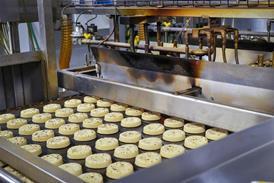
The system has been developed specifically for doughs that benefit from gentler handling, including sourdough, rye breads, white breads, sandwich loaves, pizza dough and ciabatta. At the heart of the design is a larger product pump, creating more space for dough to move through the system. This allows the dough to expand and fill chambers more naturally during processing, helping to minimise damage to the dough’s internal structure while improving portioning accuracy.
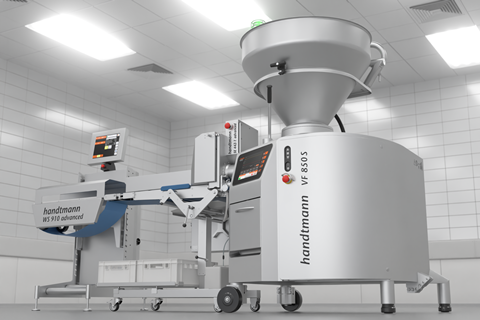
The VF 850 S works alongside Handtmann’s SE 442-1 advanced cutting unit to provide continuous, oil-free dough dividing without the need for oil. The high level of portioning accuracy helps reduce product giveaway, enabling bakeries to achieve more consistent target weights and improve yield.
For medium to large bakeries, operational considerations extend beyond product quality alone. Labour availability, energy usage and production efficiency are also key concerns. The VF 850 S has been designed with automated operation, reduced maintenance requirements and energy efficiency in mind, while also offering integration with existing production lines.
The oil-free dividing process can significantly reduce total cost of ownership by eliminating the need for production oil, while also reducing wear on critical machine components. Compared with traditional dough dividers, where major metal components may require replacement every 12 to 18 months, bakeries can benefit from lower maintenance requirements, reduced downtime and lower ongoing operating costs.
Once a product has been programmed, operators can switch between recipes and portion weights with minimal intervention, making it suitable for bakeries producing a range of bread formats on the same line.
As bakery formulations continue to evolve, the ability to process delicate doughs at scale is likely to remain a key consideration for manufacturers investing in future production capacity.
Supporting skilled bakery teams through automation
As bakery businesses continue to navigate labour shortages, operational pressures and the challenge of maintaining consistency at scale, many are looking for ways to protect craftsmanship while improving efficiency.
For artisan and growing bakery operators alike, one of the biggest hurdles remains finding and retaining skilled bakers. While automation has often been seen as a concern for traditional production environments, there is a growing recognition in the benefits of technology and how it can support skilled teams rather than replacing them.
For Emma Kelly, bakery specialist at Reiser, the conversation is increasingly focused on how bakeries can optimise the expertise already within their workforce.
“Our focus is on redirecting labour and freeing up those skilled individuals to spend more time on the jobs that really benefit from their expertise and less time on repetitive processes,” Kelly says.
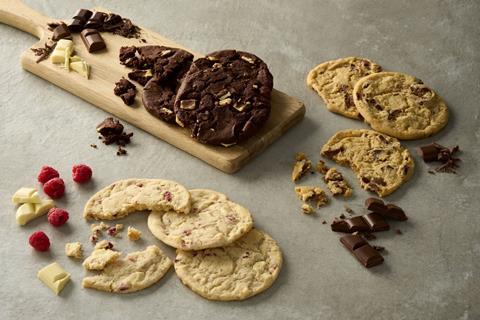
One example cited by Kelly involved an artisan bakery producing sourdough, laminated pastries and cookies. By reviewing the production process and introducing automation, the business reduced the time spent on cookie production from around 18 hours to just 40 minutes for the same output and without any compromise to quality. The result was not only greater efficiency but also the opportunity for skilled bakers to focus their attention elsewhere in the operation.
“Automation doesn’t have to mean taking the craft out of baking. Often it’s simply about making a process more repeatable and efficient, while allowing skilled bakers to focus on the areas where the human touch adds the most value,” says Kelly.
Capacity is another challenge facing many businesses. For bakeries looking to expand output, physical space and labour availability can often become limiting factors before demand does. Flexible production approaches can help create additional capacity without requiring significant changes across the wider business.
Maintaining consistency is equally important. As operators balance quality expectations with commercial realities, issues such as product handling, hygiene standards and portion control remain key considerations. Solutions that support repeatable results can help bakeries maintain standards while reducing process variability.
“Our focus is on redirecting labour and freeing up those skilled individuals to spend more time on the jobs that really benefit from their expertise and less time on repetitive processes” - Emma Kelly, Reiser
A significant part of this process is proving what works in practice. Reiser’s approach combines customer-centre trials with time spent on bakery sites, allowing specialists to observe challenges first-hand and test potential solutions in real-world production environments.
“Much of my time is spent out in the field with customers, looking at their processes, understanding their challenges and working through solutions with them,” says Kelly. “It’s not just about equipment, it’s about becoming a trusted adviser and helping bakeries get to where they want to be.”
This hands-on approach is particularly valuable for small and medium-sized bakeries that may not have dedicated technical or new product development teams. Access to specialist expertise, operational insight and experience gained across multiple food sectors can help businesses evaluate different approaches and identify opportunities for improvement.
Ultimately, as labour pressures continue and customer expectations remain high, many bakery businesses are seeking ways to balance efficiency with craftsmanship. The most successful solutions are increasingly those that support skilled people, preserve product quality and create a foundation for sustainable growth.
Future-proofing bakery operations
Energy has become a key challenge for bakery manufacturers. Alongside ongoing pressures around ingredient and labour costs, rising energy prices are forcing businesses to think differently about how production lines are designed, operated and maintained.
While energy costs remain a concern today, the conversation is beginning to extend beyond price alone. Questions around grid capacity and peak demand are becoming increasingly relevant as bakeries look ahead and plan investments and expansion projects.
“Future-proofing a bakery is about more than investing in new equipment. It’s about creating flexible, efficient production systems that can adapt to changing energy demands, workforce challenges and business priorities” - Steve Merritt, EPP Ltd
For manufacturers, this means looking more closely at how equipment consumes energy and when it is used. An industrial oven, for example, may draw substantial power during start-up, creating demand spikes that place additional pressure on both site infrastructure and the wider network. As energy systems continue to evolve and sustainable approaches become an increasing focus, bakeries may find they need greater flexibility in how production schedules are managed.
Future-proofing a bakery is about more than investing in new equipment,” says Steve Merritt, managing director at EPP Ltd. “It’s about creating flexible, efficient production systems that can adapt to changing energy demands, workforce challenges and business priorities
These challenges are prompting bakeries to take a longer-term view of equipment investment. Rather than focusing solely on individual machines, businesses are considering how entire production processes can be designed to deliver greater efficiency, consistency and adaptability.
This shift is reflected in the growing adoption of integrated production systems. Larger bakery businesses have long taken this approach, using connected processes to improve efficiency, consistency and control across the production line, now medium and smaller producers are increasingly following suit.
Historically, many bakeries may have automated individual stages of production, but there is growing interest in connecting multiple processes from ingredient handling, mixing and proving to baking and packaging. Such an approach can streamline operations, improve visibility and reduce inefficiencies throughout the line.
Alongside this, automation is changing the skills required within bakery production. Today, production lines often operate with fewer people than in the past, helping manufacturers address labour shortages and rising employment costs. However, as staffing levels reduce, operational knowledge becomes increasingly valuable.

Process set-up, fault diagnosis and equipment optimisation can have a significant impact on productivity and product quality. As a result, technical skills are evolving to have greater emphasis on engineering and automation alongside traditional mechanical expertise.
Maintenance is another area receiving renewed attention. As production systems become more integrated, a single equipment failure can disrupt an entire operation. Preventive maintenance, accurate set-up procedures and quick access to replacement parts are therefore becoming essential components of operational resilience.
For equipment providers such as EPP, these industry shifts are shaping discussions with both suppliers and customers. Future bakery production equipment must not only support current requirements but also help manufacturers prepare for changing energy demands, evolving workforce challenges and increasingly automated operations.
While no one can accurately predict what the next few years will bring, building flexibility into bakery production has never been more important. By taking a forward-looking, strategic approach to equipment, automation and maintenance, bakeries can create operations that are better positioned to manage uncertainty, improve efficiency and support sustainable growth in the years ahead.