












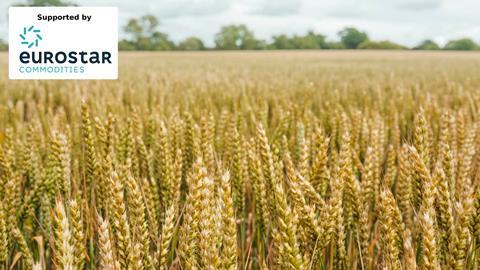
Interest in regenerative farming is undoubtedly growing, but for Wildfarmed co-founder Edd Lees that growth is nowhere near fast enough.
“As a percentage of the wheat grown in this country, regeneratively farmed grain is still roughly less than one percent,” he says.
The first British Regenerative Farming Week, taking place from 12 to 19 September, is hoping to change that by driving an accelerated take-up of regenerative farming.
“The direction of travel is very positive,” says Jason Bull, managing director at Eurostar Commodities, which has created and is sponsoring the week-long campaign. “Bakers and food manufacturers are increasingly interested in where their wheat comes from, how it has been grown and the impact that farming system has on soil, water and biodiversity.”
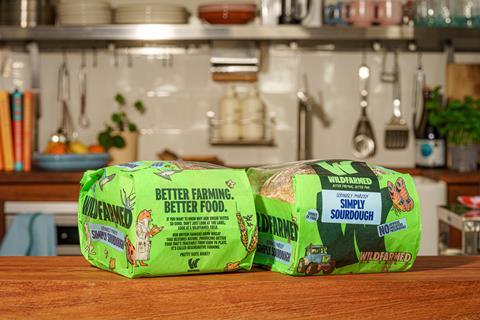
Retailers are also buying into the story as regenerative agriculture continues to make its mark on supermarket shelves. Tesco and Waitrose stock Wildfarmed products, for example, and producers in categories including dairy, beer and confectionery are using regeneratively farmed ingredients.
The question for suppliers and millers is how to turn interest into sales and ensure the use of regeneratively farmed ingredients continues to grow.
Bertie Matthews, managing director at Matthews Cotswold Flour, points out that awareness of regenerative flour and adoption are not the same thing.
“Many bakers are interested, but widespread use will depend on regenerative flour becoming commercially accessible, consistently available and capable of delivering the quality and performance they require,” he explains.

Matthews is seeing demand develop in two ways: through dedicated regenerative products such as the three-strong range of flours it launched into Waitrose this summer, and through customers gradually introducing regenerative wheat into established flour ranges. “The latter could ultimately have the greater impact because it allows regenerative sourcing to become part of mainstream flour production rather than remaining confined to a niche range,” he says.
Lees at Wildfarmed is encouraged by who the early adopters are.
“The people who know the most about flour, the top craft bakers, are the ones leading on this, because they understand what it means for quality, not just principle,” he says. “The next step is for bigger businesses to follow where the craft bakers have already gone.”
Factors giving some bakers and food manufacturers pause for thought include cost, availability and confidence in quality and consistency.
According to a recent survey carried out for Eurostar Commodities, cost is currently the biggest concern, cited by 58% of respondents. And when asked what would most influence a decision to use regenerative wheat or flour, competitive pricing came top at 75%.
“That tells us something important,” says Bull at Eurostar. “Businesses may strongly support the principles behind regenerative agriculture, but the ingredient still has to work commercially.”
He adds that quality and consistency are also considerations, and that bakers “quite reasonably” expect regenerative flour to perform to the same standards as any other commercial ingredient. Bulls says this is an important part of Eurostar’s work with its Rise Re:Gen flours.
“Our technical development work is focused on helping customers understand how the flour behaves in real applications and demonstrating that regenerative sourcing and technical performance need not be competing priorities.”
Many suppliers agree that consumer awareness and understanding is also a barrier, with Lees at Wildfarmed believing it is actually the biggest hurdle to overcome.
“If everyone understood the benefits of regenerative agriculture, not just for people in the food supply chain, but for everyone downstream of it, this would unquestionably be how food is grown,” he says. “We believe that this is the inevitable route of where our food system is heading, it’s just a matter of how quickly we can get there.”
Is a universal definition needed?
Consumer understanding might be easier to achieve if the term ‘regenerative agriculture’ was clearly defined, but many in the industry feel this is unlikely to happen.
“Regenerative agriculture is not necessarily about prescribing exactly the same farming system everywhere”
“There is still no universally accepted single definition and, in some ways, that reflects the nature of regenerative farming,” explains Bull. “Farms differ enormously according to soil, climate, geography and what they produce, so regenerative agriculture is not necessarily about prescribing exactly the same farming system everywhere.”
While a universal definition is unlikely, suppliers agree that clear standards and measurable principles are important and that without them there is a risk ‘regenerative’ becomes a vague marketing term rather than something customers can trust.
Eurostar’s Rise Re:Gen flour is produced using The Green Farm Collective regenerative wheat standards that include established soil management, long-term cropping, plant health, biodiversity and water management policies, alongside a nutrient management plan. They also include requirements around diverse crop rotations, minimal soil disturbance, nitrogen use and responsible use of synthetic inputs.
Bull points out there are also processes for self-assessment, review and independent spot-checking: “Perhaps the most important thing is not that everybody uses precisely the same definition, but that when a business calls something regenerative it can demonstrate what that means, what standards have been followed and how those claims are verified.”
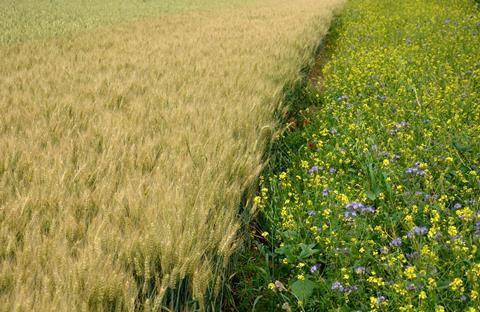
Matthews at Matthews Cotswold Flour agrees that farms should not be required to follow exactly the same practices given the variation in soil type, climate, rotation and farming systems.
“However, flexibility must not become vagueness. The industry needs a common minimum framework covering the outcomes being pursued, the evidence required, how progress is measured and how public claims are verified,” he says.
A framework that focuses on outcomes while encouraging continuous improvement is likely to support adoption from industry, suggests Dr Simon Penson, technical director at ADM, which produces Nature’s Gold Regeneratively Sourced Bakers Flour. “Transparency and traceability are fundamental,” he says. “We maintain robust documentation and verification processes throughout the supply chain and share relevant information with our customers.”
ADM works with specialist partners to help monitor and measure on-farm emissions data, and organises visits to farms, giving customers the opportunity to see regenerative practices first hand and speak directly with the farmers implementing them.
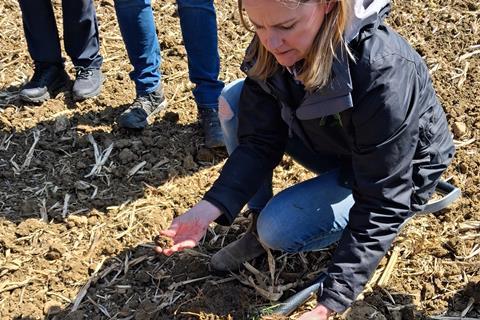
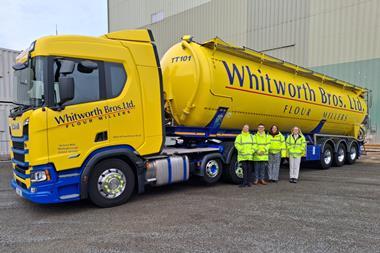
Whitworth Bros, meanwhile, has launched the Rooted in Soil programme, a farmer-led scheme designed to improve the land where the company’s wheat is grown by following practices that benefit the soil. As a mass balance scheme, the flour may not physically contain wheat grown by participating farmers.
“Instead, the purchase contributes to a system that rewards those certain farmers for improving soil health and sustainability for the future,” explains Gill Pendergrast, sales director at Whitworth Bros. “For us, it is about being honest about how the scheme works while making sure the benefits are going back into the farming system for the long term.”
A compelling story
Ultimately, the way to engage consumers is by making regenerative agriculture simpler and more relevant, suggests Matthews at Matthews Cotswold Flour. He adds that consumers will not engage with a long list of farming practices, but can understand healthier soils, better-managed water, thriving biodiversity and a secure supply of British food.
It’s a view echoed by Bull at Eurostar, who says consumers cannot actively seek out regenerative products if they do not know what regenerative means or why it matters. “We should tell the story of the food: where the wheat came from, who grew it, what is happening to the soil and why practices such as maintaining living roots, diverse rotations and reducing soil disturbance matter,” he notes.
Bull adds that combining a compelling story for consumers with flour that is competitively priced, reliably available and performs consistently in the bakery will make adoption much easier.
“That is one of the main reasons for creating British Regenerative Farming Week,” he says. “We want to give farmers, bakers, manufacturers and brands a shared platform through which they can explain what regenerative agriculture means and why healthy soil matters.”
The barren fields seen across the UK and other countries this summer all too clearly highlighted the importance of practices that can help to improve food security. The yield of the UK wheat crop is likely to be around 12% below the five-year average, a figure that was already low because of weak crops in 2024 and 2025.
“A lot of people in the UK will have driven past visibly brown, parched fields and lived under hosepipe bans, despite a very wet start to the year, and we’re likely to see flooding again soon,” says Lees. “Many consumers don’t realise the connection and the agency they have here, to use their food choices to be part of the solution, not the problem.”

“A lot of people in the UK will have driven past visibly brown, parched fields and lived under hosepipe bans, despite a very wet start to the year, and we’re likely to see flooding again soon”
Pendergrast at Whitworth Bros points out that sustainability cannot sit with one part of the industry.
“Climate change continues to introduce greater variability into wheat production, making technical expertise, rigorous quality testing and careful milling practices increasingly important,” she adds. “The industry’s long-term success will depend on collaboration between farmers, millers, manufacturers and retailers, ensuring sustainability is embedded throughout the supply chain rather than addressed in isolation.”
Collaboration for facilitation
Success will also require funding to facilitate the transition to regenerative farming practices.
Matthews at Matthews Cotswold Flour believes that, during that transition, farmers must be fairly rewarded for the additional work, measurement and change involved. “Meanwhile, millers must ensure that bakers receive the consistent quality and performance they expect,” he adds.
Lees at Wildfarmed says questions are now being asked about how transition happens and who pays for it. “It’s a complicated piece of work, not a straightforward switch,” he adds.
Wildfarmed has partnered with Lloyds Banking Group to create the Food & Nature Resilience Fund that brings together banks, utility companies, insurers and businesses to pool investment and reward farmers for delivering verified improvements across biodiversity, soil health, water quality and carbon.
“The number of farmers showing interest is growing, and that’s good news. But interest alone isn’t enough, what they need are better, more reliable frameworks and long-term deals,” says Lees. “That’s what helps share the risk: if a farmer knows their crop will be bought for multiple years, they can make the harder decisions the transition actually requires. That’s what will accelerate things fast enough.”
ADVERTISEMENT: EUROSTAR COMMODITIES
What if great baking could start with healthier soil?
From 12-19th September 2026, RISE Re:Gen and The Green Farm Collective are shining a light on regenerative farming and the role it can play in creating a more resilient food system.
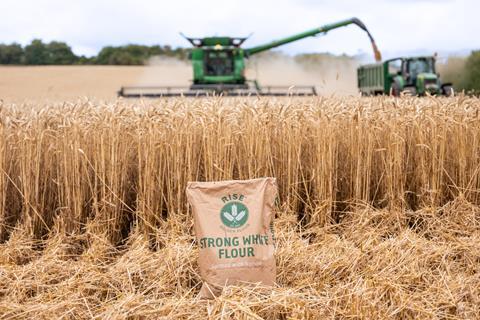
RISE Re:Gen is made from 100% British wheat grown using whole farm regenerative farming practices, by the farmers at the Green Farm Collective who are committed to improving soil health, supporting biodiversity and building a more sustainable future for British agriculture.
RISE Re:Gen has been developed to perform in the bakery, delivering the quality and functionality professional bakers need. Available in All Purpose and Strong White, in durable 16kg bags, it is suitable for a wide range of applications, from bread and pizza to everyday bakery products.
Regenerative Farming Week brings farmers, bakers and food businesses together to explore where our ingredients come from, and why it matters.
To find out more, visit: riseregenflour.co.uk/










No comments yet