










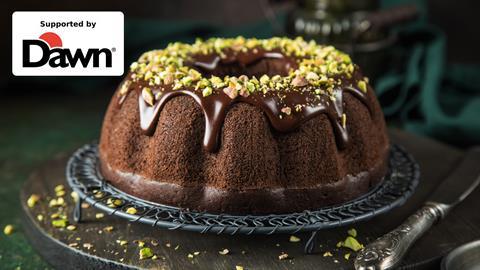
Pistachio is everywhere right now. From croissants to doughnuts, biscuits, and even tiramisu, there is no escaping the green hue, indulgent flavour, and nutty finish in bakery.
The nut has gone from “niche patisserie ingredient to mainstream flavour hero”, according to Anthony Saison, head of category insights & customer marketing at Mademoiselle Desserts.
Riding the high of the Dubai chocolate trend – which sees it paired with chocolate and crispy knafeh (a fine shredded pastry) – pistachio has soared to become a beacon for on-trend indulgence.
Five pistachio bakery launches
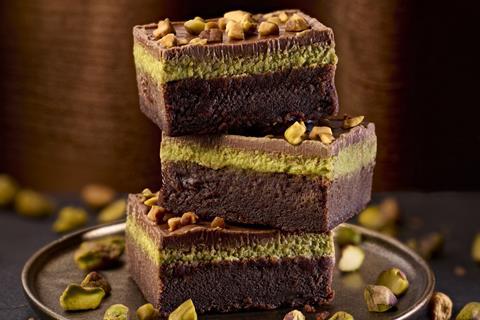
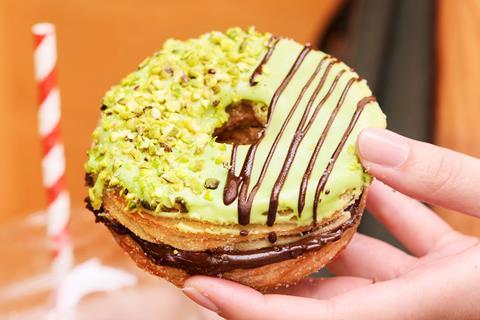
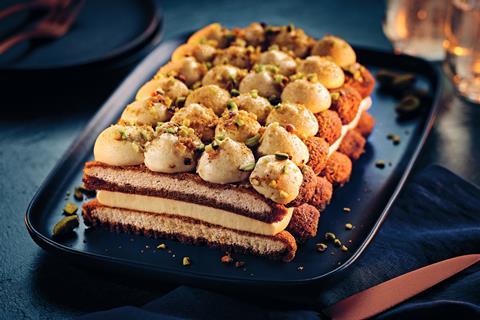
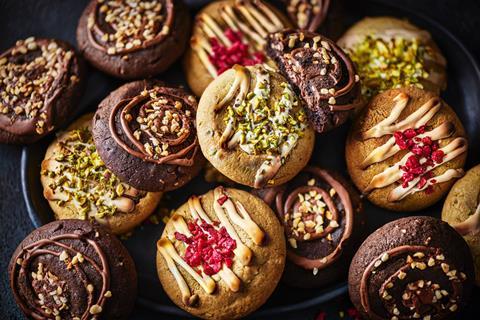

But its allure goes far beyond the hype of being a signature part of a viral flavour combination.
“Pistachio sits at the intersection of indulgence, health cues, and global flavour exploration,” explains Tom Smalley, commodities buyer at wholesaler (and reigning Supplier of the Year) Bako.
While its use has undoubtedly generated sales in droves for bakery businesses, and the wider food & drink industry, demand has placed pressure on supply chains.
“The meteoric rise in the popularity of pistachio, for example, across bakery and desserts coupled with poor pistachio harvests has resulted in a global shortage of the nut and spikes in prices,” explains Jacqui Passmore, marketing lead West EU & AMEAP at Dawn Foods.
Prices jumped 30% in a year, according to Keinia Industrial Group which specialises in the production and distribution of nuts. European wholesale prices for pistachios sat at €14 per kg in early 2024, rising to €20 per kg in early 2025.
Drought and other challenges
Pistachio isn’t the only one to feel the squeeze of late. Almonds, which dominate in bakery by volume according to Bako, are also under pressure. They’re “incredibly versatile, [have] great flavour, reliable functionality, and strong nutrition credentials” meaning they show up everywhere from Bakewell tarts to macarons, and gluten-free bakes.
While demand has stayed relatively steady, weather (and by extension market) conditions have not.
“Almonds… are becoming harder and more expensive to source,” notes Kirsty Matthews, brand manager at Macphie. “Drought conditions in California and parts of Europe, combined with global trade and cost pressures, have made the supply of almonds increasingly volatile.”
This is leading some to look for alternatives. As Matthews questions: “what happens when familiar ingredients are no longer guaranteed?” The answer. Reformulation is put on the table to create recipes that can “withstand the unpredictable, without compromising on taste or quality”, she adds.

There are some benefits that come with this. While nuts tap into indulgence, health cues, and more, they are also an allergen. Gloucestershire-based Hobbs House Bakery, for example, recently axed its almond croissant as part of a wider move to make its central bakery nut-free.
There are several options in the market for achieving this, particularly flavourings – something flavour specialist I.T.S says many of its bakery customers are turning to.
Natural nut flavours can be used alongside or instead of nuts, “not only saving on cost but offering a stable supply chain too” notes I.T.S bakery specialist Liz Gabriel. “Natural nut flavours deliver all the buttery nutty notes of the real product but are completely allergen-free too, making production easy and allergen declarations simpler for nut-free sites,” she adds.
Format, texture, and function
Despite prices and availability serving up challenges for the nation’s bakers, they’re still keen to take advantage of consumers’ increased interest in particular flavours and formats.
“It can be a challenge in this climate for bakers in all channels to meet the latest bakery flavour trend or social media sensation while maintaining finished product costs,” Dawn Foods’ Passmore adds.
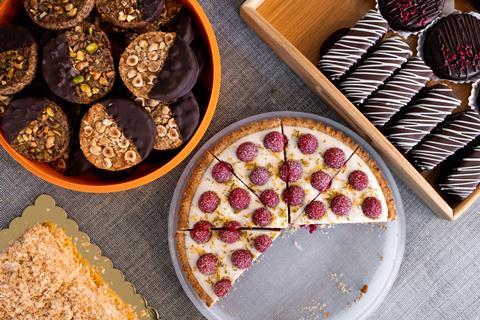
As such, the firm advises bakers to reduce the inclusion of whole or chopped nuts and maximise the use of ready-to-use nut-based fillings and flavour compounds.
“These ingredients will not only provide the authentic nut flavour and visual appeal, but enhance the sensory profile of the finished product, and result in consistent cost management too,” she says.
The experts suggest this may already be happening with many pointing to the rise of nut creams and butters, as well as nut-based flours, to bring a luxurious and ready-to-use element to bakes.
“Texture is the new frontier in flavour, and nuts are a big part of that”
“We’re seeing pistachio reimagined as a luxurious cream or butter, for example, used as a swirl in loaf cakes or a filling in buns. Gianduja, laminated dough and puff pastry are also moving beyond the croissant and cruffin, filled and topped in bold new ways,” notes Saison at Mademoiselle Desserts.
Five nutty bakery launches
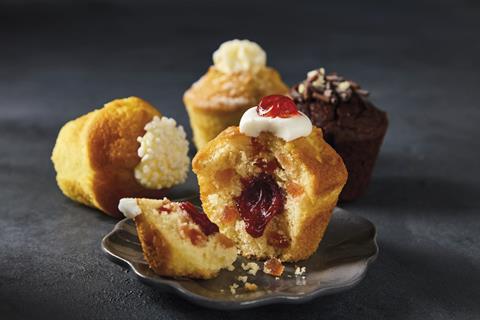
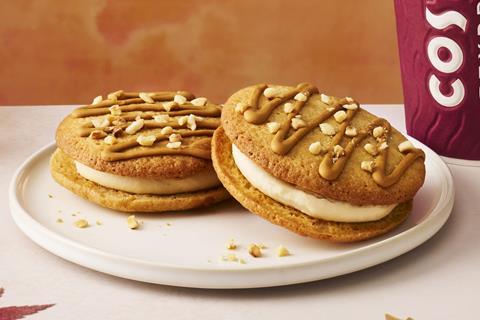
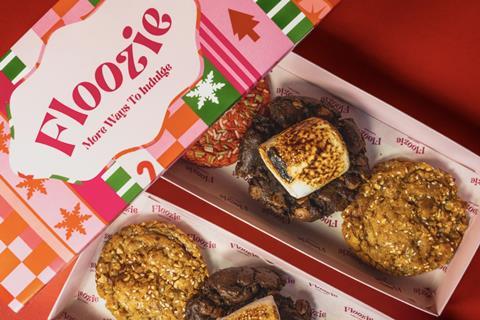
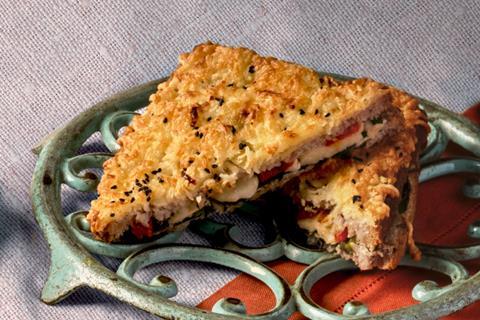
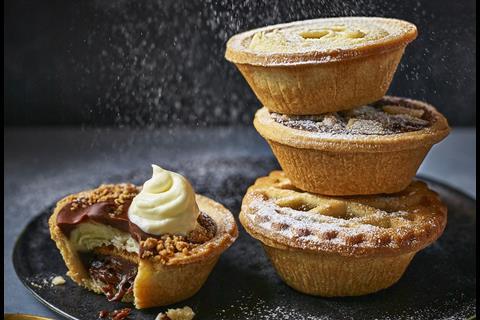
One of the plus sides of these formats is they allow bakers to tap into demand for nuts, but with a variety of interesting textures.
“Texture is the new frontier in flavour, and nuts are a big part of that,” adds Saison. It can be seen in classic bakes, such as the use of whole walnuts on top of a coffee & walnut cake, to modern ones which sees cookies or filled topped with nut creams. “It’s all about textural storytelling – combining smooth, crunchy and creamy elements for sensory impact,” he explains.
That’s another tick in the box for nuts of all varieties then from pistachio to peanut, almonds, hazelnuts, walnuts, and more. The flavours and textures can be enhanced further by roasting, caramelising, and pairing with ingredients which enhance their flavours.
Nuts “have become essential in the baker’s larder, pulling double duty as functional ingredients and premium decorations”, adds Smalley. “2025 may be the ‘pistachio year,’ but almonds still anchor the category, with hazelnuts and walnuts rounding out a flavour-first toolkit. The winners in bakery will be those who marry nutrition, texture, and visual theatre, and nuts do all three brilliantly.”
ADVERTISEMENT: DAWN FOODS

Coconut Puddle Doughnuts
What You’ll Need….
Doughnuts
- 2000g - Dawn Balance Donut Mix Vegan Plain
- 100g – Fresh Yeast
- 980g – Water
- 100g – Vegetable Oil
Decorations
- Royal Steensma Souplesse Milk
- Royal Steensma Souplesse Dark
- Dawn Delicream Coconut
- Bounty bars and/or coconut (for decoration)
Directions for donuts
- Add all the donut ingredients to a spiral mix and mix for 2 minutes on slow speed, and then 8-10 minutes on fast speed.
- Cover the dough and let it rest for 10 minutes.
- Sheet the dough out to a thickness of 8-10mm.
- Re-cover the dough and let it rest for a further 10-15 minutes.
- Cut out doughnuts using a round ring doughnut cutter, do not remove the cut hole – place the doughnut onto a proofing tray / cloth.
- Proof for 35-45 minutes at 38°C / 60% RH. Allow to air dry for 10 minutes.
- Fry at 180-185°C for approximately 120 seconds on each side.
- Allow to cool thoroughly.
Directions for finishing
- Remove the top of the cut hole or push it down to make a well.
- Heat the Souplesse Dark to achieve a good dipping consistency and dip the top of each doughnut.
- Heat the Souplesse Milk and drizzle / spin over the top of the doughnuts.
- Place a cut piece of Bounty or coconut onto the icing as a decoration.
- Fill the created well with the Coconut Delicream.






No comments yet