











Family-owned Whitworth Bros is on a mission to change bakery for the better starting with the ingredient at the heart of almost every baked good – flour.
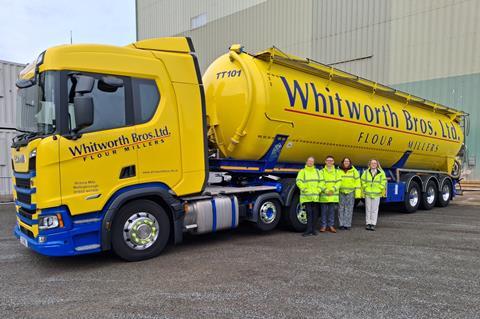
As the largest flour miller in the UK, it certainly has the opportunity to do this. It supplies over one million tonnes of flour every year from 10 sites across England and Scotland, accounting for more than a third of the UK’s flour. Among its portfolio are three Carr’s mills in Kirkcaldy in Fife, Maldon in Essex, and Silloth in Cumbria as well as former Hovis sites in Selby, North Yorkshire, and Manchester. The jewel in Whitworth Bros’ crown though is the Whitley Bridge mill in Yorkshire which opened in 2021.
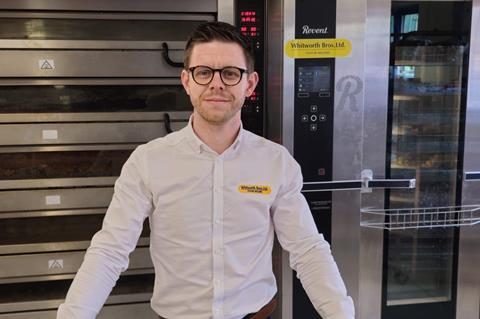
“As the biggest supplier of flour in the UK, we play a vital role in supporting the food industry from small artisans to large scale food manufacturers, across all sectors,” explains Simon Curran, head of technical bakery & innovation at Whitworth Bros.
The resultant flour goes into industries far beyond bakery with ice cream inclusions, beer, snacks, mustard, bird food, and even cardboard boxes (where it’s used as a starch for strengthening).
Established in 1886, the business has undergone plenty of change in its 140-year history, although the George family have been present for most of that with Frank George joining in 1905 as a milling apprentice and eventually buying the business in the late 1920s when the original owners retired.
The George family continue as custodians to this day and are “not shy of investing money where it’s needed”, according to Curran. Beyond acquisitions which has seen the portfolio grow to where it is today, the miller has put considerable sums into new technology. “If you’re not constantly investing in new technology and new processes, it does become very hard to be competitive,” he adds.
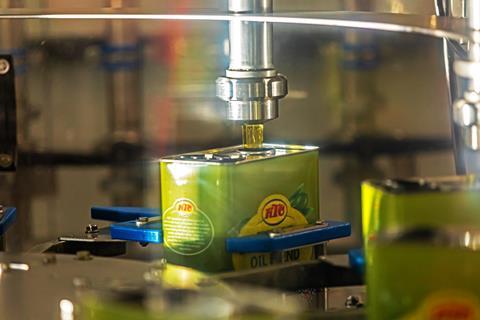
There’s more coming over the next three to five years, with oil specialist KTC Edibles now nestled among the portfolio since its acquisition in 2025 marking Whitworths’ expansion beyond flour.
In a recent interview with the Independent, chairman Martin George said the business was looking to diversify into different areas as its “getting to the top of our tree” in flour milling. This doesn’t mean the firm is taking its foot off the pedal when it comes to flour though.
Fibre for February and beyond
One topic Whitworth Bros is keen to address is fibre which Curran describes as a “real talking point” right now. Fibre February – an annual campaign designed to encourage the nation to eat more fibre – plays a part in this, as does the TikTok trend of fibremaxxing, as well as the rise of GLP-1 drugs for weight loss which see consumers turn to more nutrient dense foods whilst eating less overall.
According to the National Diet and Nutrition Survey published in 2025, only 4% of UK adults met the fibre recommendation of 30g per day with an average of 16-17g typically consumed. Notably, it found that fibre intake increased on average with increasing income. Cereals and cereal products were the main source of fibre for all age groups, contributing between 43% and 50% to average daily intakes, followed by vegetables and vegetable dishes (19-25%) and then fruit (6-12%).
“Flour millers and manufacturers play a big part in delivering fibre to the nation”
While acknowledging that wholemeal bread is “obviously the big hitter” when it comes to fibre-rich bakery items, Curran points to continued appetite for white bread and its current contribution to the nation’s fibre intake at around 2g per two slices (depending on the product).
“Flour millers and manufacturers play a big part in delivering fibre to the nation,” he says. “It’s not about demonising white bread or anything that isn’t wholemeal, but more of an educational piece to highlight the importance of fibre.”
The fibre gap is hard to ignore though. Curran believes there is potential for improvement, so long as it’s not at the cost of attributes consumers love about certain products, such as taste and texture.
“Consumers want health by stealth,” he explains. “They want increased fibre and protein, but it needs to be natural and have a minimal effect on appearance and texture. What’s more, it has to taste good, if not better than the original, but equally needs to be affordable.”
To help, the miller has created Fibrefine: Wheat, a high-fibre functional flour derived from wheat designed to deliver a higher fibre content without the course texture of traditional bran flours.
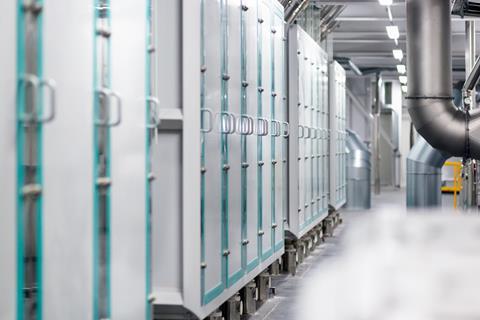
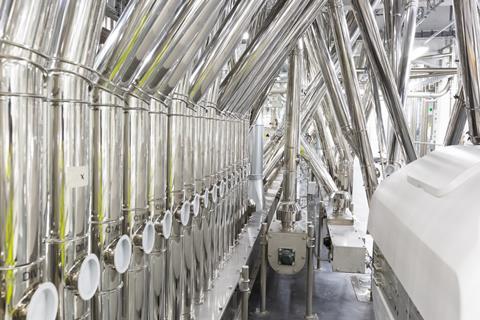
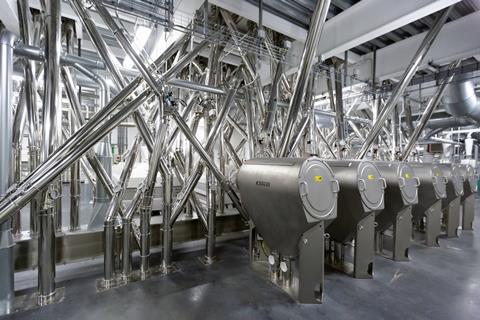
Its creation has involved a “multimillion pound investment” by the firm into “next generation grinding technology”. “Partnered with our extensive milling and engineering expertise, this allowed us to push the boundaries where milling meets innovation to achieve products which are perfect for a ‘health by stealth’ approach,” Curran says.
The technology in question allows Whitworth Bros to mill bran finer than flour meaning it is not detected in the final product. It also means it has minimal impact on the dough or batter rheology meaning it can be used for bread as well as aerated products such as cakes and laminated pastry. Depending on the recipe, an inclusion of 4% can be enough to provide a ‘source of fibre’ claim.
“This makes it a perfect addition to support fibre intake in baked products, especially for a younger demographic who may be put off by bran flakes in their bread.”
Of course, it would be remiss to talk about health without mentioning the other big macro: protein. Whitworth Bros also has a solution for this in the form of its ProteinFine Fava Bean flour. The fava beans (or broad beans as they’re often known) go through an adapted heat-treated milling process resulting in a flour which has a higher fibre and protein content than wheat flour at 7g of fibre and 23g of protein per 100g.
“It’s a natural functional flour,” Curran explains, not a protein isolate which he says have minimal compromise on taste and colour of resultant products.
Like the acquisition of KTC, these projects signal a journey beyond wheat for Whitworth Bros, with a maize and rice mill already in its line-up, and the business also “looking at chickpea flours and spelt”.
Rooted in soil

From human health to soil health, Whitworth Bros is also looking to improve the sustainability of the crops which go into its flour via its new Rooted in Soil programme.
It’s designed to support British farmers to make measurable, practical changes, starting with lowering nitrogen on farms. This is because, notes Whitworth Bros, reducing nitrogen is the single biggest step that can be taken to lower the environmental impact of wheat production, and is one the firm can track, reduce, and report on. Farmers can choose their level of investment, adding more land or adopting new practices as they evaluate the success of what has gone before.
“We reward progress, not perfection”
Other practices farmers are rewarded for includes measurement and monitoring of soil health, direct drilling, increased rotations, cover cropping, and the use of greener fertiliser options.
Importantly, the farmers are guaranteed payment even if crops fail.
“We reward progress, not perfection,” Curran says. “It’s not up to us to dictate to ‘farmer John’ how he runs his farm which has been in his family for hundreds of years… They tell us what is achievable for them and get rewarded for that then hopefully every year they will invest a bit more.”
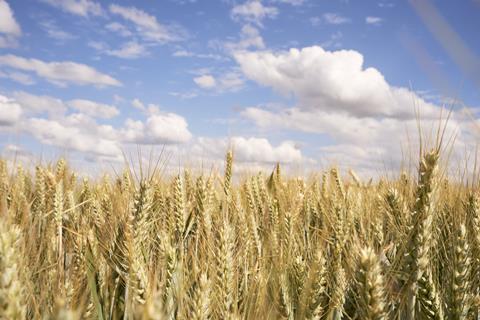
Whitworth Bros is keen to avoid the term ‘regenerative’ as its lack of accreditation or universal acceptance means “it’s a bit of a grey area”. Instead, the miller promises “the same trusted wheat but sourced from farms where there’s an active investment in soil health”, Curran explains.
Notably, the programme is operated on a mass balance scale which he assures “removes the inconsistencies that might come in different kinds of protein levels and water absorption levels”. “When we talk about our customers in large scale manufacturing, the last thing they want is a potential variable coming through for the biggest component that’s in their recipes,” he adds.
There’s a lot of time and effort that goes into Whitworth Bros’ operations and development of its mills and products, according to Curran, pointing to people as a big part of this. “You don’t become the biggest flour miller in the UK by not having the best people,” he enthuses.
From the people inside the business to outside, the miller aims to use its scale for the good of the nation, even if it is ‘health by stealth’. “As a big player feeding into the UK supply chain, we’ve got the ability to impact [the nation’s nutrition] quite heavily so we’re just using our footprint in the right way.”






No comments yet