











Restrictions on supermarket placings of foods high in fat, salt, or sugar (HFSS) has led to a marked reduction in purchases, independent analysis has found.
The research, carried out in England by the University of Leeds, estimates that two million fewer HFSS products were sold per day after the new regulations were put into effect in October 2022.
As part of the government’s Childhood Obesity Strategy, the legislation limits the location of in-scope HFSS products and applies to store entrances, aisle ends and checkouts, as well as their online entry pages, landing pages for other food categories, and shopping basket or payment pages.
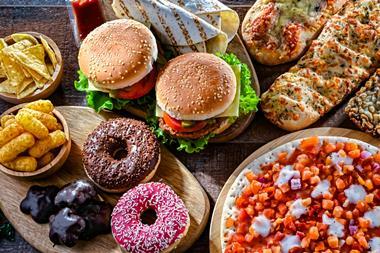
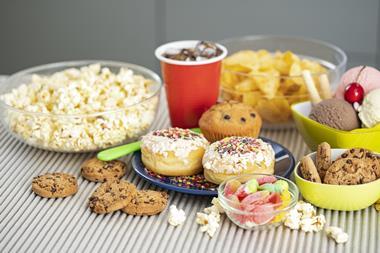
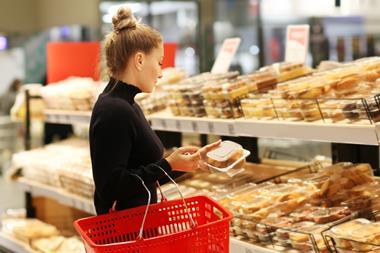
Bakery products within scope include the likes of pre-packaged cakes, biscuits, morning goods, and pizza that score four or more on the 2004/5 Nutrient Profiling Model. However, loose items such as those at in-store bakery formats are out of scope of the legislation.
Prior to the implementation of restrictions, 20 out of every 100 items sold were in-scope HFSS products, with the number subsequently dropping to 19.
The researchers utilised store level sales and product data from Asda, Morrisons, Sainsbury’s, and Tesco, alongside the Priority Places for Food Index – an online tool which identifies neighbourhoods most in need of support to access affordable, healthy, and sustainable foods.
They also conducted surveys and interviews with representatives from the four major multiples as well as the British Retail Consortium (BRC) and enforcement officers. In addition, nearly 2,000 shoppers were surveyed to find out how the legislation was perceived and how it impacted shopping behaviours.
Data were analysed by researchers in the Nutrition and Lifestyle Analytics team at the University of Leeds, led by Professor Michelle Morris.
“Our research shows that the HFSS legislation was a force for good, leading to significant reduction in sales of in-scope HFSS products,” commented Morris. “But more now needs to be done to make healthy and sustainable diets the easy choice for our population, so that we can shift more people’s eating habits towards the national recommendations of the Eatwell Guide.”
Morris’ colleague Dr Emma Wilkins highlighted the enormous size of the study. “We analysed real-world data from 11.6 billion product sales, collected over 2.5 years from 480 stores across England, which is far bigger than traditional dietary studies that rely on self-reported surveys or receipts,” she said.
The research is part of a broader UK Research and Innovation Transforming UK Food Systems-funded academic collaboration entitled Diet and Health Inequalities (DIO-Food), which is led by Professor Alexandra Johnstone at the Rowett Institute, University of Aberdeen.
“It is critical that any new legislation does not widen dietary inequalities for vulnerable groups, like people living with food insecurity,” asserted Johnstone. “We are reassured to see from our research that the impact of the HFSS legislation was equitable in stores located in areas with different levels of priority according to the Priority Places for Food Index.”
Research findings
A “step change” was observed after the legislation was introduced, with trends of in-scope HFSS sales at a lower level to those before the restrictions. The researchers believe this may dispel any arguments that the changes were driven by the cost of living or inflation.
With no guidance given on what should be placed in certain prominent locations instead of in-scope HFSS products, interviews with retailers demonstrated that they’d implemented different strategies. Some had switched in healthier or non-food items, while others used such spaces for exempt products like baby food or alcohol, or for digital advertising.
Despite some implementation challenges, the retailers interviewed felt the legislation was a positive step and supported the fundamental aim to reduce obesity. Whilst the legislation did not cover Scotland and Wales, the research on sales from a smaller number of stores in these nations found aspects may have carried across.
If products were reformulated (lowering fat, salt or sugar from products or adding fruit, vegetables, nuts, protein and fibre), this would have been carried across national borders, as many of the same products are sold in stores across England, Scotland and Wales.
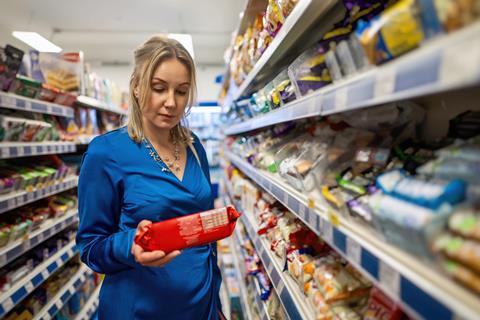
On the shoppers side, most felt it was a good step to encourage healthier food choices; although 73% didn’t think it would impact their own shopping behaviour, a similar number (71%) believed it would have more impact on others who did not plan their shopping.
Nearly all shoppers surveyed (90%) thought making healthier foods affordable was just as, if not more, important than the legislation against less healthy food. More than half of the respondents (56%) hadn’t noticed any changes from the restrictions – which had been one of its intentions – and they still found it easy or very easy to location HFSS food and drinks in supermarkets.
Eight recommendations are being made to policymakers as a result of the research findings:
- Strengthen legislation to mandate against promotion of less healthy foods
- Ensure healthier foods are more affordable
- Make available an open, regularly updated food composition database for HFSS classification of food and drinks
- Allocate sufficient funding to allow evidence generation and robust and timely evaluation of legislation
- Consult with context-specific experts to develop implementation guidance for food policy in complex retail environments
. - Ensure legislation is enforceable
- Align government departments in their approach to food
- Establish dedicated support and guidance to facilitate effective implementation of legislation.
In July, the government unveiled a 10-year plan aimed at improving the health of the nation and easing the burden on the NHS. While bans on promoting HFSS products and multibuy deals (which have been repeatedly delayed) are now expected to be scrapped all together, all large food businesses are to do mandatory reporting on healthy food sales – a move that suppliers and trade bosses have urged needs to take into account different categories and occasions.








No comments yet