









From creating and scanning QR codes, to logging internal temperatures and printing edible cake toppers, the latest bakery equipment offer a variety of solutions.
There’s also a brand-new spiral mixer that runs off normal mains supply, and a bespoke wooden display case crafted and shipped all the way from the other side of the planet to help showcase artisanal bakes.
Read on for more details on the equipment innovations now available to UK bakers:
Bakery display case, George & Willy’s
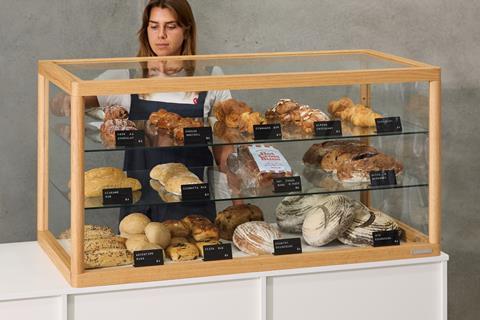
As hospitality spaces become smaller and more flexible, furniture is being asked to do more with less, highlights New Zealand-based design studio George & Willy.
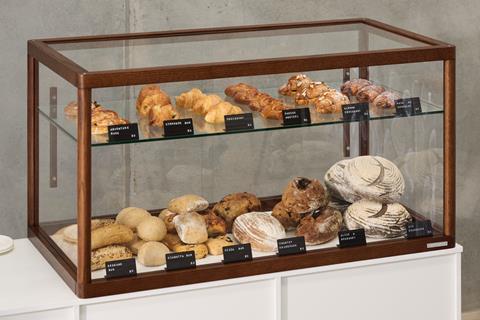
To address this, it has created a wooden version of its best-selling Bakery Display Case that takes up minimal bench space whilst supporting maximum treats. Available for UK businesses (rsp: £1,722, 122cm x 62cm x 62cm), it comes in choice of oak or walnut, both with tempered glass for easy cleaning. It has two adjustable shelves with seven height options and removable doors for faster service when its go time.
“We wanted a case that earned its place on the counter visually, not just functionally,” says George & Willy co-founder George Wilkins. “Wood does something stainless can’t – it warms the whole room up, and it looks better the longer it’s there.”
QR code software and assessment, Markem-Imaje
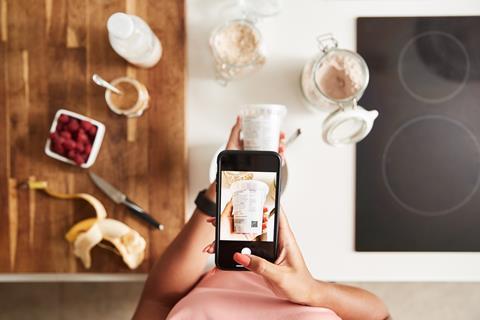
Following on from the rollout of Version 7 of its CoLOS Software for packaging operations, systems provider Markem-Imaje has launched more software as well as an advisory offering to help manufacturers including bakeries assess their readiness for complying with emerging regulations.
The CoLOS 2D Activate and CoLOS 2D Engage are software-as-a-service enterprise solutions that enable brands to create, organise, activate, and manage both static and dynamic GS1 Digital Link QR codes on their products. These can also deliver personalised consumer experiences, collect valuable first-party insights, and support future digital product initiatives.
Complementing the software platform, Markem-Imaje’s implementation experts provide companies with a structured assessment of their production environment, coding processes, and operational readiness. This includes a full-day on-site review followed by practical recommendations to help identify gaps, prioritise investments, and develop a clear roadmap for implementing QR codes.
Spiral mixer, Pantheon
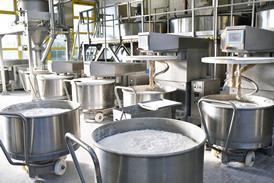
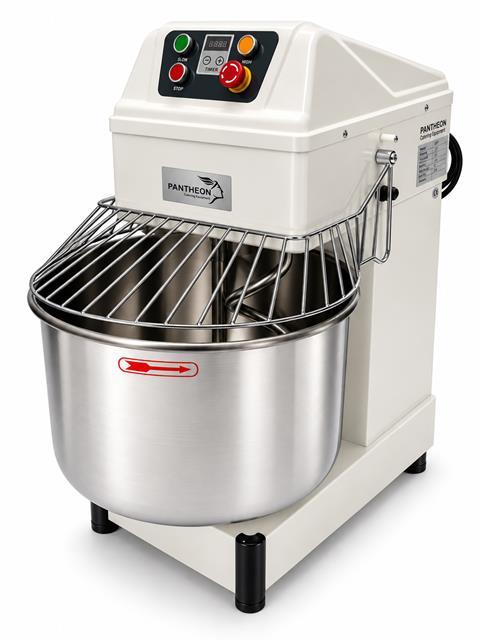
A new 60-litre, dual-speed, floor-standing model has been added to Pantheon’s spiral mixer range, meeting the needs of medium to large production kitchens. The SM60 is designed to operate from a regular 13-amp plug, meaning there’s no need to pay for installation of a 3-phase power supply.
The speed options provide operators with more control over how each batch of dough is developed – the lower 150rpm setting evenly distributes ingredients while 200rpm actively builds gluten structure. It also makes it suitable for a broad range of bakery products.
Mixing time can be adjusted from 1 to 99 minutes, while operator safety is addressed with the likes of a microswitch-controlled, stainless steel safety guard, a hard-wired emergency stop switch, and anti-vibration framing.
Cake sheet printer, Primera Technology
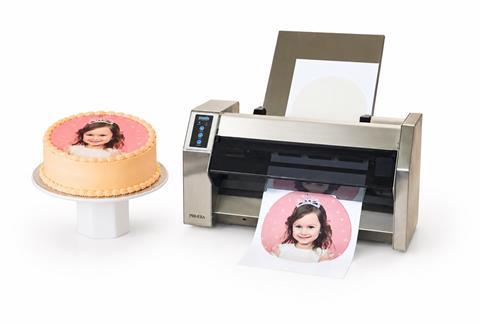
There was Eddie the Edible Ink Printer, then Freddie the Frosting Machine, now Minnesota-headquartered printing equipment specialist Primera has rolled out Connie the Cake Sheet Printer. This is billed as the world’s first edible sheet printer built specifically to earn NSF certification for commercial kitchen use.
The innovation responds to the common problem of food manufacturers incorrect use of standard inkjet printers (such as from Canon, HP and Epson) to produce printed edible frosting sheets for cakes, cupcakes, and other baked treats. The plastics, metals, lubricants, adhesives, and print head components inside these printers carry no food-contact approval of any kind, noted Primera. Connie, however, shares its core print head technology with Eddie, meaning it is purpose built for edible inks and approved for direct food contact.
Connie also runs regular automated maintenance to prevent unused ink drying inside and keep the print head clean and ready, even after an extended period offline. The machine can print at resolutions up to 1200 x 4800 dpi (ie. photo quality) and on design sizes ranging from precision 3” cupcake circle to A3 cake toppers.
Code reading sensor, Sick
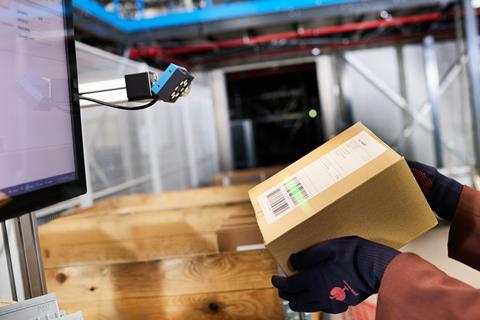
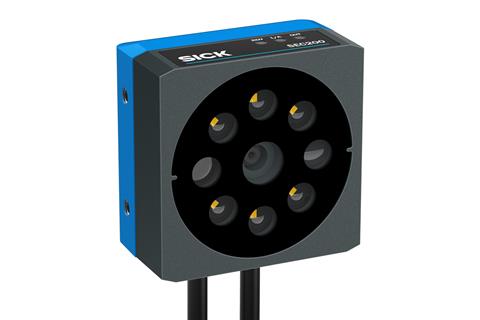
Vision solutions specialist Sick has unveiled its new SensingCam SEC200 image-based code reader to help reliably identify 1D and 2D codes. This helps keep processes running smoothly and reduces avoidable delays at industrial sites such as bakeries.
The German company, founded by Erwin Sick in 1946, asserts that fast, reliable scanning should be as simple as using a supermarket checkout or parcel dispatch point.
With a 1.3-megapixel camera module that can capture codes from up to 30cm away, regardless of alignment or rotation, the new sensor combines robust construction and user-friendly guidance in a compact device. An integrated web server, industrial connectivity, and clear visual and acoustic feedback all help to simplify configuration, speed up commissioning, and support dependable operation on the shop or factory floor.
Temperature data logger, Signatrol
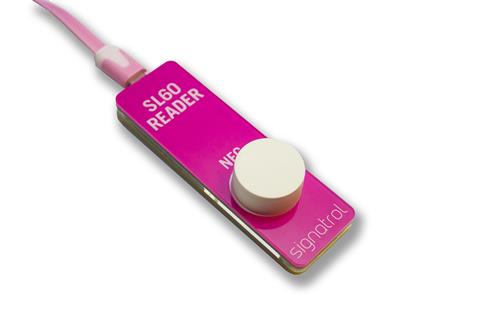
Signatrol has launched a low-cost, immersible, miniature data logger for use by bakery and ready meal manufacturers to record product temperatures throughout the product manufacture cycle.
The SL63T temperature data logger is made from food-grade materials and is fully encapsulated, so it can be immersed into liquid, such as pie fillings, without needing protective enclosures. It can also be applied in food R&D processes, frozen cooking validation, HACCP workflows, and during production washdowns where protective housings can be difficult to clean.
It is able to measure the whole cook-chill-frozen process from +125°C down to -40°C, within an accuracy of ±0.2°C. With a larger, non-volatile memory, data can be downloaded should the battery be depleted. Starter kits are available with either two or five SL63T temperature data loggers, USB interface cable, and the TempIT5-PRO software that facilities data retrieval via a USB-powered NFC reader.





No comments yet