











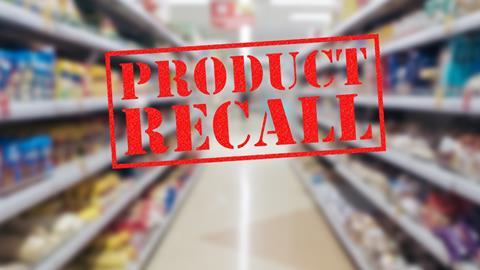
The presence of glass, small stones, and even moths are among the reasons bakery products have been recalled over the past five years.
To analyse the trends and identify any problem areas, British Baker trawled through the Food Standards Agency (FSA) website for recalls from 2021 to 2025 and the reasons behind them (see full list at end of story).
The research revealed that over the past five years there have been 113 recalls within the bakery space including items such as pies, steak bakes, custard tarts, and cupcakes. While there has been a 27.7% overall increase in the number of recalls during this period, their levels have fluctuated from a low of 18 in 2021 to a high of 26 in 2022 and 2024.
When analysing the recall notices, items such as bread, cakes, biscuits, tarts, bakes, and pies as well as food-to-go products such as sandwiches, wraps, and sausage rolls were included. Items such as ice cream with brownie or cookie dough inclusions, for example, were not.
The analysis only counted incidents not the number of products affected by them as, in some cases, this was updated at a later date. For example, in February 2024 various cookies were recalled because they may have contained pieces of metal with an extended list of affected products released as the situation evolved. For the purposes of this analysis, it has been counted as one recall.
Once collated, the recalls were then categorised into four areas:
- Contamination – microbial, where presence of E. coli or salmonella is suspected or confirmed
- Contamination – foreign body, where presence of metal, stones, or another physical contaminant is suspected or confirmed
- Labelling error, including incorrect use-by dates, allergens not being declared in English, or allergens not emphasised
- Undeclared allergens, where allergens which are or may be present are not on the label.
Undeclared allergens were the most common reason for recalls, followed by contamination of foreign bodies, then microbial contamination, and finally labelling errors.
So, what does this tell us about the potential issues in the bakery supply chain? And how should operators handle a recall should the situation arise?
Firstly, due to the complex nature of food manufacturing, recalls are arguably an unavoidable part of the system, even more so as supply chains become increasingly complex. What’s important though is that recalls are dealt with swiftly to avoid harm to the public.
It’s worth noting the difference between a recall and a withdrawal as these happen at different stages in the supply chain. According to the FSA, a recall is the process by which unsafe food is removed from the supply chain and consumers are advised to take appropriate action, for example to return or dispose of the unsafe food. A withdrawal, meanwhile, is the process by which unsafe food is removed from the supply chain, where unsafe food has not yet reached the consumer.
Following a food safety incident, operators are advised to undertake a root cause analysis (RCA) to determine the reasons why the recall/withdrawal occurred. This will enable the identification of corrective actions which, in turn, will help to mitigate reoccurrence of the food safety incident.
“Understanding the root cause of the issue is key to future prevention with examples including poor training of line operatives, inadequate line checking procedures, and insufficiently detailed processes for cleaning and disinfection to name a few,” Alec Kyriakides, independent food safety consultant recently explained to British Baker’s sister title FoodManufacture.
Complex investigations
Kyriakides noted that microbiological contamination can often be linked back to raw materials introducing bacteria or chemicals, cross contamination in processing, or indeed under processing.
The possible presence of Listeria, E. coli, salmonella, and mould were among the culprits for microbial contamination of bakery products over the past five years. Notably, half of the incidents occurred in the summer of 2024 as various wraps and sandwiches were recalled by suppliers including The Real Wrap Co, Greencore Group, and Samworth Brothers Manton Wood.

These were significant incidents with more than 100 products recalled by The Real Wrap Co because of the possible presence of listeria monocytogenes, and more than 60 products recalled by Samworth Brothers, Greencore, and plant-based brand This! as a precautionary measure due to the risk of a possible presence of Shiga toxin-producing E. coli (STEC).
An investigation by various health bodies, including the UK Health Security Agency (UKHSA) and FSA, of the latter incident found that pre-packaged sandwiches containing UK-grown Apollo lettuce was identified as the likely cause of the STEC outbreak, with several people admitted to hospital. The difficulty with cases such as this, the investigation noted, was the short shelf life of products.
“Outbreaks involving fresh produce or ready-to-eat foods are particularly challenging to investigate due to the speed with which they emerge and the high number of cases that we must assess,” explained Amy Douglas, lead epidemiologist at UKHSA. “By the time we are made aware of an outbreak, often none of the implicated food products are available for testing because they have either been eaten or disposed of, making it difficult to confirm whether they were contaminated.”
Notably, the investigation highlighted that the firms had ‘detailed and robust hazard analysis and critical control points (HACCP) plans and biosecurity in place’.
Jacquelyn McCormick, head of incidents at the FSA, added that the outbreak demonstrated the “complexity of the supply chain and how critical it is for government organisations and the food industry to work together to respond rapidly to food safety concerns and protect public health”.
Despite extensive investigation, the UKHSA said it was not possible to confirm how the lettuce had become contaminated.
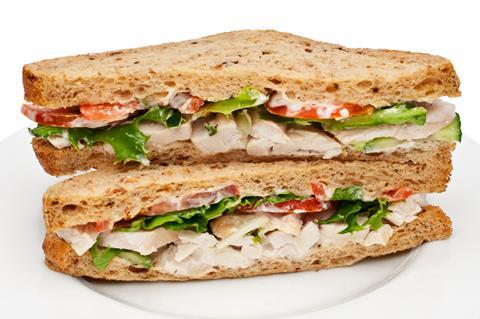
Things were a bit different for the Bread Spread recall which took place around the same time. In May 2024, the food-to-go supplier issued a recall for various items because Listeria monocytogenes has been found in some of its products. Less than a year later the business was hit with a £47k fine after pleading guilty to 21 counts of serious food hygiene failures at Uxbridge Magistrates’ Court. The court heard evidence that the company had mislabelled sandwiches with the wrong shelf life and had repeatedly ignored warnings to raise its hygiene standards and failed to comply with improvement notices from Ealing Council officers.
“Maintaining stringent hygiene standards in production environments, especially in hot, harsh or wet conditions, is critical,” explains Mike Pipe, head of product inspection at Mettler-Toledo Product Inspection. “Manufacturers are encouraged to implement thorough cleaning programs and invest in equipment designed with hygienic features to minimise risks.”
Metal, stones, moths, and more
When it came to foreign bodies, metal was by far the most common foreign body to force a recall, accounting for 57% of the incidents during the five-year period. The possible or confirmed presence of plastic accounted for just under a quarter of cases (23.8%), followed by glass (9.5%).
“Foreign body contamination incidents are not rare anomalies, they are rising concerns across the [food production] industry,” says Glen Oxborough, business manager at Ishida Europe which supplies end-to-end weighing, packing and safety solutions for food manufacturers. “Whether the culprit is metal, bone, stone, or plastic, relying on metal detection alone leaves manufacturers exposed. The need for adaptable and advanced inspection systems has never been clearer.”
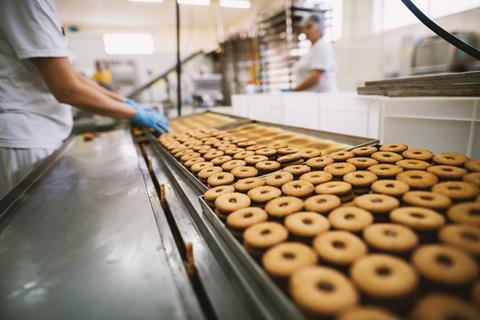
Other contaminants found in baked goods included dried glue from packaging which triggered the recall of Tesco Finest All Butter Pastry Mince Pies in October 2024 and the possible presence of moth larvae which saw Daylesford Organic recall some crispbreads and savoury biscuits the same year. The latter was traced back to an organic flour mill that has since been treated for the infestation.
Even with rigorous processes in place, recalls can happen. But Pipe from Mettler-Toledo Product Inspection insists there is a “silver lining”.
“As food production becomes increasingly sophisticated, so do the risks. Ultra-processed foods, with their multifaceted supply chains and intricate handling, introduce multiple points of failure on a production line. Whether it’s contamination, labelling errors or packaging failures, complex foods require extra vigilance from manufacturers,” Pipe adds. “As the food manufacturing sector adapts to these challenges, the path forward lies in proactive measures, continuous improvement and the integration of advanced technologies. By addressing the root causes of recalls, manufacturers can enhance safety standards and gain and uphold the trust of their consumers.”









No comments yet