












Universally popular, pizza enjoys a reputation as an easy dish for both home entertaining and socialising. But as UK consumer preferences evolve, how can bakers create a mouthwatering sensation that will keep their customers coming back for more – and the pizza base is a key ingredient.
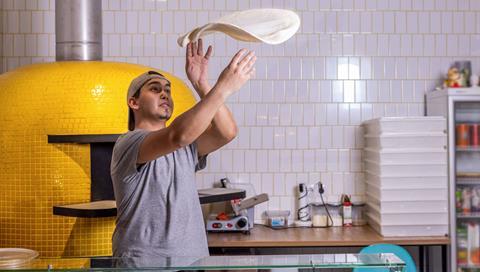
As one of the most recognisable world foods, pizza has enjoyed huge popularity globally, with the size of the market estimated at US$282.9bn in 2025, and expected to grow from $215.5bn in 2026 to $340.9bn in 2034.
In the UK, recent studies have shown that the per capita consumption in 2024 was 6.3kg, somewhat lower than in the US (9.6kg) and, somewhat surprisingly, Norway which leads the consumption per capita table at 11.4kg. However, the UK market for pizza is projected to reach $7.82bn by the end of this year. Yet the familiar high street chains in the market have suffered of late, according to a recent report in British Baker sister magazine The Grocer, while sales in the supermarkets are down by just 2% and value is relatively flat.

That said, the UK market is currently being driven by a premiumisation trend, with frozen pizza buyers transitioning into the chilled segment, according to the Grocer, and certain brands reaping the rewards of offering what consumers perceive to be a restaurant-quality experience at home. Given the rising cost of eating and drinking out-of-home in the market, consumers are voting with their wallets and opting for a posher experience in their own kitchens, as different brands tap new toppings to indulge in a more sensory experience.
The opportunity for bakers, therefore, to also capitalise on the popularity of pizza remains undiminished. But apart from the toppings, this is where bakers can excel in creating a superlative common denominator in all pizzas – the base.
Organoleptic properties
In a study with Baking With Lesaffre, Chicago native and craft baker/pizza maker Leo Spizziri, says that it is necessary to cater to clearly identified tastes and expectations of pizza lovers when it comes to crust thickness, softness or crunchiness. Working with Baking With Lesaffre, Spizziri has undertaken sensory analysis of yeast-leavened pizza bases to develop an essential tool for bakeries – be they industrial, in-store or craft – when it comes to developing the optimum pizza dough. This, explains the study, is important in terms of the quality of raw ingredients used, but is also vital for bakeries to establish product concepts, analyse the competition in the market and optimise formulation and processes in creating pizza bases.
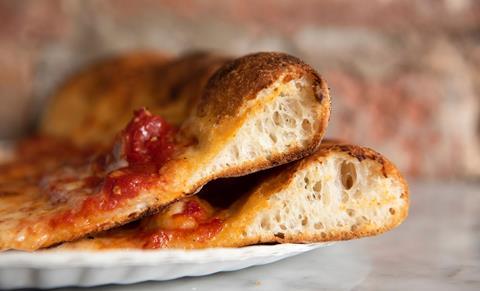
The study approaches the issue from two angles – the more objective angle of experts and the more subjective angle of consumers – examining factors such as:
● Appearance – examining the overall appearance, the crust and then the dough interior;
● Smell – and its importance to the attraction of pizza;
● Sound – the crispiness, crunch or, sometimes soft. crunchy texture;
● Texture – through touch and then in the mouth;
● Taste – as a major indicator of quality, with descriptors both intrinsic to the dough itself and the migration of toppings into the dough.
The research also establishes that the aromas released in the mouth when eating a pizza develop and travel to the nose via the back of the throat which is a route described as ‘retronasal’. As such, the perception of taste, smells and mouthfeel are all of key importance when assessing pizza dough.
Also, with pizza “highly sensitive to cooling”, it was important to assess product texture while hot and after cooling. From the assessment, the study developed a glossary of sensory attributes adapted to the assessment of pizza, which bakers can use in new product development.
Shared experiences

Along the whole of the study, professionals from Italy, China, the US, France and Russia share their criteria and experiences on what makes a good pizza -and even the environment in which they can best be enjoyed, as well as the toppings that make them special. For example, Pasquale Cicci, a grocery storekeeper in Italy notes that: “A good pizza should be eaten really hot, otherwise you don’t get to enjoy the true taste of the dough, or the special texture.” Meanwhile, in China, Yi Qing Ding, R&D at Feizi in Hangzhou, says: “The minimum baking temperature and short baking time are key to a perfect finished product.” And Pasquale Cozzolino, executive chef at Ribalata in the US, emphasises the need for good-quality ingredients and the importance of the fermentation phase, and recommends baking in a wood-fired oven. “In short,” he says, “ a pizza maker should know their job to keep customers coming back for more.”
Trending developments
Bakeries looking to tap into a healthier vibe in the market, might also consider the production of ‘pinsa’, an oval shaped flatbread made from a mixture of wheat, rice and soy flour, sourdough, yeast, salt, oil (optional) and water. It tends to be lower in gluten, fat and calories than traditional pizza. It is highly hydrated and undergoes a 48-72 hour maturation process, which breaks down starch for better digestion.
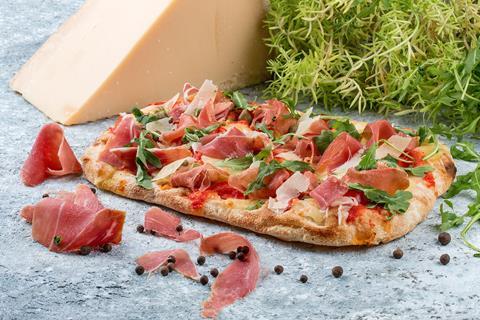
Moreover, as the market for pizza moves into the ‘swavoury’ (sweet and savoury or ‘swicy’ (sweet and spicy) arena, dessert pizzas featuring toppings with products such as the trending hot honey have gained favour with the younger generation, notably Gen Z.
So for bakeries interested in capitalising on the pizza market, there is plenty to get their teeth into – and the return on investment could prove lucrative, given the current preference for take-away offerings.
How Lesaffre can help
Baking With Lesaffre offers a diverse range of speciality pizza yeasts catering to various production set-ups. These include Saf-Pizza, an instant dried yeast tailored to pizza makers. This allows easier rolling out of the dough and prevents any dough shrinkage associated with an all-purpose dry yeast. It also enables longer shelf-life for the user. Meanwhile, the company’s Compressed Fresh Yeast lends pizza dough a distinctive flavour and soft chewy texture, with a tanginess that can enhance the overall taste of the pizza crust.
Bakers can also create sourdough pizzas using the Livendo sourdough solutions range, to develop their own recipes with unique characteristics. Livendo offers ready-to-use live sourdoughs that can be immediately incorporated into pizza dough, saving bakers valuable time and ensuring dough stability and consistency throughout the baking process. The Livendo range also offers dry deactivated sourdoughs that enable bakers to infuse pizzas with sourdough aromatic notes.
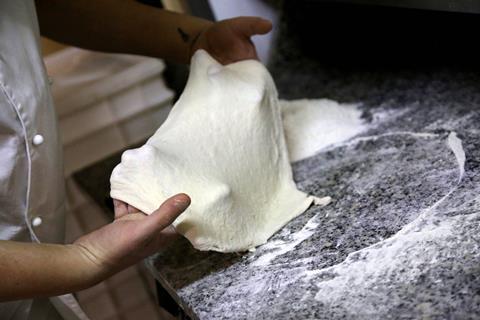
Other products from the company include Liquid Fresh Yeast, suited to the automated production of pizzas and helping to maintain uniformity of the dough fermentation and streamline production in an industrial setting, while its Free Flowing Frozen Yeast, offers a ‘fermentation delay’ effect to avoid too fast a start to the dough fermentation.
To discover more, click here.