












Younger consumers focused on health and nutrition, but also expect products to be increasingly clean label and sustainable. As such, they are seeking out protein-rich foods that meet those criteria but that also deliver on taste and texture. So how can bakery companies solve these nutritional demands, but still keep their offer attractive?
The British baking landscape is at a crossroads. On one side, consumer demand for high-protein products is surging, driven by an ageing population concerned with muscle retention and a younger generation focused on fitness and satiety. On the other, the ‘Great Reformulation’ of 2024 has left many bakers struggling to remove artificial additives and reduce sodium without sacrificing the golden crumb and delicate texture that define a proper British bake.
According to recent data from Innova Market Insights, 38% of UK consumers now actively seek high-protein claims on bakery packaging, a figure that has risen steadily since 2021. Meanwhile, Mintel reports that 62% of British shoppers are willing to pay a premium for products that offer both nutritional benefits and environmental sustainability.
Yet, a significant gap remains between demand and delivery. Why? Because for decades, boosting protein in bread, cakes, and biscuits has meant compromising on quality.
The current landscape: a menu of compromises
Walk down the ‘free-from’ or ‘high protein’ aisle of any major UK retailer – from Tesco to Waitrose – and you’ll encounter the same recurring issues:
- The texture trap: traditional plant proteins (pea, soy, rice) often interfere with gluten networks. The result? Dense, gummy loaves that lack volume, or biscuits that crumble excessively. For the British consumer, who prizes a light, airy crumb above all else, this is a dealbreaker.
- The flavour barrier: many alternative proteins carry distinct ‘beany’, ‘earthy’ or bitter off-notes. Masking these flavours often requires additional sugar, salt or artificial flavourings – directly contradicting the clean-label ethos.
- The allergen exclusion: whey and casein are functional powerhouses but exclude the 7-10% of the UK population with lactose intolerance and the growing vegan demographic. Soy, another common booster, is a top allergen, limiting market reach.
- The sustainability question: with the UK government’s Net Zero 2050 target looming, bakers are under pressure to lower their carbon footprint. Animal-based proteins have high environmental costs, while some crop-based proteins require significant land and water resources.
Bakers are stuck in a trilemma: nutrition vs. texture vs. sustainability. They can choose two, but rarely all three.
AngeoPro: the yeast protein revolution
But what if the solution were not to be found in a new crop, but in an ingredient already native to bakery?
AngeoPro Yeast Protein, derived from edible yeast through advanced enzymatic hydrolysis, is emerging as the game-changer the UK industry has been waiting for. Unlike isolated plant proteins, AngeoPro is engineered specifically for bakery applications, offering a unique combination of functionality, nutrition, and clean-label appeal.
1. Uncompromised texture: the ‘invisible’ protein
Yeast Protein empowers German client to achieve ‘half the carbs, double the protein’.
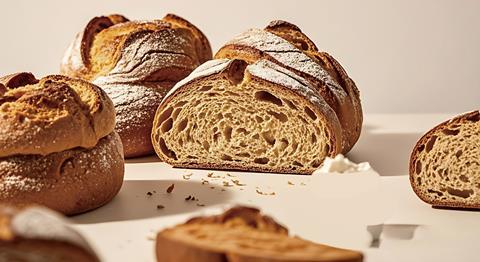
A German bakery premix supplier sought to upgrade its core product lines (bread, biscuits, and pizza) to meet the rising demand for ‘high-protein, low-carb, high-fibre’ functional foods in mainstream retail.
With Angel Yeast’s technical support, the client incorporated AngeoPro Yeast Protein (at 0.8%) as a source of premium protein and dietary fibre. To address potential structural weakening in bread dough, the technical team recommended blending it with 1% Vital Wheat Gluten. This synergy effectively reinforced the gluten network, ensuring optimal loaf volume and chewiness. The new formulations achieved half the carbohydrates and double the protein of traditional recipes, while delivering 12% dietary fibre. Perfectly aligned with keto and fitness trends, the series is now accelerating into major German retail channels, setting a new benchmark for healthy baking.
2. A complete nutritional powerhouse
Not all proteins are created equal. AngeoPro boasts a PDCAAS (Protein Digestibility Corrected Amino Acid Score) of 1.0, matching the gold standard of whey and egg proteins. It contains all nine essential amino acids in optimal ratios, making it a truly ‘complete’ protein source – a rare find in the plant-based world. This is crucial for the UK market, where consumers are becoming increasingly educated about amino acid profiles. It’s not just about ‘grams of protein’; it’s about quality protein that supports muscle synthesis and satiety.
3. Clean-label & allergen-free
In an era where free-from is a baseline expectation, AngeoPro ticks every box:
● Naturally gluten-free: safe for coeliacs (when produced in dedicated facilities).
● Dairy-free & soy-free: expands reach to vegans and those with common allergies.
● Non-GMO & clean-label: listed simply as ‘Yeast Protein’ or ‘Yeast Protein from Saccharomyces cerevisiae’, avoiding the long lists of chemical-sounding additives that deter modern shoppers.
4. Sustainability built-in
Perhaps most compelling for the forward-thinking UK brand is the environmental footprint. Yeast fermentation is incredibly efficient:
● Low carbon emissions: producing yeast protein generates significantly fewer greenhouse gases compared to animal agriculture and even some water-intensive crops.
● Minimal land & water use: yeast is grown in controlled bioreactors, requiring a fraction of the land and water needed for pea or soy cultivation.
● Circular economy potential: often produced using by-products from other industries, aligning with the UK’s waste-reduction goals.
Real-world applications: from artisan loaves to grab-and-go

The versatility of AngeoPro opens doors across the entire bakery spectrum:
● High-protein sliced bread: ideal for school meals and hospital menus where nutrition and a soft texture are paramount. Adding just 1–1.5% yeast protein significantly boosts protein content without compromising quality.
● Energy & snack bars: acts as a premium hybrid protein engine, blending perfectly with other ingredients to deliver a complete amino acid profile without compromising taste. Perfect for the post-workout crowd grabbing a quick bite at Pret A Manger or Starbucks, for example.
● Savoury crackers & crispbreads: enhances the Maillard reaction, delivering a deeper golden hue and richer flavor profile, thereby removing the need for artificial colourants.
● Gluten-free premixes: provides a high-protein solution for gluten-free baking. It breaks the traditional barrier of ‘gritty texture’ in GF products while significantly reducing carbohydrate content, achieving a perfect balance between nutritional density and delicious taste.
The verdict: a future-proof ingredient
The UK bakery market is evolving rapidly. Consumers will no longer accept ‘healthy’ food that tastes bad or harms the planet. They demand holistic solutions that deliver on all fronts.
AngeoPro Yeast Protein represents more than just an ingredient; it’s a strategic tool for bakers to future-proof their portfolios. It solves the texture-taste-sustainability trilemma, allowing brands to launch high-protein innovations that feel familiar, taste exceptional, and align with ethical values.
As we move into 2026 and beyond, the question for British bakers isn’t “Can we add protein?” but rather “How can we add protein without compromise?” The answer, increasingly, is yeast protein.
Ready to transform your bakery portfolio?
Discover how AngeoPro can help you meet the demands of the modern British consumer with uncompromised nutrition and quality.
Contact our UK team today at angeleu@angelyeast.com or visit en.angelyeast.com to request samples and application support.