










While sweet bakery and patisserie needs to look good and taste indulgent to attract consumers’ attention, there’s also a growing need to meet their demands on clean-label and sustainability – and the perfect filling can go a long way to satisfying all these requirements. But this comes with technical challenges, as Puratos explains.
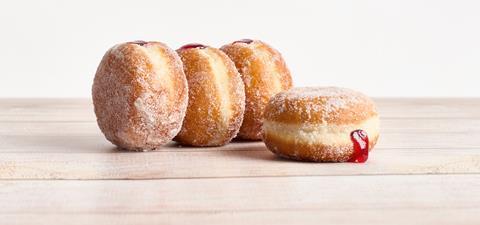
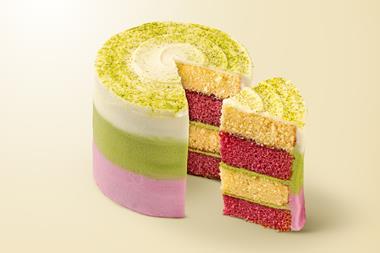
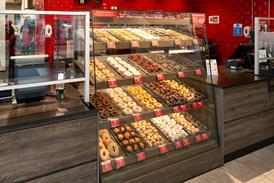
Consumers want it all – indulgence, Instagram appeal and clean-label credentials. Meeting that brief is fuelling a new wave of bakery innovation, in a market projected to grow from £9.6bn to £13bn by 2033 [Straits Research]. The sector continues to shift towards bakery-led convenience and foodservice formats, with UK consumers hungry for sweet bakery and patisserie that looks as good as it tastes. Think artisan doughnuts filled with the latest trending flavours and decorated with statement toppings – formats that are tailor-made for the TikTok generation. It’s little wonder that doughnuts now account for 42% of fresh pastry volume [Gira], reflecting growing appetite for filled indulgence.
At the same time, health and clean label are key purchasing drivers. Consumers are increasingly looking for fillings with reduced sugar, packed with fruit or based on natural ingredients. This is where filling innovation gets interesting. Bakers are finding the sweet spot by experimenting with tastes, textures and seasonality across everything from classic pastries to hybrid croissants and traybakes. The creative possibilities are vast, but getting fillings right is no small feat. Here we explore the common challenges of innovating with cream and fruit fillings, to ensure baked goods truly go down a treat.
The filling formula: tackling texture, stability and shelf life
The perfect filling will surprise and delight consumers. But behind the scenes, achieving consistent performance across manufacture, baking and shelf life demands technical precision at every stage – and the margin for error is slim.
Manufacture
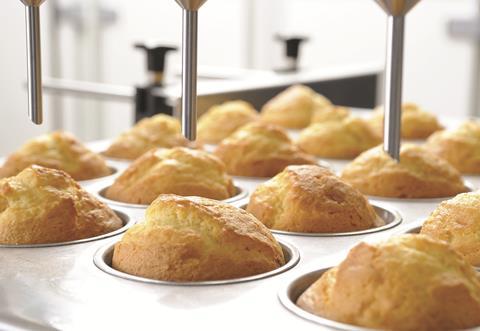
It starts as soon as a filling enters production. Viscosity is critical; the filling must flow through large pumps in early processing yet behave precisely at the point of injection. Shear sensitivity adds complexity, as pumping and mixing can break down texture, while air incorporation risks inconsistent weight and oxidative flavour loss.
Baking
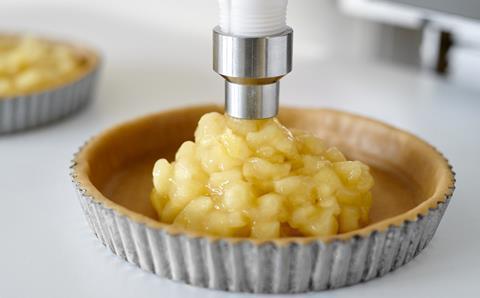
During baking, stability is equally unforgiving. Fillings must hold where they were placed. Any weakness results in boil-out – filling leaking under steam pressure, compromising visual appeal. Fruit fillings add variability. Strawberries from different origins, for example, vary in size, flavour profile and colour, all of which affect appearance and overall eat. Format also matters: large pieces may suit a trifle and give visual interest and texture, but doughnuts demand a uniform sauce that can be easily piped in.
Shelf life
Shelf-life stability is the result of carefully managed pH, sugar levels, water activity, process control and packaging compatibility. The clean label movement has raised the bar further still, with demand for preservative-free fillings pushing formulators to control microbial stability through pH and water activity alone.
Brix level – the measure of sugar concentration – is key to sweetness and stability. In lower-sugar formulations, changing Brix can compromise freezability and water activity, creating challenges for shelf life and freeze-thaw performance. Moisture migration from filling to crumb or packaging, crystallisation in sugar-based fillings and freeze-thaw instability in frozen dough applications all require precise formulation to resolve.
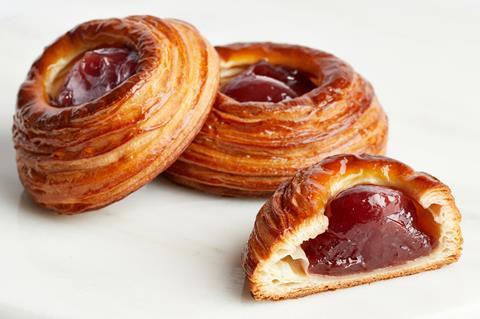
The biggest challenge lies in aligning consumer demands with technical reality. High fruit content, reduced sugar and a long shelf life – ideally with bake stability and freeze-thaw tolerance – are difficult to achieve simultaneously. Reducing sugar while increasing fruit content raises water activity, accelerating microbial risk and moisture migration. In high-speed production, even minor viscosity variations can affect fill weight, yield and waste. That’s why every reformulation should involve considered trade-offs rather than simple substitutions.
The science behind great fillings
When it comes to manufacturing fruit fillings, fruit selection can make or break the product. Variables like pH, natural sugar profile, fibre structure and water activity must be assessed before formulation. Close relationships with growers and supply chain visibility allow tighter control over fruit maturity and sugar levels, reducing the risk of bleed, syneresis and flavour variability. Cold pressing also helps preserve flavour, colour and aroma by limiting thermal damage early in processing, resulting in a fresher fruit profile with less need for correction later.
Choosing the right gelling system is equally important. Pectin suits fruit-based fillings where clean flavour release is key, while modified starches or blended systems can improve freeze-thaw stability or pumpability. The choice must reflect how the filling will be processed, baked and stored.
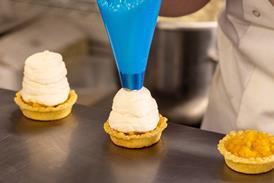
For cream fillings, controlling particle size and emulsion stability is essential. High-shear mixing disperses sugars and fats, while homogenisation reduces particle size to create smoother textures – particularly in caramel or fat-based fillings where crystallisation or separation can occur. These processes improve pumpability, reduce oil separation and support thermal stability during baking.
Underpinning this is a co-development approach. Fillings providers working directly with bakers helps translate ambitious briefs – cleaner labels, reduced sugar, novel textures – into fillings that perform in production and on the palate. Because every application is unique, fillings developed in isolation rarely deliver on both. Add into the mix the need for fast, efficient innovation and agility, and the case for co-creation is clear.
Puratos: specialists in bakery fillings
Puratos brings extensive R&D experience in functional fillings, fruit processing and bakery and patisserie applications within the UK and across the world. Its global network enables knowledge-sharing and problem-solving on challenges such as reduced-sugar formulations, bake stability and freeze-thaw performance, while pioneering solutions tailored precisely to local needs.
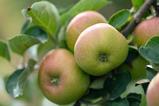
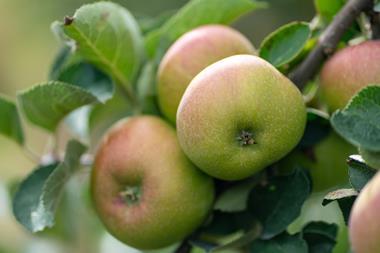
This translates into an application-led approach beyond off-the-shelf solutions. Puratos creates hundreds of tailored fillings recipes each year, knowing that every finished product has unique requirements. Through Puratos Fourayes, the company gives customers an opportunity to bring provenance and local sourcing into NPD. Puratos Fourayes grows its own Bramley apples and sources 90% of fruit within 35 miles of its Kent site. Using retail-grade, Red Tractor and LEAF-accredited fruit ensures tighter control over ripeness, sugar profile and texture – building consistency from the orchard up.
In a market where consumers demand more from every bite, the difference between a good bake and a great one often comes down to what’s inside. That’s where the right fillings partner comes in – making sure every great idea is filled with potential.
For more information, click here.