










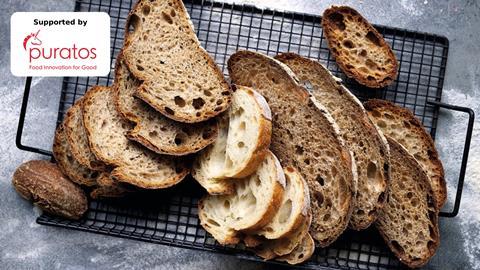
It couldn’t get much sweeter (or should that be tangier?) for the sourdough category in the UK.
Demand for loaves and other products featuring long-fermented dough has continued to rise across all corners of the market – from in-store bakeries (ISB) and wrapped bread aisles to craft bakery counters and foodservice outlets.
“Sourdough is fast becoming the everyday bread of choice for consumers”
As a measure of how far it’s come, a UK consumer survey commissioned by Lesaffre found 68% of respondents said they bought sourdough products. Notably, around a third (32.4%) reported that they had increased their purchases.
“Sourdough bread is fast becoming the everyday bread of choice for consumers,” says Hannah Sibley, product and innovation director at Aryzta UK & Ireland, noting that that larger loaves are now being created to cater to shoppers expanding their consumption across more at-home occasions.
So what consumer considerations are helping maintain sourdough’s popularity, and what trends can bakers jump on to boost sales? How are things changing across the different channels, and does the industry expect the category to sustain its upwards trajectory?
Why they buy
One of the primary reasons behind sourdough’s success is its unique flavour profile. Lesaffre’s research found nearly half of UK consumers surveyed (49.8%) cited flavour as a key motivation. Other drivers of sourdough purchases are its gut health and nutritional benefits, as well as its composition of natural ingredients, the research showed.
Shoppers are attracted by sustainability claims too, especially one of the latest buzzwords: regenerative farming.
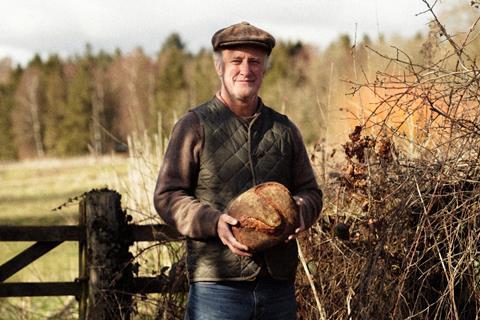
Gloucestershire-based Hobbs House Bakery, for example, reported an increase in sales of its Seeded Sourdough after switching it to be made with 100% Wildfarmed regenerative flour.
Marketing director Anna Herbert also talks about the importance of providence. “For us, it’s knowing your farmer so we can know how it’s been farmed and that it is helping us towards our goal of knowing that all our flour is coming from healthier soils by 2032,” she says.
Anomarel Ogen, executive master baker at Gail’s, reveals customers of the high street chain are pleased its loaves are made with ‘soil-positive’ flour and that the firm provides information on traceability. He highlights a move towards a vertically integrated supply chain with bakeries working with specific farmers, milling their own wheat, and then baking with it. “We need look at the whole chain, not only the final product,” Ogen adds.
Gail’s introduced its regenerative agriculture initiative, The Wheat Project, earlier this year which has so far given rise to the Bruern Farms Sourdough loaf and the Good Earth Sourdough loaf, both enriched by a blend of ancient grains.
Favouring flavourings
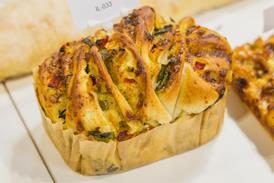
The classic sourdough varieties – white, brown, and seeded – are no longer the only ones behind the wheel of its growth vehicle. It’s inclusions in loaves that are now keeping things fresh and exciting for consumers and supporting incremental profit for retailers.
The distinctive taste and texture of sourdough can be paired with visually enticing, on-trend, health-led, or seasonal inclusions, suggests Lantmännen Unibake UK’s marketing manager Samantha Winsor.
“From savoury profiles with acidic or malty flavours such as vinegar or ale, to sweet and creamy combinations such as maple, honey, vanilla or butter, sourdough can be tailored to suit a wide range of taste preferences,” she comments. “It can also deliver earthy mushroom profiles, fermented fruit flavours, or nut and seed inclusions that add both texture and depth.”
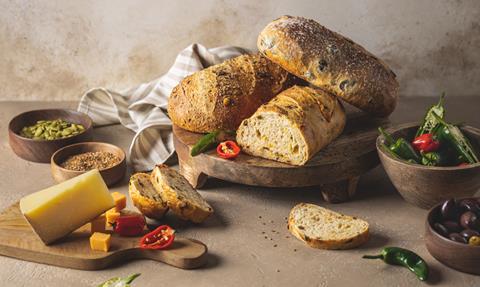
To help demonstrate the versatility of sourdough – which can shift its flavour profile by tweaking fermentation techniques, hydration levels, or baking styles – Lantmännen Unibake has developed its own Sourdough Flavour Spectrum. Educating retailers on this tool helps broaden the appeal of sourdough and bring new consumers to the category who “may simply not have found their sourdough yet”, asserts Winsor.
However, producers still need to be mindful of texture. “Products that are too tough or chewy can lose appeal,” says Charlotte McCready, category manager at Finsbury Food Group. “The most successful sourdoughs offer a premium eating experience without compromising on ease and versatility.”
McCready draws attention to activity in the more accessible ‘middle ground’ of products that “dial down the chew and intensity of traditional sourdough to appeal to a wider audience”. New launches are softer-textured, she says, with a touch of sour flavour that straddles the space between standard white bread and full-on sourdough.
“Additions like seeds, cheese, fruit or herbs give sourdough loaves personality while maintaining their craft credentials. Ultimately, it’s about striking the balance between familiarity and distinction,” concludes McCready.
In-store standout
Sourdough continues its meteoric rise at in-store bakeries (ISB), where it’s the fastest growing subcategory with loaves up by 49% year-on-year [Circana data for 52w/e 2 August 2025].
It’s a cornerstone of the speciality bread category, which itself is a growing market for ISB racking up sales of £190m, an increase of 12% over the past year.
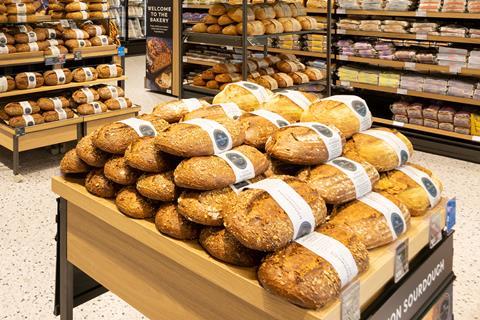
Puratos UK marketing manager for bakery Lydia Baines notes that while premium and artisanal-style products – with visual cues like bespoke shaping and flour-dusted crusts – remain the standard for sourdough, storytelling has grown more prominent in recent years.
“Banners, posters, and shelf-edge displays increasingly highlight the heritage of the mother dough, the quality of ingredients, and the craft behind the bread,” she comments. “Unlike the wrapped aisle, ISB promotes freshness as a main selling point, with a same-day baking promise and images of bakers making the bread for further emphasis.”
ISB also grants an opportunity for shoppers to ask the bakers questions about the sourdough, adds Baines. “It’s a much more personalised experience,” she says.
With sourdough ticking the gut health and clean label boxes that health-conscious consumers are increasingly hunting for, communicating these nutritional markers helps retailers drive sales.
Out of home comforts
Increasing consumer demand for authentic, artisanal dining experiences featuring high-quality ingredients have allowed the sourdough trend to permeate further into the foodservice sector.
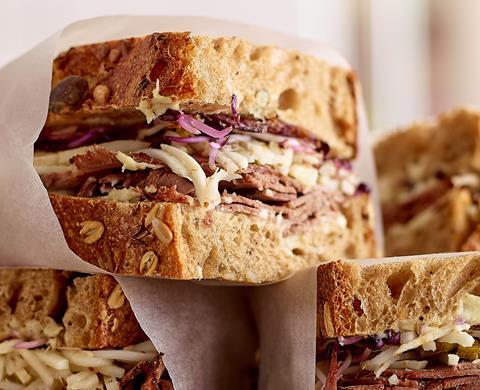
Its distinctive flavour is helping elevate a range of products such as pizza bases, burger buns, and sandwiches as well as sweet treats like doughnuts, waffles, pancakes, and pastries (including hybrids).
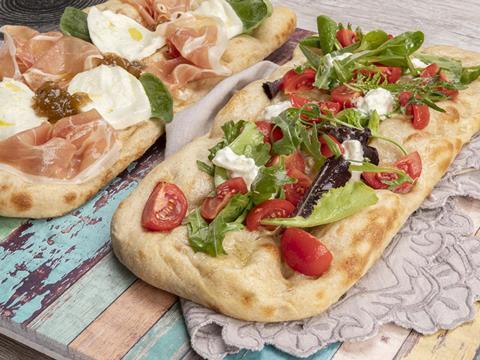
The appetite for variety and innovation speaks to its versatility and enduring relevance, according to Stéphanie Brillouet, marketing director at bakery supplier Délifrance. “With roots dating all the way back to 3700 BCE, it’s remarkable that sourdough feels so perfectly aligned with today’s modern dining habits and formats,” she says.
Research conducted by Délifrance reported that 38% of out-of-home consumers had increased their sourdough consumption, with many favouring bakery, sandwich, and coffee shops over supermarkets.
Sourdough is particular resonant among students in further and high education – a catering segment explored by a Délifrance report earlier this year. Brillouet notes how their survey found 14% of respondents actively seeking sourdough bread carriers for sandwiches bought on campus, while 40% of those who eat breakfast on-campus look for sourdough. “So, it appears the ‘smashed avo on toast’ trend is still firmly in motion,” she concludes.
Looking forward
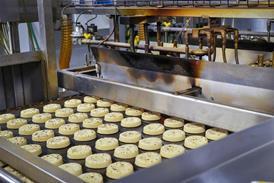
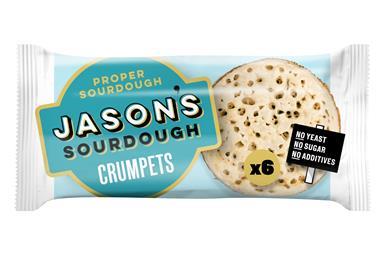
Jason’s Sourdough has drawn plenty of eyes to its ongoing success story. Impressively, it has managed to keep pace with soaring demand for its range – most recently extended with a crumpets line and unsliced boule – thanks to a £36m custom-built factory over the road from its existing Leicester site.
New players are still emerging on the wrapped sourdough scene, however.
Brace’s Bakery is one such example. The South Wales-based, family-run manufacturer launched a new sourdough brand, Ernest 100%, at regional Tesco and Asda stores last month following a major investment to convert an existing production line and add a temperature-controlled room for bulk fermentation at its plant in Croespenmaen.
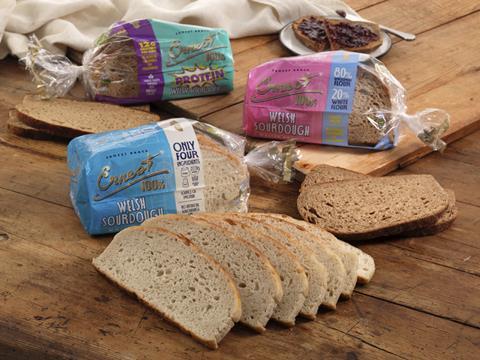
Director Jonathan Brace says data suggests that the sourdough market has still not matured. “Far from it,” he enthuses. “There is still a long way to go before it hits its limit. We could be seeing another five years of growth.”
This is echoed by other manufacturers. Pearson at Lantmännen Unibake UK points to Kantar data for the 52 weeks to 15 June 2025, which has household penetration of sourdough moving up a point over the past year to currently stand at 20.3%. This is “signalling headroom for further growth as sourdough takes a greater share of the category,” he says.
Finsbury’s McCready, meanwhile, cites latest NIQ data up to July 2025 that shows a 50.6% year-on-year volume uplift. “The key point is that the ceiling hasn’t been reached,” she comments. “We’re seeing consistent demand, with more shoppers buying sourdough and those shoppers buying it more regularly. That ongoing mainstream adoption is what will fuel future growth.”
Finally, Baines at Puratos UK finds strong engagement for ‘sourdough’ still pervading across social media sites. The company’s Taste Tomorrow Always-On Consumer Insights reported that the term had 834,000 searches and mentions between March 2024 and February 2025.
With sourdough expected to stay hugely popular for years to come, bakery manufacturers and retailers who balance craft with storytelling and embrace new flavours and formats will be well-positioned to capture long-term growth.
ADVERTISEMENT: SAPORE SOURDOUGH FROM PURATOS
Puratos’ sourdoughs can support you to create high-quality baked goods with delicious signature flavours. Taste and naturalness are key factors when consumers are making purchase decisions.
Recipe: Blueberry and Lemon Sourdough – inspired by Taylor Swift
Travis’ favourite? A tangy, sweet blueberry lemon loaf – two flavours that our Taste Tomorrow research call out as being in the top 100 flavours in bakery and patisserie.
| Ingredients | Grams | % |
|---|---|---|
|
Strong white flour |
1,000 |
100 |
|
Salt |
18 |
1.8 |
|
Yeast |
30 |
3 |
|
200 |
20 |
|
|
Water +/- |
550 |
55 |
|
15 |
1.5 |
|
|
Sugar |
30 |
3 |
|
Oil |
20 |
2 |
|
Frozen blueberries |
200 |
20 |
|
Citrus peel |
50 |
5 |
|
Total |
1,114 |
Method
- Spiral mix all 4 mins slow, 6 mins fast
- Dough temp 25°C
- Bulk fermentation 20 mins
- Scale 480g, then mould
- Intermediate proof 30 mins
- Make up mould and tray up
- Final fermentation 60 mins +/-
- Decoration before baking; cut is required
- Oven temp °C 230°C to 200°C, open dampers halfway through baking
- Baking time 26 mins






No comments yet